

If you’re wondering how to get to Tortuguero after deciding it’s part of your Costa Rica itinerary, you’re in the right place.
Tortuguero is remote. There are no roads leading to the village. The only way in is by boat or small plane.
Getting to Tortuguero takes some planning, but it’s far simpler than it looks. And the effort is 100% worth it.
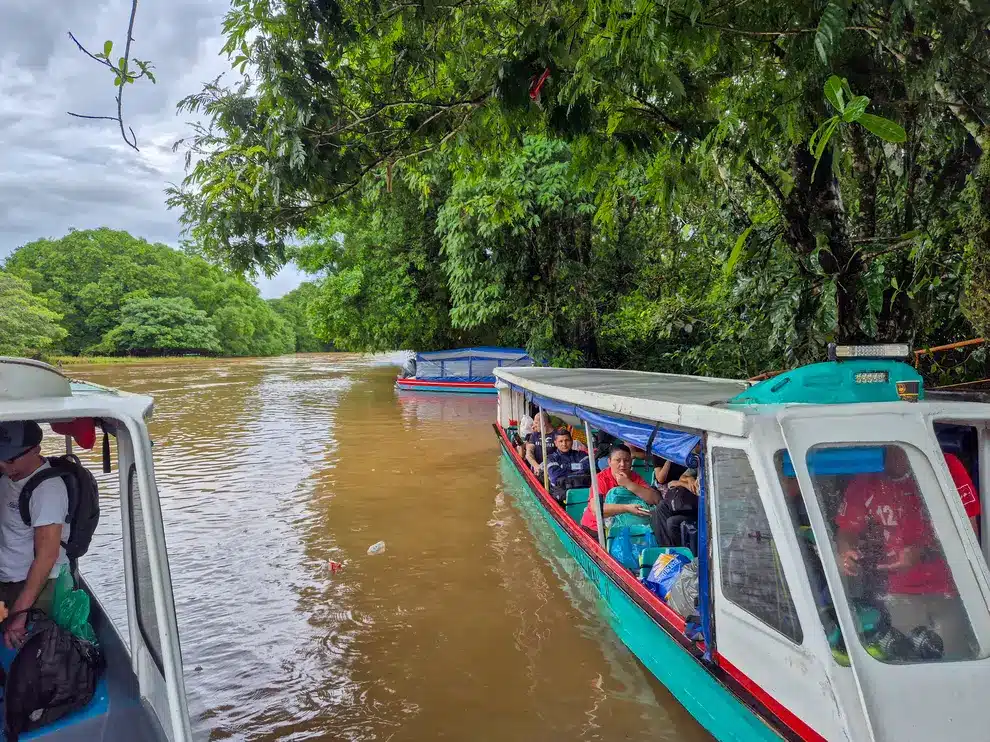
This guide is for travelers who already know they want to visit and now want clear, practical advice on getting to Tortuguero.
The first time I planned the route, I expected a headache. Instead, I realized that once you understand the options, it’s actually straightforward. You just need to plan a bit ahead.
Below, I’ll break down how to get to Tortuguero in the clearest way possible. You’ll find the main routes by boat and plane, where to start from, what the journey feels like, and which option makes the most sense for you.
In a hurry? Plan your trip to Tortuguero now!
Don’t have time to read the full guide? This is the short answer.
→ Best way to get to Tortuguero: Boat via La Pavona. The easiest and most reliable option, and the one that works year-round.
→ Fastest option: Domestic flight from San José. About 30 minutes, but expensive, with strict luggage limits and some safety concerns.
→ From Puerto Viejo or Limón: Boat via Moin. Possible, but longer and more dependent on weather conditions.
→ Driving the whole way: Not possible. Tortuguero has no roads and must be reached by boat or plane.
→ My recommendation: If you’re unsure which route to choose, go with La Pavona. It’s the most straightforward option for most travelers.
Where is Tortuguero?
Tortuguero sits on Costa Rica’s Caribbean coast, in a part of the country that feels completely cut off from everything else.
The village is built on a narrow sandbar, with jungle canals on one side and the ocean on the other. There are no roads connecting Tortuguero to the rest of Costa Rica. That’s what makes it special, and also what makes planning the trip a bit different.
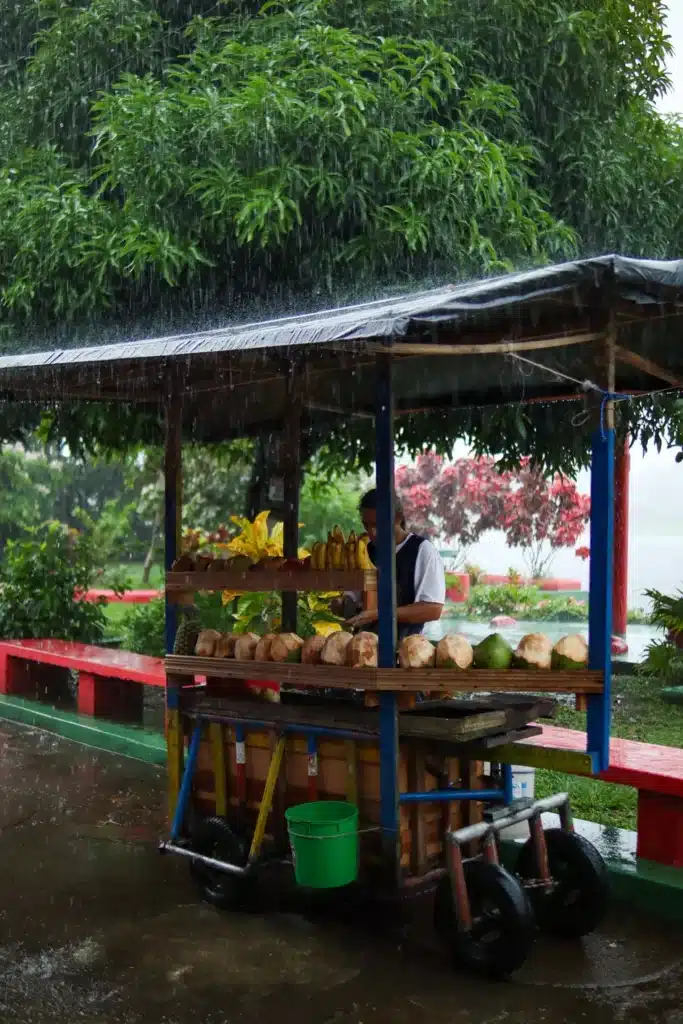

Boats and small planes are the only way in. No cars. No last-minute detours. Getting here takes a bit more thought, but once you understand the routes, it’s very manageable.
I still remember arriving by boat for the first time. The canals, the silence, the feeling of slowly leaving “normal Costa Rica” behind. That arrival alone already felt like part of the experience.
Overview of how to get to Tortuguero
Before getting into details, here’s a quick overview so you can decide what makes sense for your trip.
- By boat via La Pavona
- The most common and reliable option
- This is the route I recommend and the one I used
- Best if you’re coming from San José or La Fortuna
- By boat via Moin
- Less common and more weather-dependent
- Closer if you’re coming from Puerto Viejo, Cahuita, or Limón
- Even so, I usually suggest La Pavona instead
- By boat via Cano Blanco
- No public boats operate on this route
- Sometimes suggested by hotels as a private transfer in specific situations
- I won’t cover this option here, but if your hotel suggests it, check out this guide about the Cano Blanco boat taxi.
- By domestic flight
- The fastest way to arrive
- Also, the most expensive
- Limited luggage and occasional weather or safety concerns
I’ll break down each option below, starting with the route most travelers choose. If you want the short answer, the La Pavona boat route is the best option for most travelers. It’s the easiest, the most reliable, and it works year-round.
Getting to Tortuguero by boat via La Pavona
This is the most popular and reliable way to reach Tortuguero, and for good reason. La Pavona works year-round, has frequent boat departures, and is well-connected to the rest of the country.
It’s especially convenient if you’re traveling from San José or planning the route from La Fortuna to Tortuguero. Even though I came from Puerto Viejo to Tortuguero, I still used La Pavona because it’s simply the most straightforward option.
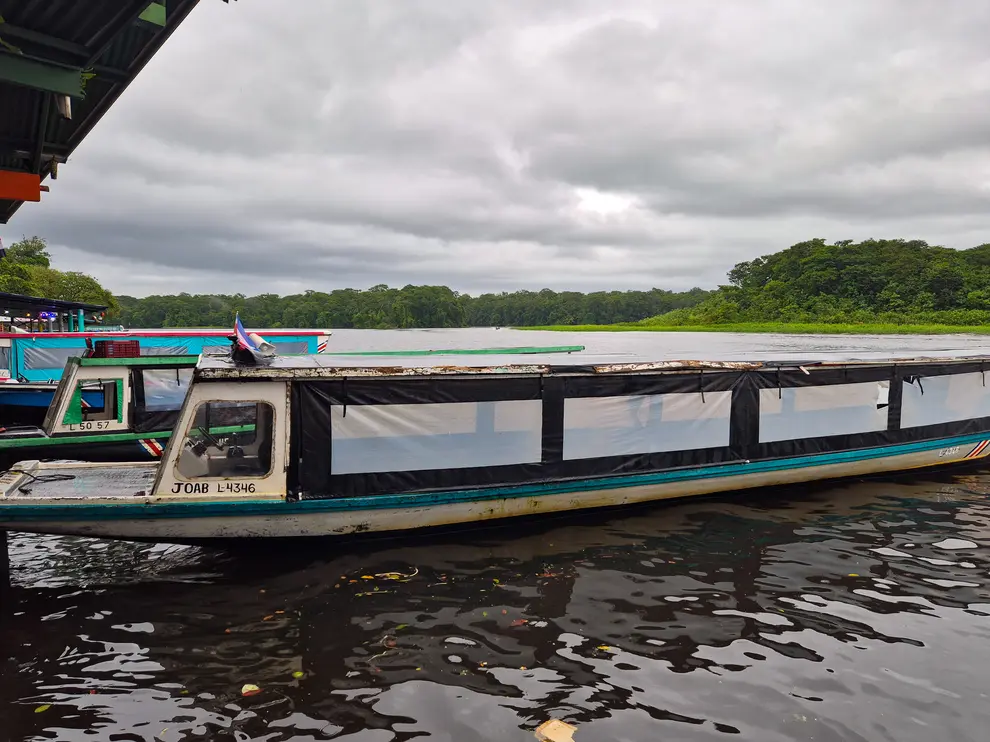
Several companies operate this route. I used Green Tours, but there’s also this other option.
When I arrived at the parking area, the staff immediately checked my booking. They noticed I wasn’t with their company and quickly pointed me to the correct person. It was literally right next door.
» Where is the La Pavona dock
La Pavona dock is located inland, surrounded by lowland jungle and canals. You can find it here.
This dock is considered the main gateway to Tortuguero. Most public boats depart from here, parking is available nearby, and transfers from different parts of Costa Rica are designed around this point.
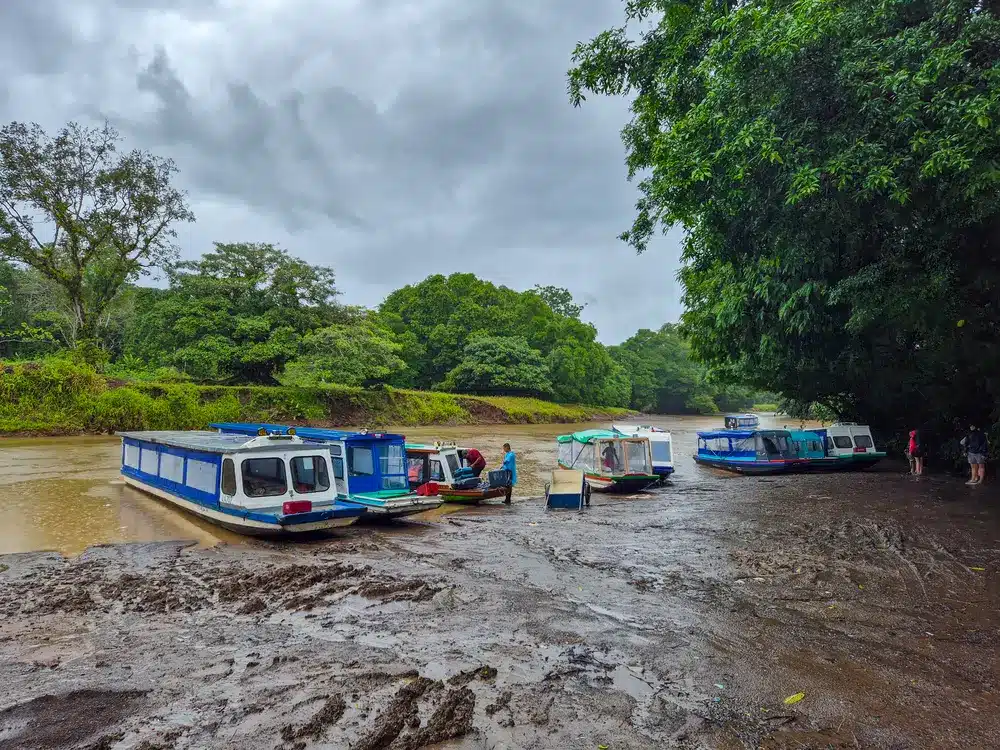
If you’re unsure which route to choose, this is usually the safest bet. It’s the option that works for most itineraries, most seasons, and most travel styles.
In the next sections, I’ll go deeper into boat schedules, what the ride is like, and how this compares to options like the boat from Moin to Tortuguero or flying.
» How to get to La Pavona
La Pavona is easy to reach from several parts of Costa Rica, which is one of the reasons this route works so well. These times are without traffic and assume normal road conditions.
- From San José, about 3 hours
- From La Fortuna, about 3 hours
- From Puerto Viejo, about 3.5 hours
Driving to La Pavona with a rental car is the best option if you’re comfortable driving. It gives you flexibility and makes timing the boats much easier. If you’re not driving, transfers are widely available.
🚗If you’re renting a car in Costa Rica, Discover Cars is a great platform to compare prices across different rental companies. It offers free cancellation for flexibility, an easy-to-use search tool to find the best deals, and side-by-side comparisons to ensure you get the lowest rates.
There’s also a public transport option from San José. From the Gran Carib terminal in downtown San José, take a direct bus to Cariari, around 2 hours. From Cariari, switch to a bus going to La Pavona, which takes about 1.5 hours.
» Parking at La Pavona
There are paid parking lots right next to the dock, which makes things very straightforward if you’re driving.
The option I recommend costs 20 USD /17€ per night. You can reserve it here. There’s also this option, but it’s more expensive for 24 hours.
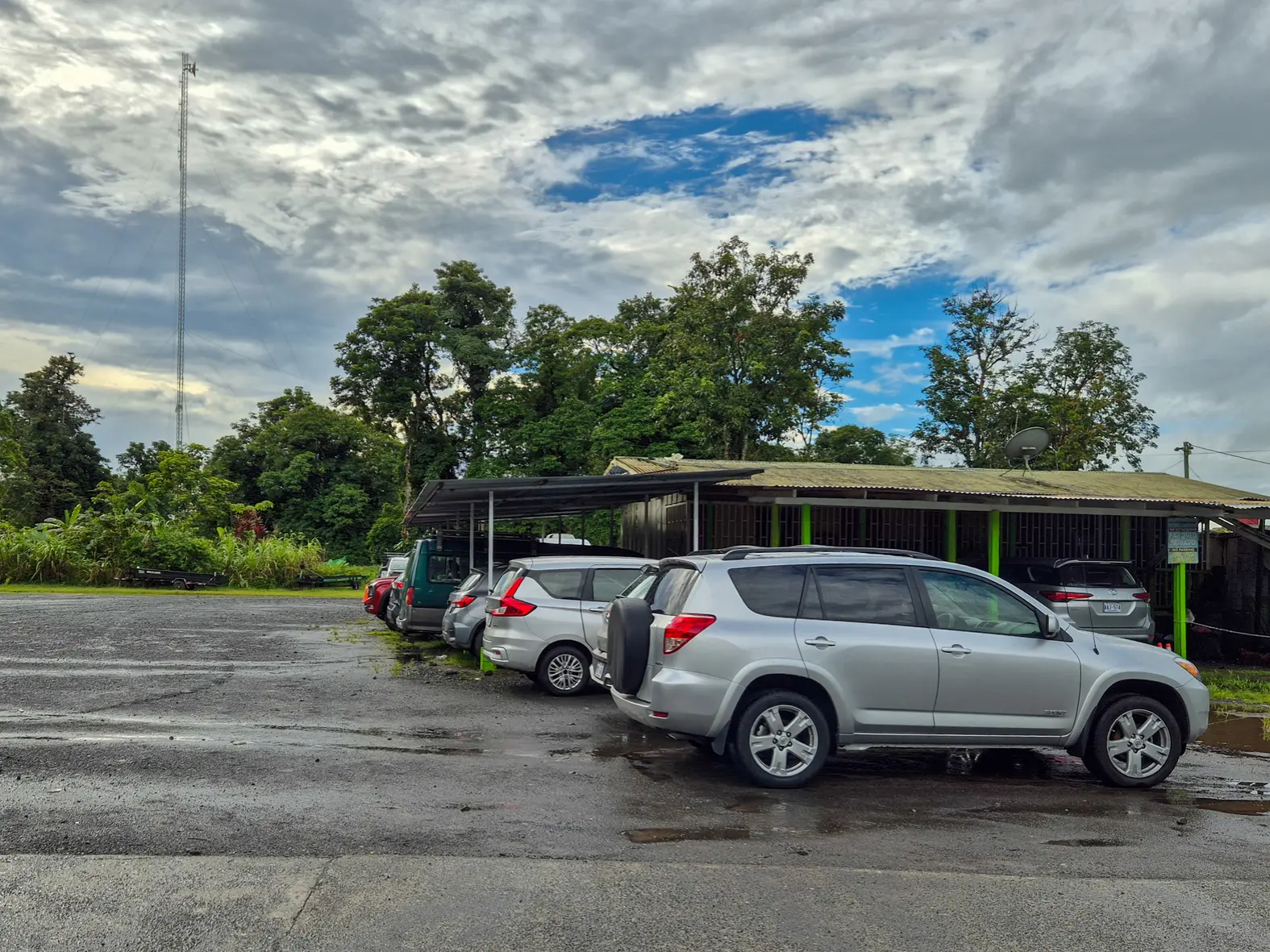
The parking area has 24/7 security, but we still took extra precautions. We only boarded the boat with a small backpack carrying essentials for our stay. So, we left our suitcases in the trunk and secured them with an iron cable to make theft harder if the car was broken into.
» La Pavona to Tortuguero boat ride
Boats run every day, with morning and afternoon departures. They’re not constant, but there are enough options to plan around them.
If you book with Green Tours, these are the typical schedules:
- Daily departure schedule, La Pavona to Tortuguero: 6.00 am | 7.30 am | 9.00 am | 11.00 am | 1.00 pm | 3.00 pm | 4.30 pm
- Daily departure schedule, Tortuguero to La Pavona: 5.00 am | 7.00 am | 9.00 am | 11.00 am | 1.00 pm | 3.00 pm
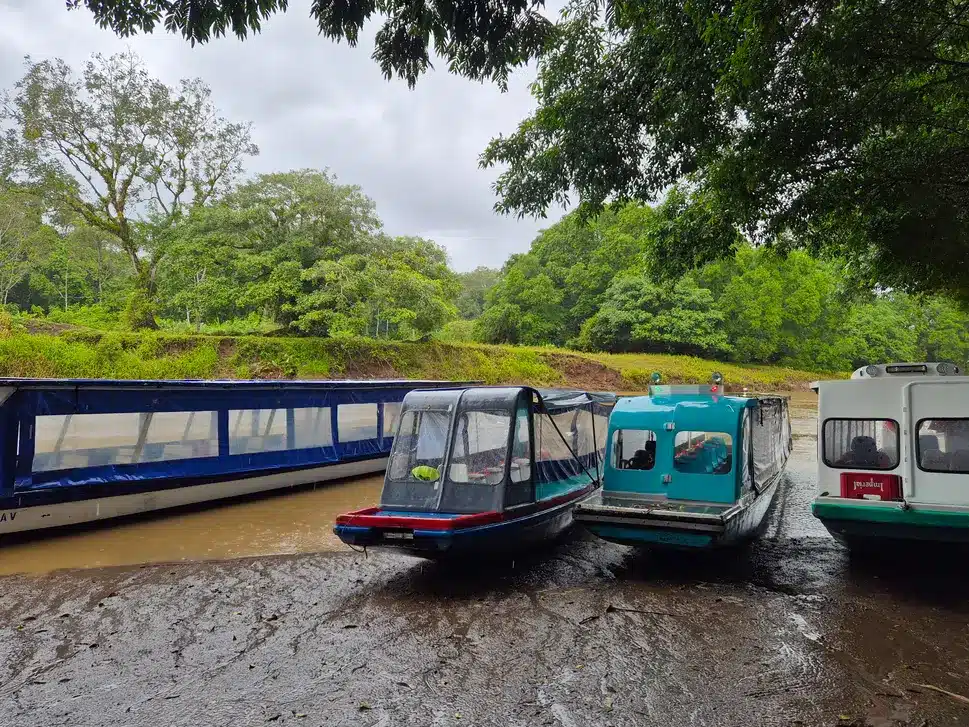
Your ticket is valid for any available departure on the day of your booking, or for the next available boat when you arrive.
🎫 If you want to lock this in ahead of time, Bookaway makes this part much easier. You can see which boats are running on your travel date, compare schedules from different operators, and book in advance. Many tickets also come with free cancellation up to 24 hours before departure, which is helpful if you’re still fine-tuning your plans.
The boat ride takes about 1 hour during higher water months, roughly July to January. In the drier season, it can take up to 2 hours.
Boats may stop along the way if your accommodation is outside the main village. If that’s your case, confirm this with both your hotel and the boat company.
These boats are also used by locals who live or work in the area, which makes the ride feel very authentic.
Even though schedules exist, there’s some flexibility. We arrived later than planned due to heavy traffic. The parking staff called the boat driver and asked him to wait for us. We ended up boarding a few minutes later without any issues.

As for the experience itself, it really depends on the weather. When we went, it was a rainy day, so the boat had transparent side covers. That limited visibility at first. Later, the rain eased, the driver lifted the covers, and the whole ride changed. Suddenly, we could see the canals, the jungle, and even a bird perched on the riverbank that the driver stopped to point out.
Tickets cost around 10 USD/ 8.6€ per person per way, or 20 USD/17€ round trip. I strongly recommend buying round-trip tickets in advance, since this same boat system will be your way back out of Tortuguero.
When you arrive in Tortuguero, the boat docks at the main port. You’ll likely see hotel staff waiting for guests. Each hotel knows the arrival times and sends someone to pick you up.
We stayed at Budda Home, and someone was already there waiting. The walk from the dock to most accommodations is under 5 minutes. Everything in Tortuguero is close.
One last useful detail. Near the La Pavona parking area, there’s a small café with simple meals and bathrooms, which is very handy if you arrive early or have time to wait before boarding.
💼 TRAVEL INSURANCE: It’s one of those things you hope you won’t need… but it can save you a lot of money and stress if something goes wrong.
I personally use Heymondo because it offers strong coverage at a reasonable price, including medical expenses, lost luggage, and electronics.
What I like most is how easy it is to manage everything through their app, especially if you ever need assistance while traveling.
🎉 Get 15% off until June 28. The discount is already applied through the link below, but only for a limited time.
If you’ve been planning a trip, this is a good time to secure your policy before the offer ends.
Getting to Tortuguero by boat via Moin
This route only makes sense in very specific cases. It’s mainly used if you’re already on the Caribbean side and planning the trip from Puerto Viejo to Tortuguero, or if you’re staying near Limón.
Even then, it’s less commonly used than La Pavona. The boat ride is longer, more exposed to the ocean, and more dependent on weather conditions. For most travelers, I still recommend La Pavona whenever possible.
» Where is the Moin dock
Moin is located just north of Limón, on Costa Rica’s Caribbean coast. You can find the dock here.
This route is mostly used by:
- Travelers already staying in Puerto Viejo or Cahuita
- People based in Limón
- Locals moving between coastal areas
There’s parking available near the port, which makes it possible to arrive by car if needed.
» How to get to Moin
If you decide this route fits your itinerary, these are the approximate driving times without traffic:
- From San José, about 2 hours and 40 minutes
- From La Fortuna, about 3 hours and 20 minutes
- From Puerto Viejo, about 1 hour and 20 minutes
Roads are paved most of the way, but conditions can change quickly with heavy rain, especially closer to the coast.
» Moin to Tortuguero boat ride
The boat ride from Moin to Tortuguero is longer and more exposed than the La Pavona route. Expect a journey of 3 to 4 hours, depending on sea conditions.
Schedules are limited, with far fewer departures than La Pavona. Boats don’t run as frequently, which means less flexibility if plans change.
This stretch is also more affected by weather and ocean conditions. Choppy seas are common, and departures can be delayed or canceled if conditions aren’t safe.
Prices usually range between 35 – 50 USD per person (30 – 43€), one way. Because of the longer ride and higher cost, this option is best reserved for travelers already nearby who want to avoid backtracking inland.
Getting to Tortuguero by plane
Flying is the fastest way to reach Tortuguero, but also the most expensive and, honestly, not for everyone.
There are domestic flights from San José operated by SANSA and Nature Air. Flight time is short, about 30 minutes from takeoff to landing. SANSA also operates some services from Arenal.
This option mainly makes sense if you’re very short on time or trying to avoid a long travel day. Otherwise, flying costs around 100 – 150 USD (86 – 130€) per person each way, which adds up quickly.
It’s also worth setting expectations. These are small prop planes, similar to air taxis. Some travelers are fine with it. Others find it intimidating. I even came across articles that advise caution with domestic flights in Costa Rica, especially for travelers who aren’t comfortable with this type of aircraft. It’s something to be aware of before booking.
Landing in Tortuguero is an experience on its own. The runway is short and surrounded by jungle. Plus, after landing, you’ll need to take a 5-minute boat ride from the airstrip to Tortuguero village.
Best time to travel to Tortuguero
Tortuguero can be visited at any time of year, but the experience changes depending on rainfall and wildlife activity. This part of the Caribbean coast doesn’t follow the same seasons as the rest of Costa Rica, so it helps to know what to expect before you go.
Rain is present year-round, but some months are noticeably drier. February, March, September, and October usually see less rain, while May through November tend to be wetter, especially in the afternoons. Even during the rainier months, it rarely rains all day. Mornings are often calm, with showers later on.
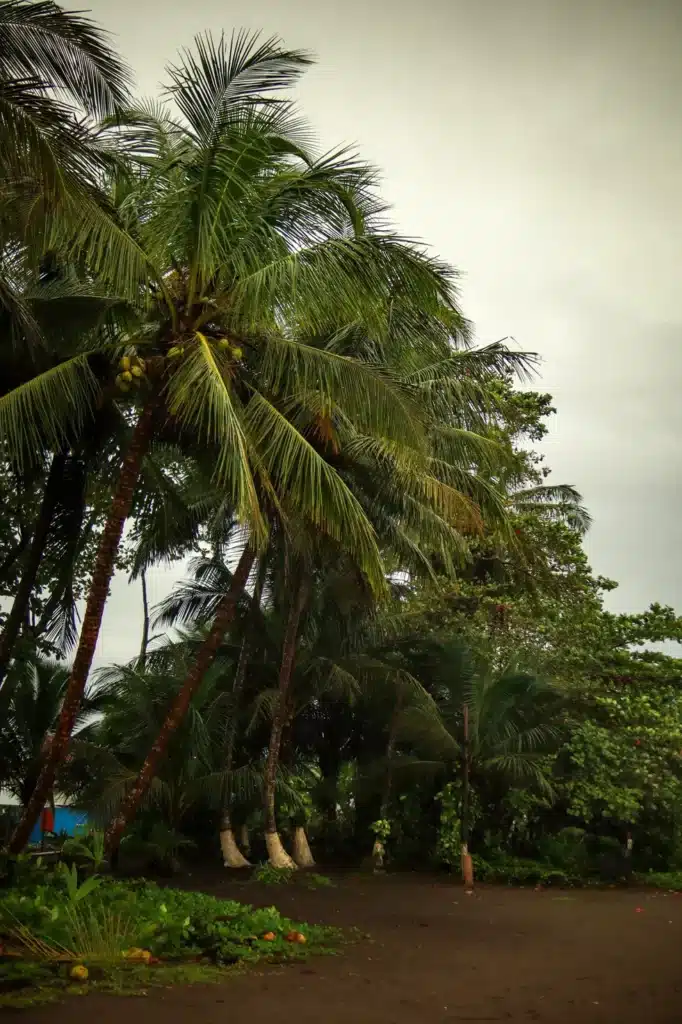

Wildlife is one of Tortuguero’s biggest highlights, and it doesn’t disappear with the rain. Monkeys, birds, caimans, sloths, and river life can be seen throughout the year. In fact, higher water levels during wetter months can make canal tours more active and interesting.
Turtle nesting season is a major draw. From July to October, green sea turtles come ashore to nest, with August and September usually being the peak months. Night tours during this period are carefully regulated, but they’re one of the most memorable things to do in Tortuguero.
Rain can also affect travel logistics. Boat services usually continue as planned, but heavy rain may cause small delays. Higher water levels often make the La Pavona boat ride faster, while more exposed routes like Moin can be impacted by rougher conditions.
Other practical trips
Traveling light makes a real difference in Tortuguero. Boats are small, planes even more so, and handling big suitcases quickly becomes annoying. A backpack or small soft bag is much easier to manage, especially when boarding boats or walking short distances in the village.
Waterproof luggage is also important. If it rains, and it often does, everything can get wet fast. Boats aren’t fully sealed, and water can splash in during the ride. A dry bag or waterproof backpack cover can save you a lot of stress.
Also, if you’re prone to motion sickness, bring something for that too. Boat rides are usually calm, but rain and wind can change conditions quickly.
Final thoughts
Getting to Tortuguero might look complicated at first, but once you understand the routes, it all makes sense.
The lack of roads is part of what keeps this place special. The boat ride, the canals, and the slow arrival already set the tone for what’s coming next.
When it comes to getting to Tortuguero, there’s no single best option for everyone. The right route depends on where you’re coming from, how much time you have, and how you like to travel.
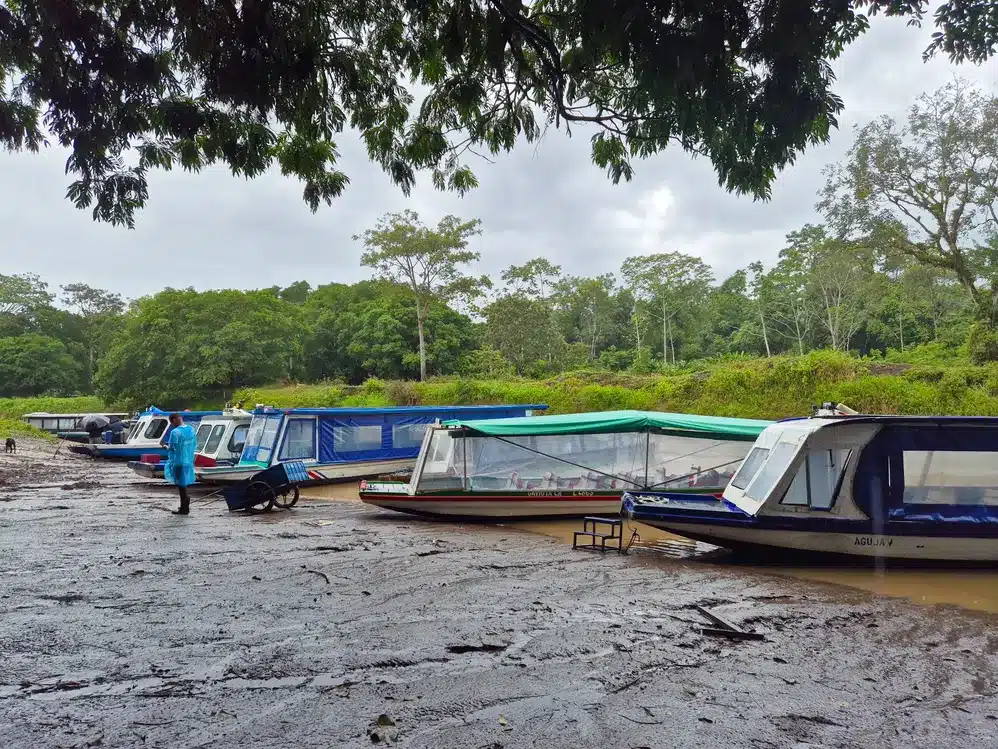
That said, if you’re unsure which option to choose, arriving by boat from La Pavona is the route I recommend. It’s the most reliable, works year-round, and is good value for money.
Have questions about your route? Or have you already made the trip and taken a different path?
Disclaimer: this post may contain some affiliate links, which means I get a small commission if you buy something through my links. This doesn’t represent any additional cost to you and you’ll be supporting my work here on the blog😊