

Are you feeling a bit overwhelmed trying to plan your trip and wondering which apps you need in China? Then you’re exactly where you should be.
I get it! Traveling to China isn’t like traveling anywhere else.
Not only do you have to figure out what to visit, where to stay, and how to get around, but you also have to deal with something most travelers don’t expect: many apps are banned in China. Think Google Maps, WhatsApp, Instagram, Gmail…yep, none of those work once you land.
That’s where this guide comes in. I’ll walk you through the exact apps you need in China for travel to make your life so much easier.

These apps helped me pay for meals, book train tickets, call taxis, order food, translate menus and much more.
Trust me… without them, I’d have been totally lost. With the language barrier and limited English spoken, not having the right apps would’ve made an already challenging trip feel impossible.
In this post, I’ll show you the most popular apps in China, explain what each one does, and share a few personal tips from my own experience so you don’t get stuck like I almost did.
You’ll also find practical advice on how to download them (even before you arrive), how they help with everyday travel needs, and why skipping them just isn’t worth the stress.
Let’s make your China trip smoother, easier, and a whole lot more enjoyable, one app at a time.
Quick Summary: Essential Apps You Need in China
1. WeChat – All-in-one app for messaging, mobile payments, booking DiDi, scanning menus, and more. You’ll use it constantly.
2. Alipay – Another must-have payment app. Great for metro rides, shopping, and as a backup if WeChat Pay doesn’t work.
3. DiDi – China’s version of Uber. Simple, affordable, and works with English input. Pay through Alipay or WeChat.
4. Amap – The best map app in China. Works in English and gives subway exit numbers and transit options.
5. Trip.com – Easiest way to book hotels, trains, tours, and attraction tickets in English. Super reliable.
6. 12306 – The official app for booking high-speed train tickets in China. Not user-friendly, but gets the job done.
7. Google Translate – A daily essential for translating signs, menus, and conversations. Don’t forget to download Mandarin offline.
8. Airalo – Buy an eSIM before landing so you’re connected the moment you arrive. Most plans come with VPN access.
9. VPN (like NordVPN) – Lets you access blocked apps like WhatsApp, Instagram, and Google. Install it before you arrive.
Apps you need in China
Before I dive into the apps you need in China, here’s something you really need to know: download them before you arrive.
Once you’re in China, some app stores, like the Google Play Store for Android users, won’t be accessible at all. So if you wait until you land, it might already be too late.

1. WeChat: the app you’ll use every day in China
If you only download one app before your trip, make it WeChat. Seriously, this is one of the must-have apps in China, and I used it every single day I was in the country.
WeChat isn’t just for messaging. You can use it to:
- Pay at restaurants, convenience stores, and even metro stations
- Book DiDi rides (China’s version of Uber)
- Buy attraction tickets, like for Zhangjiajie National Forest Park or the panda base in Chengdu
- Scan menus, order food, and pay without speaking a word
- Tap into city metro systems in places like Shanghai, Beijing or Chengdu
It’s truly one of the top apps in China, and locals rely on it for just about everything.
Before your trip, make sure to:
- Create your account and verify it (this sometimes takes time)
- Link your international card (Visa or Mastercard usually works). I linked my Revolut, for example.
- Enable WeChat Pay inside the app so you’re ready to go
Most of the interface is in Chinese, but there’s a built-in translation option. It works most of the time. When it didn’t, I took screenshots and used Google Translate on them, which helped a lot.
💡 EXTRA TIP: I installed WeChat on my family’s phones back home. That way, I could still text them if, by chance, WhatsApp with the VPN connection didn’t work for some reason.
Bottom line? WeChat is one of the most essential China travel apps you can have. Without it, everything from ordering lunch to getting a cab becomes way harder.

2. Alipay: your backup (and sometimes lifesaver) payment app
Just like WeChat, Alipay is one of the apps you need in China, especially when it comes to paying for, well, everything.
It works almost exactly the same way as WeChat Pay. You can:
- Scan a vendor’s QR code or let them scan yours
- Pay for food, transport, shopping, and even metro rides in many cities
- Link your international card (Visa or Mastercard) during setup
- Access in-app translation if you’re stuck on a Chinese-only screen
Honestly, during my trip, I either used WeChat or Alipay to pay for everything. And I mean everything, from buying dumplings on the street to hopping on the metro in Chengdu.
Here’s the thing: you could survive with just one, but I don’t recommend it. I had a few moments where WeChat Pay failed or took forever to load. I just pulled out Alipay and paid instantly. Having both apps saved me more than once.
💡 EXTRA TIP: Just like with WeChat, register and link your card before you land in China. It’ll save you a lot of hassle when you need to make that first payment straight from the airport.
If you’re wondering what apps you can use in China for contactless payments, this is one of the best. No cash. No stress. No awkward language barrier moments.

3. DiDi: the easiest way to get around without speaking Chinese
DiDi is basically China’s version of Uber, and honestly, I ended up using it a lot more than I expected. It’s affordable, convenient, and a total lifesaver when you’re trying to get across town without navigating a crowded metro.
Here’s why it’s one of the best apps for China travel:
- It works just like Uber: input your destination, get matched with a driver, and go
- You can pay seamlessly through WeChat or Alipay
- You can type your address in English
- It’s much cheaper than taxis in most cities
Even though you can also hail DiDi rides inside Alipay or WeChat, I still recommend installing the standalone DiDi app. That’s what I did, and I’m glad I did since it gave me access to more features, better control, and quicker access when one of the other apps was being slow.
💡 Helpful tip: Once you have the DiDi app, link your payment method (either Alipay or WeChat) for fast, cash-free rides.
If you’re covering longer distances, especially in cities where public transport is limited or confusing, DiDi will quickly become your go-to. It’s one of those tools that makes everything feel way easier, even when language is a barrier.

4. Amap: the best map app in China that actually works
Google Maps doesn’t really work in China. While it technically opens, it’s unreliable, hard to use, and rarely gives you proper info like subway routes or exit numbers. That’s where Amap comes in.
If you’ve never used it before, you can check how to use Amap in China to understand how it works.
After trying a few options, I can confidently say Amap is the best map app in China, especially for travelers. Here’s why I loved it:
- It works in both big cities and smaller towns, I used it in Shanghai, Beijing, Fenghuang, and even Furong
- The app shows public transport options, including which subway exit to take (which saved me so much time)
- There’s an English version, so it’s way easier to search for restaurants, shops, or attractions
- It also gives good suggestions for nearby places to eat or grab coffee, better than Google ever did
If you’re looking for the best maps app for China in English, this is it. I opened it constantly to figure out which bus or metro line to take. And trust me, when you’re trying to find the right subway exit in a massive station, having this info makes a huge difference.
Among all the China travel apps, Amap quietly became one of the most useful ones on my phone.
💡 EXTRA TIP: All the apps mentioned above (ike WeChat, Alipay, DiDi, and Amap) don’t require a Chinese phone number to sign in, which makes setting them up way easier.
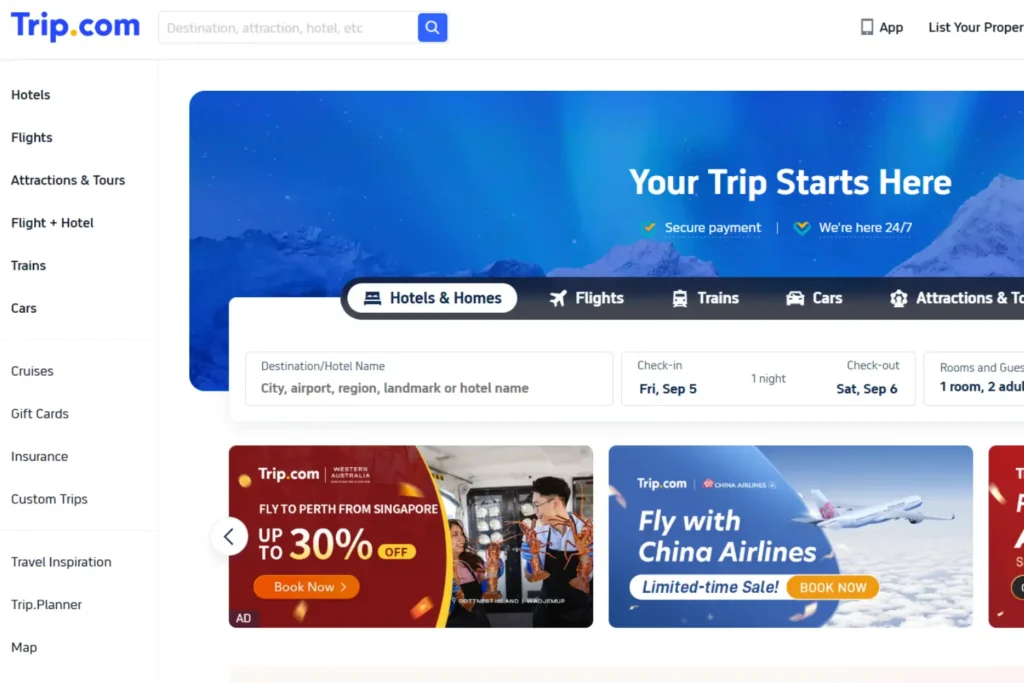
5. Trip.com: your go-to app for booking hotels, trains, and tickets in English
If you’re looking for one app to handle your bookings in China, Trip.com is it. It quickly became one of my favorite apps for my trip planning to China, especially when I needed to book things without wrestling with apps entirely in Chinese.
Here’s what makes it a lifesaver:
- The app and website are fully in English
- You can book hotels, trains, tours, and attraction tickets in just a few taps
- It’s easy to use, fast, and way less frustrating than trying to book through WeChat or other Chinese platforms
Even though I usually book hotels through Booking.com, I found Trip.com sometimes had more options, especially in less touristy towns. I actually ended up booking a few stays there when Booking didn’t have much available.
When it comes to attraction tickets, yes, you can try to book them on WeChat… but honestly? It’s a headache. It’s rarely intuitive, and it’s almost always in Chinese. With Trip.com, I could search, pay, and confirm in under two minutes, no translating screens or guessing buttons.
The same goes for train tickets. While there’s an official train booking app (12306), it’s not the easiest to use, and it doesn’t always work. Trip.com not only makes it easier to book trains, but you can also ask them to secure tickets in advance, even before they go on sale. There’s no guarantee, but it gives you a better shot at grabbing a seat during busy times.
Sometimes there’s a small commission fee when booking through Trip.com. But honestly? It’s worth the extra cost just to skip the hassle, especially if you’re short on time or patience.
6. 12306: the official (but clunky) railway app for China
12306 is the official app for booking high-speed train tickets in China. It’s legit, reliable, and used by millions of locals. But it’s not exactly user-friendly.
The app is entirely in Chinese, and even after switching your phone language to English, most of the interface still stays untranslated. You can book tickets through it, but you’ll need a lot of patience to figure it out at first.
That said, once you get the hang of it, it does work. I managed to book a few train rides through it after a bit of trial and error. But if you’re short on time or don’t feel like dealing with a confusing interface, I’d honestly just use Trip.com instead.
Still, for those who want to book trains directly through the official system, 12306 is the way to go. Just prepare for a learning curve.
7. Google Translate: your daily lifeline for communication in China
Let me be real with you: most people in China don’t speak English. And I don’t mean limited English. I mean zero English, especially once you step outside major cities like Shanghai or Beijing.
That’s why Google Translate became one of the tools I relied on the most. I used it every single day: to ask questions, read restaurant menus, talk to hotel staff, and much more.


Here’s why it’s so helpful:
- You can type or speak what you want to say and show it to the other person
- It has a camera feature that translates menus, signs, and documents instantly
- It’s fast, simple, and honestly saved me in situations where I had no idea what was going on
💡 EXTRA TIP: Download Mandarin for offline use before your trip. You’ll thank yourself the first time you lose signal and still need to translate something.
Out of all the must-have apps in China, this one is a no-brainer. It helped me feel less helpless when the language barrier got tough and it will absolutely do the same for you.
8. Airalo: the easiest way to stay connected in China (with built-in VPN!)
Your trip to China is going to be very smartphone-dependent. Between paying for things, translating menus, booking transport, and finding your way around, you’ll be glued to your phone more than usual. So staying connected at all times is essential.
One of the easiest and most reliable ways to stay online is by using the Airalo app to purchase an eSIM before you arrive in China. That way, the second you land, you’re already connected.
💡 Use my promo code MARIAN4315 at checkout to get a 3 USD discount on your first eSIM!
Here’s why I recommend Airalo:
- They offer different plans based on how long you’re staying and how much data you need
- Installation is quick and easy through their app (even for non-techy people)
- The plans also come with built-in VPN access, so you’ll be able to use blocked apps like Instagram, WhatsApp, Facebook, and even Google
9. VPN: access your favorite apps and stay safe on public Wi-Fi
Even if you get an eSIM, there might be moments when you’re saving data and relying on your hotel’s Wi-Fi. That’s when having a VPN becomes super helpful, especially if you still want to access your usual apps like WhatsApp, Instagram, or Gmail, which are all blocked in China.
A VPN also helps you stay safer on public networks, which is important if you’re using hotel or café Wi-Fi for bookings, payments, or personal messages.
I personally recommend NordVPN. It’s fast, reliable, and super easy to use. Just make sure to install it before landing in China, because VPN websites and apps are also blocked once you’re there.
Other China travel apps that might come in handy
While the apps above are the main ones you’ll use every day, there are a few other China travel apps that might be useful depending on your travel style or needs.
Here are a few extras worth knowing about:
- Baidu Maps – Another popular local maps app. It’s often compared to Amap, but personally, I found Amap more intuitive and helpful.
- MetroMan – This one’s great if you’re mostly sticking to major cities with metro systems like Shanghai or Beijing. It helps plan subway routes and can even show you ticket prices and estimated travel time. I had it downloaded, but honestly, Amap handled all my metro planning just fine, so I didn’t end up using it.
- Meituan – Useful for food delivery, laundry services, and even bike rentals. It’s widely used by locals, but you’ll probably need some Chinese to get the most out of it.
- Dianping – Kind of like Yelp for China. It’s packed with local reviews for restaurants, cafés, and street food, and often includes photos and pricing info. I downloaded it thinking I’d use it all the time… but to be honest, I didn’t open it once.
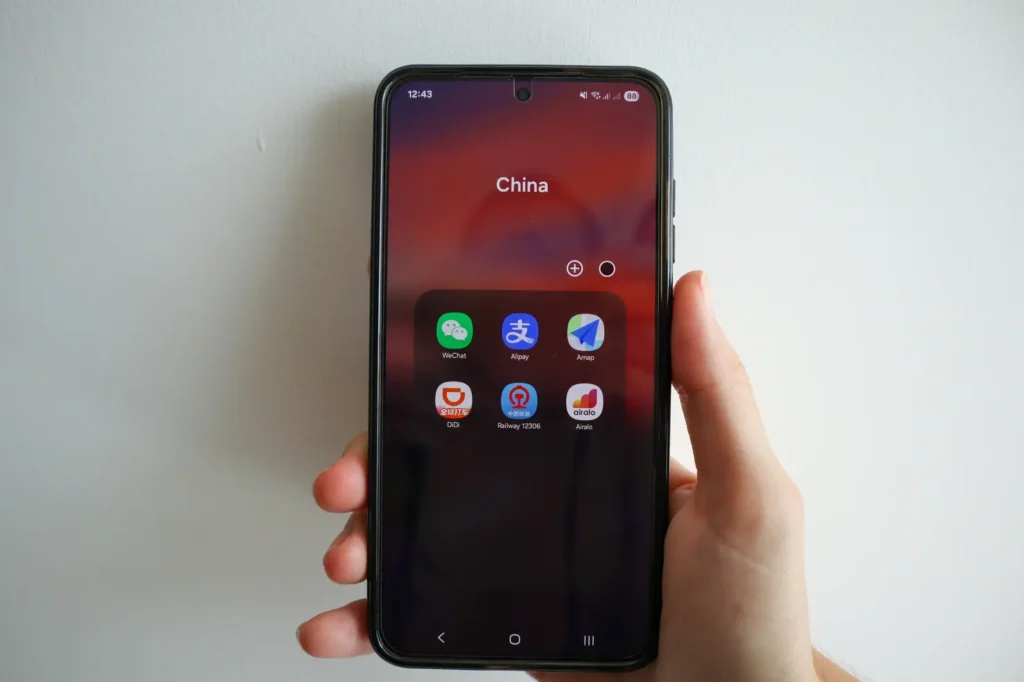
These aren’t must-haves like WeChat or Alipay, but they’re nice to have on your phone, just in case. Especially if you’re staying longer, or planning to explore like a local.
Frequently Asked Questions
» Can I use WhatsApp, Facebook, or Instagram in China?
No, you can’t access WhatsApp, Facebook, Instagram, or other Western social media platforms in China without a VPN.
These apps are blocked by China’s internet restrictions (also known as the Great Firewall). If you want to stay connected with friends and family using these apps, you’ll need to install a reliable VPN before arriving in China. Otherwise, the apps won’t load at all.
As an alternative, most travelers and locals use WeChat for messaging and social sharing within China.
» Which payment app is better for tourists: WeChat Pay or Alipay?
Both are widely accepted, but Alipay tends to be slightly more tourist-friendly.
The setup process is usually quicker, and the app interface is easier to navigate in English. That said, some places accept only WeChat Pay, especially small vendors or taxi drivers.
I recommend setting up both. That way, if one fails or isn’t accepted, you always have a backup. You’ll use these apps daily in China, so it’s worth having both ready before you land.
» Do I need a Chinese bank account to use WeChat Pay or Alipay?
No, you don’t need a Chinese bank account to use either WeChat Pay or Alipay as a tourist. Both apps now support foreign credit and debit cards, making it possible for international travelers to make payments without a local bank account.
You just need to create an account, verify your identity, and link your card. However, not all foreign cards work smoothly, so it’s smart to have both apps installed just in case one gives you trouble.
Final thoughts on the must-have Apps in China
Traveling in China is an incredible experience, but it definitely comes with its own set of challenges. Between the language barrier, blocked Western apps, and a completely different digital ecosystem, being prepared is key.
That’s why having the apps you need in China downloaded before your trip can make all the difference.


From paying for your bubble tea to translating a street sign to booking a train across the country, these apps will help you do it all, easily and stress-free. You don’t need every single one, but the more you have ready, the smoother your trip will be.
Already traveled to China? Have questions about which app works best for your itinerary?
Disclaimer: this post may contain some affiliate links, which means I get a small commission if you buy something through my links. This doesn’t represent any additional cost to you and you’ll be supporting my work here on the blog😊