
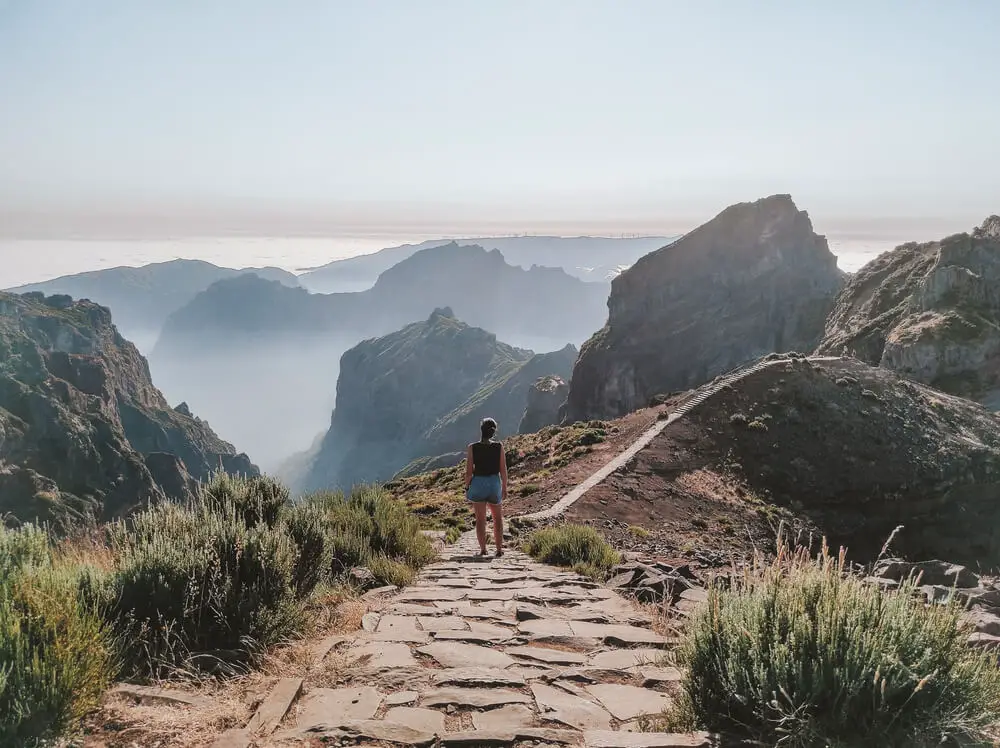
If you’re looking for the perfect Madeira 6-day itinerary, then you’re in the right place.
While Madeira may seem like a relatively small island, deciding what to include in your trip is not always easy. Between scenic viewpoints, waterfalls, hiking trails, natural swimming pools, charming villages, and dramatic coastal roads, there’s a lot more to see than most people expect.
Before my trip, I was convinced I could easily see Madeira in 3 or 4 days. I couldn’t have been more wrong. After spending 6 days in Madeira, I quickly realized the island deserves much more time, especially if you want to experience more than just Funchal.
What surprised me most about Madeira was the variety. In a single trip, you can hike mountain trails in the morning, stop at breathtaking viewpoints, relax at a black sand beach, swim in natural pools, and finish the day eating some seriously good food. Honestly, Madeira completely exceeded my expectations.
That’s exactly why I put together this detailed Madeira itinerary based on my own experience exploring the island. In this guide, I’ll share a realistic day-by-day route, practical travel tips, maps for each day, where to stay, and how to make the most of your time on the island without constantly feeling rushed.
And because not everyone has the same amount of time available, I’ll also include ideas for shorter and longer itineraries, so you can easily adapt this route whether you have fewer or extra days.
If you’re still planning your trip, don’t forget also to check out my guides about Madeira:
- What to do in Funchal: a complete guide to Madeira’s capital, including the best places to visit, restaurants, viewpoints, and a one-day itinerary in Funchal.
- What to eat in Madeira: discover the traditional dishes and drinks you shouldn’t miss, from bolo do caco and espetadas to poncha and Nikita.
- Best hiking trails in Madeira: my favorite levadas and veredas on the island, including practical tips, difficulty levels, and what to realistically expect from each trail.
Quick Madeira Guide
📍 Top places to visit in Madeira: Câmara de Lobos | Ponta do Sol | Seixal | Porto Moniz natural pools | Ponta de São Lourenço | Pico do Areeiro | Santana | Funchal | Hiking trails
🚗 Getting around Madeira: Renting a car is the best way to explore the island and make the most of this Madeira road trip. Many viewpoints, hiking trails, villages, and natural swimming pools are spread across the island and public transport is limited.
📅 Best time to visit Madeira: April to early November for hiking trails, beaches, and natural swimming pools
🌿 Most popular tours in Madeira
1. Sunset sailing cruise from Funchal
2. Food tour in Funchal
3. Northern Wonders Jeep Tour
4. Funchal Old Town Walking Tour
5. Pico do Areeiro to Pico Ruivo guided hike
😴 Where to stay in Madeira: Funchal | Câmara de Lobos | Ponta do Sol | Porto Moniz | Seixal
💊 Best travel insurance for Portugal: I recommend Heymondo for its excellent balance between affordability and quality.
🛜 Best way to stay connected in Portugal: If your phone supports eSIM, use Airalo (MARIAN4315 = 3$ off). Otherwise, get a MEO, NOS or Vodafone SIM.
💰Currency in Portugal: The local currency is the Euro (€) and I recommend using Revolut to save on conversion fees.
Is Madeira worth visiting?
After visiting Madeira, I genuinely think it’s one of the most beautiful and underrated destinations in Europe.
What makes Madeira so special is the variety. In a single trip, you can hike dramatic mountain trails, swim in natural swimming pools, stop at scenic viewpoints, and even relax at a black sand beach.
One of the things I liked most was how much the landscapes change from one part of the island to another. You can go from misty mountains to sunny coastal towns in less than an hour.
As a Portuguese, I honestly still don’t know how it took me so long to finally visit Madeira. And now that I’ve been, I can’t stop thinking about going back to explore even more of the island.
Honestly, Madeira ended up exceeding my expectations and is one of those places I’d happily return to again.
How to get to Madeira?
Getting to Madeira is quite easy, with Madeira Airport (Funchal Airport) receiving direct flights from several European cities throughout the year. Airlines such as Ryanair, easyJet, TAP Air Portugal, British Airways, Lufthansa, and others operate regular routes to the island.
If you can’t find direct flights from your country, a good alternative is to first fly to Lisbon or Porto, as both cities have several daily direct flights to Madeira.
If you book in advance, it’s often possible to find fairly affordable fares, especially outside the peak summer season.
Madeira’s main airport is located in Santa Cruz, around a 20-minute drive from Funchal and well connected to the rest of the island.
Once you land, you can either pick up a rental car (my personal recommendation for exploring Madeira) or opt for the Aerobus, taxi, Uber/Bolt, or a private transfer, especially if you’re planning to stay in Funchal and join organized tours around the island instead of driving yourself.
🚗 Planning a Madeira road trip? I highly recommend renting a car. Many of Madeira’s best viewpoints, hiking trails, villages, natural swimming pools, and beaches are spread across the island, and having your own car gives you much more flexibility to explore at your own pace.
That said, Madeira’s roads can be steep and winding in some areas. If you’re not comfortable driving mountain roads, staying in Funchal and joining guided tours can also work well for a first trip.
Accommodation in Madeira
Many tourists choose Funchal as their only place for accommodation for all their days on the island. However, and to avoid wasting some driving time, it may make sense to change accommodations along the way.
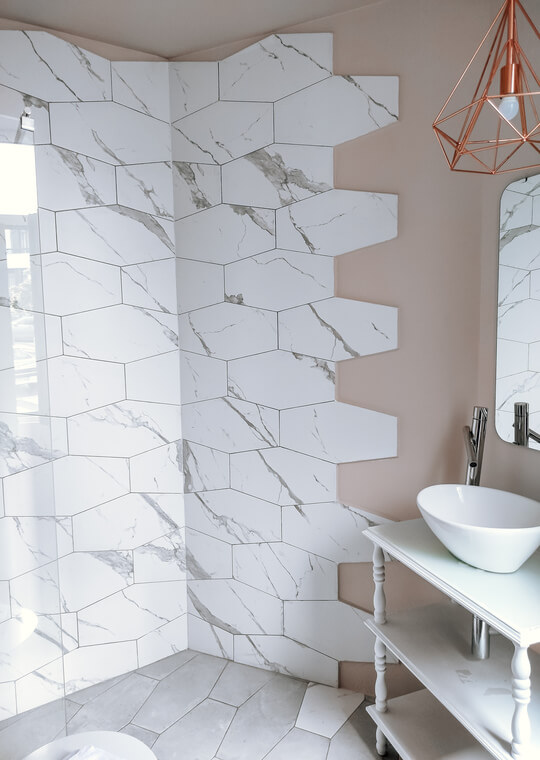
Even though Madeira is relatively small, if you can save yourself some extra driving time and avoid unnecessary trips back to Funchal, it’s definitely worth considering.

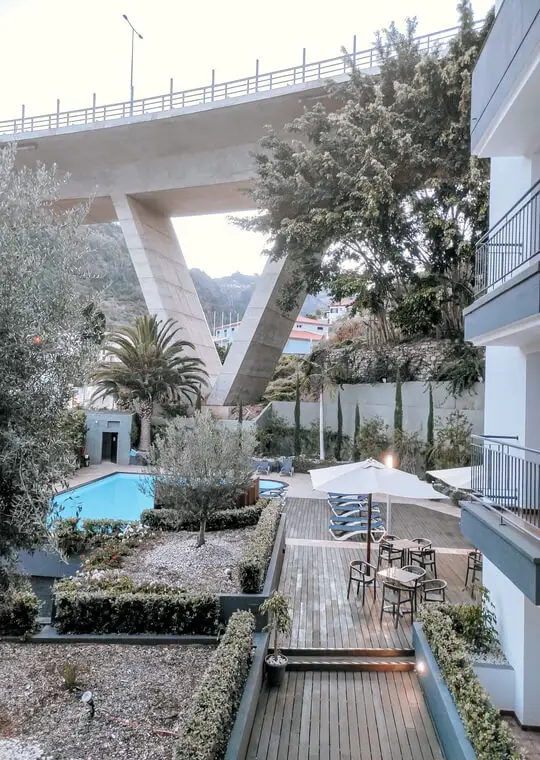
In my case, I stayed in Santa Cruz (5 minutes drive from the airport) on my first night on the island, from where I went to Porto Moniz (2 nights) and from there to Funchal (3 nights).
If you want to save some time you should try splitting the stays through the Southern part of the island (Funchal, Câmara de Lobos, Ponta do Sol) and the North (Porto Moniz, Seixal, Santana) part of the island.
These were the accommodations I chose and personally recommend:
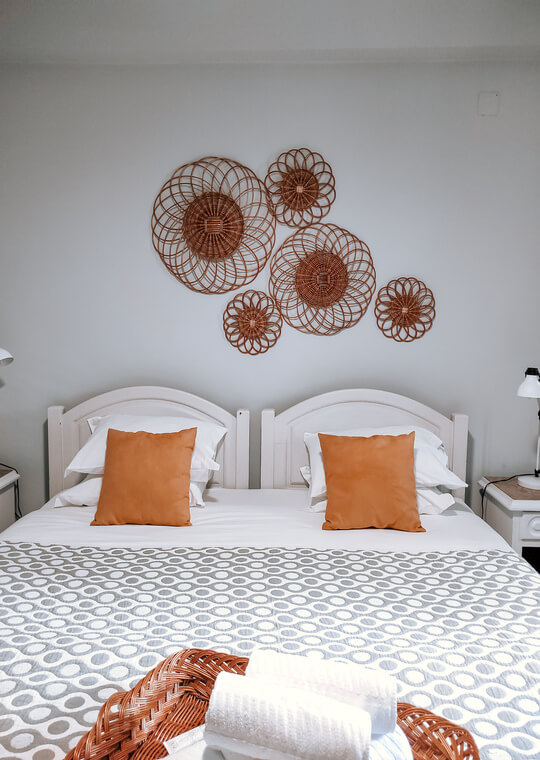
- [Santa Cruz] Santa Cruz Village Hotel: A modern hotel with excellent facilities and very friendly service. The room was incredibly spacious, easily one of the biggest I’ve stayed in. The only small downside was breakfast, which felt a bit limited in variety.
- [Porto Moniz] Costa Azul: flats located less than 5 minutes walk from the natural swimming pools of Porto Moniz. The flat was huge, equipped with a kitchen, two bathrooms and a living room. The conditions are more modest, but it was just fine.
- [Funchal] ASPA Studios: fully refurbished flat in an older building. Breakfast was served outdoors and included a varied selection of food that changed throughout our stay.
💼 TRAVEL INSURANCE: It’s one of those things you hope you won’t need… but it can save you a lot of money and stress if something goes wrong.
I personally use Heymondo because it offers strong coverage at a reasonable price, including medical expenses, lost luggage, and electronics.
What I like most is how easy it is to manage everything through their app, especially if you ever need assistance while traveling.
As a Ticket to Take Off reader, you get 5% off, already applied when booking through the link below.
Activities & tours in Madeira
🎫 Don’t leave your activities until the last minute. Some of the most popular tours sell out quickly, especially during peak season. I personally use GetYourGuide to book activities because it’s easy to compare options and most tours offer free cancellation. Use code ATICKETTOTAKEOFF5 for 5% off your first booking in the app. Download here!
Madeira 6-day itinerary: day-by-day breakdown
To help you make the most of 6 days in Madeira, I’ve put together a realistic and easy-to-follow Madeira itinerary based on my own experience exploring the island.
This route combines scenic viewpoints, amazing towns, some of the best hiking trails in Madeira, waterfalls, coastal roads, natural pools, and some of Madeira’s most beautiful landscapes, while trying to avoid too much backtracking.
To make planning easier, I’ll also include a map for each day, so you can quickly understand the route I recommend and see how the stops fit together.
Here’s a quick overview of the itinerary:
- Day 1: Câmara de Lobos – Cabo Girão – Fajã dos Padres – Ribeira Brava – Ponta do Sol – Anjos Waterfall – Paúl do Mar – Ponta do Pargo Lighthouse – Porto Moniz
- Day 2: 25 Fontes/Risco Trail – São Vicente – Seixal – Ribeira da Janela – Fanal
- Day 3: Alecrim/Lagoa do Vento Trail– Ponta Delgada – São Jorge – Santana
- Day 4: Ponta do Garajau – Ponta de São Lourenço – Porto da Cruz – Balcões Trail – Curral das Freiras – Pico do Areeiro
- Days 5 & 6: Explore Funchal, Madeira’s capital
Day 1 in Madeira
» Câmara de Lobos
I think Câmara de Lobos is an excellent place to start your Madeira trip. It’s one of those places that quickly gives you a taste of the island’s dramatic scenery and colorful fishing villages.
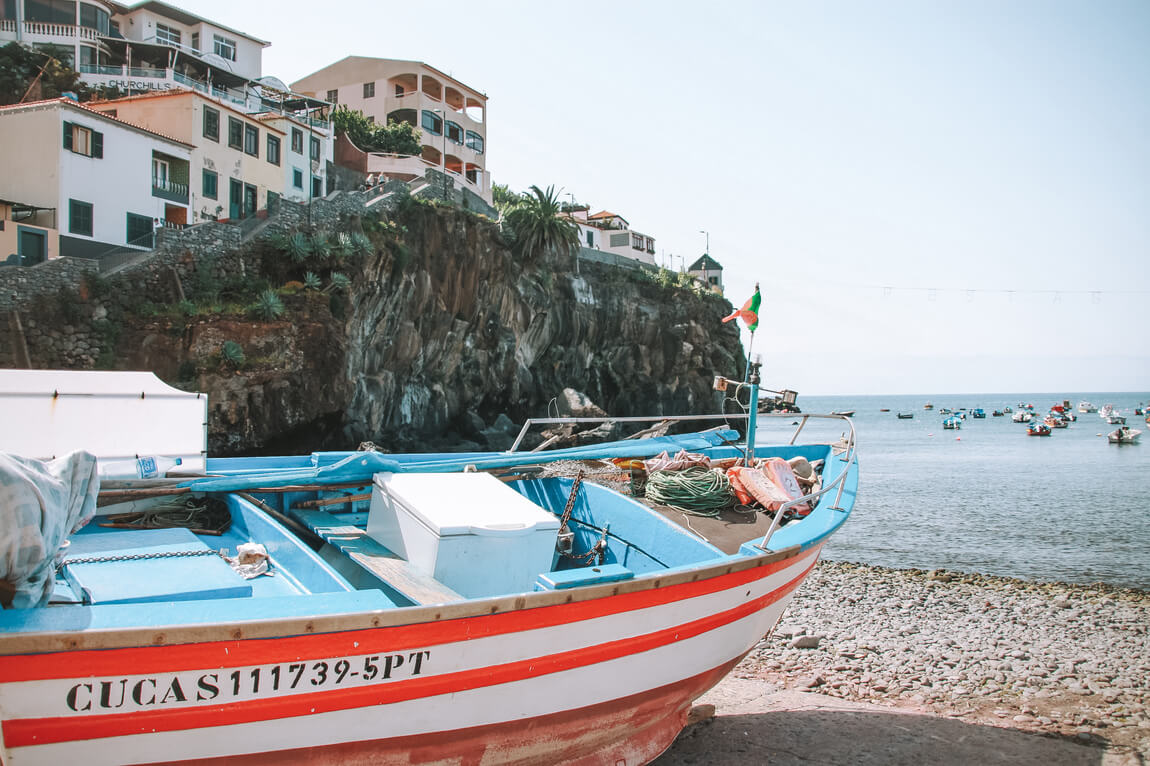
Start with a walk along the bay, where sea lions were reportedly spotted when Madeira was first discovered. Then, make sure to stop by Nossa Senhora da Conceição Chapel and São Sebastião Church, two of the town’s main landmarks.
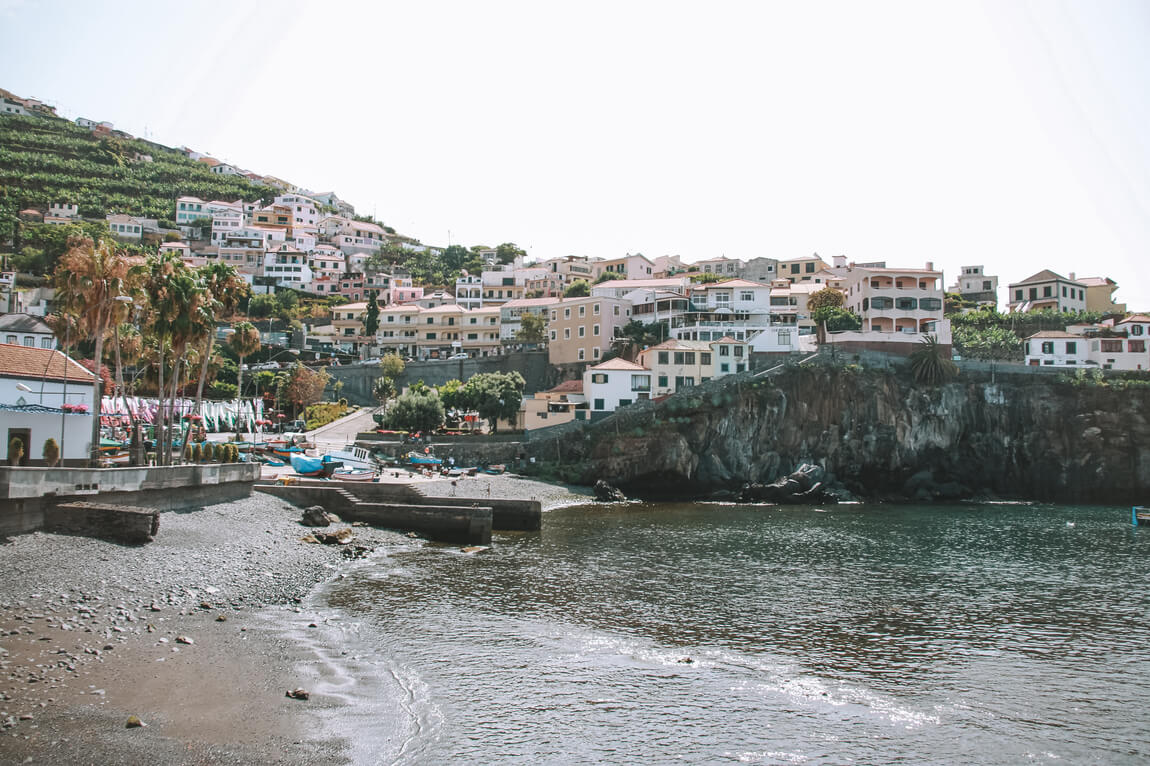
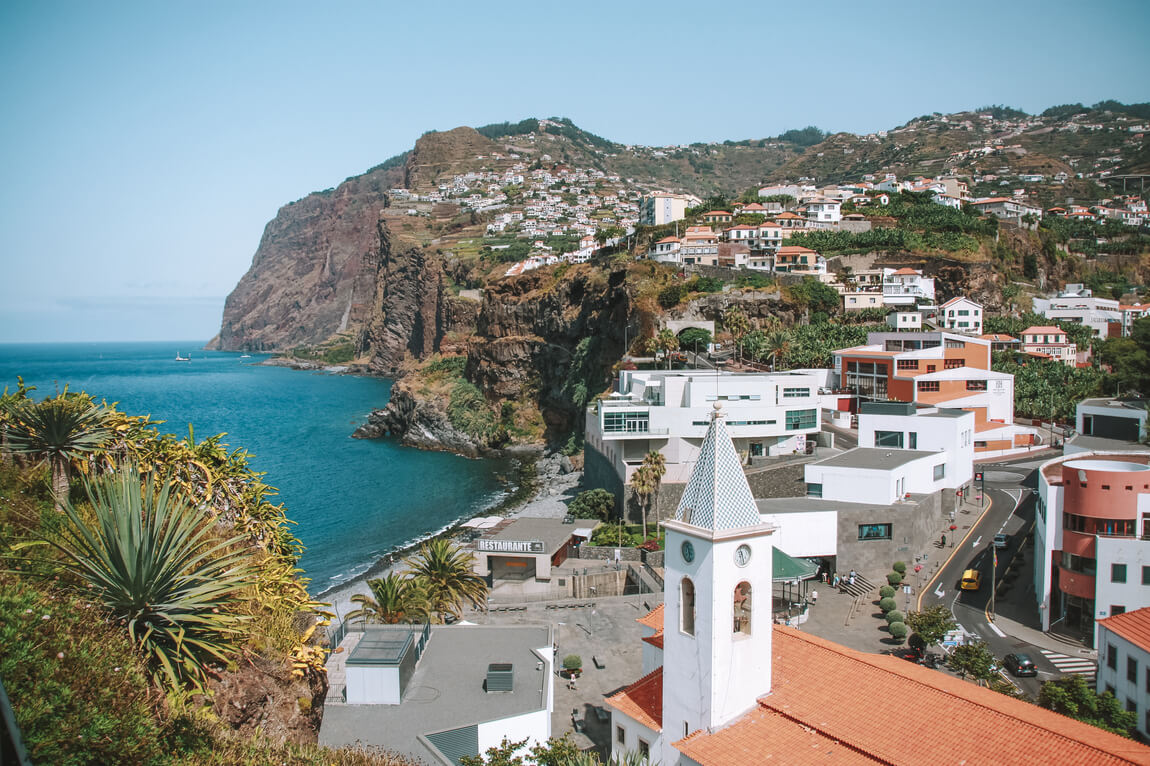
To enjoy some of the best views, I also recommend heading up to Ilhéu de Câmara de Lobos and stopping at Salão Ideal Viewpoint.
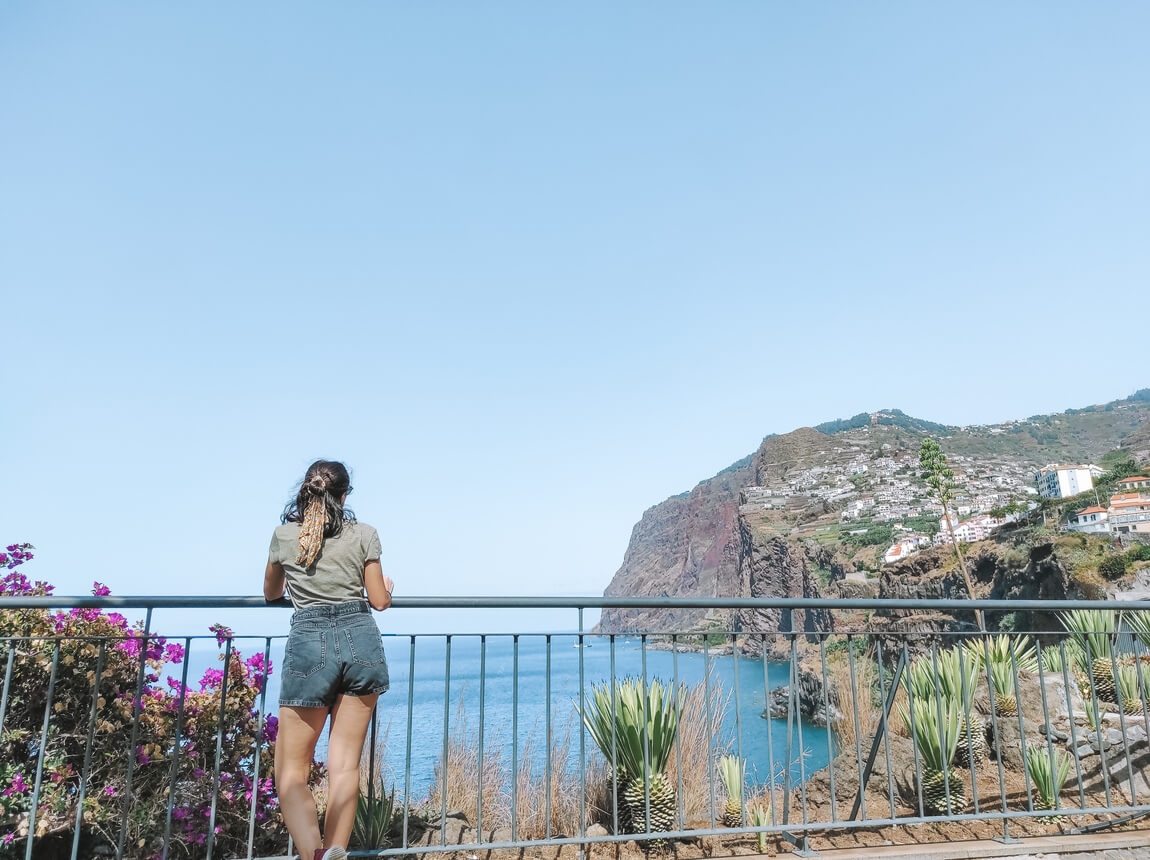
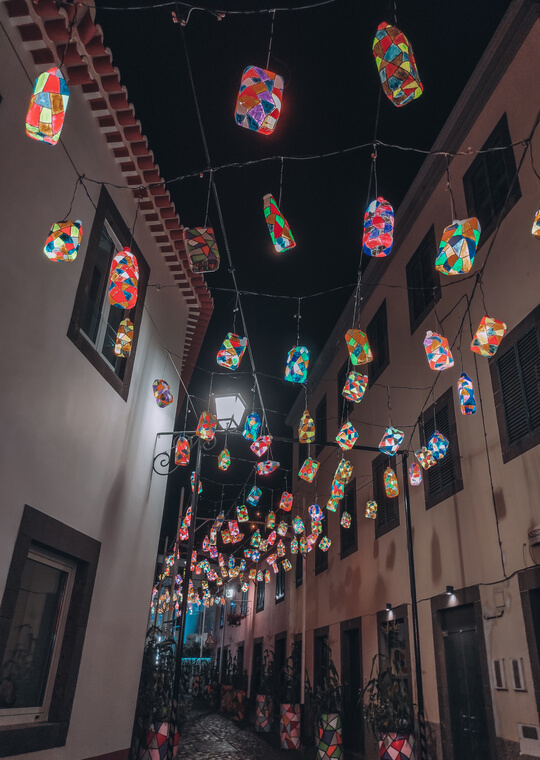
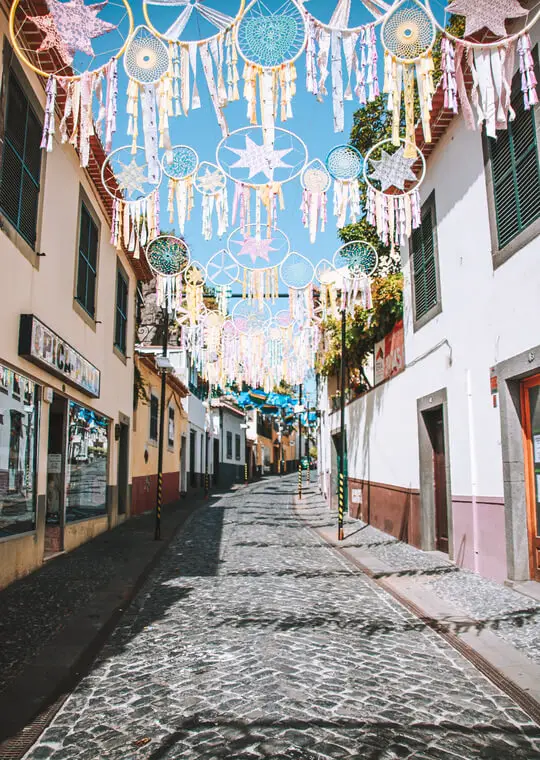
One of the best things to do here is simply wander around without much of a plan. Câmara de Lobos has a very pleasant atmosphere (especially at night), with colorful boats, small streets, local bars, and plenty of street art.
If you have time, this is also a great place to stop for a coffee or even try a poncha, one of Madeira’s most famous drinks.
» Cabo Girão
One of the most famous places in Madeira, Cabo Girão is the highest sea cliff in Europe at 580 metres (1,900 ft) and one of the island’s most iconic viewpoints.
The main attraction here is the glass skywalk platform, suspended above the cliff.
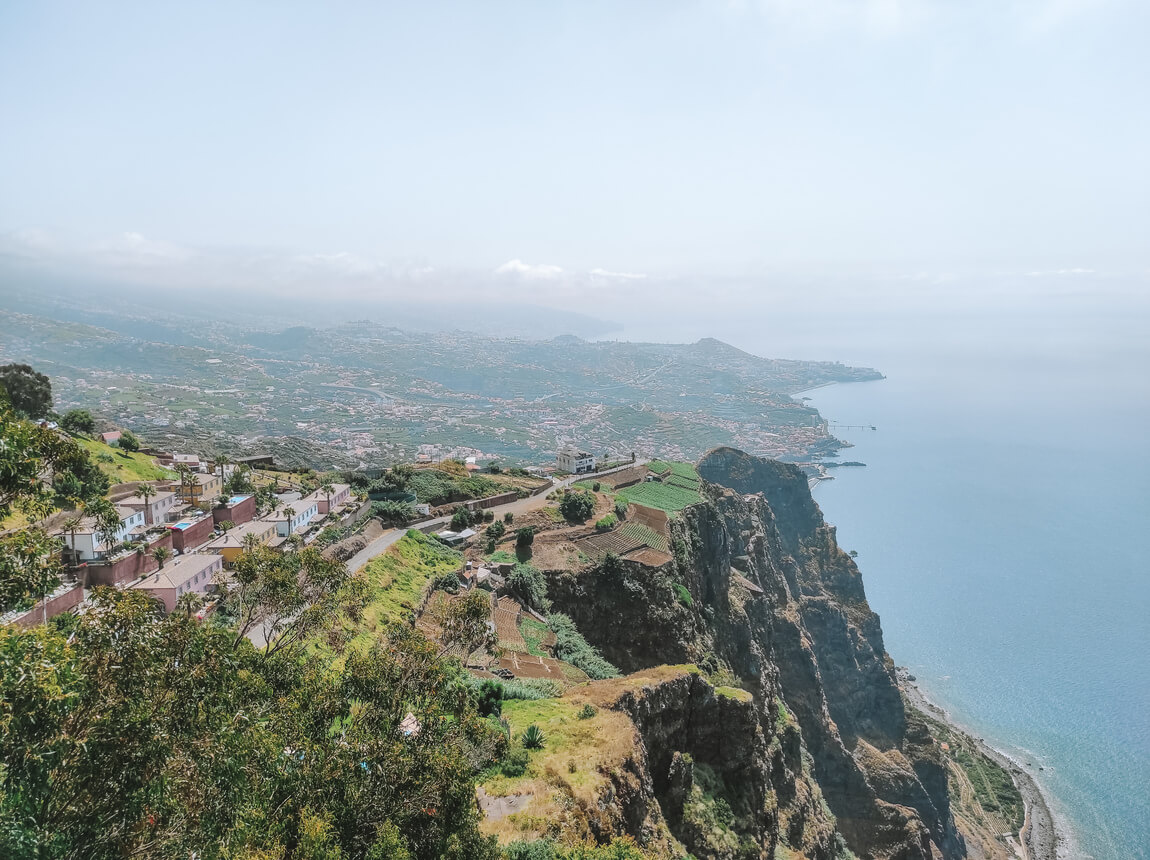
I’ll be honest, I expected the platform itself to be bigger, but the views are absolutely worth the stop. From here, you’ll have incredible views over Fajã do Rancho, the coastline, and the Atlantic Ocean.
Personally, I don’t think you need a huge amount of time here. Around 20 to 30 minutes is usually enough to enjoy the viewpoint and take some photos before continuing your Madeira road trip.
📝 USEFUL INFORMATION: Cabo Girão is open daily from 8 am to 8 pm. Entry costs 5€ (5.9 USD) per visitor over 12 years old. Tickets must be purchased in advance through Madeira’s official SIMplifica portal, especially during busier periods.
» Fajã dos Padres
Fajã dos Padres is also one of the most famous places on the island and, in my opinion, well worth the detour.
Completely isolated and only accessible by boat or cable car, this small coastal area feels very different from the rest of the island. Once you arrive, you can either relax by the beach, walk around the subtropical plantations, or simply enjoy the peaceful atmosphere.
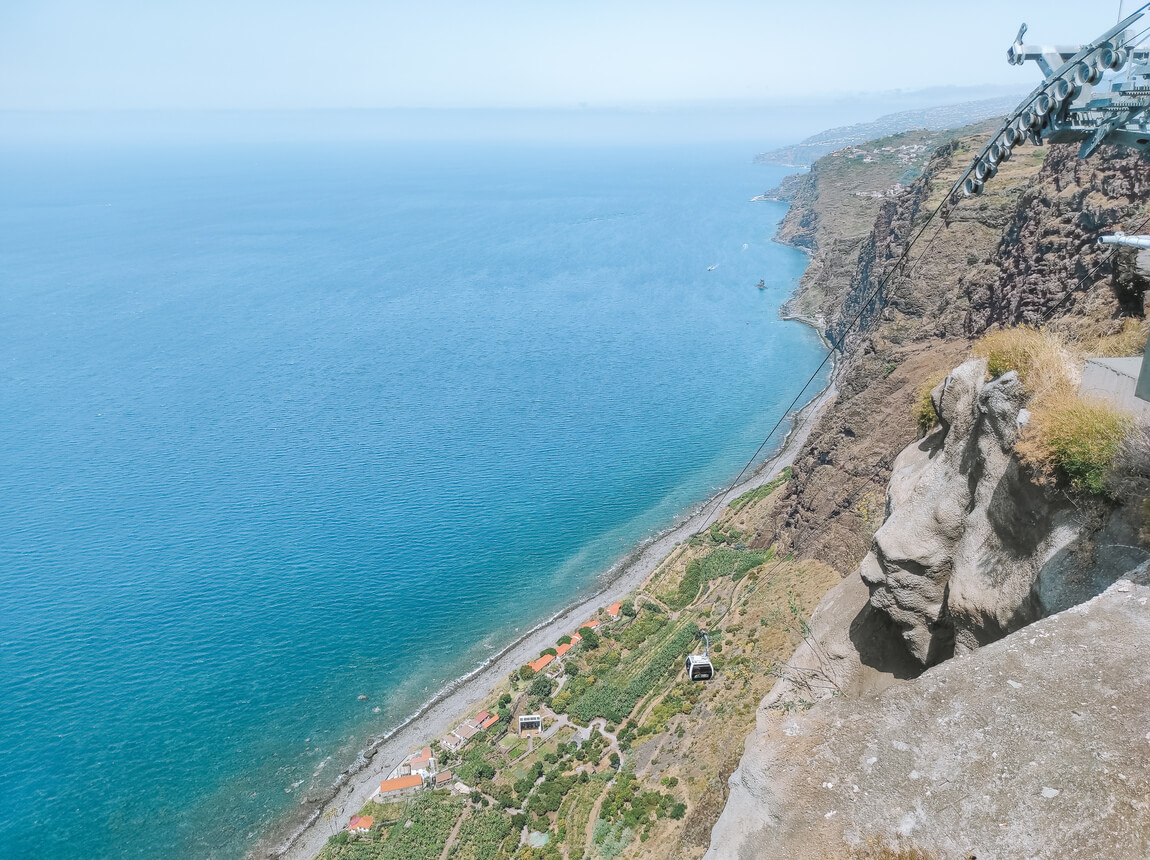
There’s also a restaurant on-site, which makes this a nice stop for lunch if you want to slow down for a bit.
The cable car ride itself is quite steep and can feel a little vertigo-inducing, although it only lasts around 3 minutes.
📝 USEFUL INFORMATION: The cable car runs from 10 am to 7 pm (6 pm in winter) and costs 12€/ 14 USD (round trip). Check out the most up-to-date information.
» Ribeira Brava
Ribeira Brava may not have as many attractions as other towns in Madeira, but I still think it’s worth a short stop, especially because of its relaxed atmosphere and pretty waterfront.
Start with a short walk along the promenade near Ribeira Brava Beach, then visit the town’s two main landmarks:
- São Bento Fortress Ruins (currently the Tourist Office)
- São Bento Church (located in a very pleasant square)
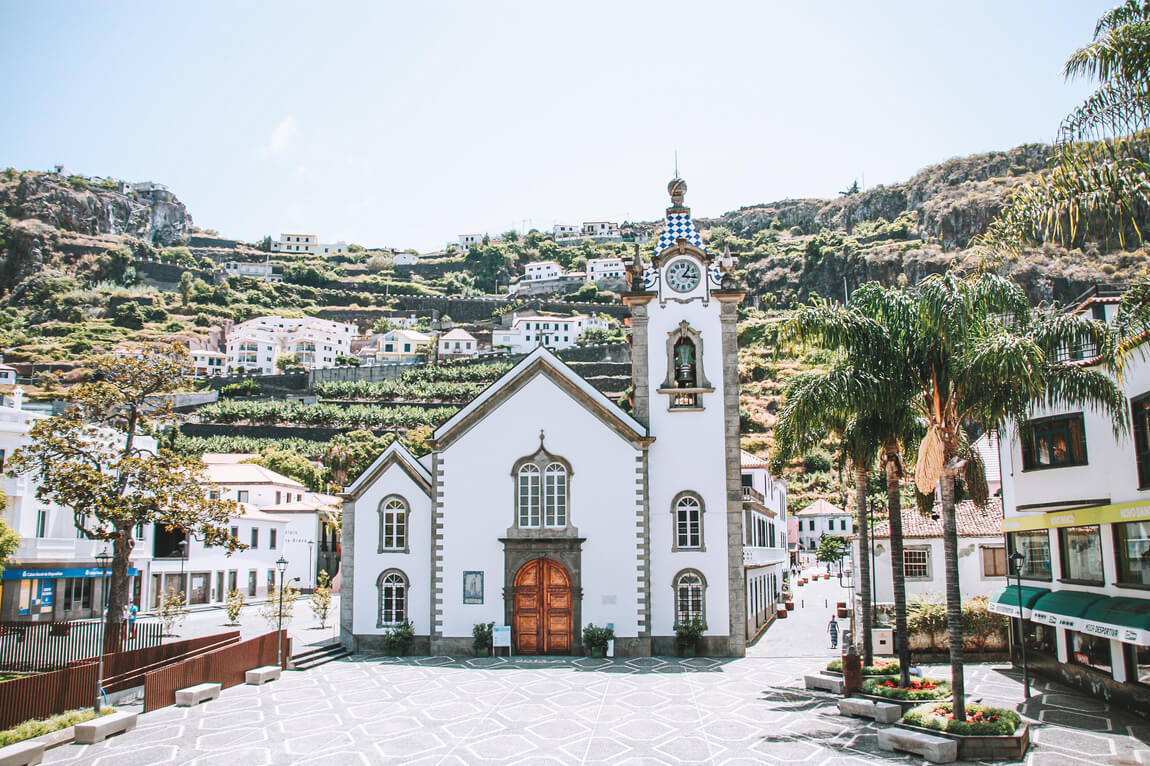
💡 EXTRA TIP: If you are travelling from Ribeira Brava to Ponta do Sol, stop at Cascalho Viewpoint for panoramic views over Ribeira Brava.
» Ponta do Sol
Ponta do Sol, which literally translates to “Point of the Sun”, is known for being one of the sunniest and warmest places in Madeira. With its relaxed atmosphere, colorful buildings, and waterfront setting, it’s the kind of place that immediately makes you want to slow down.
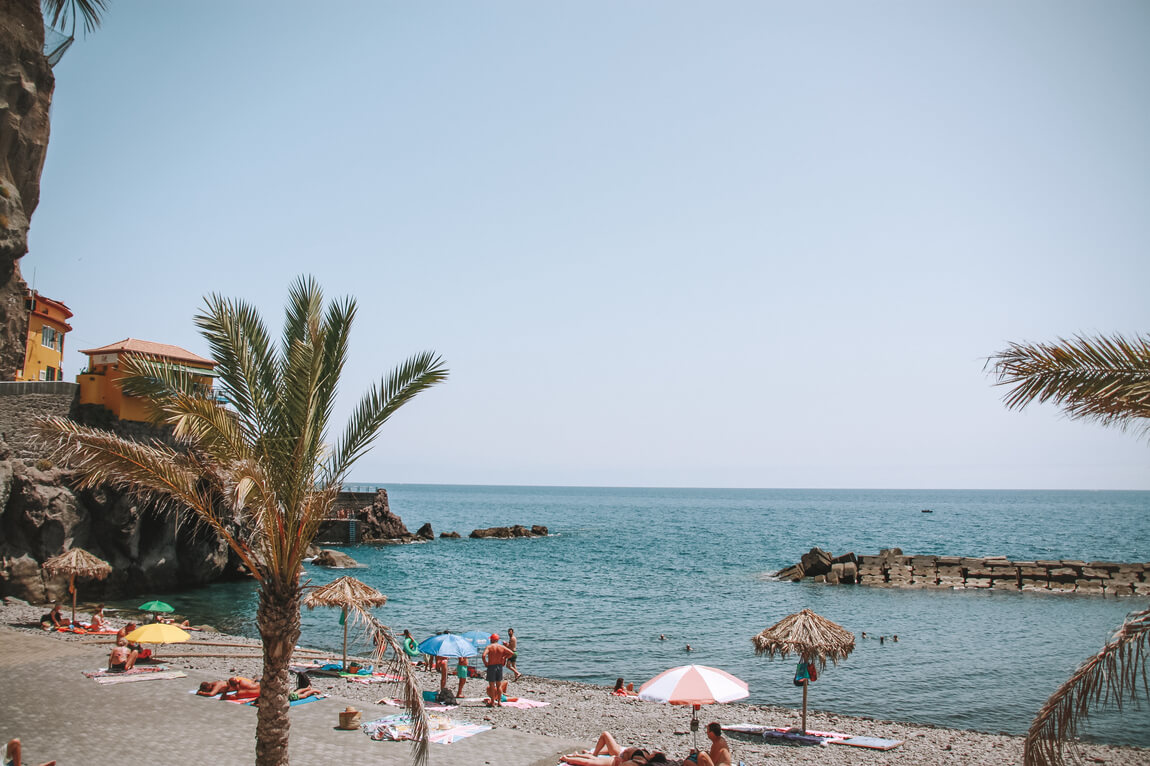
I’d recommend taking some time to wander through the small center and enjoy the seaside promenade. If you’re visiting around lunchtime, this is also a great stop for a meal with a view. Personally, I really enjoyed lunch at Maré Alta, a beachfront restaurant.
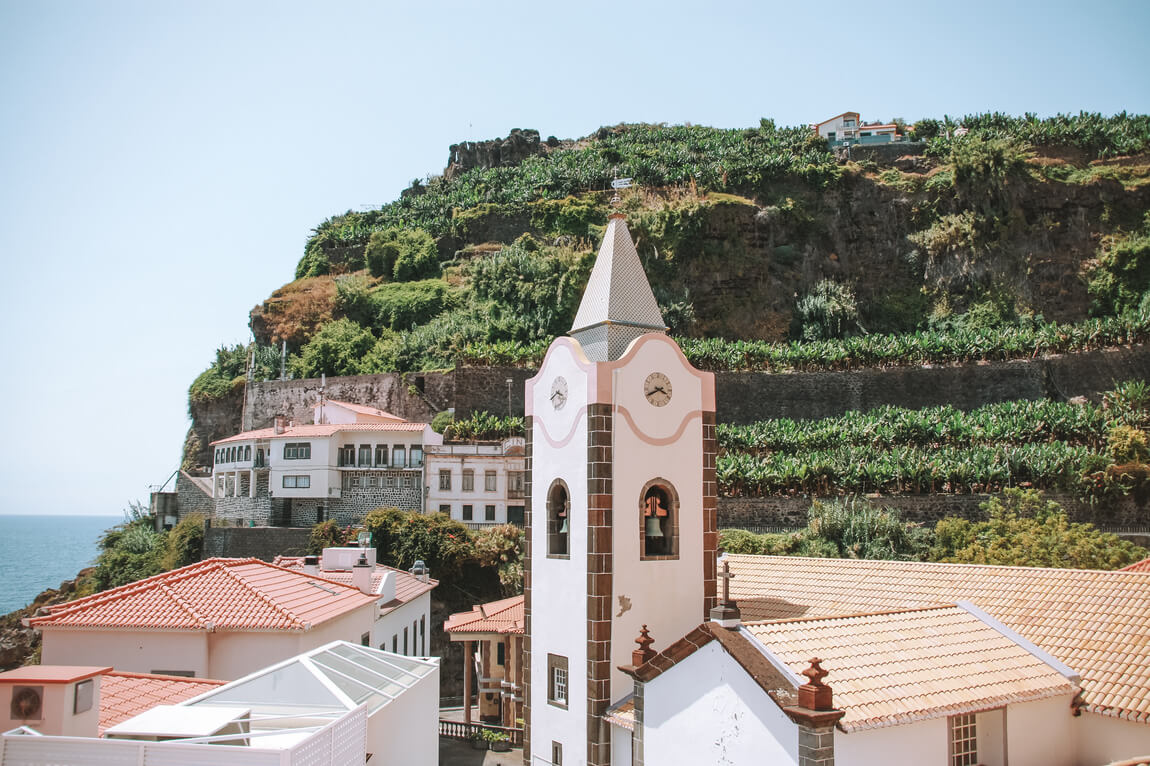
But Ponta do Sol is more than just a pretty coastal town. If you enjoy historic buildings, there are also a few churches and chapels worth stopping by:
- São Sebastião Chapel
- Santo António Chapel
- Mother Church (Igreja Matriz)
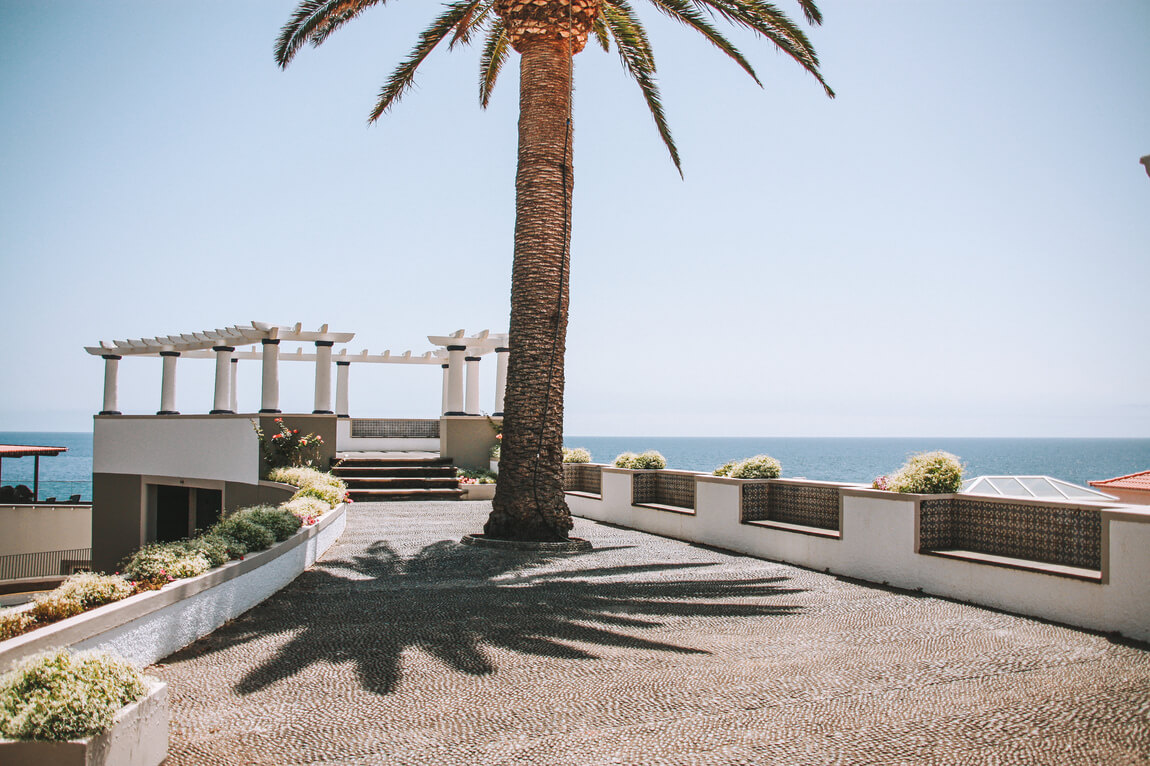
💡 EXTRA TIP: Next to Santo António Chapel, there is a viewpoint with panoramic views over Ponta do Sol.
» Anjos Waterfall
When driving from Ponta do Sol to the next point on the itinerary, don’t miss Anjos waterfall.
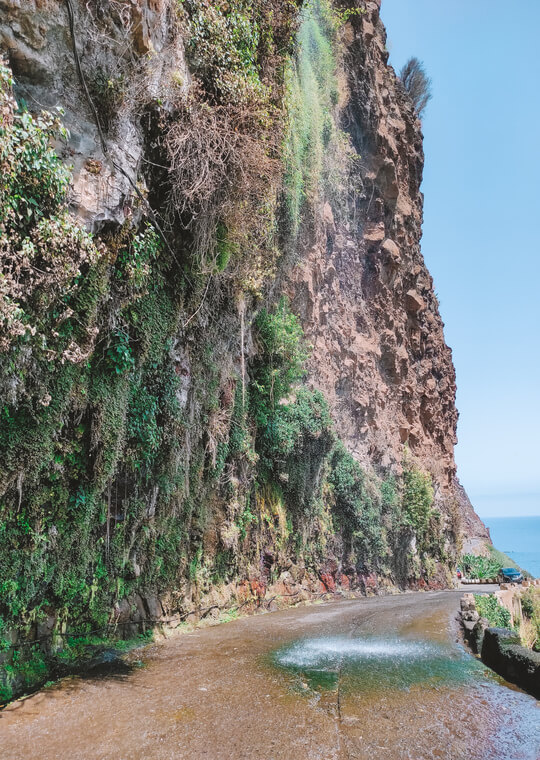
This is probably one of the most famous waterfalls in Madeira because it literally falls onto the old ER101 coastal road, creating one of the island’s most iconic photo spots.
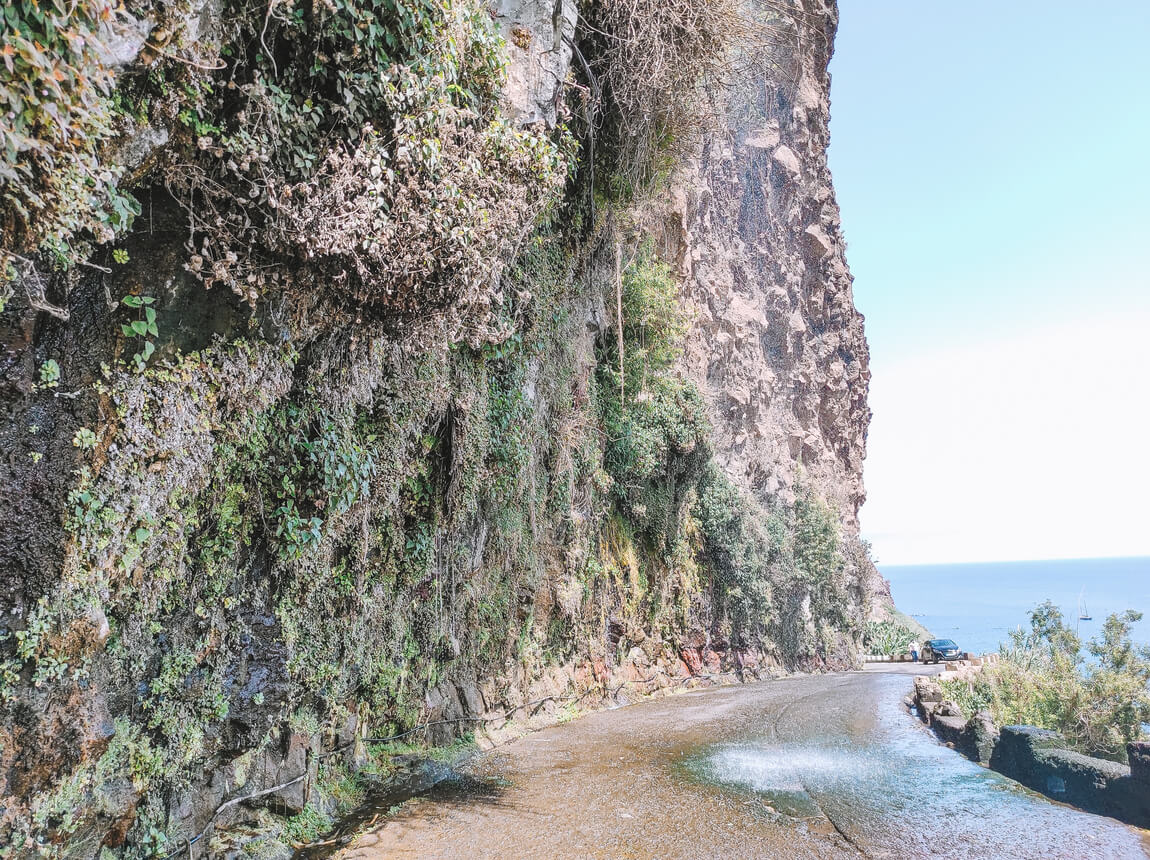
In the past, visitors could actually drive directly underneath the waterfall, which felt a bit like a natural car wash. However, things have changed and access by car is now restricted to residents only.
That said, it’s still absolutely worth stopping here. You can park nearby and walk to the waterfall, where you can still stand underneath the water if you don’t mind getting a little wet.
💡 EXTRA TIP: It can get quite busy during the day, especially in summer, so try visiting earlier.
» Calheta Beach
Madeira may be best known for dramatic landscapes and hiking trails, but there are also some great places to enjoy the sea.
If the weather is good and you feel like slowing down for a bit, Calheta Beach makes a great stop. Unlike many beaches in Madeira, this one has golden sand (imported from Morocco), making it one of the island’s most popular beach spots.
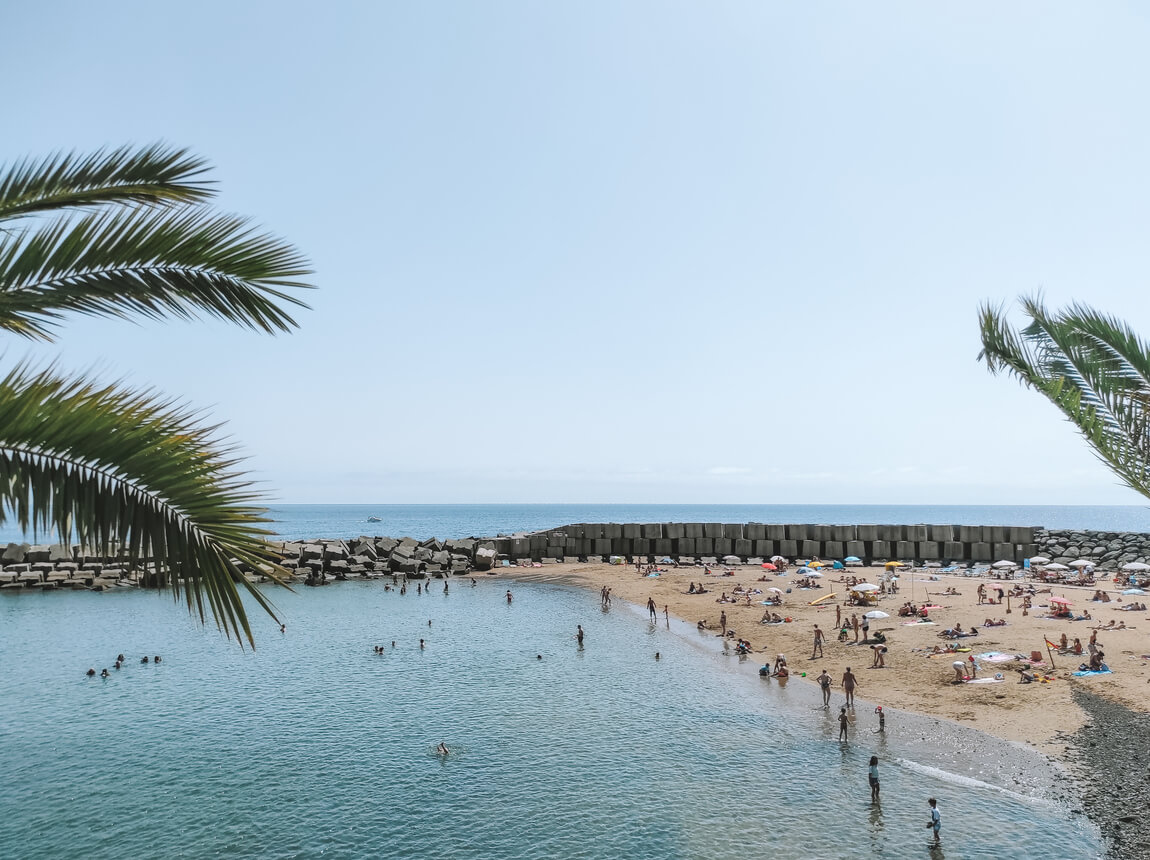
The water temperature in Madeira is also usually milder than in mainland Portugal, so if you’re visiting during warmer months, this can be a nice opportunity for a swim before continuing your Madeira road trip.
» Paúl do Mar
Paúl do Mar is one of Madeira’s most important fishing villages and a great place to stop if you want to try fresh seafood or simply enjoy a quieter, more local atmosphere.
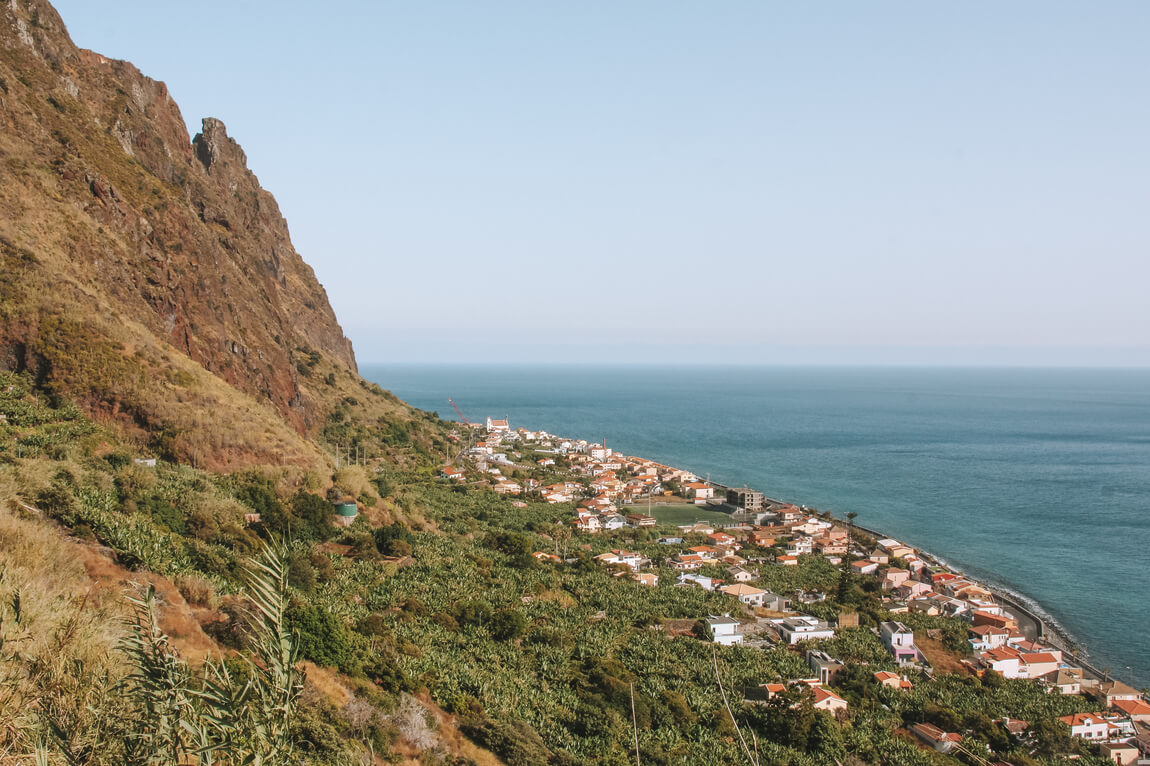
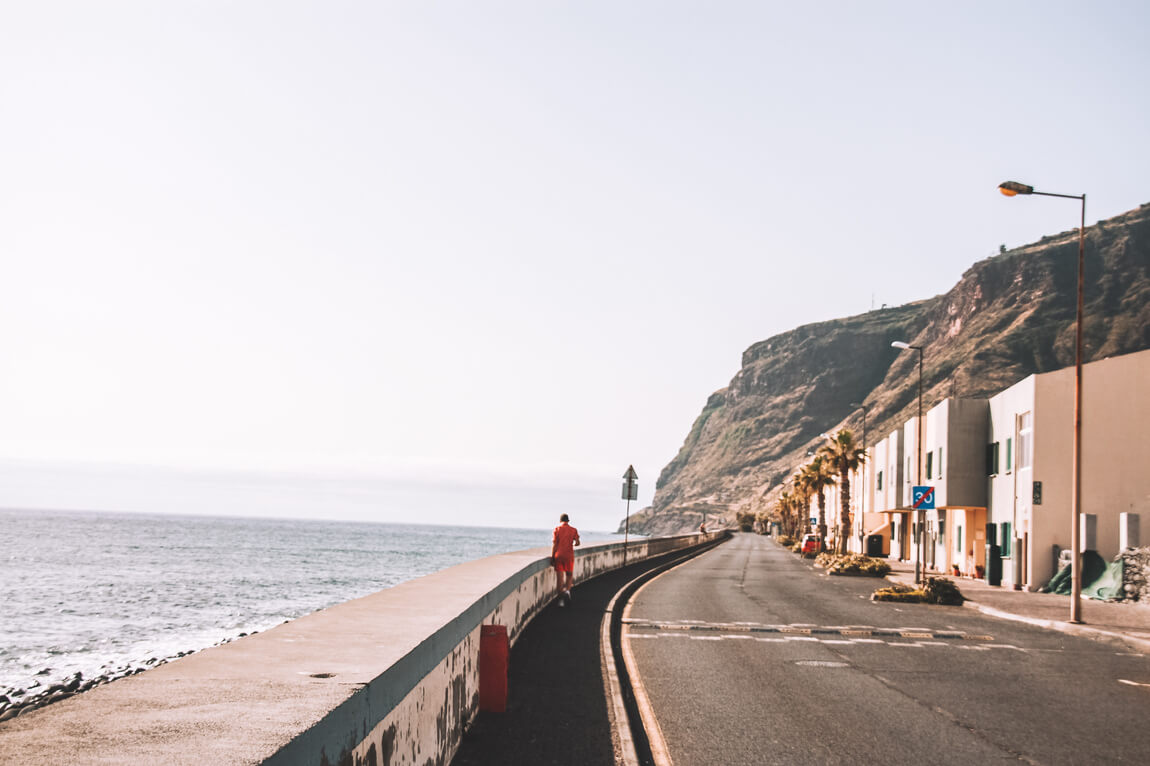
Getting here is part of the experience itself. For many years, Paúl do Mar was only accessible by boat. Nowadays, the road that allows us to get there is superb and has breathtaking views.
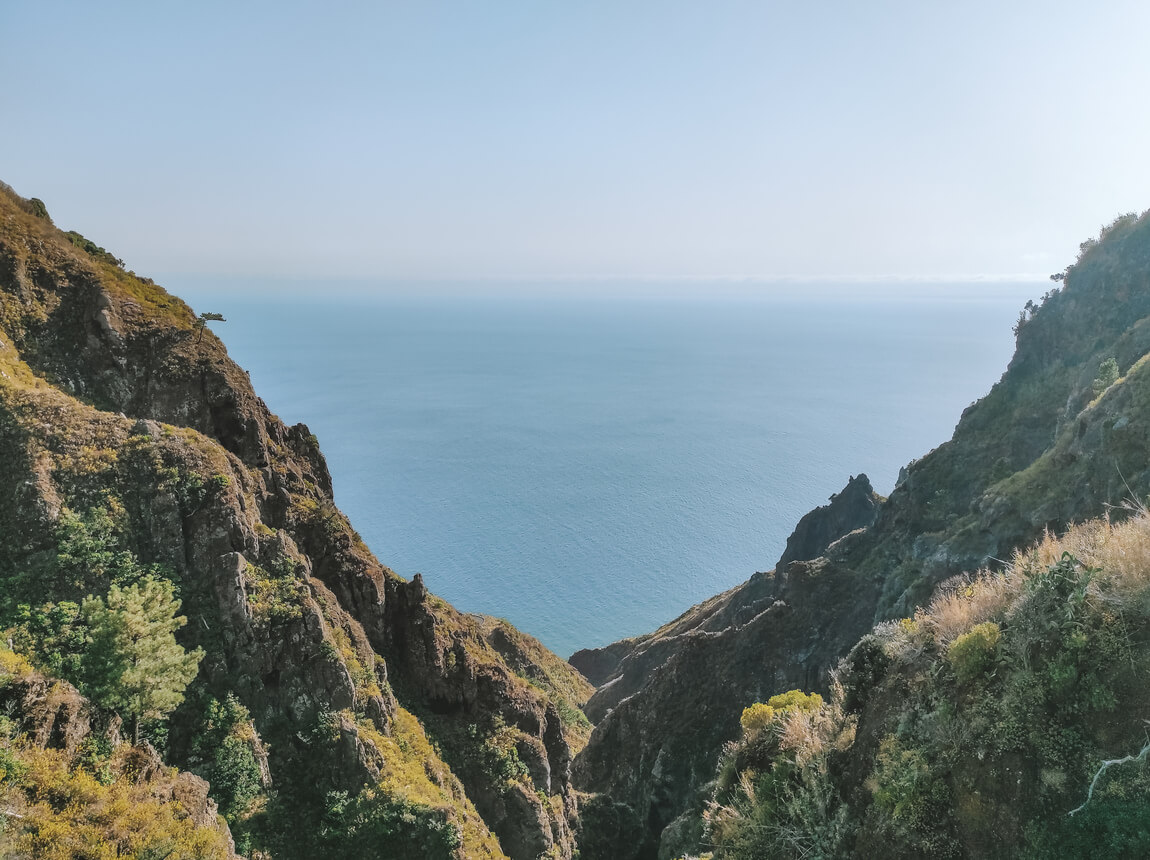
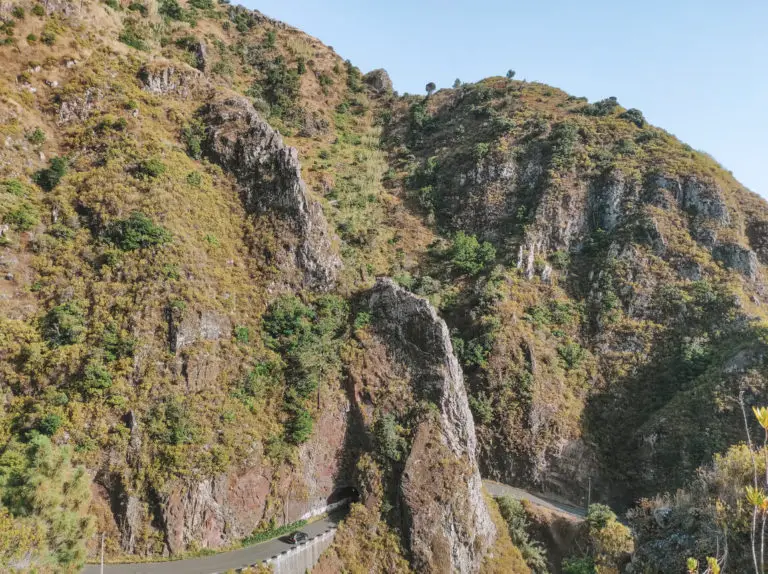
I’ll be honest, this wasn’t one of my favorite places in Madeira, mostly because I connected more with other villages on the island. But even so, I still think it’s worth stopping here, if only for the spectacular drive and ocean views.
If you have time, take a short walk along the waterfront and stop for a drink or meal by the sea.
» Ponta do Pargo Lighthouse
Before reaching Porto Moniz, make a stop at Ponta do Pargo Lighthouse, located on the westernmost point of Madeira.
The lighthouse itself is quite simple, but the real highlight here is the setting. Surrounded by dramatic cliffs and open ocean views, this is considered one of the best places on the island to watch the sunset.
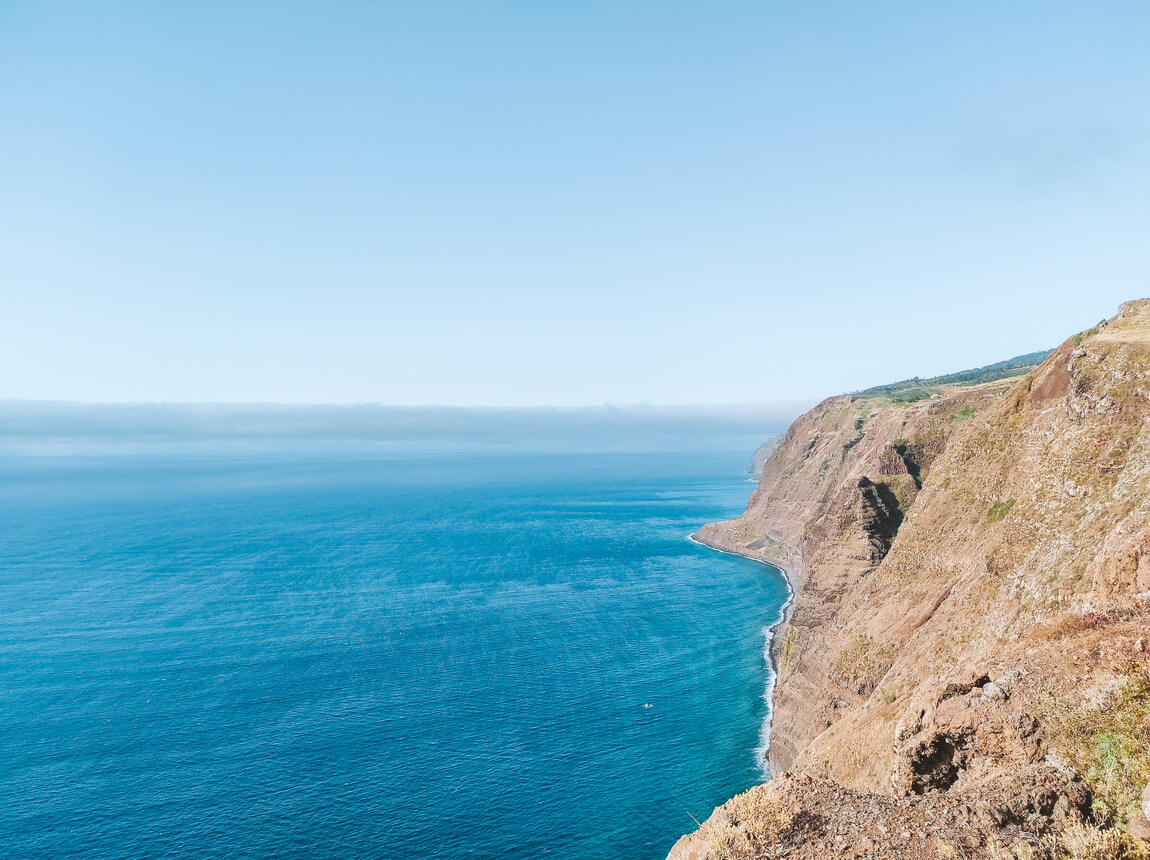
Personally, I think this stop feels especially rewarding at the end of the day, when the light becomes softer and the scenery looks even more dramatic.
💡 EXTRA TIP: If you are travelling during the rainy season (water flow is usually lower in summer), you can take a short diversion to Garganta Funda Viewpoint. Here you will be able to observe a waterfall falling from 140 meters (460 ft) high! You have to walk a short distance (about 1km/ 0.6 mi round trip) to get to the viewpoint.
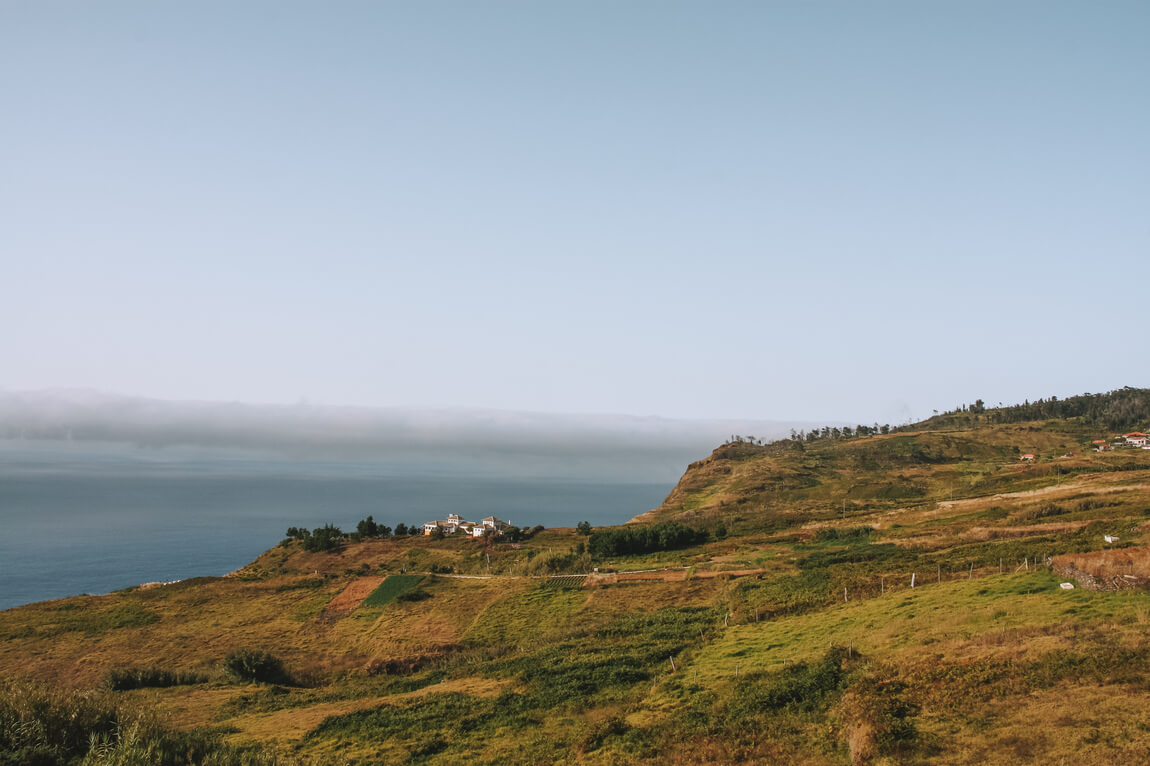
Day 2 in Madeira
» Levada das 25 Fontes + Levada do Risco
Visiting Madeira and skipping at least one levada or vereda would honestly be a shame. Madeira’s hiking trails are one of the island’s biggest highlights, and Levada das 25 Fontes + Levada do Risco is one of the best options for a first experience.
To make the most of the day, I highly recommend starting early and heading straight to Rabaçal Viewpoint, where both trails begin. These are among the island’s most popular hikes and parking fills up quickly, especially during peak season.
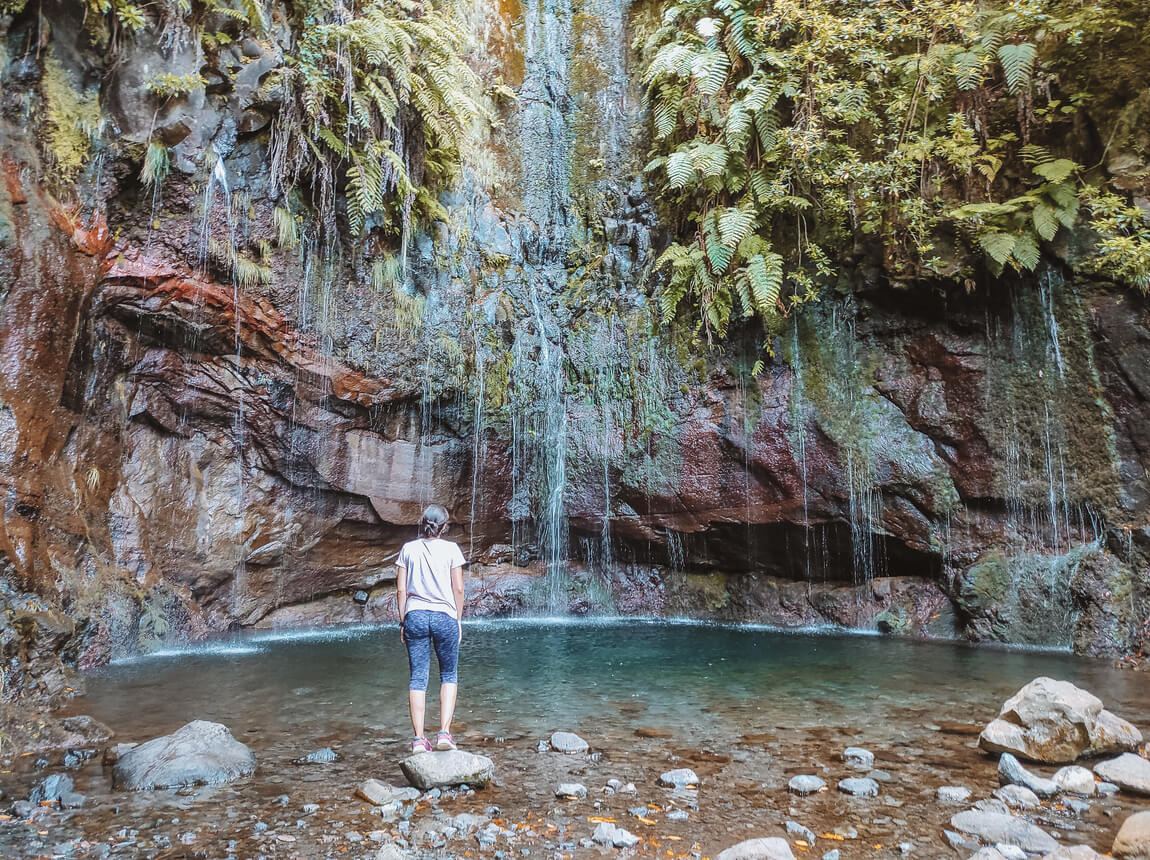
If this is your first time hearing about them, levadas are historic irrigation channels unique to Madeira, surrounded by walking paths that cross forests, mountains, and waterfalls.
There are dozens across the island, so seeing them all would be almost impossible, but I really think adding at least one to your Madeira itinerary is worth it.
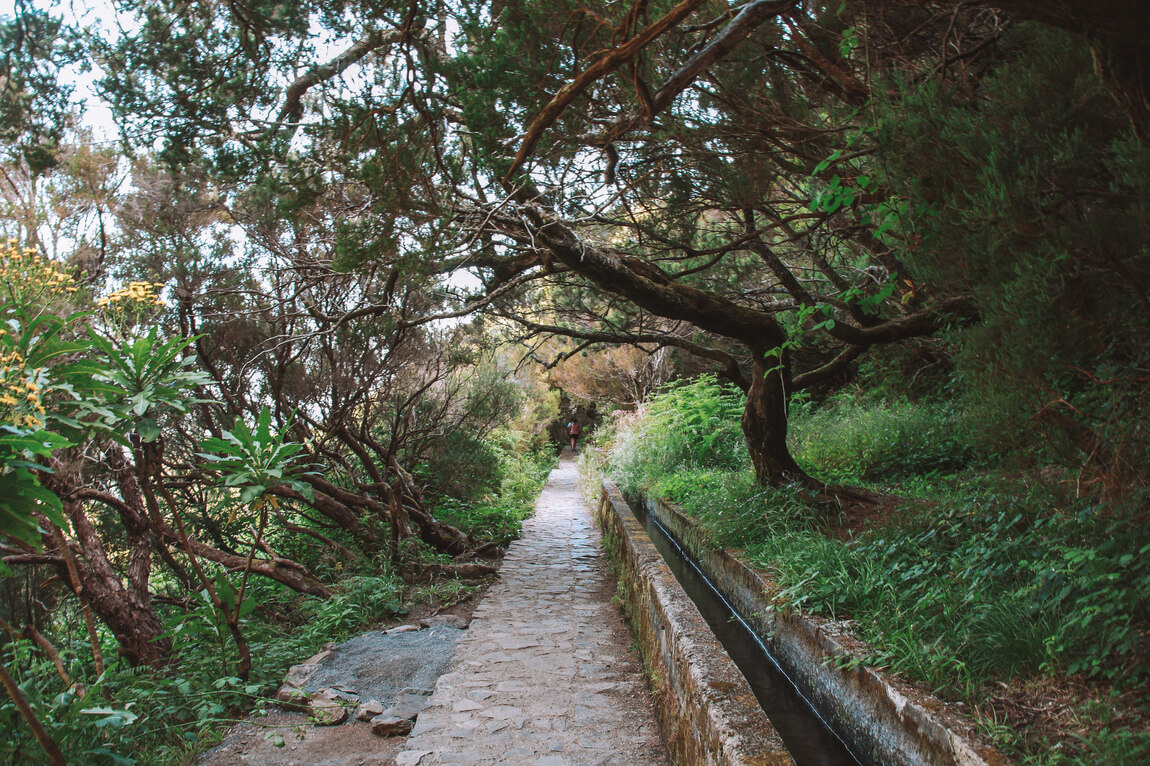
Personally, this ended up being one of my favorite hiking experiences on the island.
The combined route to Levada das 25 Fontes and Levada do Risco covers around 9 km (5.6 miles) and took me roughly 3 hours, including stops for photos and enjoying the scenery.
💡 EXTRA TIP: Most official PR hiking trails in Madeira, including Levada das 25 Fontes (PR6) and Levada do Risco (PR6.1), now require an access fee of 4.50€ (5 USD) per person aged 12+. You’ll also need to book a timeslot in advance. If you’re planning to hike several trails, there are also combined passes available, which can work out better value.
Expect lush landscapes, tunnels of vegetation, waterfalls, and some truly beautiful viewpoints along the way.
In my opinion, this is easily one of the most beautiful hiking trails in Madeira.
👉 Read more: Best hiking trails in Madeira
» São Vicente
After a morning of hiking, São Vicente makes the perfect stop to recharge. This ended up being one of my favorite places in Madeira.
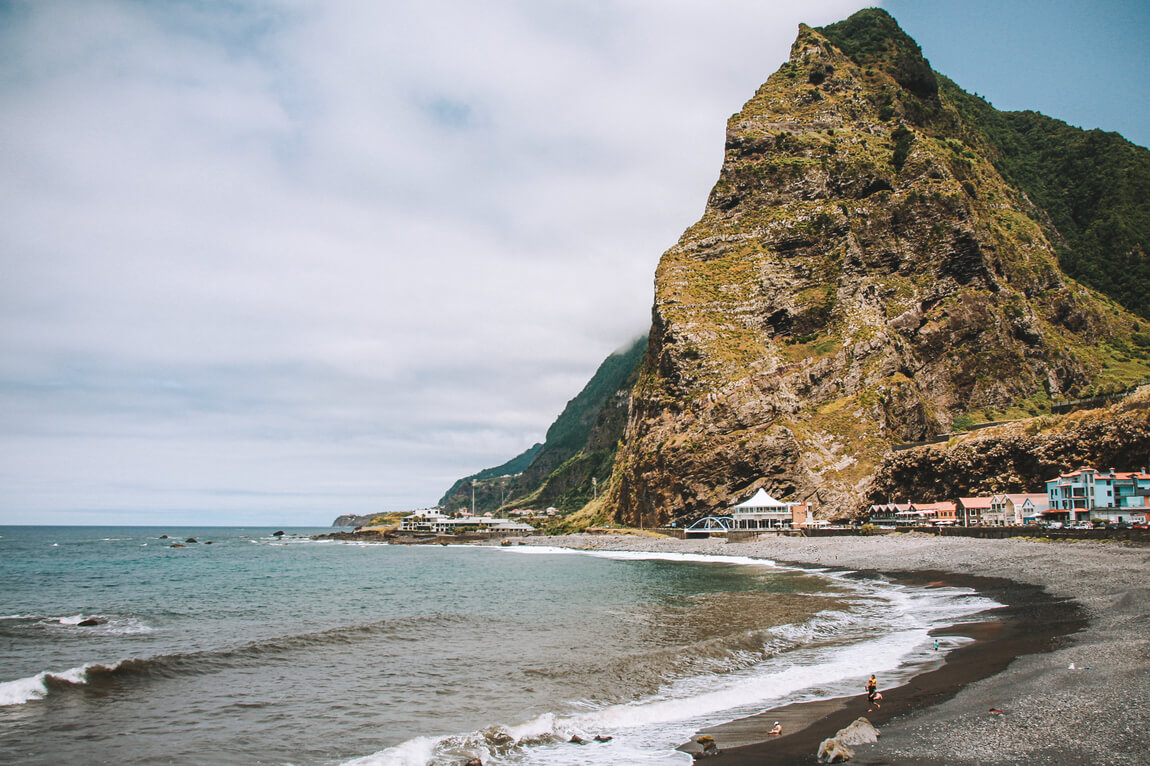
Even though it doesn’t have that many points of interest, the green landscape surrounding São Vicente steals all the attention.
Personally, I think simply walking along the waterfront is enough to fall in love with this part of Madeira.
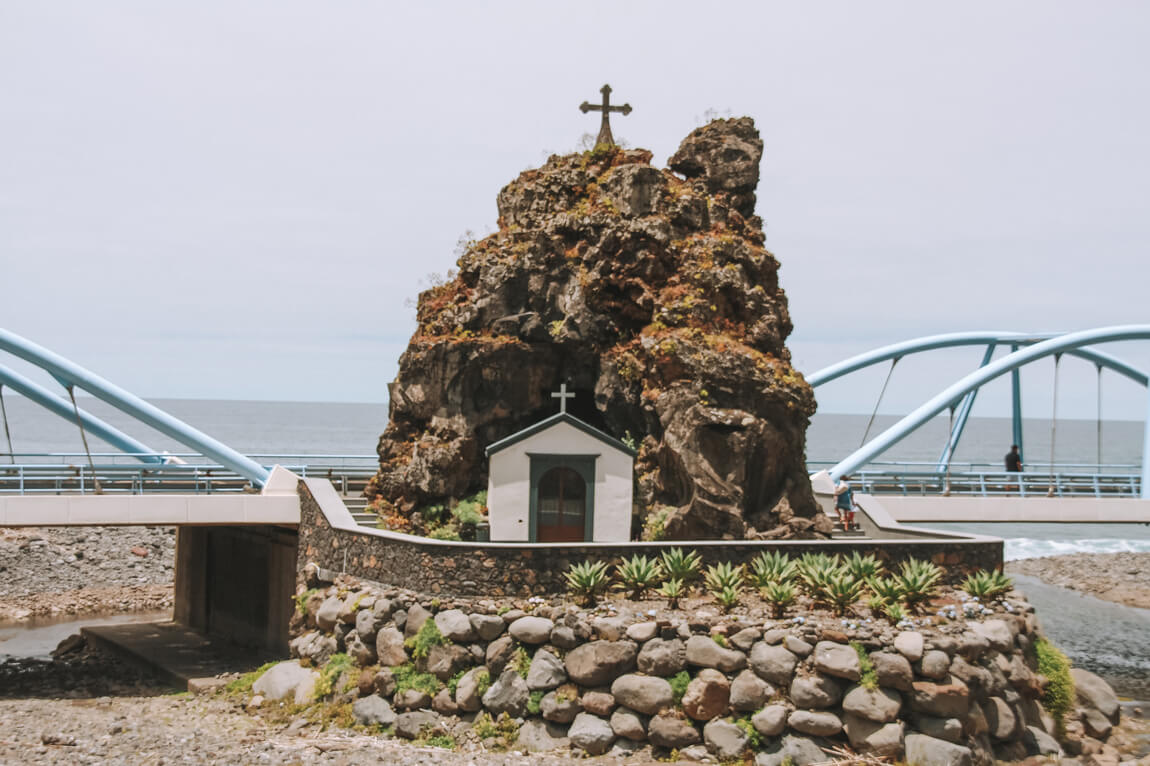
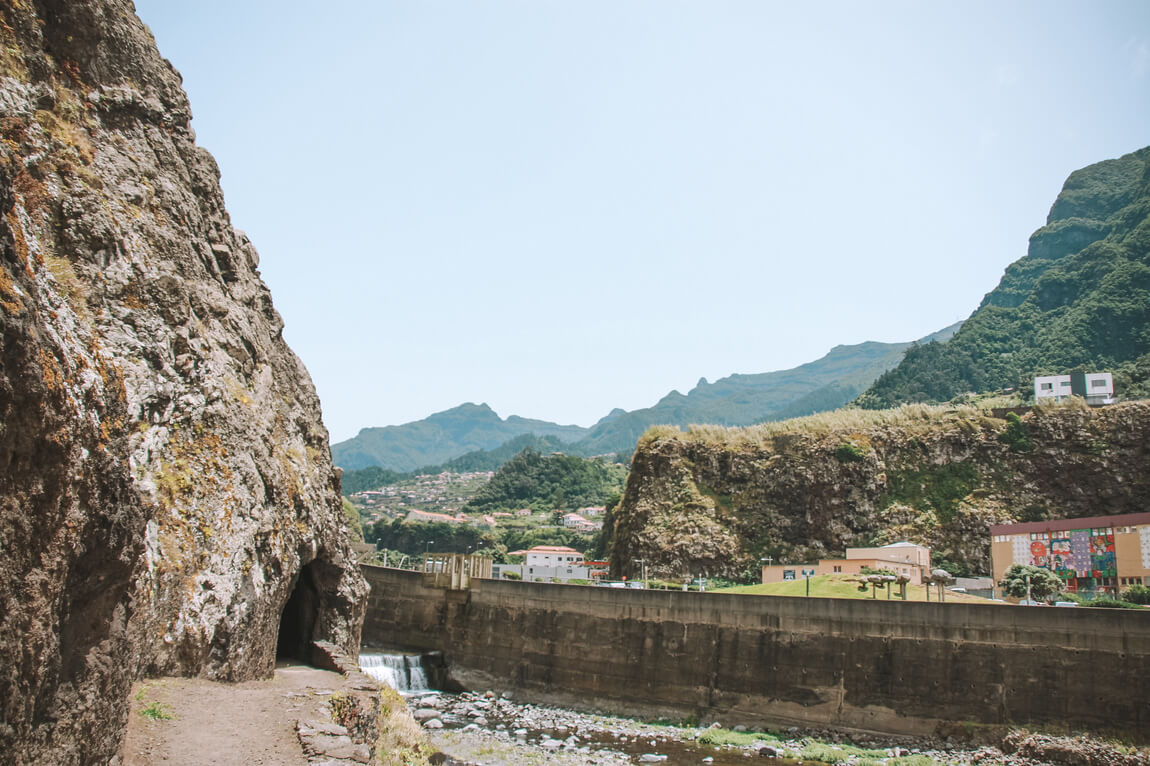
Still, there are a few places worth stopping by, such as the São Vicente Chapel (built inside a rock) or São Vicente Waterfall (right next to the road).
💡 EXTRA TIP: If you have extra time, you can also visit the São Vicente Caves and Volcanism Centre, where you can learn more about Madeira’s volcanic origins. However, they are currently closed for maintenance, so it’s worth checking the latest updates before planning your visit.
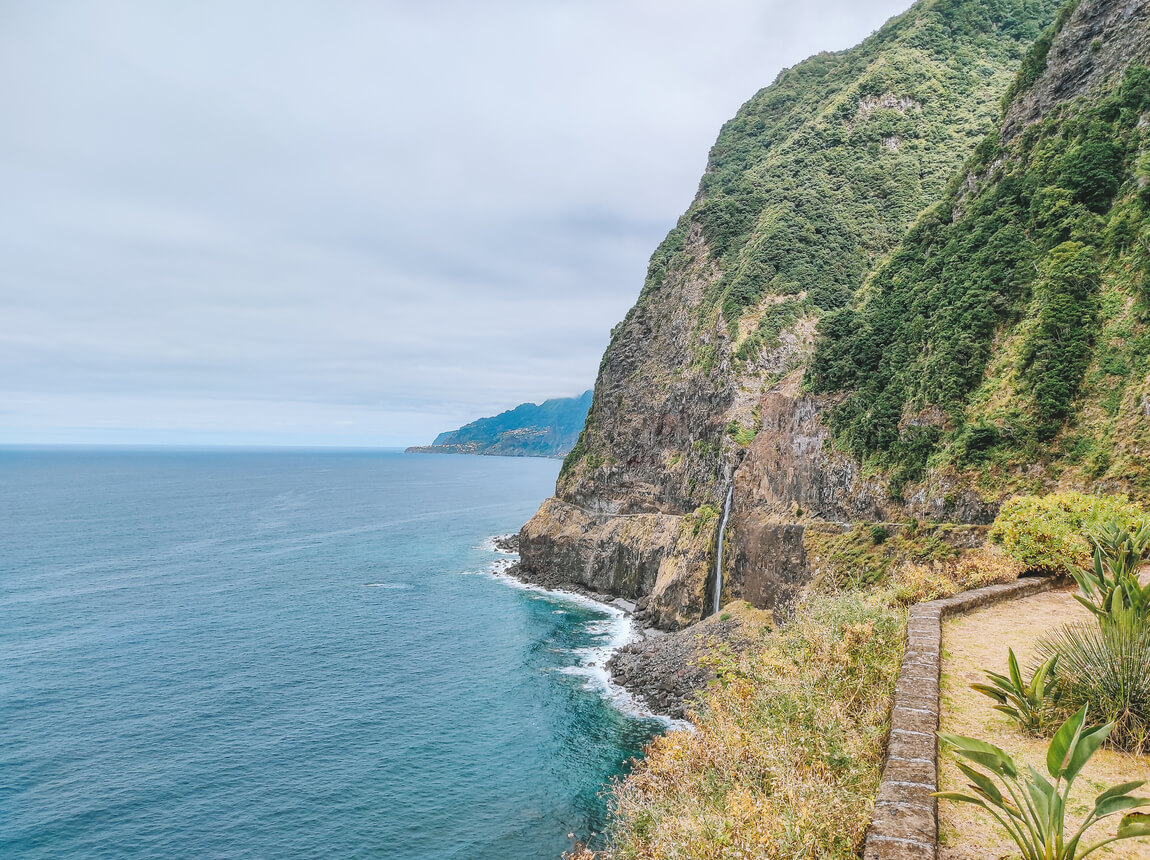
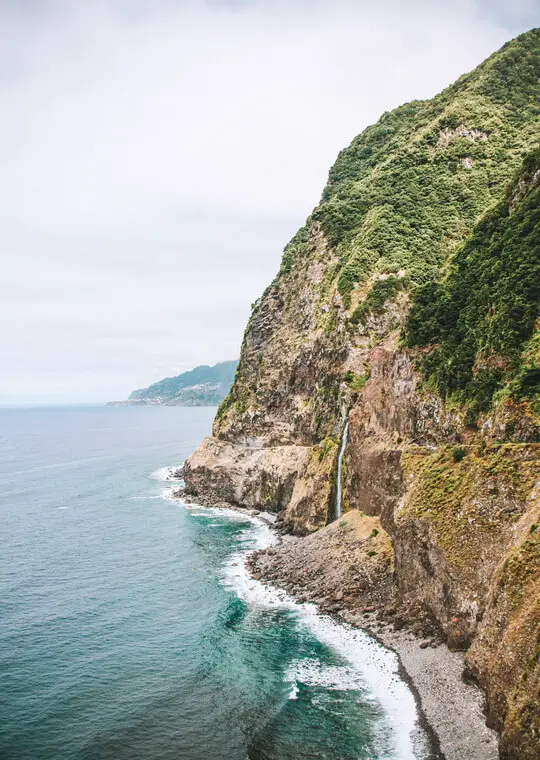
On the way to the next stop, I suggest stopping at Veú da Noiva Viewpoint (Bride’s Veil Viewpoint), from where we can observe the waterfall that shares the viewpoint’s name. The waterfall is located on the old road that used to connect São Vicente to Seixal and its name comes from its resemblance to a bride’s veil.
» Seixal
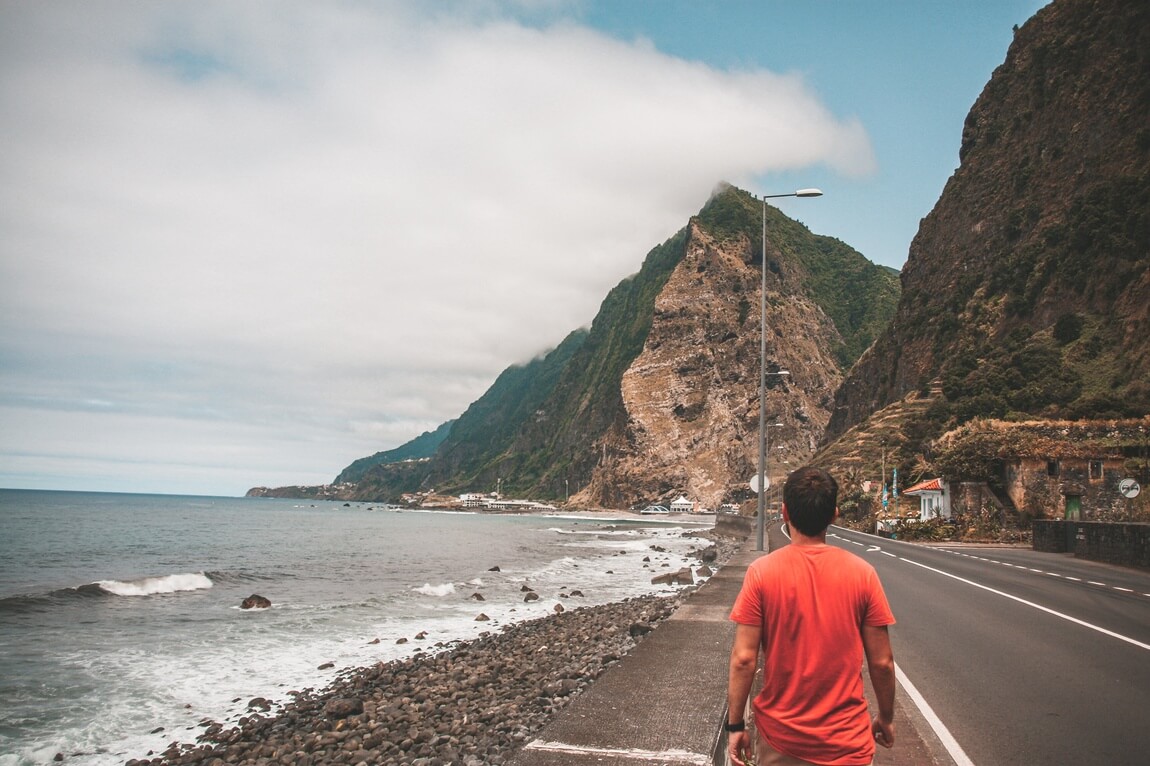
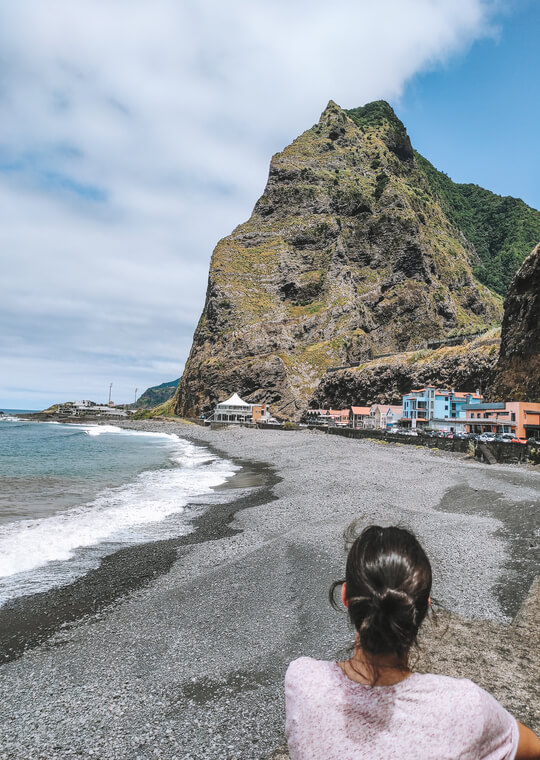
Along with São Vicente, Seixal was also one of the places that impressed me the most in Madeira. Surrounded by green hills, it will be hard not to fall in love with it.
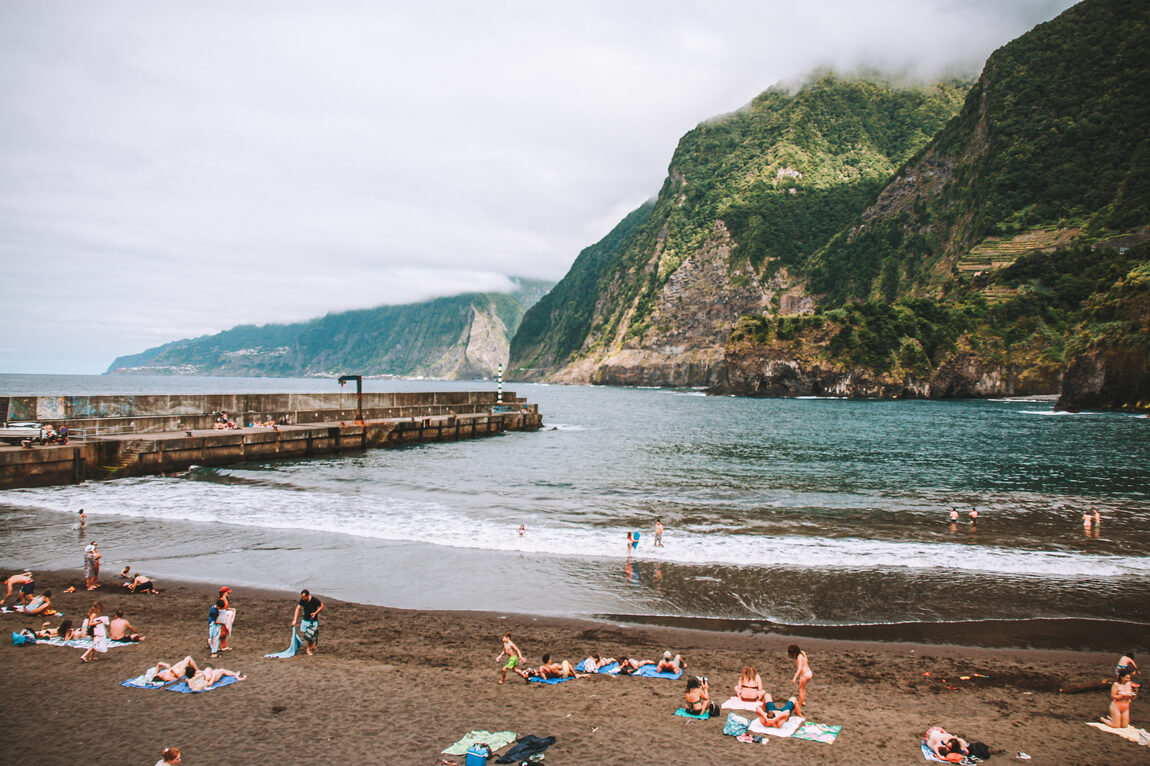
If you only have time for a quick stop, don’t miss Praia do Porto do Seixal, one of Madeira’s most famous black sand beaches. With volcanic sand and dramatic scenery all around, this easily became one of my favorite beaches on the island.
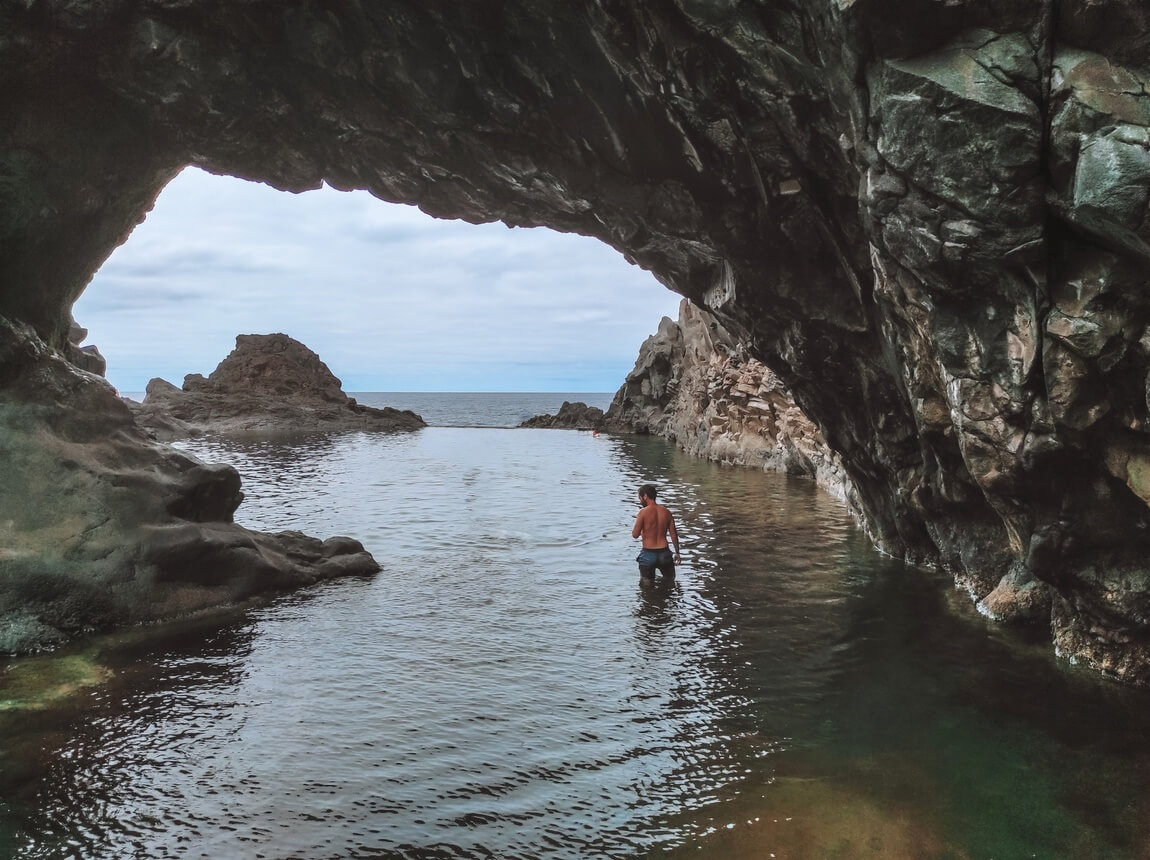
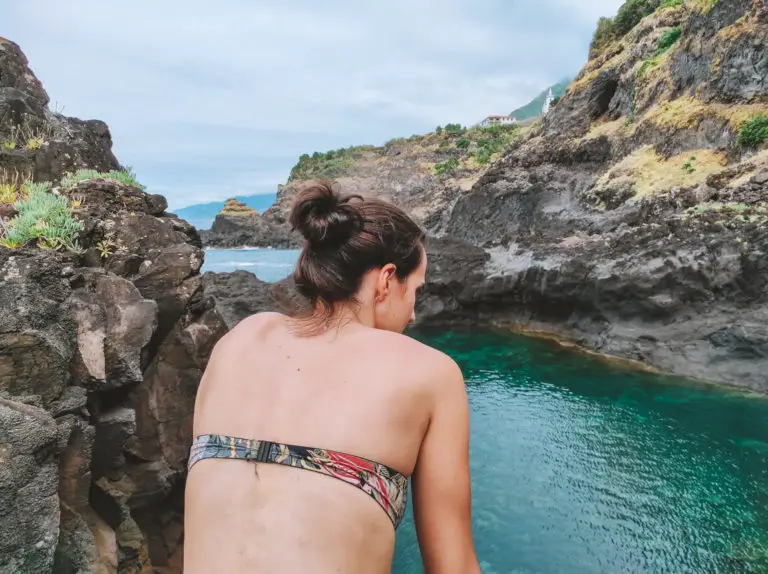
But if the weather is good and you feel like taking a swim, I highly recommend stopping at Seixal Natural Pools as well.
Formed by volcanic rock and filled naturally by the Atlantic Ocean, these pools felt much more peaceful than the famous pools in Porto Moniz. Personally, I thought they were just as beautiful and much less crowded. Tickets now cost 2.5€ (3 USD).
» Ribeira da Janela
On the way back from Seixal toward Porto Moniz, make a quick stop in Ribeira da Janela.
You don’t need a huge amount of time here, but the viewpoints are definitely worth it.
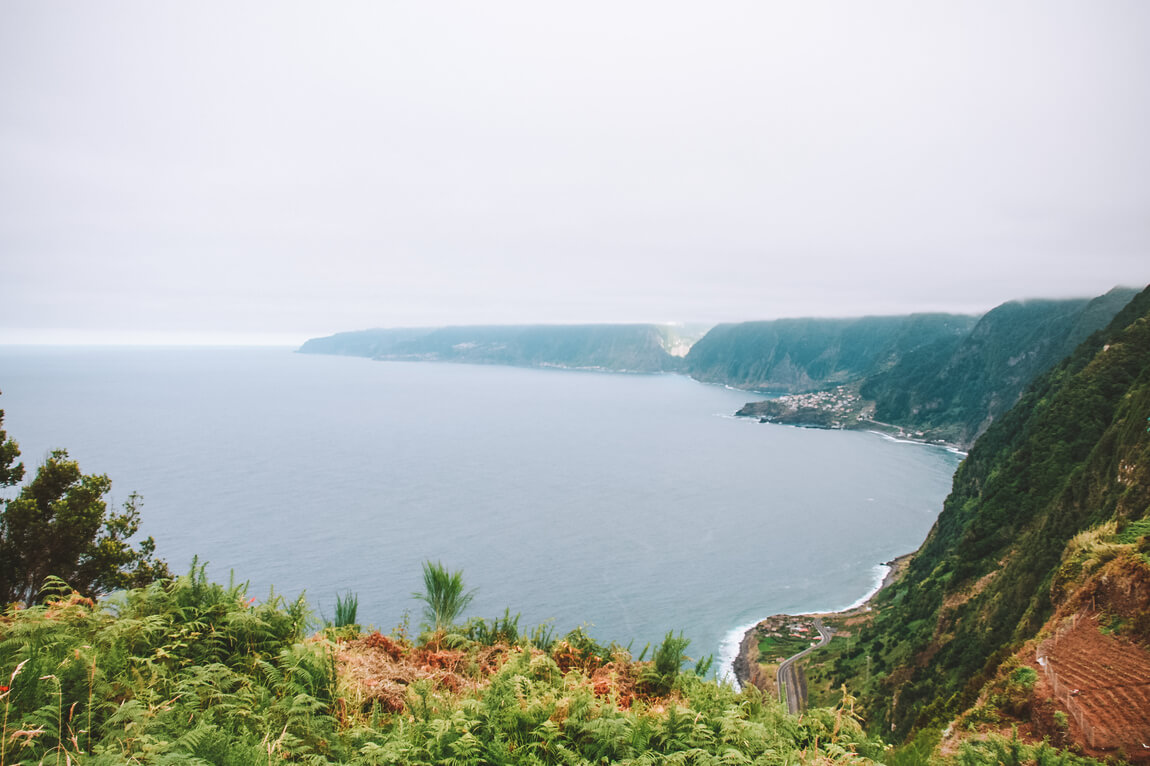
I recommend stopping at:
- Eira da Achada Viewpoint – with sweeping views over the northern coast of the island
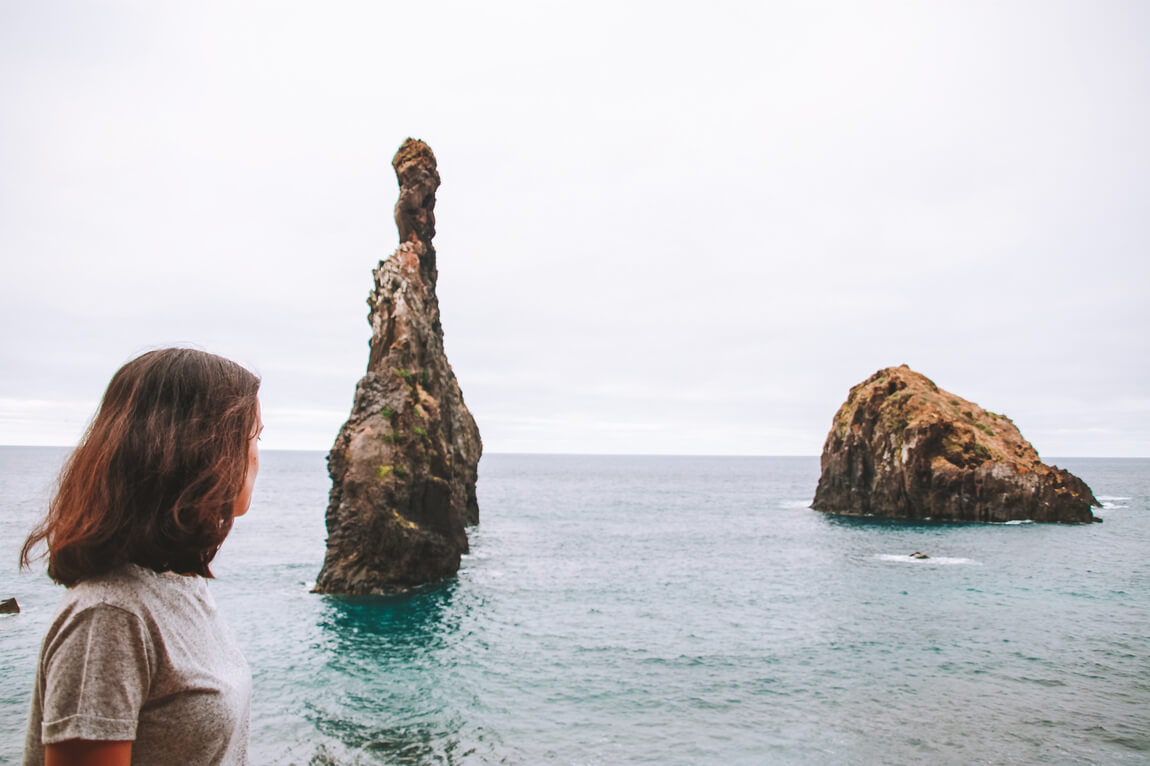
- Ribeira da Janela Islets Viewpoint – one of the island’s most iconic viewpoints, where dramatic rock formations rise from the ocean. To reach it, you’ll walk through a short tunnel, which somehow makes the experience feel even cooler.
» Fanal
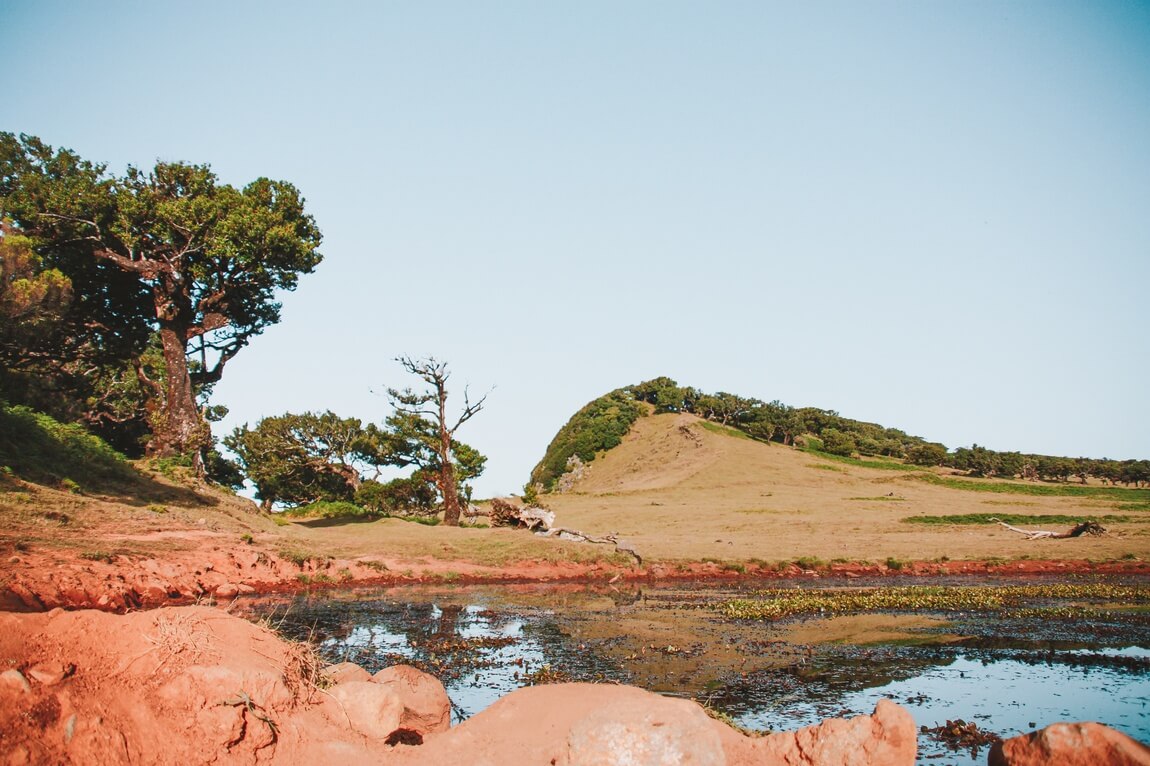
Fanal Forest is one of the most mystical places in Madeira due to the fog that often exists there and also due to the unusual shape of the trees.
Known for its ancient twisted trees and frequent fog, this area often feels like something straight out of a fantasy movie. If you’ve seen those moody photos of Madeira online, there’s a good chance they were taken here.
Unfortunately, when I visited, there wasn’t much fog and time was already running short, so I only stopped at Fanal Pond. Even so, the atmosphere still felt very unique.
If you have more time, this is also a fantastic place for hiking. Several trails begin here, including:
- Vereda do Fanal (PR13)
- Levada dos Cedros (PR14)
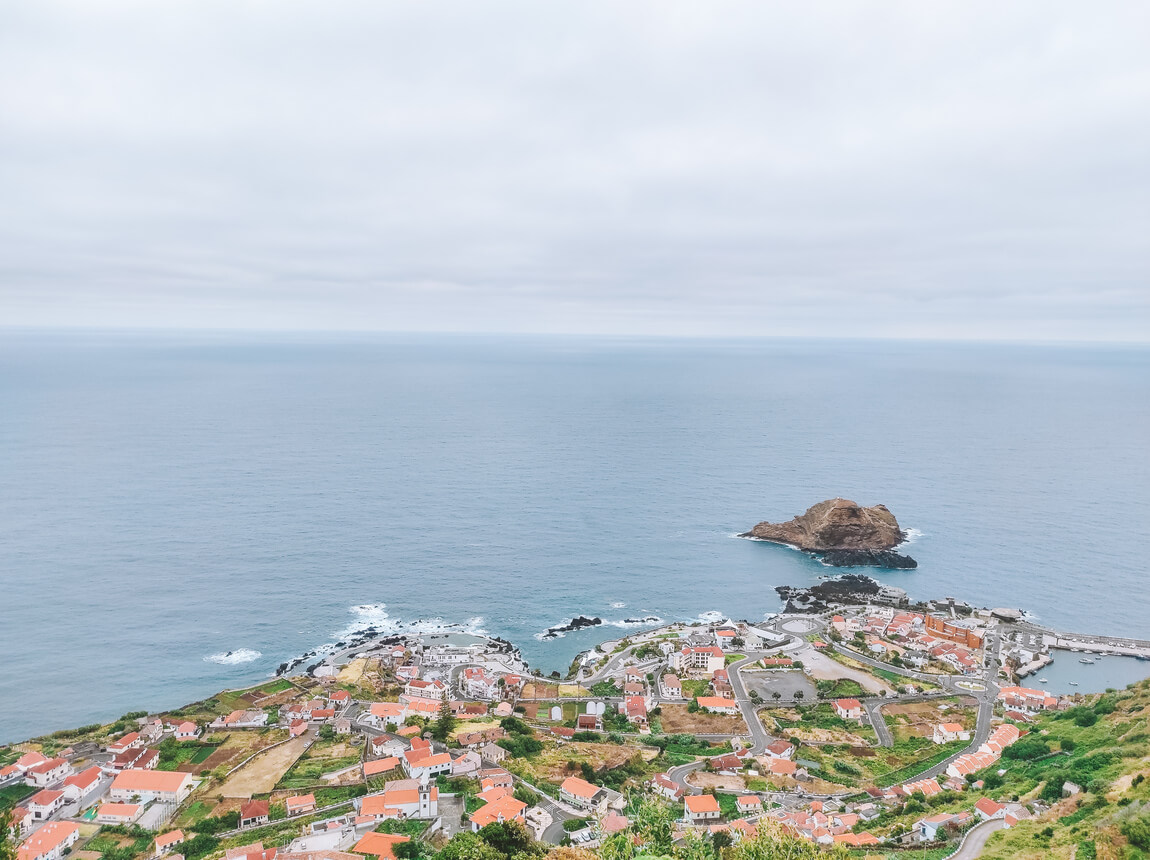
💡 EXTRA TIP: On the way back to Porto Moniz, we stopped at Santa Viewpoint, which has privileged views over Porto Moniz.
» Porto Moniz
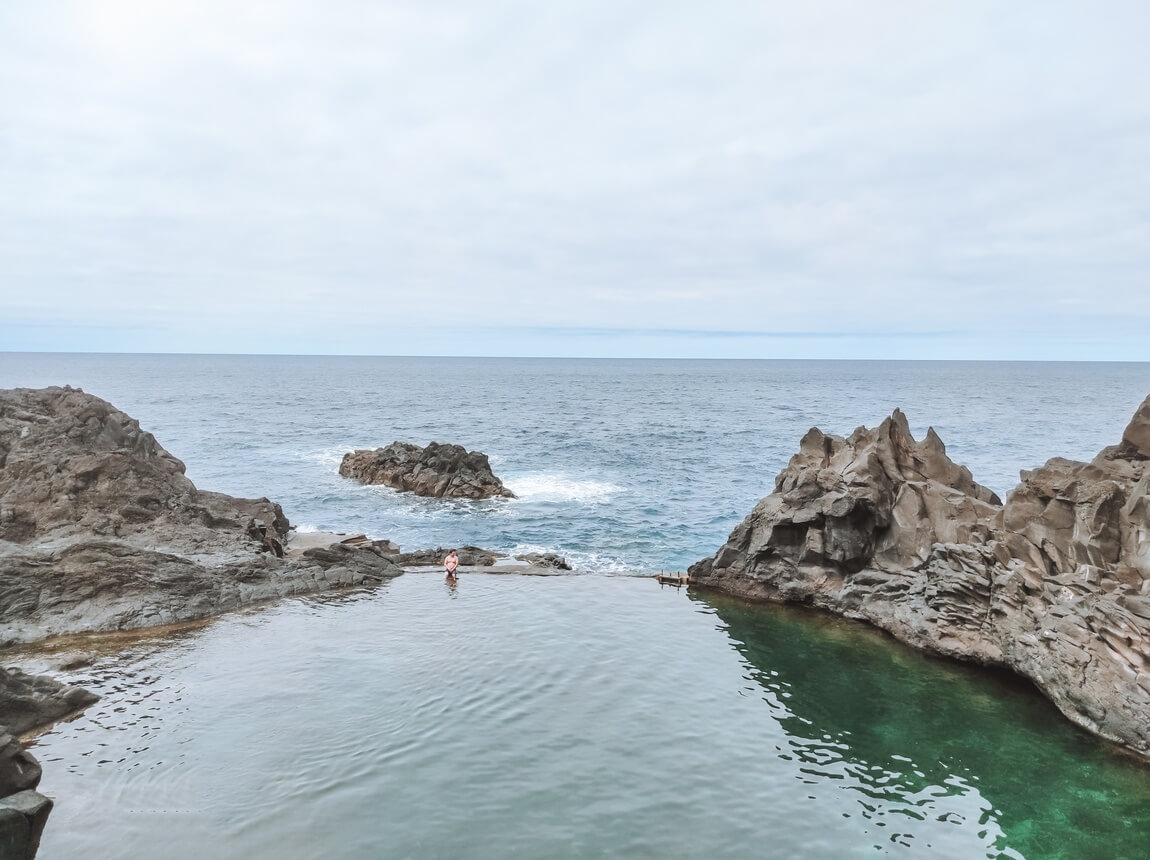
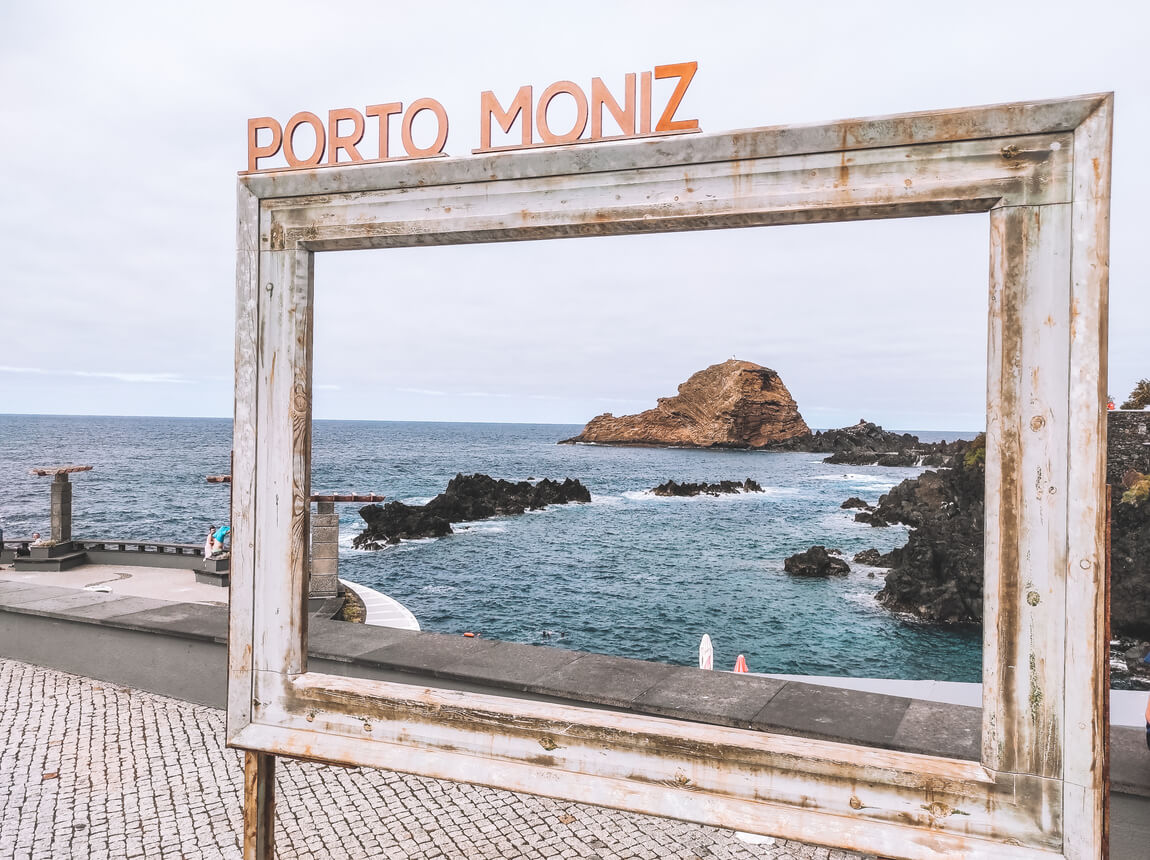
Porto Moniz is one of the most famous places in Madeira due to its natural pools that were formed by volcanic lava.
If you’re spending 6 days in Madeira, I really think this is one of the stops you shouldn’t skip, especially if the weather is good enough for a swim.
🎫 Not renting a car in Madeira? This Northern Wonders Jeep Tour can be a good alternative for exploring some of the island’s most scenic northern spots, including dramatic coastal views, mountain landscapes, and natural pools. It’s a practical option if you want to experience this part of Madeira without driving the winding roads yourself.
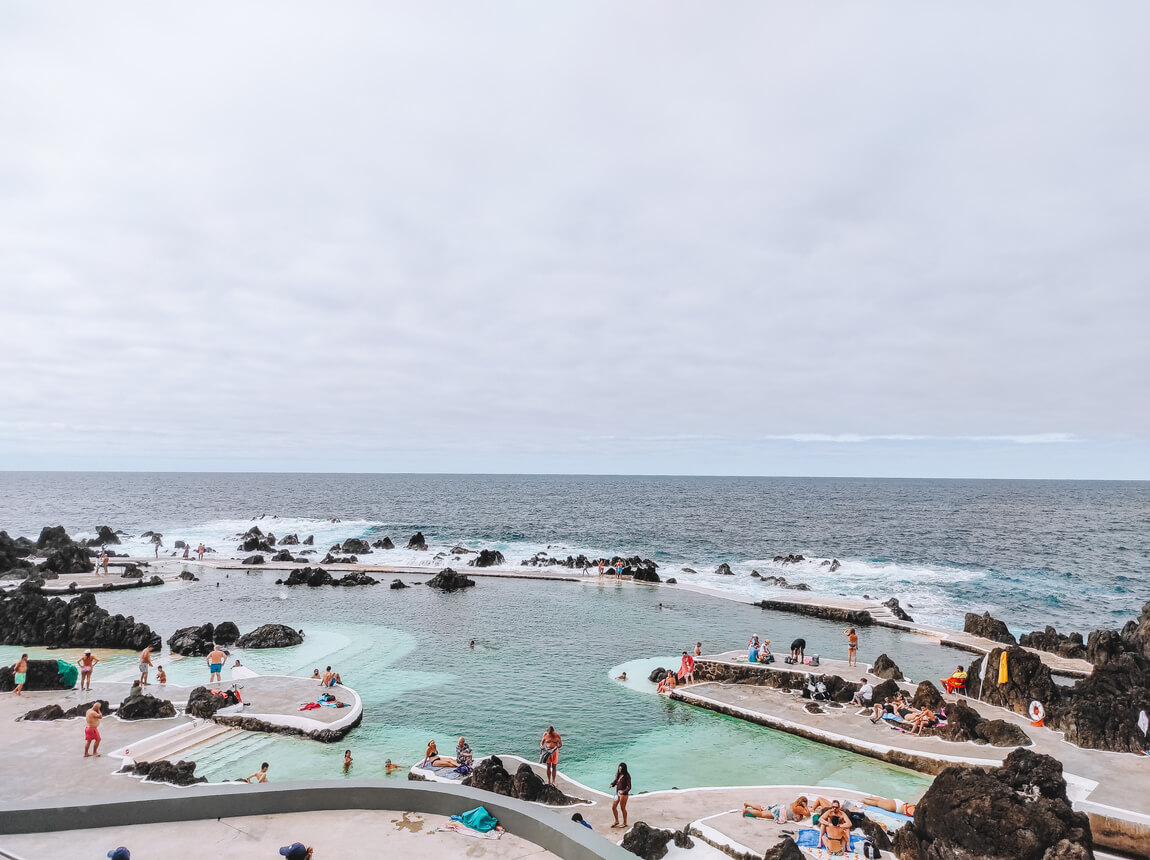
There are actually two different swimming areas in Porto Moniz:
- Old Natural Pools: completely free to visit, more rugged, and with a more natural feel
- Porto Moniz Natural Swimming Pools: the better-equipped swimming complex, with changing rooms, sunbathing areas, and facilities
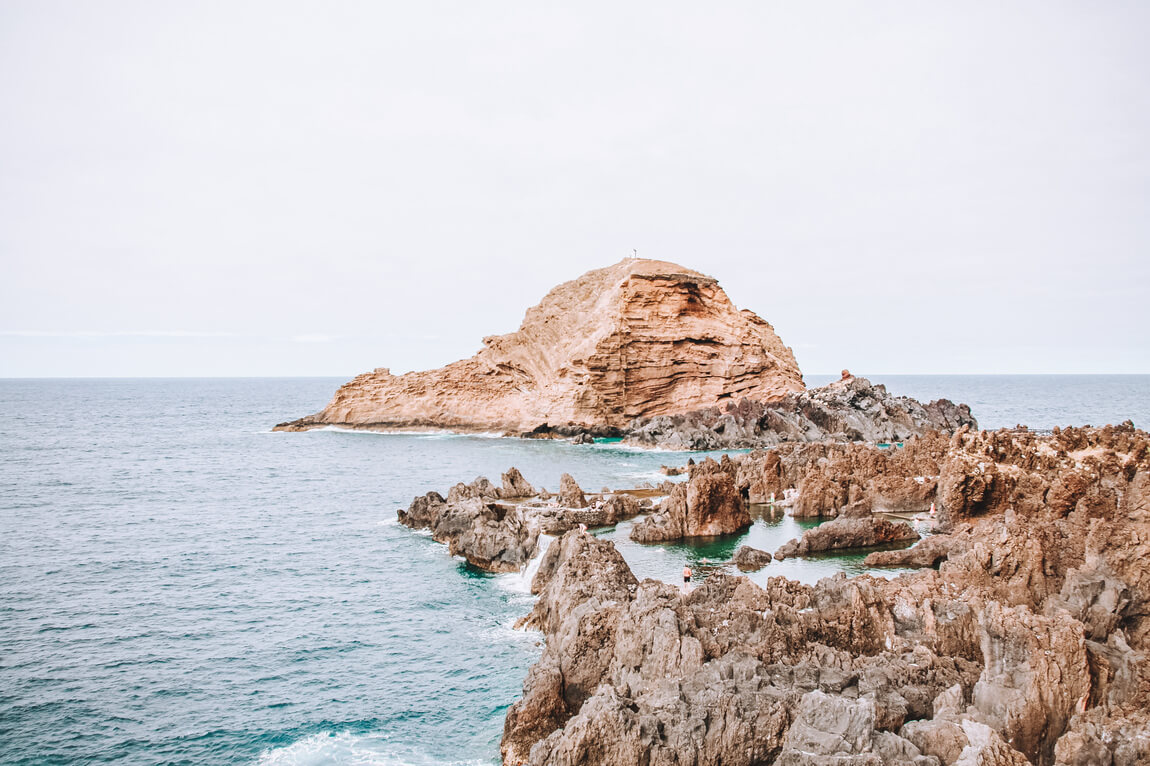
Personally, I think the paid pools are worth considering if you want a more comfortable experience, especially if you plan to spend a few hours here.
📝 USEFUL INFORMATION: Entry to the new natural pools costs 3€ (3.5 USD) per adult. Opening hours vary depending on the season, but they’re generally open from 9 am to 7 pm in summer and until 5 pm in winter.
Day 3 in Madeira
» Levada do Alecrim and Lagoa do Vento Hiking Trail
Start day 3 early once again because today includes another one of Madeira’s beautiful levadas/veredas.
Beginning at Rabaçal Viewpoint, this route takes you through Levada do Alecrim and Vereda da Lagoa do Vento, one of my favorite hiking combinations on the island.
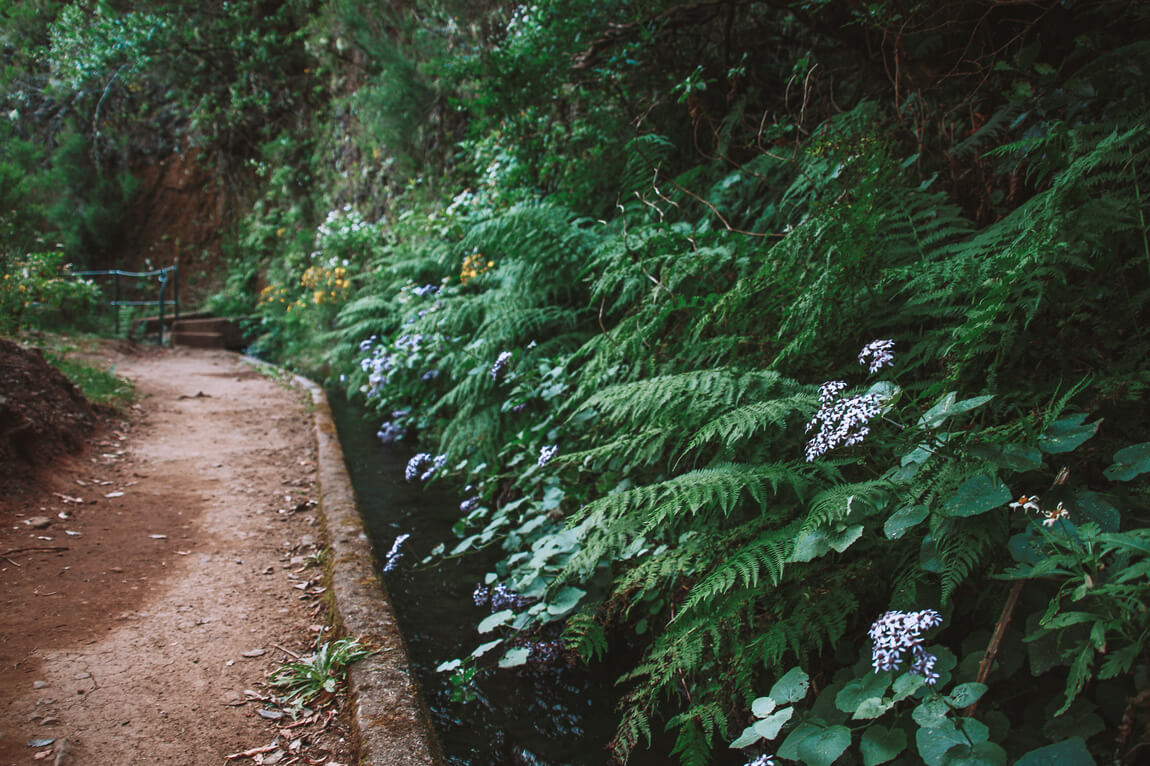
Compared to Levada das 25 Fontes, I found this trail slightly quieter and a bit less demanding, but just as rewarding.
In total, expect to walk around 8 km (5 miles), which took me roughly 3h30, including breaks.
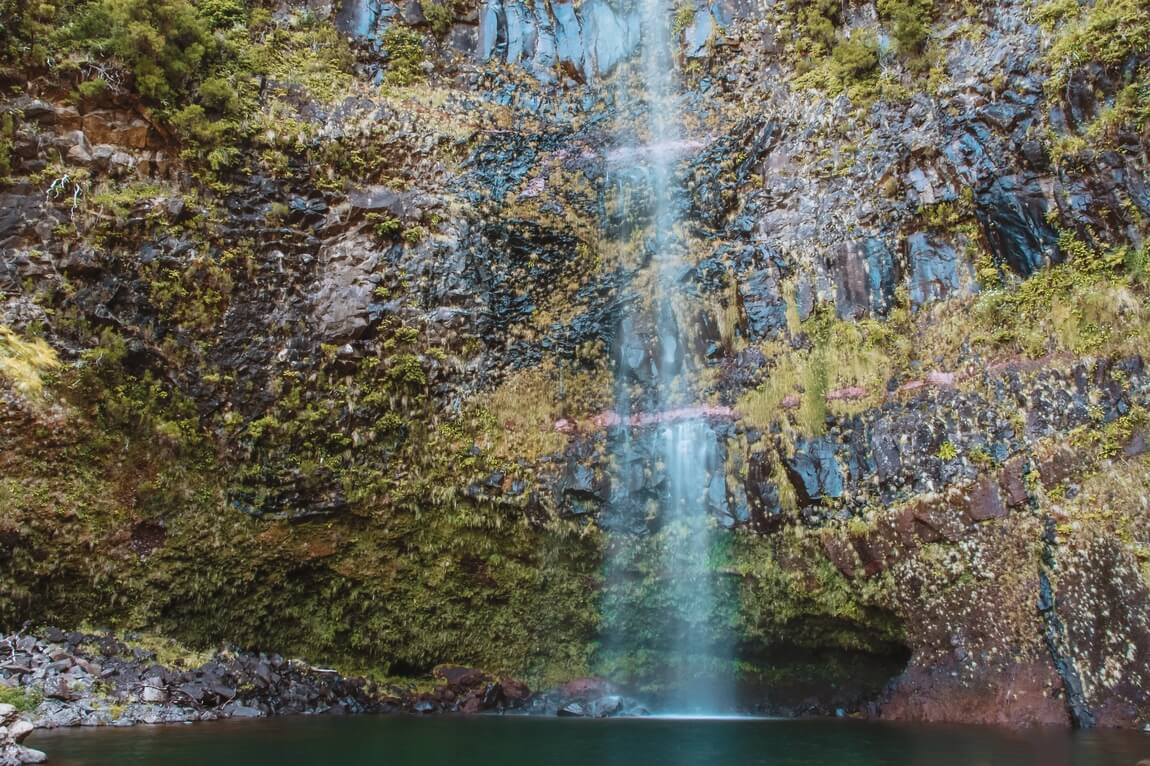
The highlight of the day is undoubtedly Lagoa do Vento Waterfall.
👉 Want all the practical details? Check out my full guide to Madeira’s hiking trails, where I share difficulty levels, useful tips, and everything you need to know about this trail and other levadas worth doing.
» Ponta Delgada
After a full morning of hiking, continue toward Ponta Delgada, a small coastal village surrounded by beautiful mountain scenery.
To be honest, this isn’t one of Madeira’s most impressive stops, especially when compared to places like Seixal or São Vicente, but it still makes for a pleasant short stop to stretch your legs.
If you have time, you can visit:
- Senhor Bom Jesus Church
- Ponta Delgada Sea Water Pools
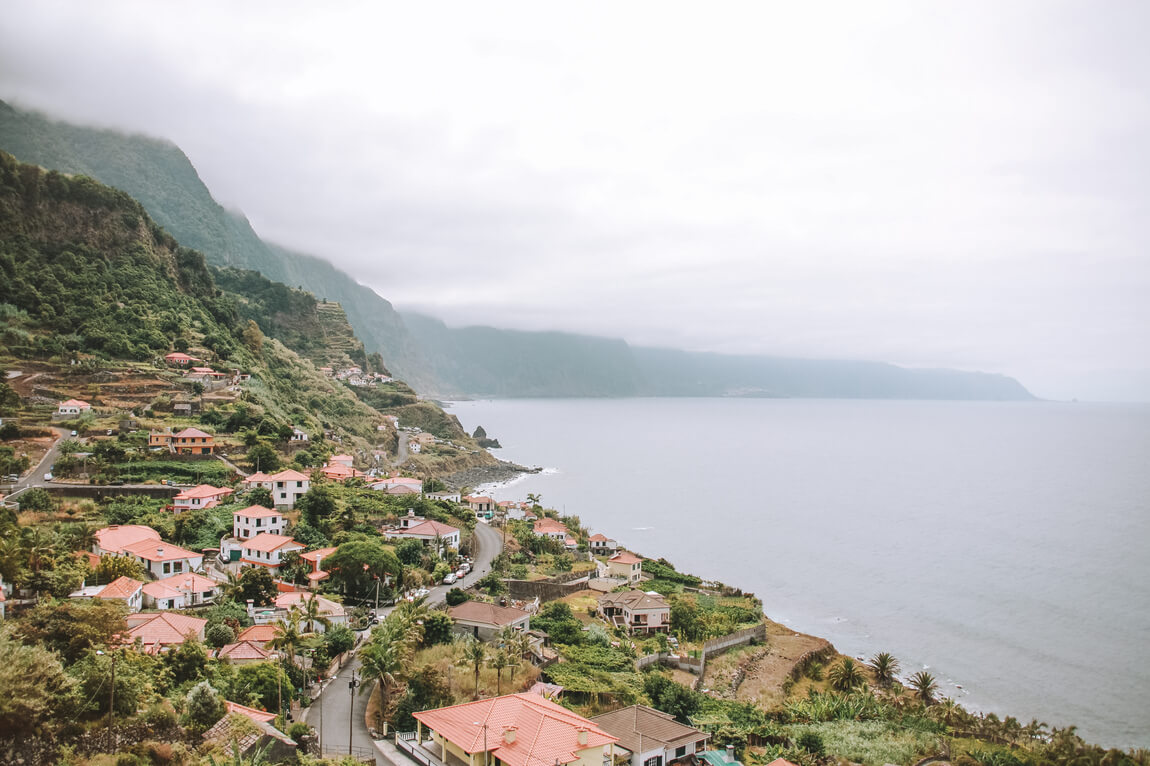
The village itself is quiet and relaxed, making it a nice stop before continuing east.
💡 EXTRA TIP: When driving from Ponta Delgada to São Jorge, you should add the Cabanas Viewpoint to your GPS. Here you will find spectacular views, and on a clear day, you can even see Porto Santo!
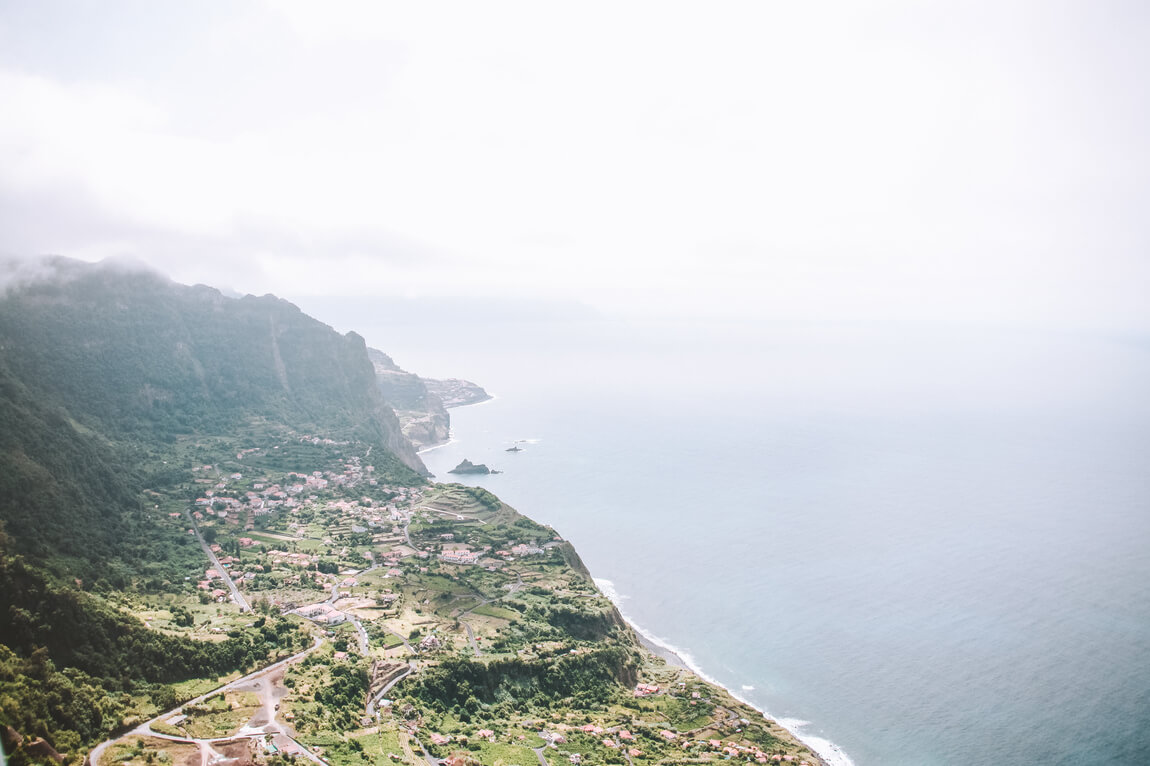
» São Jorge
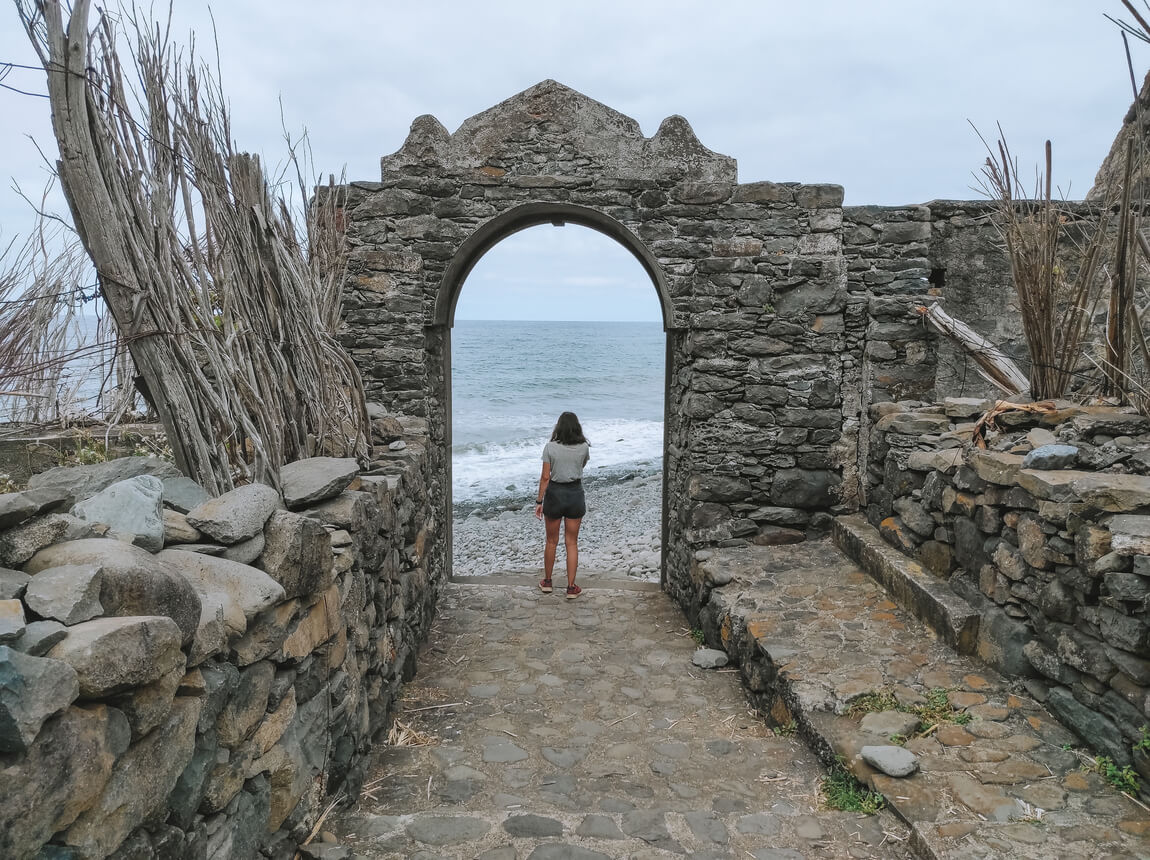
The main reason to stop in São Jorge is to visit the ruins of the old sugar cane mills, which date back to the early days of Madeira’s colonization.
While this stop is relatively quick, I still think it’s worth it if you enjoy small historical spots that are a bit different from the island’s viewpoints and nature.
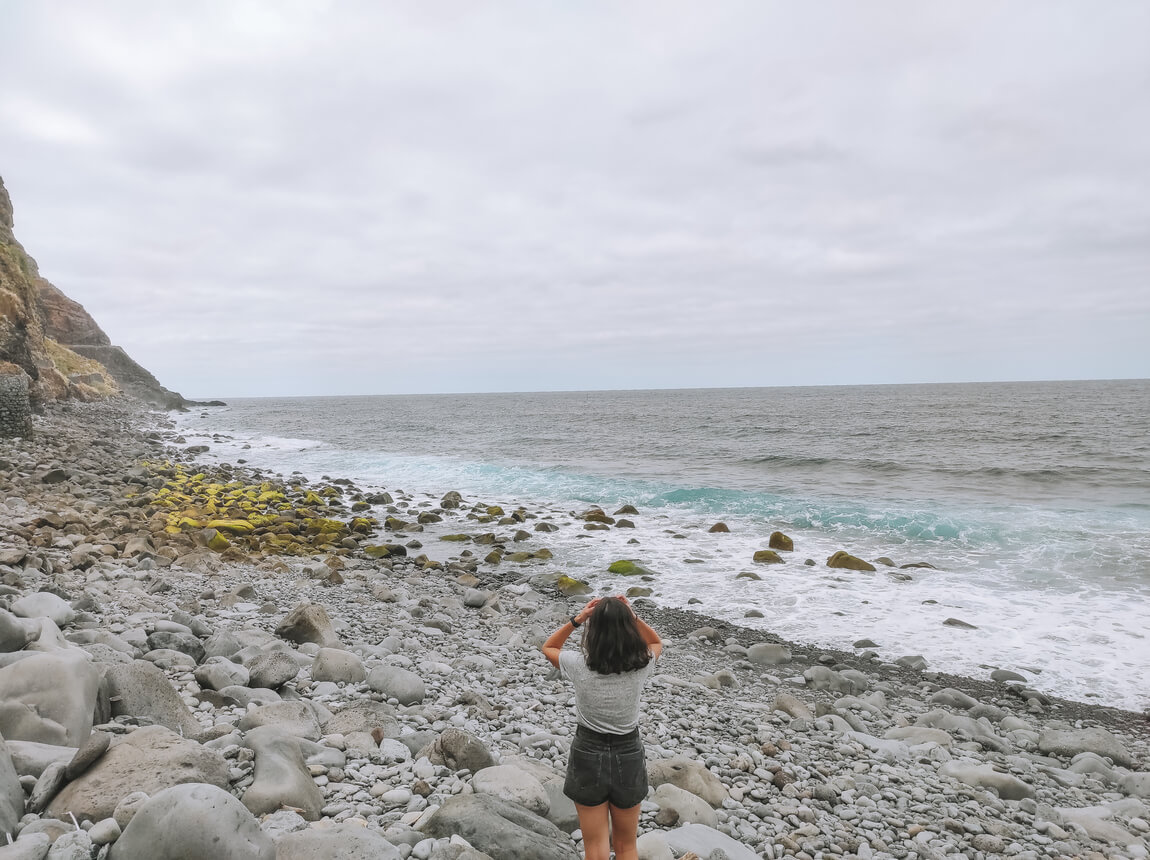
To get here, you can park your car next to the Calhau de São Jorge bathing complex, and from there it’s only a short walk to the ruins.
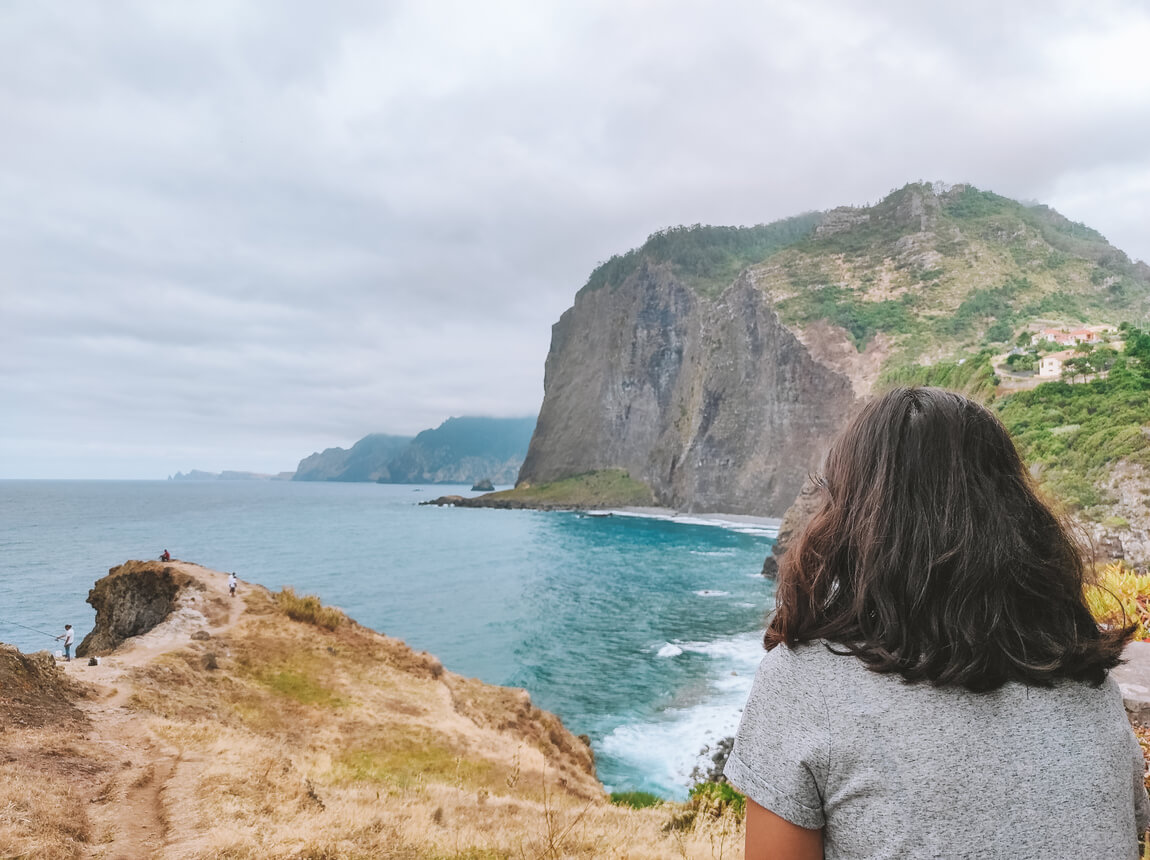
💡 EXTRA TIP: Before heading to Santana, make sure to stop at Guindaste Viewpoint. This ended up being one of my favorite viewpoints on Madeira’s north coast, with beautiful views over the cliffs, ocean, and even Ponta de São Lourenço on clear days.
» Santana
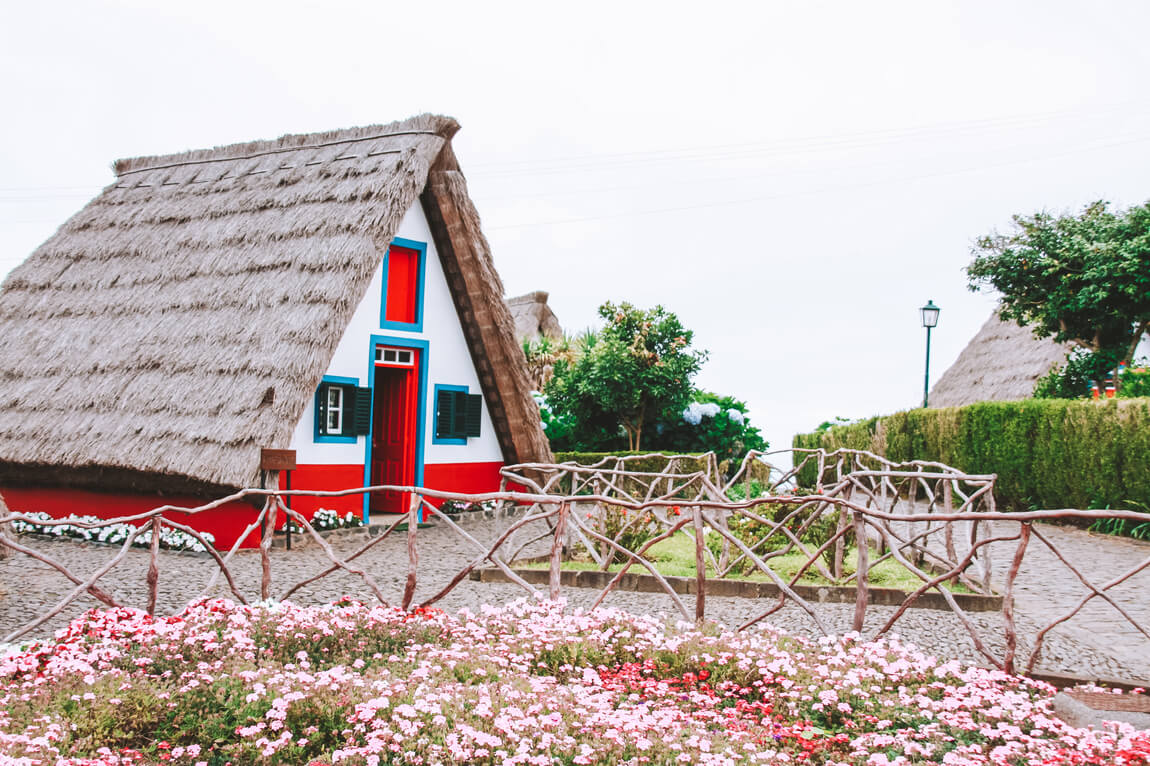
Santana is home to what is probably Madeira’s most iconic landmark: the famous traditional Santana houses.
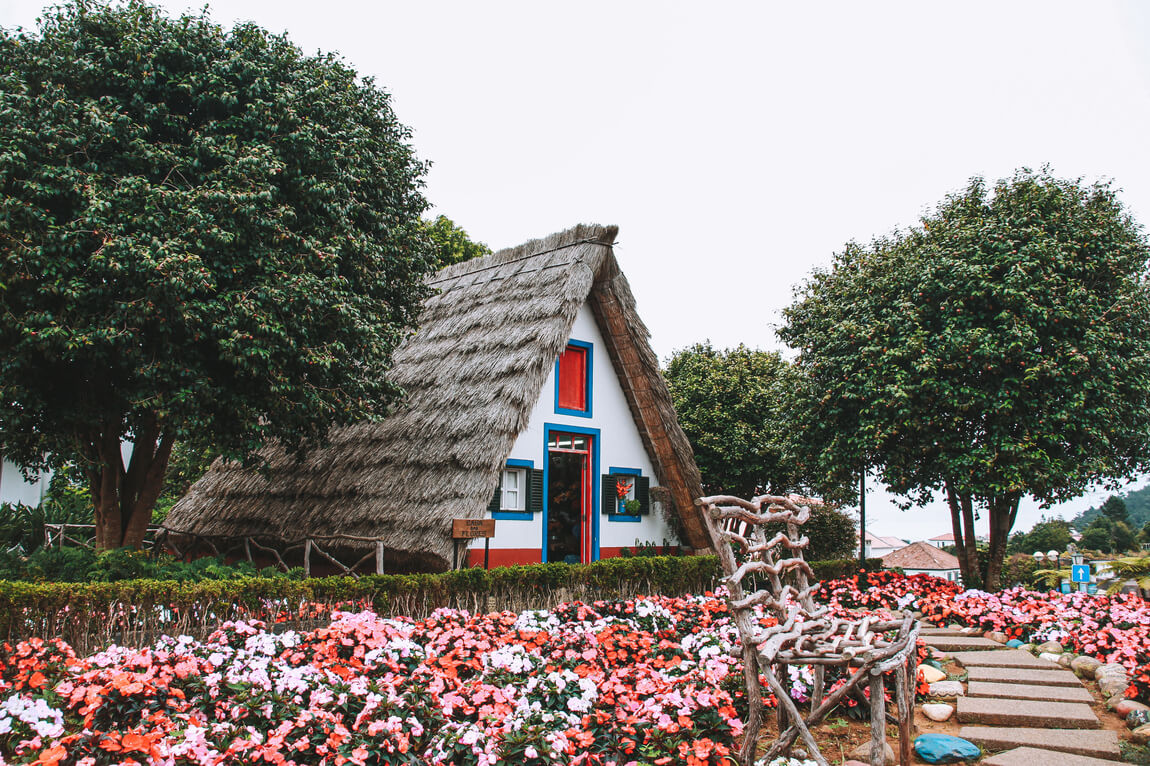
With their triangular shape, colorful facades, and thatched roofs, these small houses have become one of the island’s most recognizable symbols.
Most visitors head to the Núcleo de Casas Típicas de Santana, where several of the houses now contain local handicraft shops, regional products, and small displays of traditional culture.
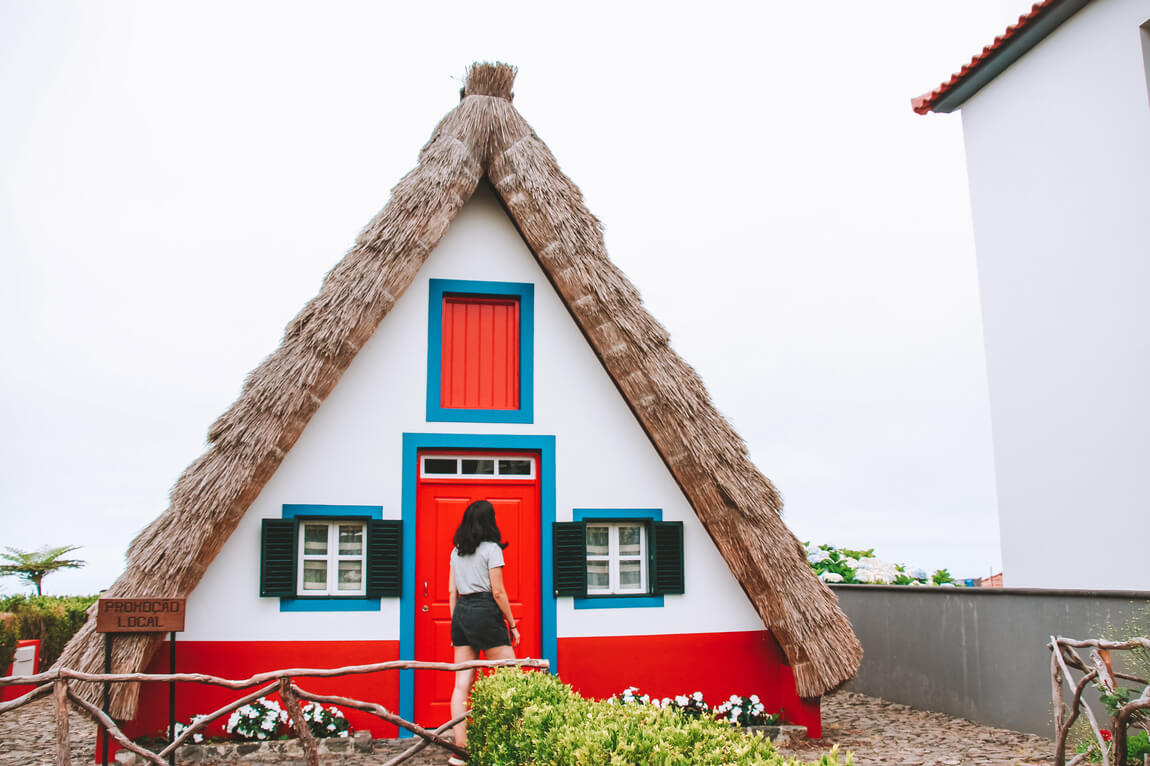
The area itself is relatively small and quite touristy, so I think it’s important to set expectations. You probably won’t need a huge amount of time here, but honestly, the houses look really cute in photos and I still think it’s worth stopping by.
💡 EXTRA TIP: If you have some extra time, you can also visit the Queimadas Forest Park, located near Santana. Here several trails start, such as Levada do Caldeirão Verde (PR9) and Levada Um Caminho para Todos.
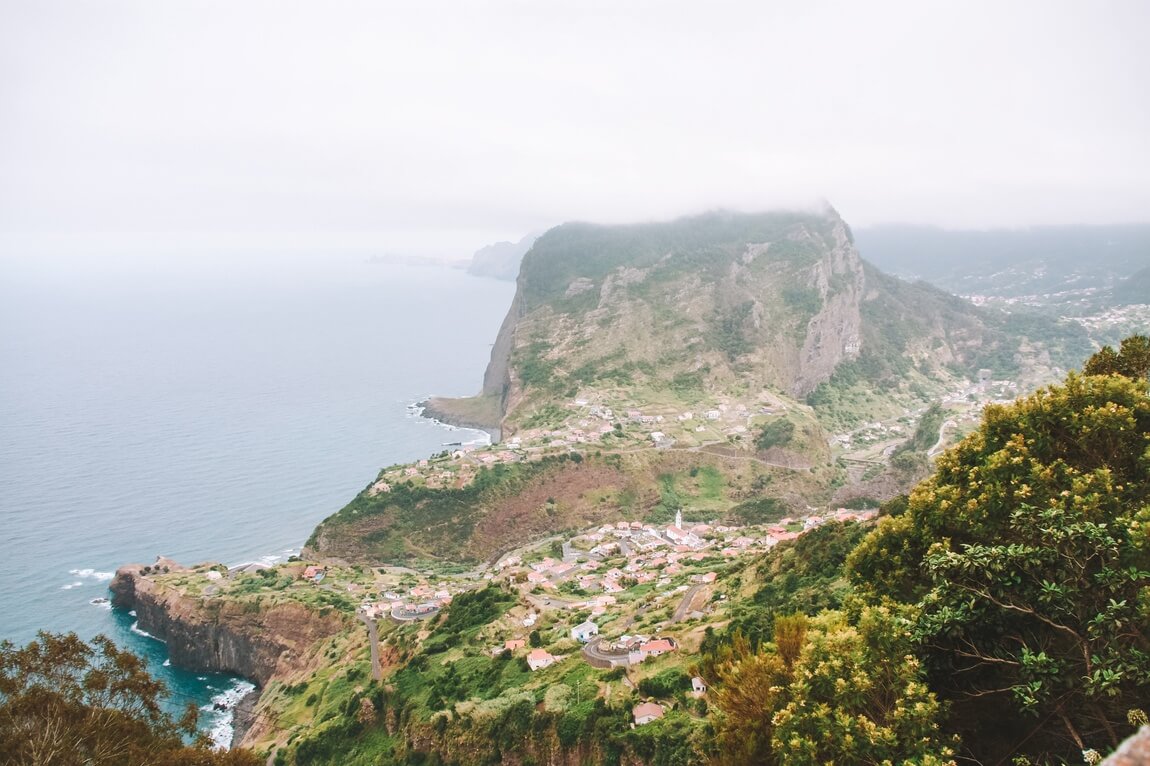
💡 EXTRA TIP: If you leave Santana heading towards Funchal, you can also stop at Curtado Viewpoint, where you’ll have beautiful views over Faial and the famous Penha d’Águia rock formation.
Day 4 in Madeira
» Ponta do Garajau
Ponta do Garajau is home to one of Madeira’s most famous viewpoints and the island’s own Cristo Rei statue, dramatically overlooking the Atlantic Ocean.
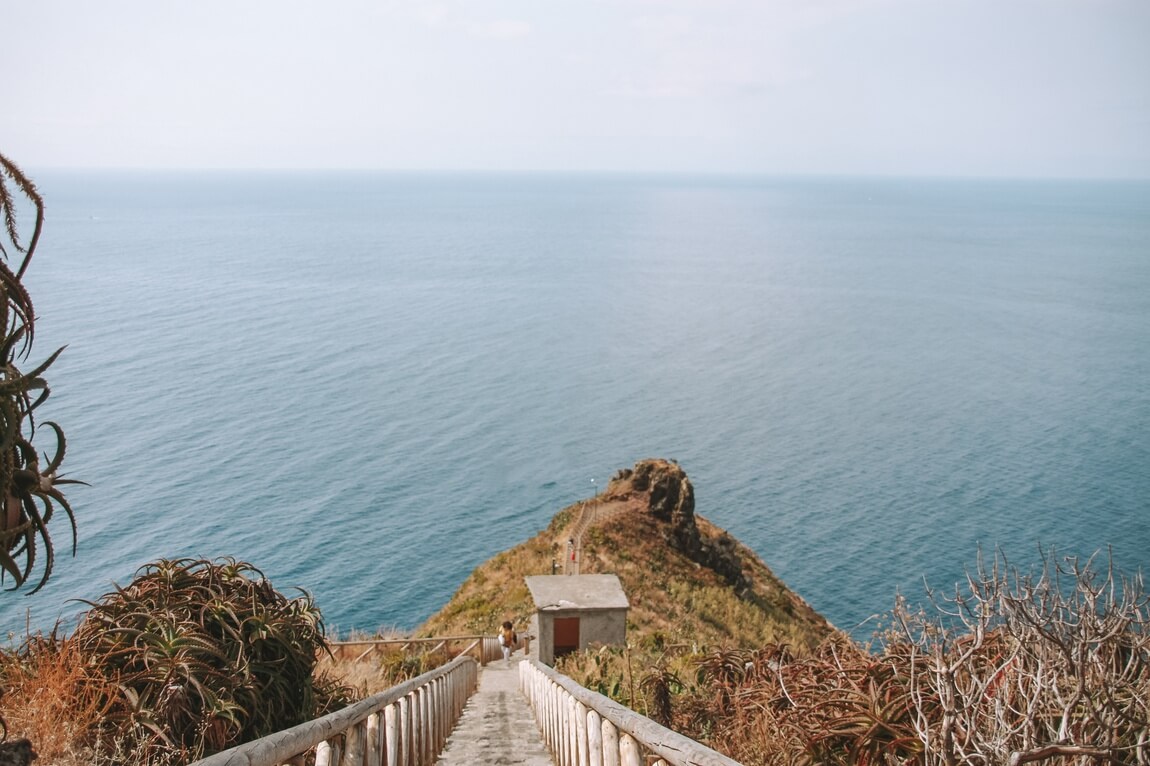
You’ve probably already seen photos of the famous staircase leading toward the viewpoint, which has become one of Madeira’s most recognizable photo spots.
This stop is relatively quick, but I definitely recommend taking some time to enjoy the views over Funchal Bay, the coastline, and the ocean.
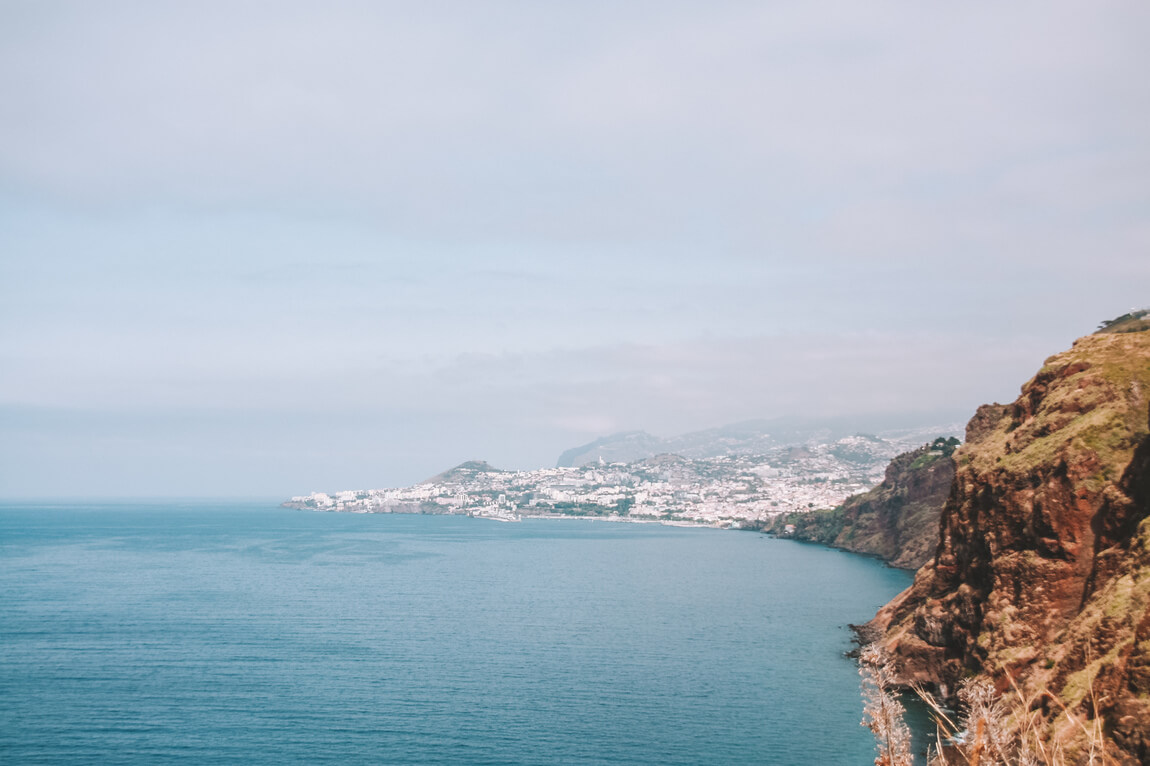
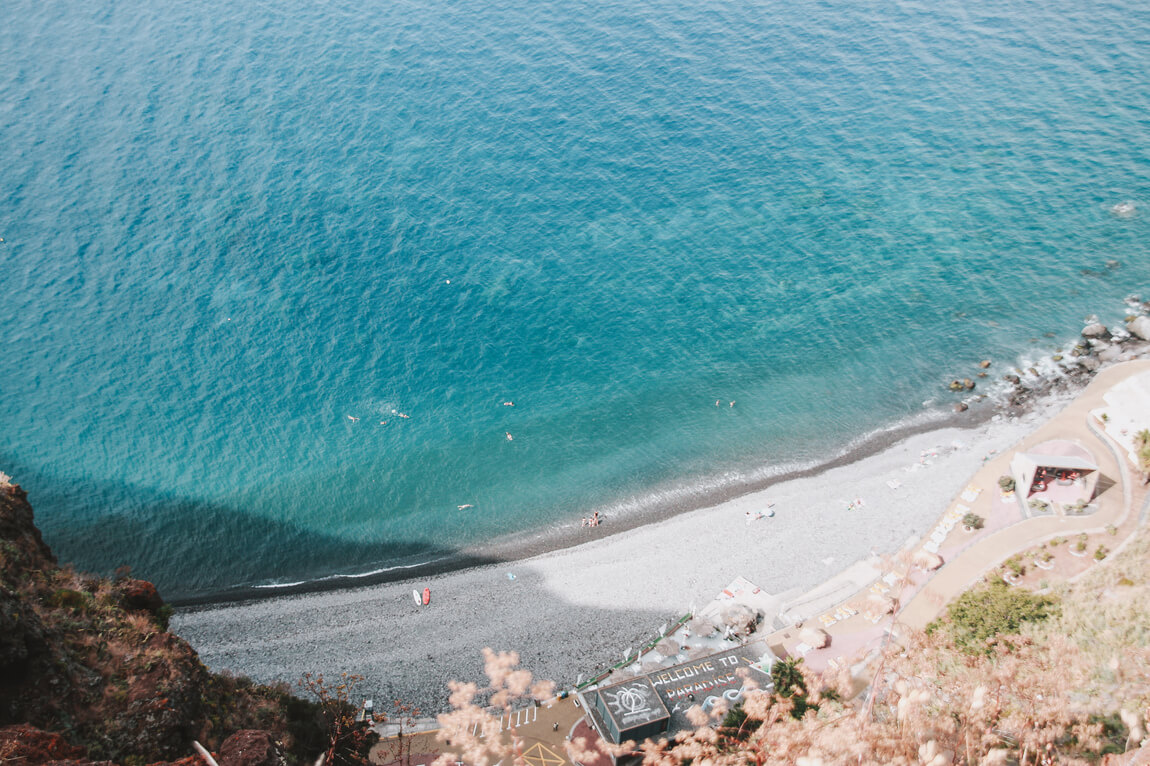
If the weather is warm and you feel like a swim, you can also head down to Garajau Beach, located below the cliffs.
Access is via cable car, and once you get there, you’ll understand why a sign welcomes visitors with “Welcome to Paradise”.
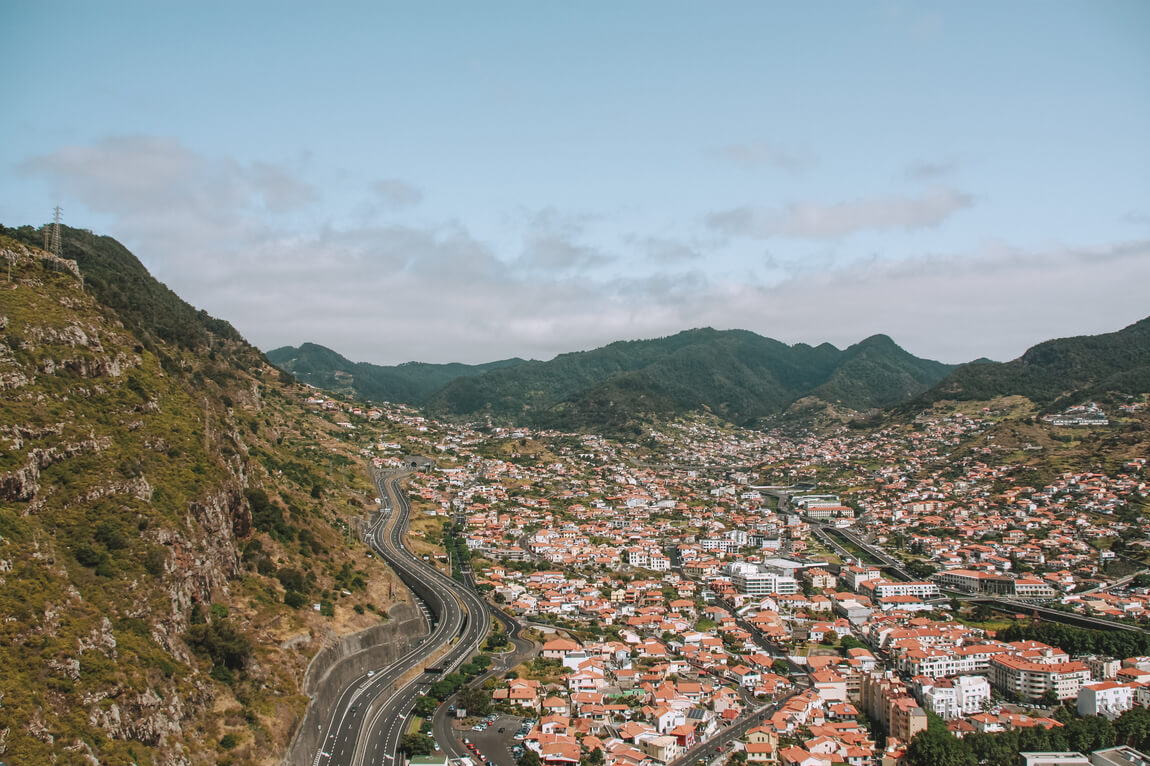
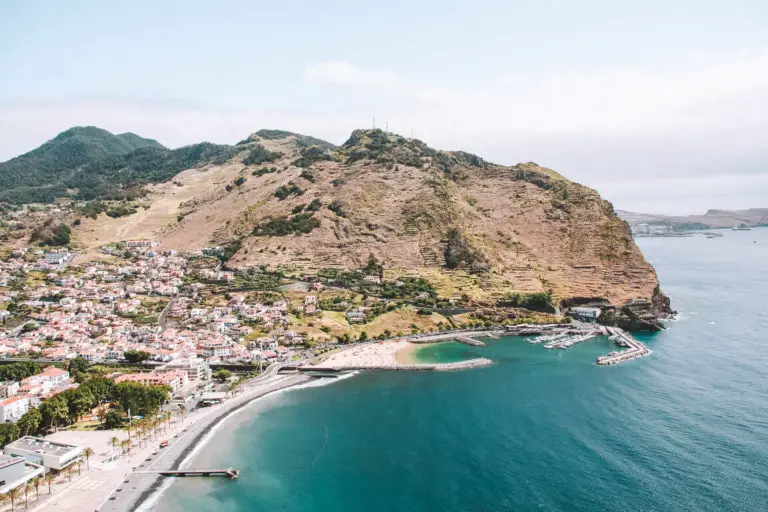
💡 EXTRA TIP: Before reaching Ponta do Garajau, you can stop at the Pináculo viewpoint with views over Funchal’s bay. I also suggest stopping at the Francisco Alvares Nóbrega Viewpoint. The viewpoint is located at the side of the road and has some of the best views over Machico and Ponta de São Lourenço.
» Ponta de São Lourenço
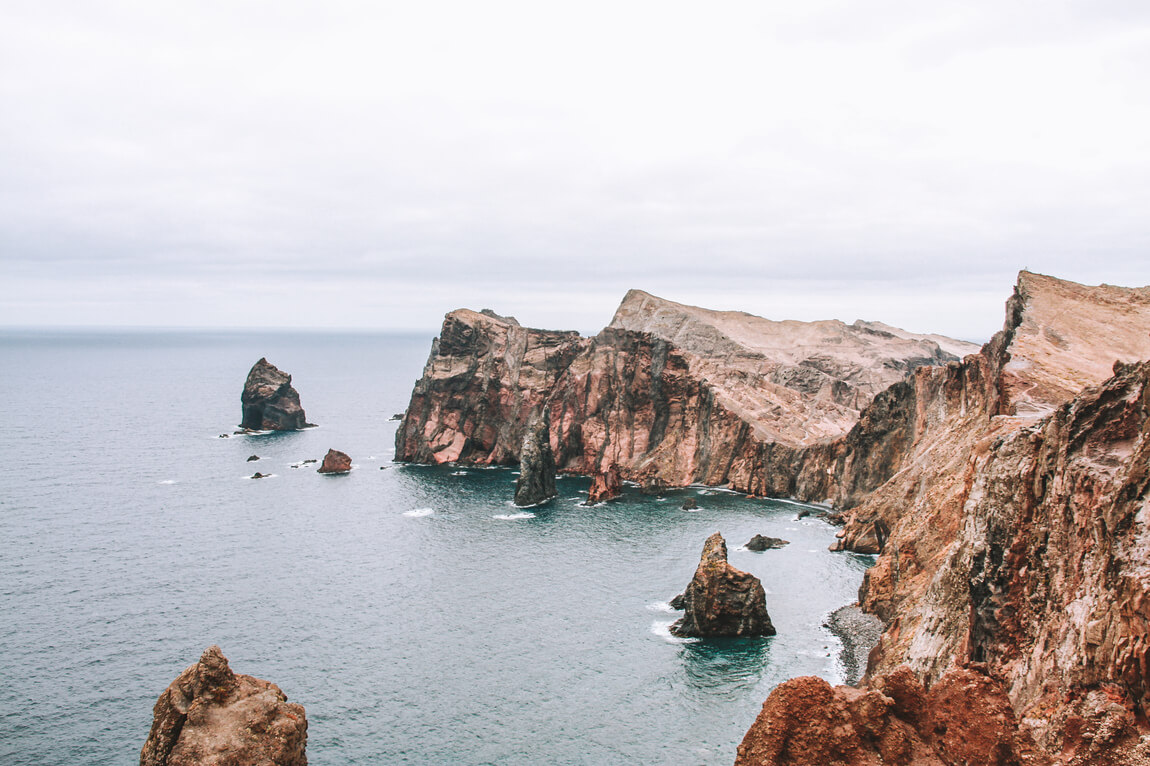
Stretching for around 9 km (5.6 miles), Ponta de São Lourenço feels completely different from anywhere else in Madeira.
Located in the easternmost part of the island, when you arrive here, it almost feels like you’re on another planet! The vegetation is much more sparse and the rocky and arid aspect of the place transports you mentally to another place than Madeira Island.
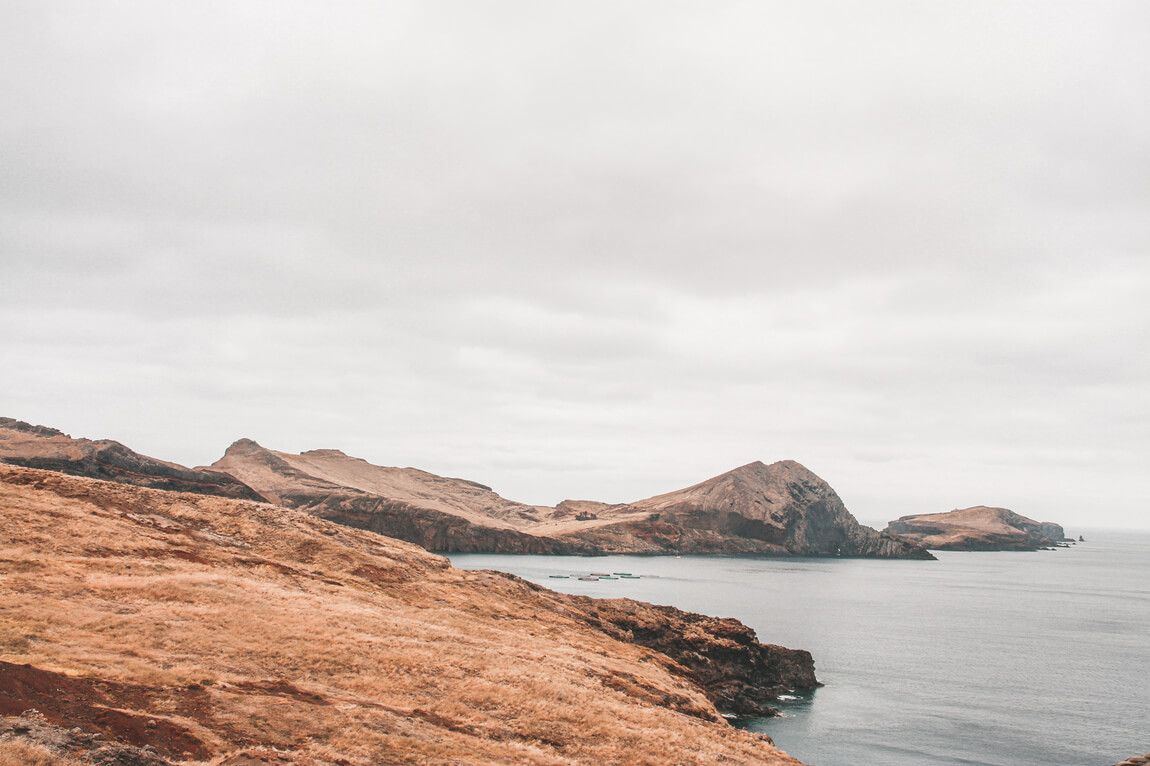
Even if you don’t have time to properly explore the area, I still think it’s absolutely worth including in your Madeira itinerary because the scenery is so different from the rest of the island.
One viewpoint you definitely shouldn’t miss nearby is Ponta do Rosto Viewpoint, which offers spectacular views over the dramatic coastline and ocean. Personally, this ended up being one of my favorite viewpoints in Madeira.
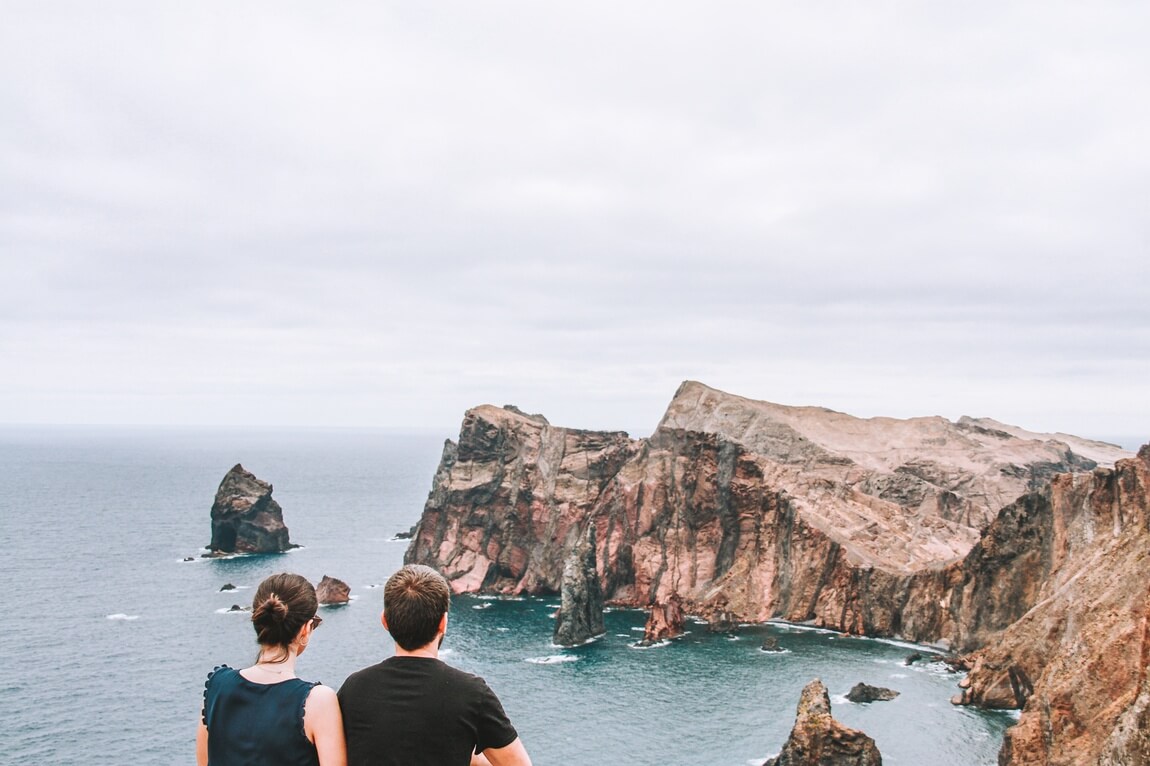
💡 EXTRA TIP: If you have extra time, one of the best ways to experience this area is by hiking the Ponta de São Lourenço Trail (PR8), one of Madeira’s most famous hikes. Unfortunately, I didn’t have time to do it during my trip, but it’s right at the top of my list for my next visit.
» Porto da Cruz
Porto da Cruz is one of the oldest settlements on Madeira’s north coast and has long been closely connected to sugar cane production, one of the island’s most important traditions.
One of the highlights here is Engenhos do Norte, one of the few remaining sugar cane mills still in operation. In fact, some of the original machinery dating back to 1927 is still used today to help produce Madeira’s famous rum and sugar cane products.
If you enjoy learning about local traditions, this is a really interesting stop and something a little different from Madeira’s usual viewpoints and landscapes.
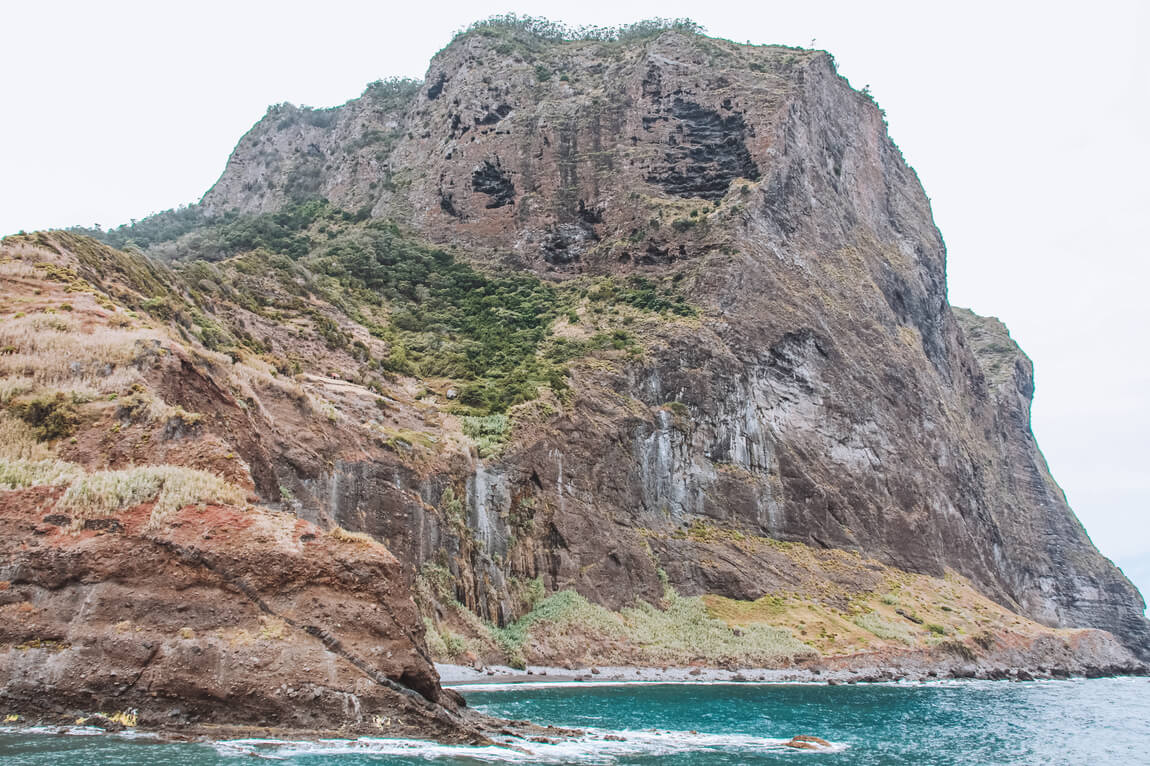
Apart from a visit to Engenhos do Norte to learn more about their history, you can also visit the Fortim do Pico viewpoint and Furna do Porto da Cruz viewpoint. Both offer beautiful views over the coastline and the dramatic cliffs surrounding the village.
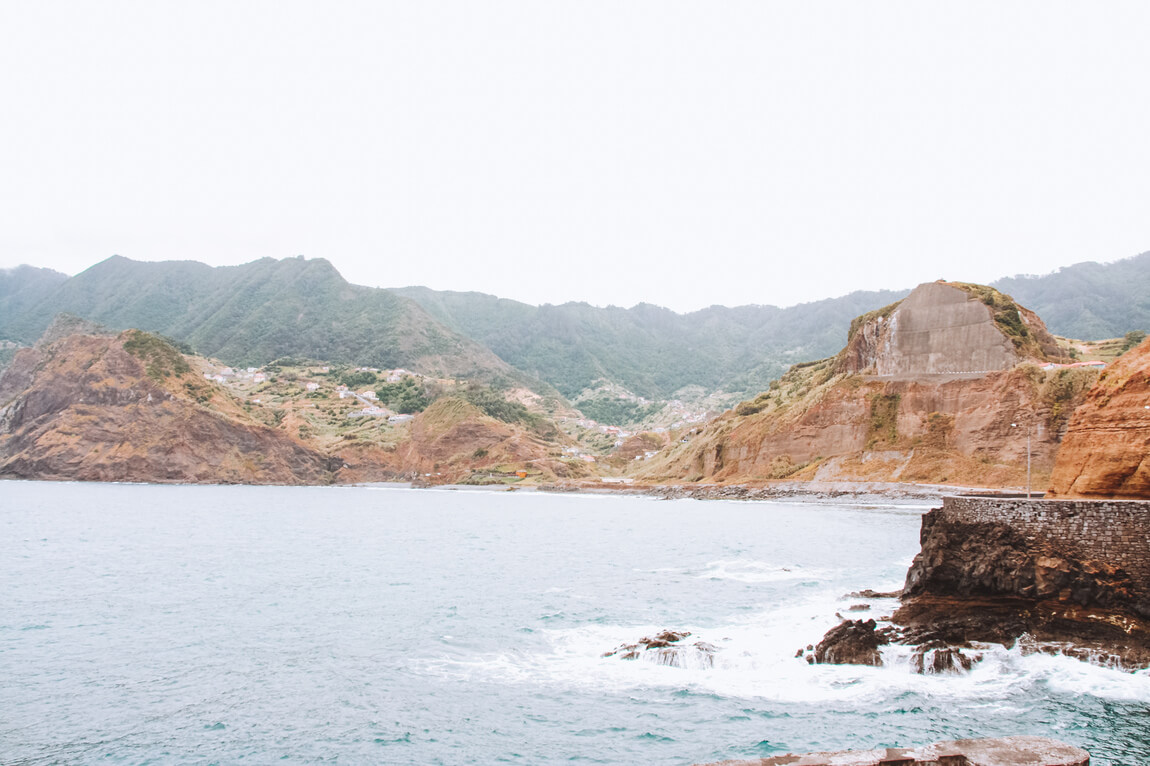
If the weather is good and you have extra time, Alagoa Beach is also a nice place for a swim, with beautiful views over Penha d’Águia, one of Madeira’s most iconic rock formations.
» Levada dos Balcões
Time to move on to what is probably the most beautiful viewpoint in Madeira – Balcões Viewpoint.
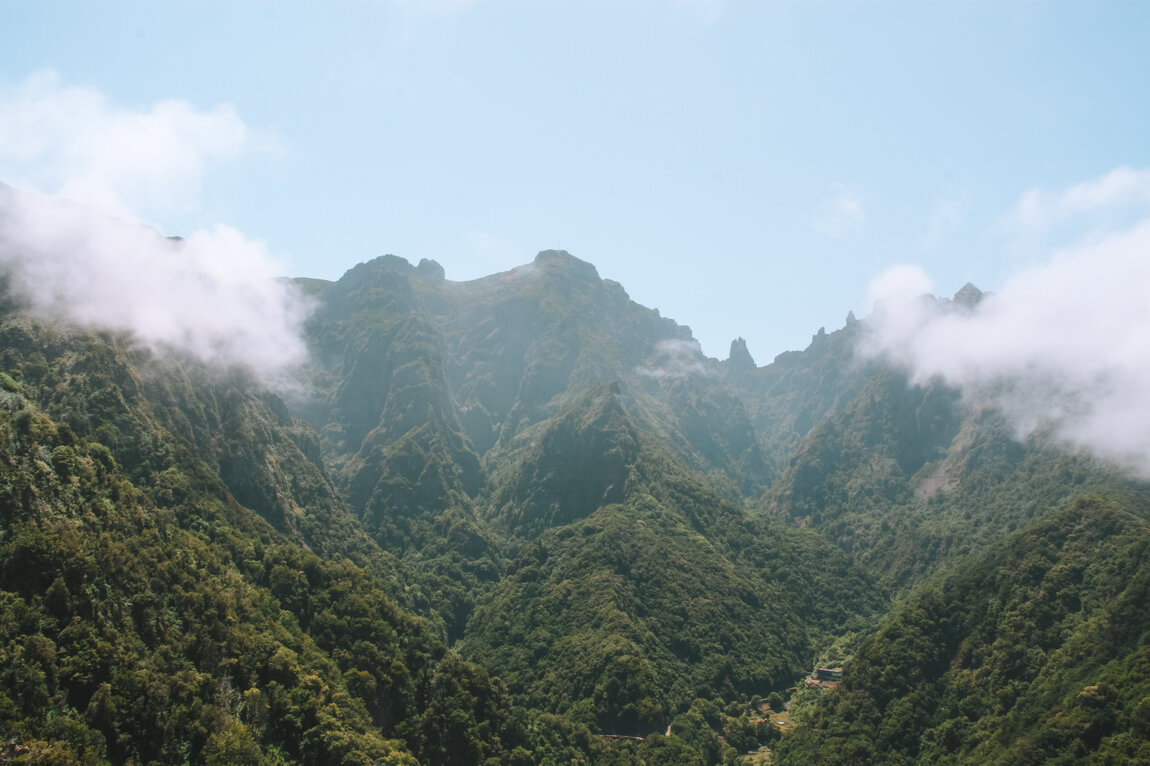
To reach it, you’ll need to follow the short Levada dos Balcões trail (PR11), an easy walk of around 3 km (1.9 miles) round trip.
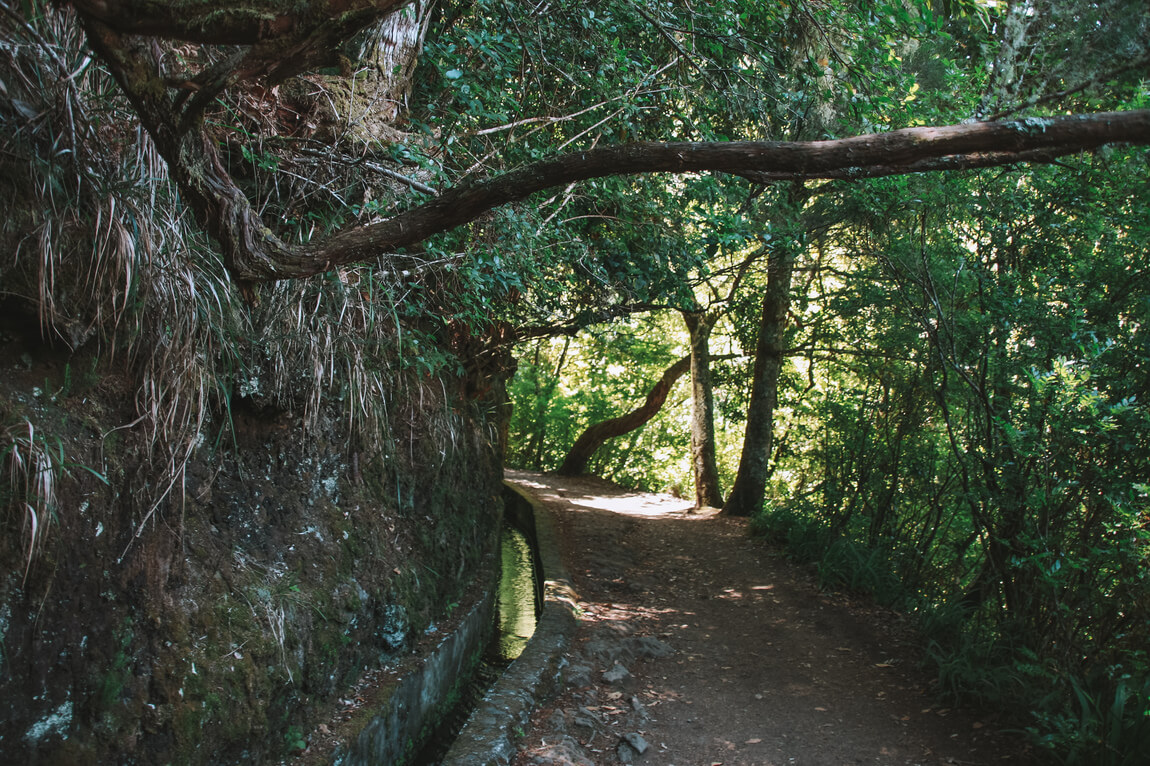
The trail itself is mostly flat and very manageable, making it one of the easiest hikes to include in a Madeira itinerary, even if you’re not a big hiker.
But the real reward comes at the end.
From Balcões Viewpoint, you’ll be treated to breathtaking views over Madeira’s dramatic mountains and the Laurissilva Forest, a UNESCO-listed forest and one of the island’s most beautiful natural areas.
Personally, I genuinely think this was one of the most beautiful viewpoints I visited in Madeira.
👉 Want all the practical details? You can check out my full guide to Madeira’s hiking trails, where I explain everything you need to know about this trail and other levadas worth doing.
» Curral das Freiras
Curral das Freiras (Valley of the Nuns) is another one of Madeira’s most emblematic places.
Its name is said to have originated around the 16th century when the nuns of the Santa Clara Convent took refuge there following the sacking of Funchal by the French.
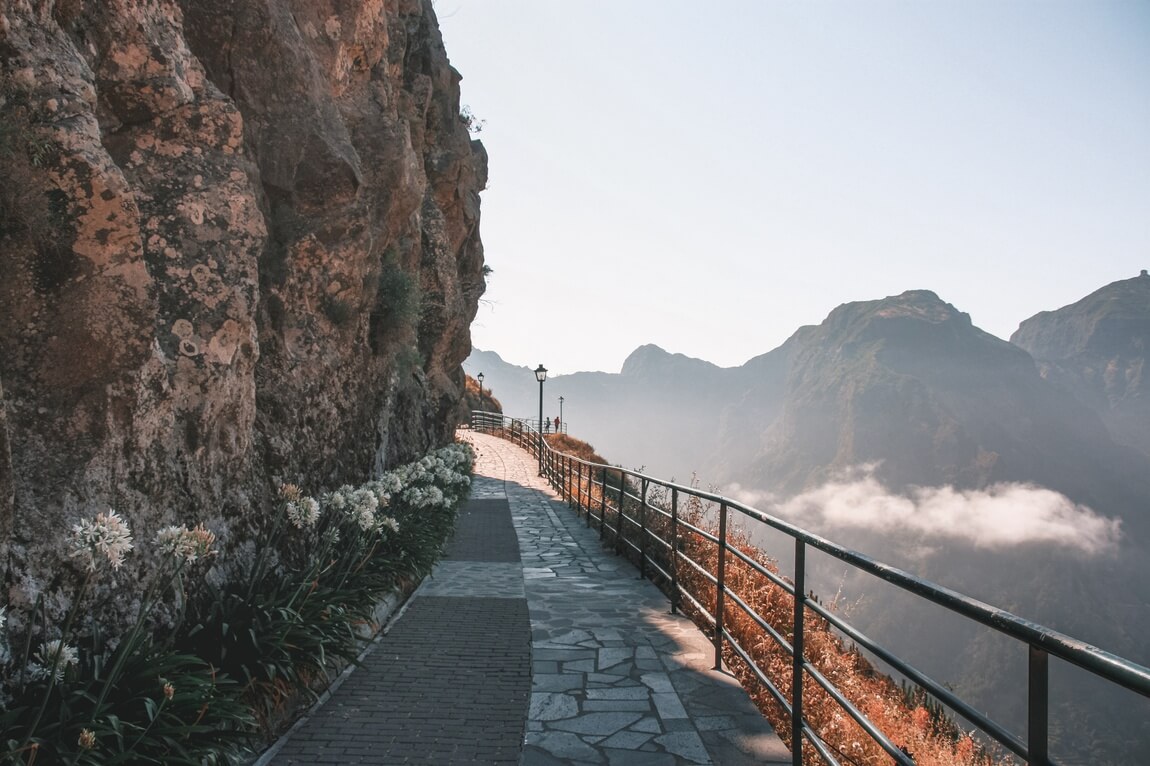
For the best views over Curral das Freiras, you can head to Eira do Serrado Viewpoint (right next to Eira do Serrado Hotel & Spa) or Paredão Viewpoint.
Personally, I think Eira do Serrado is one of those viewpoints that really shows just how dramatic Madeira’s landscapes can be.
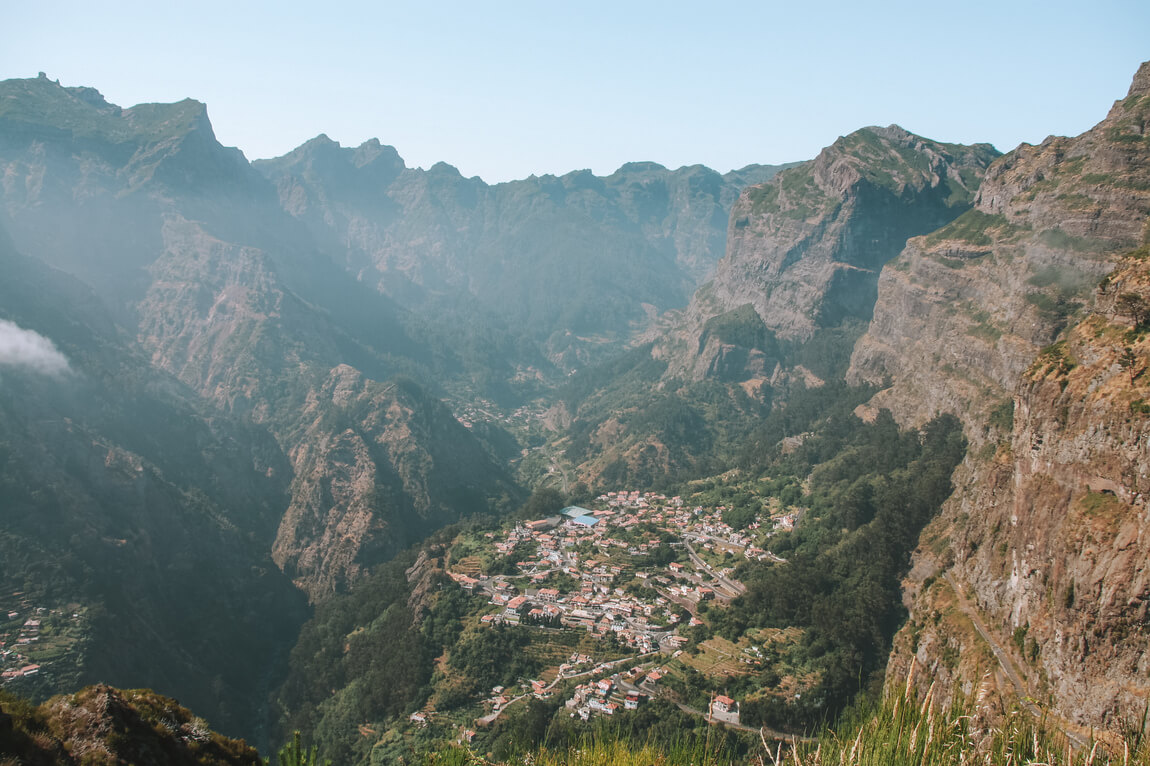
If you have time, you can also drive down into Curral das Freiras village itself, although be prepared for some steep and winding mountain roads.
💡 EXTRA TIP: The weather in Madeira is very uncertain and sometimes at high altitude, we may not have good visibility. This way and to avoid being disappointed, I recommend checking the real-time webcams on the Net Madeira site before visiting Eira do Serrado, since visibility is not always guaranteed.
» Pico do Areeiro
Next up is one of Madeira’s most magical places: Pico do Areeiro.
This is one of the island’s most popular spots for sunrise and sunset, and after visiting, I completely understand why. But even if you can’t come at golden hour (which was my case), I still think this place deserves a spot in your itinerary.
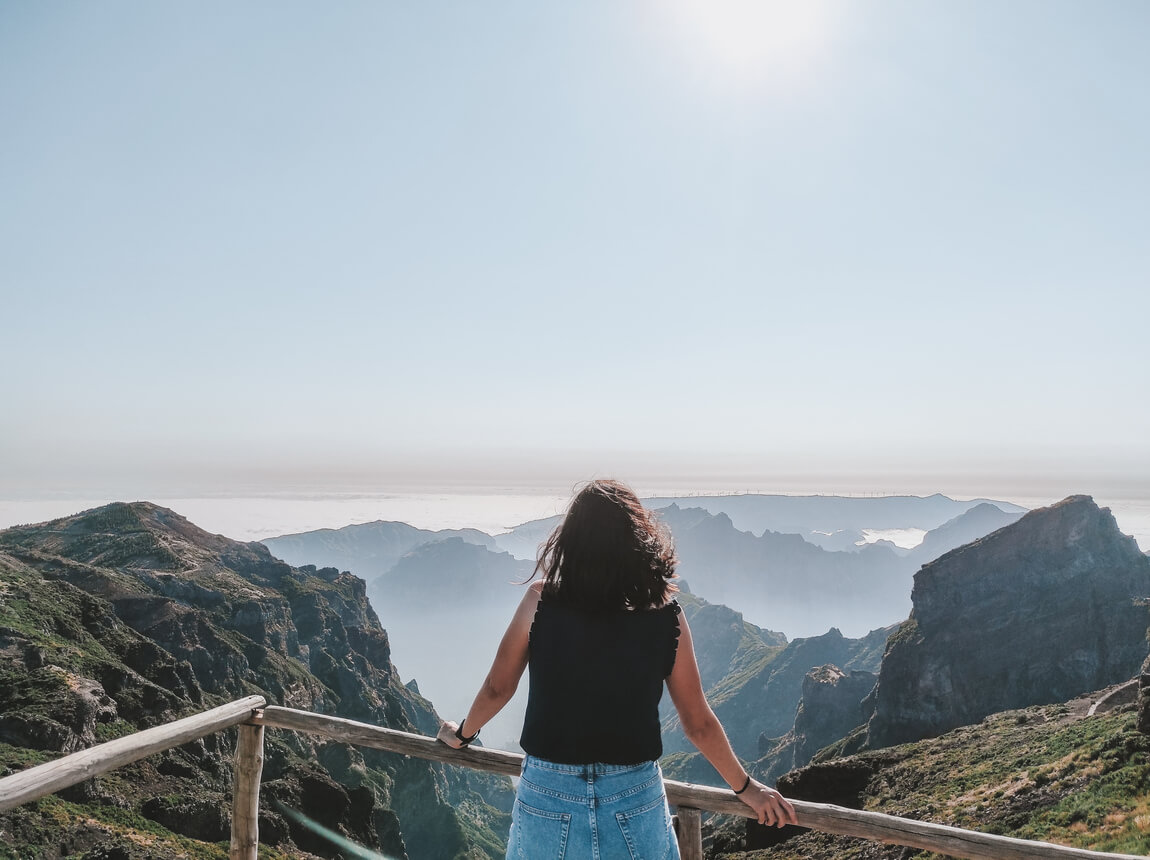
Located at 1,818 metres (5,965 ft) above sea level, Pico do Areeiro is the third-highest peak in Madeira, offering jaw-dropping views over the island’s central mountain range.
Honestly, this was one of those places where photos simply don’t do justice to the experience.
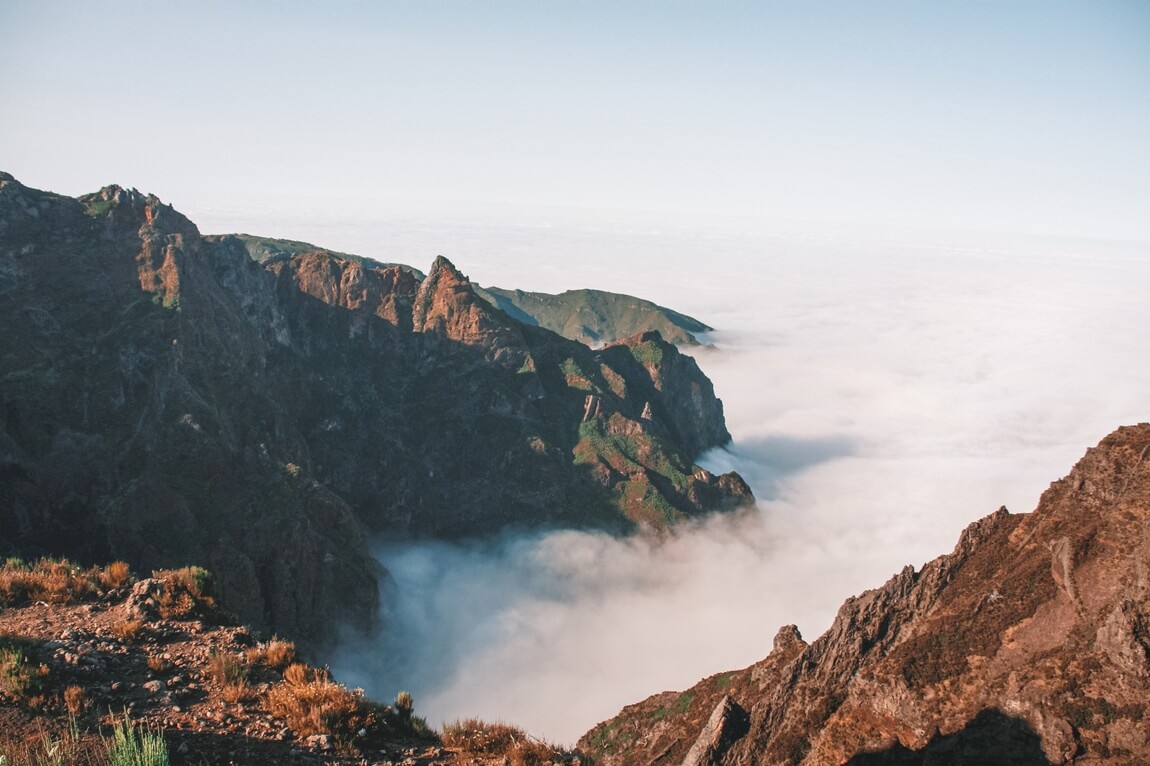
This is also where the famous Vereda do Areeiro (PR1) begins, one of Madeira’s most iconic and demanding hiking trails, connecting Pico do Areeiro to Pico Ruivo.
Just keep in mind that this is a fairly demanding trail, with steep sections, stairs, and exposed areas, so it’s best suited for those with a reasonable fitness level. It’s also one of the most popular hikes in Madeira, so don’t expect to have the trail to yourself, especially during summer or around sunrise.
Like most official PR hiking trails in Madeira, Vereda do Areeiro (PR1) requires an entry fee and booking online in advance. Since this is one of the island’s most famous hikes, I highly recommend booking ahead.
🎫 If you’d rather hike Pico do Areeiro to Pico Ruivo with a guide, this tour is a great option. It includes transportation and a local guide, making logistics much easier for this one-way trail while also giving you more context about the landscapes and mountains you’re seeing along the way.
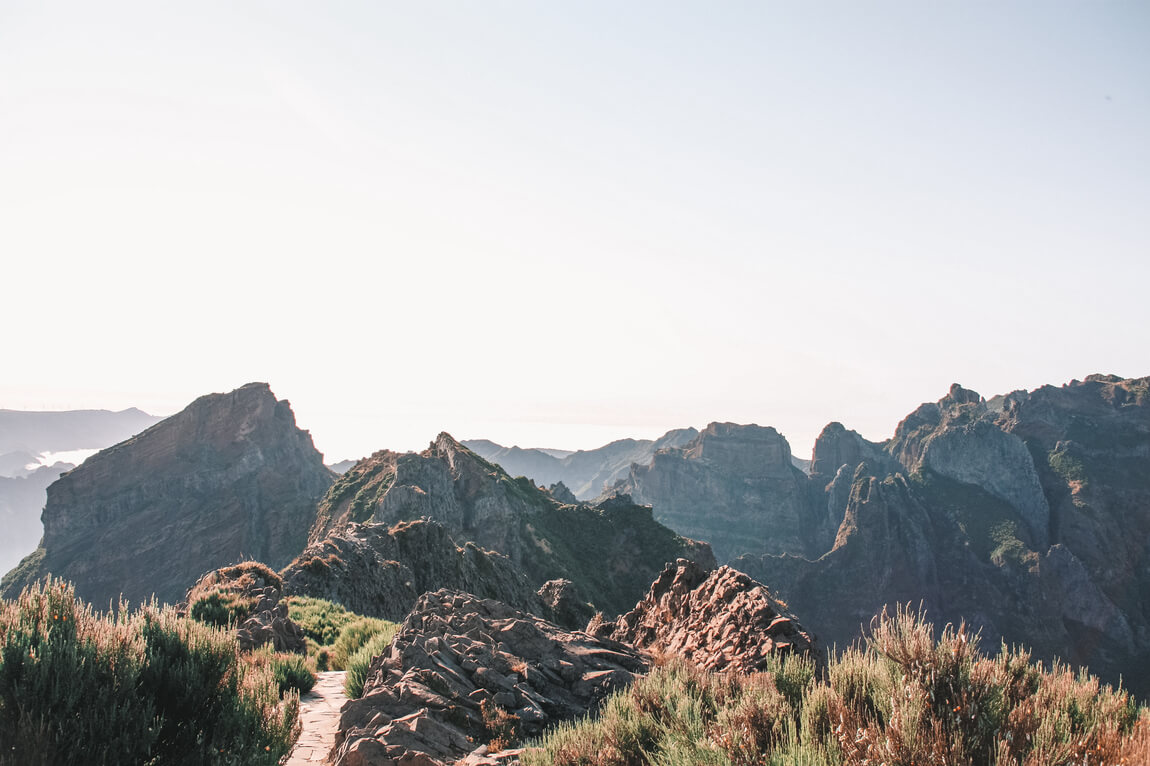
If you don’t have time (or energy) to complete the full hike, I highly recommend at least walking a short section toward Miradouro da Manta. The round trip takes around 45 minutes to 1 hour, and even this shorter walk gives you incredible mountain views. Although the distance is short, the way back is almost always uphill.
💡 EXTRA TIP: Because of the altitude, weather conditions here change very quickly. Before driving all the way up, check the Net Madeira webcams to make sure visibility is good.
Day 5 in Madeira
After several packed days exploring Madeira’s mountains, viewpoints, hiking trails, and coastal villages, I’d recommend slowing the pace a little.
Day 5 is the perfect opportunity to enjoy one of Madeira’s most popular experiences while also leaving some time to relax.
Start the morning with a whale and dolphin watching tour from Funchal, one of the most memorable activities on the island.
Madeira is considered one of the best places in Europe for whale and dolphin watching, with sightings possible throughout much of the year. While wildlife can never be guaranteed, many tours have very high success rates and often spot dolphins, sperm whales, pilot whales, or even turtles.
Personally, I think this is one of those experiences that adds something completely different to a Madeira trip.
Most tours depart from Funchal Marina, last around 2 to 3 hours, and are available throughout the year. If visiting during peak season, I recommend booking in advance.
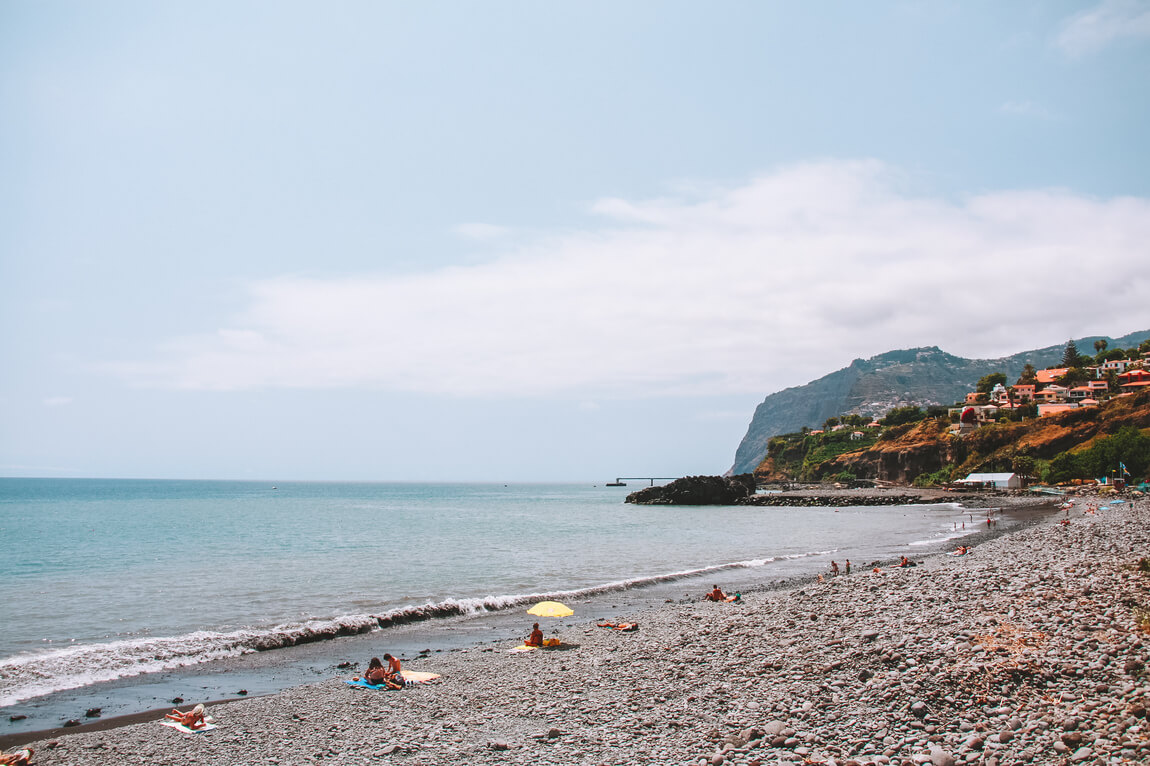
After the tour, spend the rest of the day enjoying a slower side of Funchal.
Depending on your mood and the weather, here are a few ideas:
- Wander around the Marina and harbor area
- Walk along the Lido Promenade, one of the city’s nicest seafront walks
- Relax at Praia Formosa, Funchal’s largest beach
- Enjoy a long lunch overlooking the ocean
- Visit Blandy’s Wine Lodge to learn more about Madeira wine and enjoy a tasting
Personally, after several busy days on the road, I think having a more relaxed day in Madeira makes a lot of sense. It also gives you some flexibility in case weather conditions force you to adjust plans from previous days.
Day 6 in Madeira
After several days exploring Madeira’s mountains, waterfalls, viewpoints, and coastal villages, it’s finally time to properly discover Funchal, Madeira’s capital.
Even though many people mainly use Funchal as a base for exploring the island, I genuinely think it deserves at least one full day. Between tropical gardens, cable cars, traditional markets, historic streets, and seaside promenades, there’s much more to see here than many visitors expect.
Start the morning with one of Funchal’s most iconic experiences: the Monte Cable Car.
Besides being a beautiful ride, it offers some of the best panoramic views over the city as you slowly climb toward Monte.
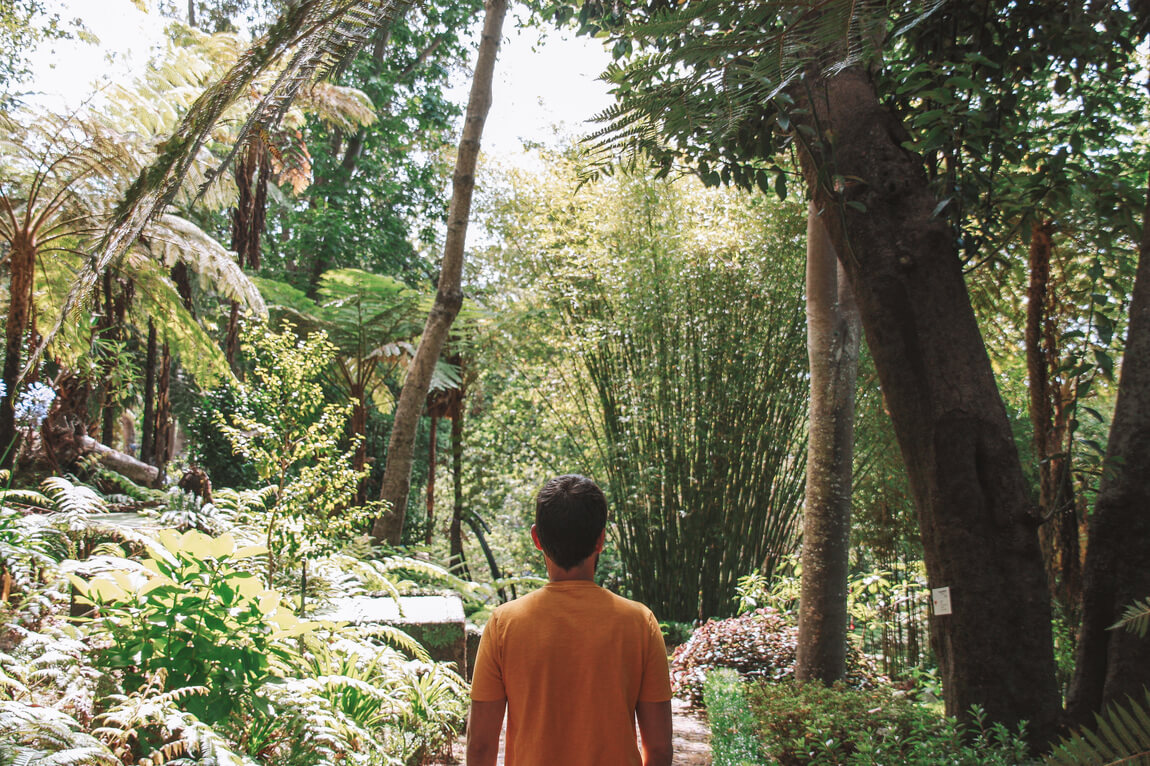
Once there, don’t miss Monte Palace Garden, one of the most beautiful tropical gardens in Madeira. Filled with exotic plants, ponds, sculptures, and incredible viewpoints, this easily became one of my favorite places in the city.
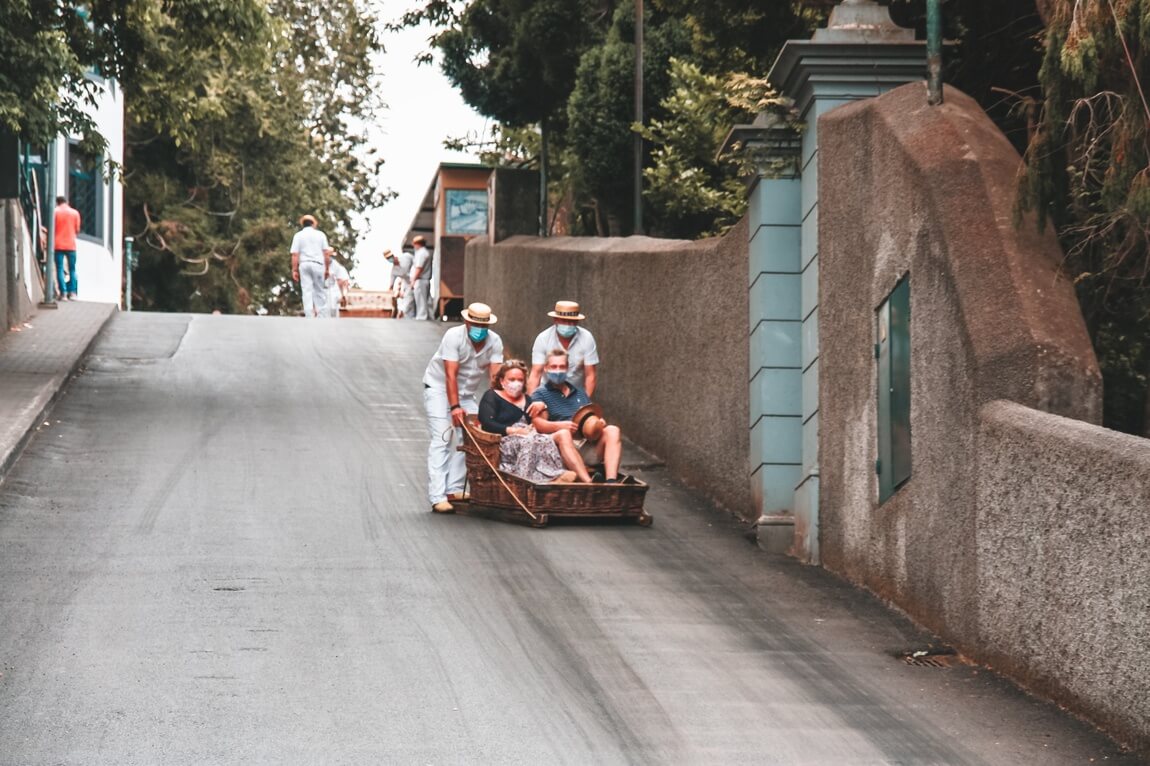
While in Monte, it’s also worth stopping by the Church of Our Lady of Monte and watching Madeira’s famous Monte Toboggan Wicker Sledges (Carreiros do Monte) in action. If you’re feeling adventurous, you can even ride one back downhill.
After lunch, head toward Funchal Old Town, one of the city’s most charming areas.
I’d recommend prioritizing:
- Capela do Corpo Santo
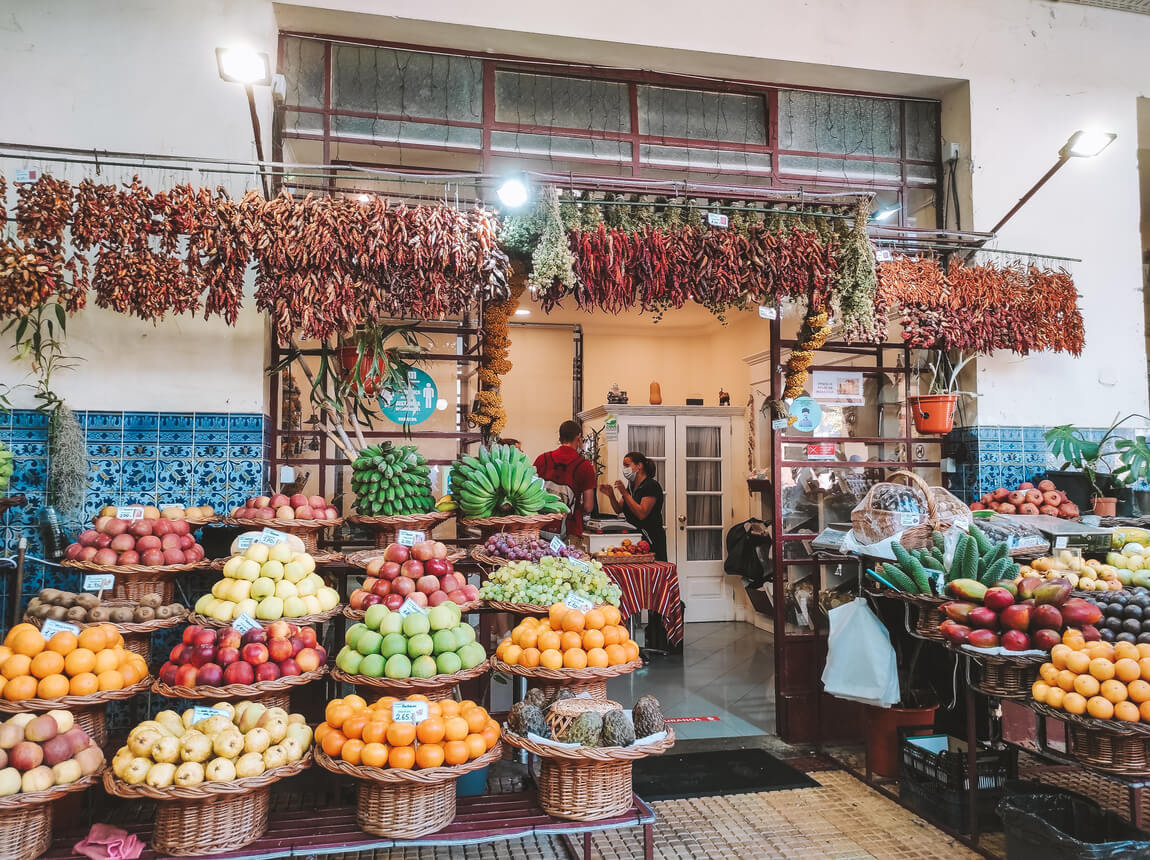
- Mercado dos Lavradores, famous for tropical fruit stalls and local products
- Santa Maria Street, known for its colorful painted doors
- São Tiago Fortress
🎫 If you’d rather explore with a local guide, this Funchal Old Town Walking Tour is a great way to learn more about Madeira’s history while visiting highlights like Mercado dos Lavradores, Santa Maria Street, and other key landmarks in Funchal. A great option for first-time visitors to the city.
From there, continue exploring the city center with stops at:
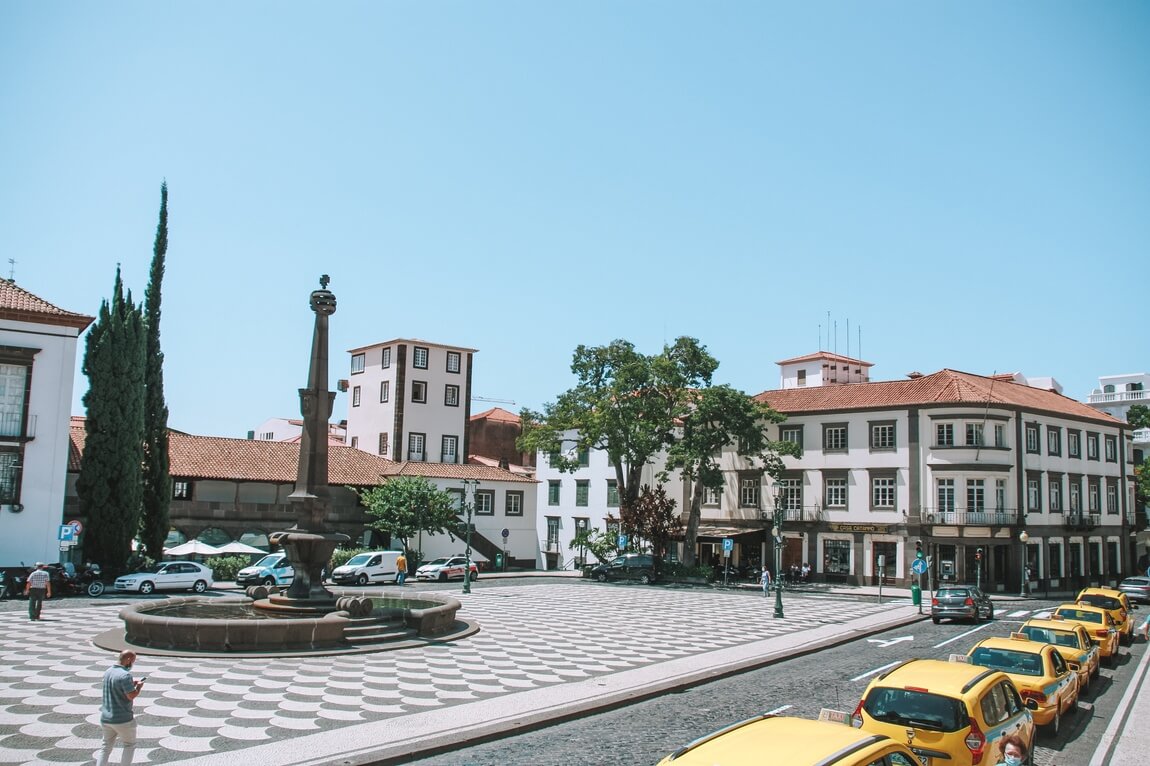
- Municipal Square (Praça do Município)
- São João Evangelista Church
- Funchal Cathedral
- Avenida Arriaga
- Santa Catarina Park
If the weather is good and you still have energy at the end of the day, finish with a walk along the Marina and harbor area, which feels especially pleasant around sunset.
👉 Recommended experience: Sunset sailing tour from Funchal
Personally, Funchal surprised me much more than I expected. Even though Madeira is often associated with dramatic landscapes and hiking trails, I really enjoyed slowing down here after several busy days exploring the island.
💡 Want a more detailed plan for the city? Check out my complete guide to what to do in Funchal, where I share a ready-to-follow itinerary, practical tips, restaurants, and hidden gems in Madeira’s capital.
Alternative Madeira 4-day itinerary
If you have fewer days available for your trip, I’d recommend prioritizing Madeira’s main highlights and skipping a few of the less essential stops, such as Porto da Cruz or Ponta Delgada.
You may also want to choose just one hiking trail, especially if you prefer a more relaxed pace or aren’t too focused on hiking.
Based on that, here’s the 4-day Madeira itinerary I’d personally recommend:
- Day 1: Santa Cruz – Câmara de Lobos – Cabo Girão – Fajã dos Padres – Ribeira Brava – Ponta do Sol – Anjos Waterfall – Porto Moniz
- Day 2: Porto Moniz – 25 Fontes/Risco Trail – Seixal – São Vicente – Funchal
- Day 3: Funchal – Ponta do Garajau – Ponta de São Lourenço – Santana – São Jorge – Balcões Trail – Curral das Freiras – Pico do Areeiro – Funchal
- Day 4: Funchal (without Lido Promenade and Formosa beach, if you don’t have time)
Alternative Madeira 7-day itinerary
If you have 7 days in Madeira, I honestly think you’ll be able to experience the island at a much more relaxed pace while also adding one or two unforgettable experiences that didn’t quite fit into this itinerary.
Rather than trying to squeeze everything into 6 days, I’d recommend using your extra day for one of these options, depending on your travel style:
- Option 1: Walking Areeiro Trail (Vereda do Areeiro)
- Option 2: travel to Porto Santo by ferry (journey time: 2h15) or by plane (journey time: 25 minutes)
- Option 3: walk Caldeirão Verde Hiking Trail (PR9, 13 km/ 8 mi round trip) or Ponta de São Lourenço Hiking Trail (PR8, 8 km/5 mi round trip)
Personally, if I had 7 days in Madeira, I’d probably choose the hiking trail from Pico do Areeiro to Pico Ruivo since it’s one of the most iconic trails on the island.
Restaurants in Madeira
Now that I’ve shared some of the best places to visit around the island, let’s talk about one thing that completely exceeded my expectations: Madeiran food.
Honestly, I had no idea Madeira’s gastronomy would end up becoming one of my favorites in Portugal. Between bolo do caco, espetadas, fresh seafood, poncha, Nikita, and traditional stews, there were so many dishes I genuinely loved trying during the trip.
If you’re wondering what to eat in Madeira, I actually put together a complete guide to the island’s traditional food and drinks, including all the local specialties I think are worth trying.
🎫 If you enjoy discovering a destination through food, this Madeira food walking tour can be a great way to try local specialties while learning more about the island’s culture.
And because good food can easily become one of the highlights of any trip, here are some restaurants across Madeira that I genuinely enjoyed and think are worth adding to your itinerary:
» Funchal and surroundings
- [Funchal] A Gruta (€€€): A lovely restaurant located right next to the Marina, perfect for trying traditional Madeiran dishes with a slightly more refined feel. We tried the picado and a delicious seafood rice with octopus, both of which were excellent.
- [Funchal] A Bica (€€): simple place, located next to the Lavradores Market. Tasty traditional food at interesting prices.
- [Funchal] Barreirinha Bar Café (€€): a very nice bar right by the sea. Their specialties include prego em bolo do caco and burgers, but the real standout for me was the Nikita, which ended up being the best one I tried anywhere in Madeira.
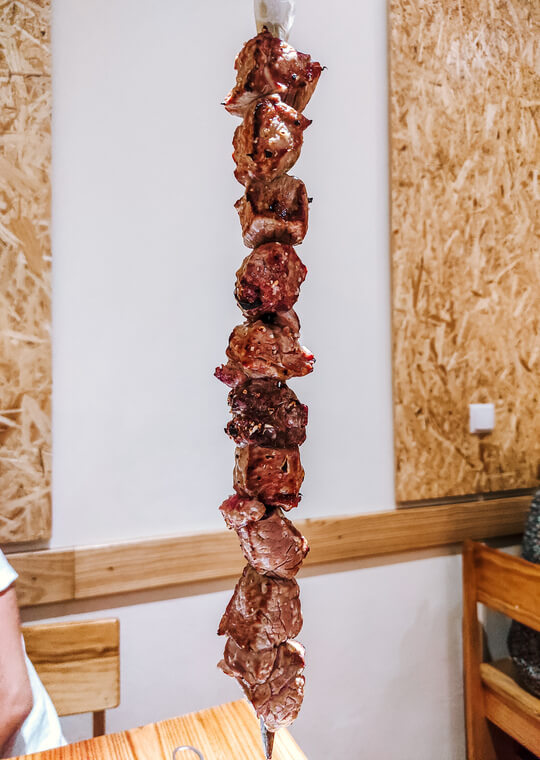
- [Câmara de Lobos – 10 min drive] O Polar (€): they only serve espetadas and barbecue chicken, but the espetadas are divine. The portions are generous and prices are very reasonable.
- [Camacha – 20 min drive] Abrigo do Pastor (€€): A very traditional restaurant serving hearty regional dishes in a cozy setting. We loved the attentive service, excellent value for money, and especially the regional espetadas with bean rice, which were fantastic.
- [Santa Cruz – 18 min drive] A Bilheteira (€): A simple local restaurant, but one that really surprised me. Their picado and prego em bolo do caco were some of the best I tried during the trip. Great option if you’re after tasty local food without spending much.

» Porto Moniz
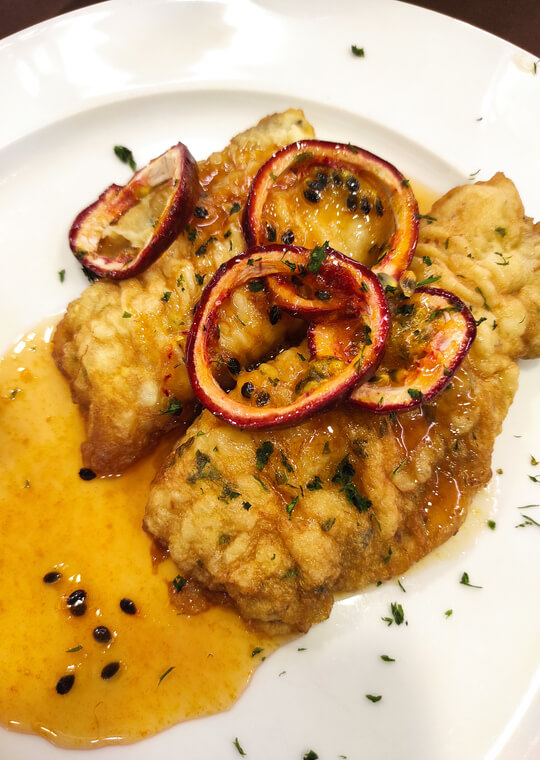
- Dom Peixe (€€€): Prices are on the higher side, but the food definitely delivers. We tried the black scabbard fish fillets with passion fruit sauce.
» Ponta do Sol
- Maré Alta Bar e Restaurante (€€): A relaxed beachfront restaurant with a very pleasant atmosphere, perfect for a slower lunch with ocean views. We tried the sautéed squid with sweet potato, and everything was very well prepared.
» São Vicente
- O Virgílio (€): A traditional local restaurant where we tried prego em bolo do caco. Portions were very generous and the steak sandwich was really tasty. Great stop if you’re after simple, hearty local food.
- Taberna de São Vicente (€): A simple and traditional restaurant serving comforting local dishes. We tried the picado misto, which was very flavorful and perfect for sharing.
Do you need to hire a car in Madeira?
In my opinion, yes, renting a car in Madeira is absolutely worth it, especially if you want to make the most of your time on the island.
While it’s technically possible to visit Madeira without a car by staying in Funchal and joining organized tours, many of the island’s best places are much easier to reach if you have your own vehicle.
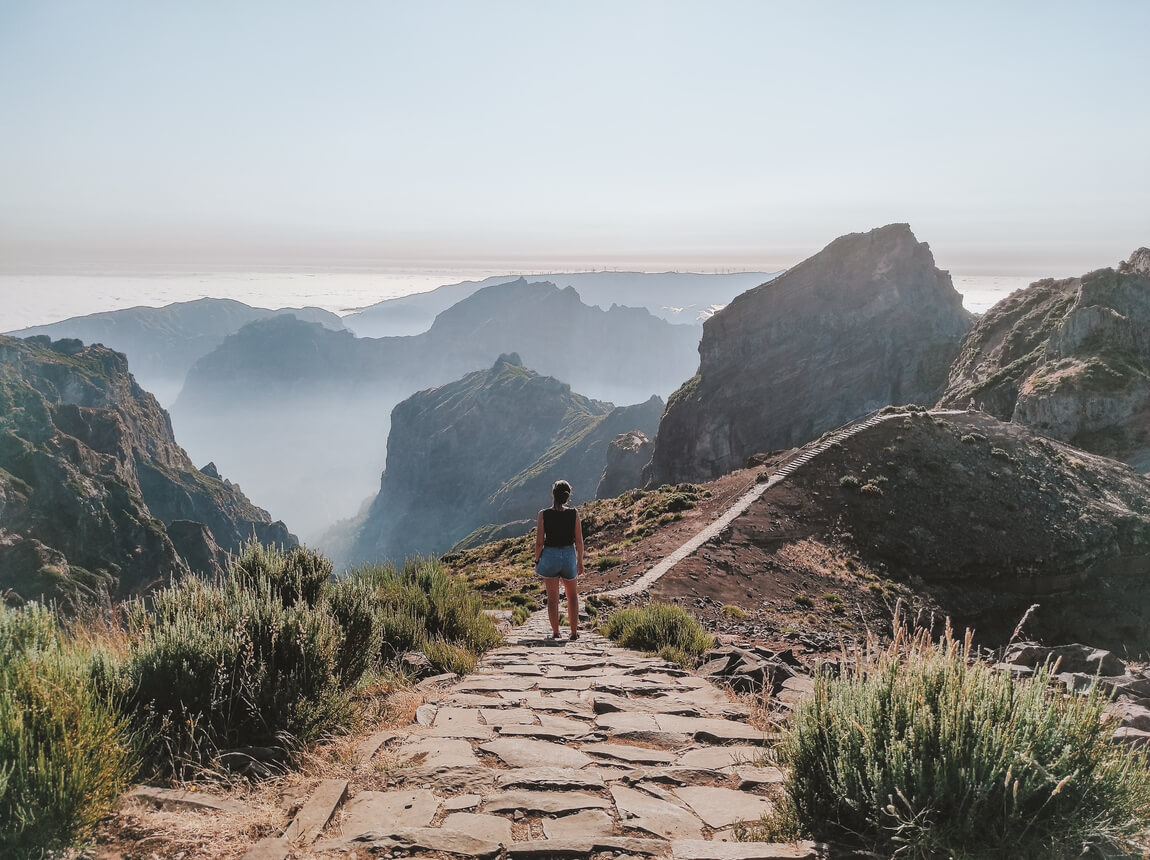
Scenic viewpoints, hiking trails, hidden villages, waterfalls, natural swimming pools, and even some of the best restaurants are often spread across different parts of the island, where public transport is limited or simply not very practical.
One of the things I liked most about having a car was the flexibility. Madeira’s weather changes quickly, especially in the mountains. On more than one occasion, I had to adjust my plans because one side of the island was cloudy while another had perfect sunshine.
Having a car gives you the freedom to be spontaneous and adapt your Madeira itinerary depending on the weather.
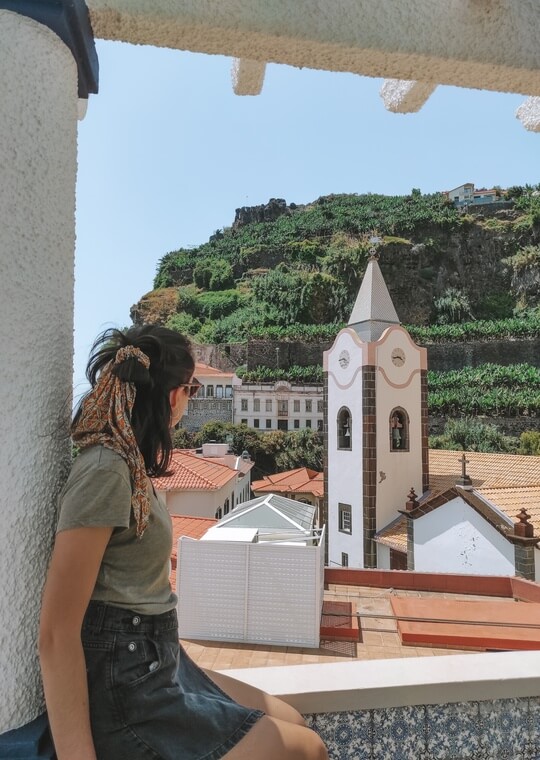
For my trip, I rented a car through a local company (InsularCar), but if you’re comparing prices, I recommend checking DiscoverCars.
It compares offers from both local and international rental companies, making it easier to find better prices and filter things like insurance coverage, fuel policy, reviews, and deposit requirements. I usually find it one of the easiest ways to compare options without spending ages checking multiple websites.
💡 EXTRA TIP: If you decide to book directly with a local company, pay close attention to the booking conditions. Sometimes online reservations are only pre-bookings and not fully confirmed. In some cases, it may be worth contacting the company afterward to confirm availability, especially during peak season.
If you don’t feel comfortable driving, staying in Funchal and joining day tours can still work well for your trip to Madeira. Many tours include hotel pickup and cover some of the island’s main highlights.
Is it difficult to drive in Madeira?
Honestly? I expected it to be harder.
Madeira used to have a reputation for narrow coastal roads with endless hairpin bends, but today, driving around the island is much easier than many people imagine.
Many sections of the old ER101 coastal road have been replaced by tunnels, which makes moving around the island much faster and more convenient. Don’t be surprised if you go through several tunnels in a single day.
That said, there are still a few things worth knowing before driving in Madeira.
The biggest challenge is usually the steep roads, especially in towns like Funchal or Câmara de Lobos, where some streets can feel surprisingly inclined. Mountain roads can also be winding at times.
Still, if you’re used to driving regularly and feel reasonably comfortable behind the wheel, I honestly don’t think driving in Madeira is difficult. I was a bit nervous before my trip because of everything I had read online, but in reality, it felt much easier than I expected.
How many days in Madeira?
While it’s technically possible to see some of Madeira’s highlights in 2 to 4 days, I honestly think the island deserves more time if you can spare it.
Distances may look short on the map, but Madeira’s winding mountain roads mean getting from one place to another often takes longer than expected. And trust me, this is not the kind of destination you’ll want to rush through.
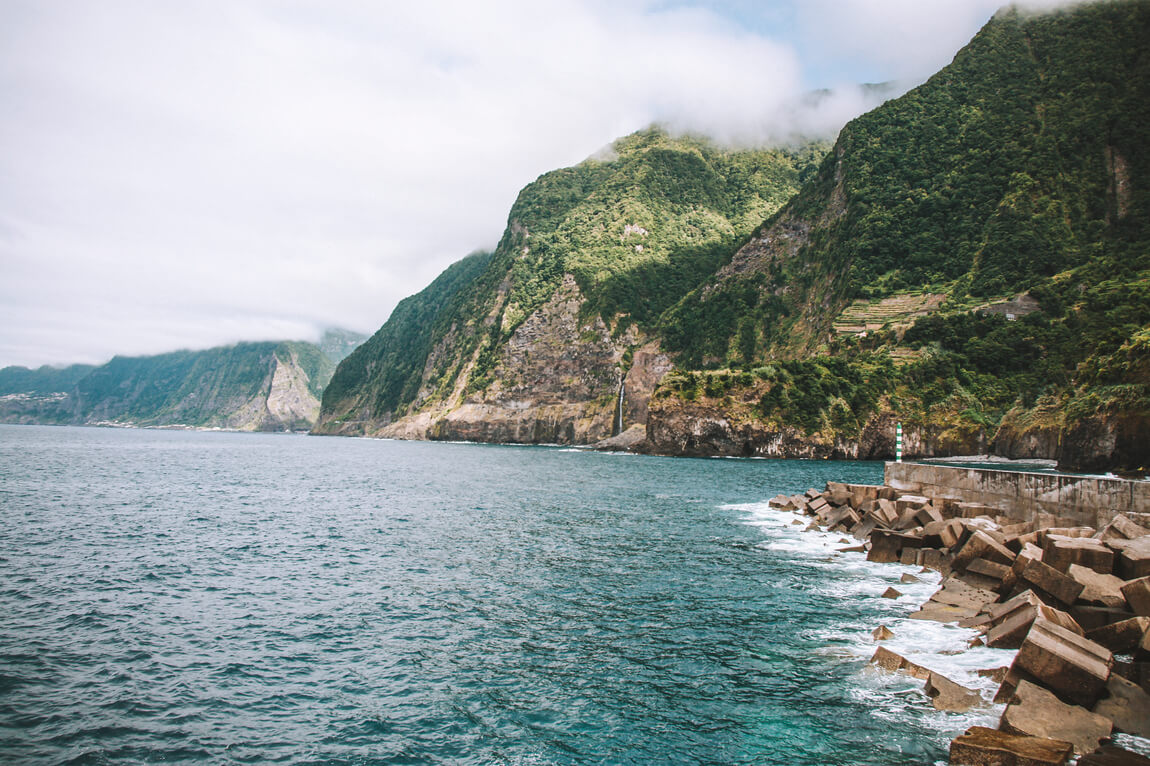
For me, 6 days in Madeira felt like a really good amount of time for a first trip. It gave me enough time to explore different parts of the island, enjoy scenic viewpoints, visit villages, swim in natural pools, and even hike some of Madeira’s famous levadas.
That said, even after 6 days in Madeira, I still felt there was so much left to experience. I left already thinking about coming back. There were more trails I wanted to hike, more swimming spots to try, and I’d also love to visit Madeira during one of its famous festivals.
That’s exactly why I think having a well-planned Madeira itinerary makes such a difference. It helps you make the most of your time while still leaving room to enjoy the island at a slower pace.
This itinerary is meant as inspiration, so feel free to adapt it based on your travel style and interests.
Best time of the year to visit Madeira
One of the best things about Madeira is that temperatures stay fairly mild throughout the year. Even in winter, it rarely gets cold, especially along the coast.
Here’s what to expect:
- Winter (December to February): 17–21°C (63–70°F) | Mild weather, Christmas lights, and New Year celebrations
- Spring (March to May): 18–23°C (64–73°F) | Great for hiking, flowers, and fewer crowds
- Summer (June to September): 23–27°C (73–81°F) | Best for beaches, natural pools, and warmer weather
- Fall (October to November): 20–25°C (68–77°F) | Pleasant temperatures and fewer tourists
However, to enjoy the island to the fullest (hiking trails, beaches, natural pools), it is always better to visit during the warmest months: April to early November. These are also, as you might expect, the busiest months (especially July to September).
There are also several well-known events throughout the year that make Madeira an even more worthwhile destination to visit:
- New Year’s Eve Party (31st of December) with one of the best fireworks shows in Portugal
- Flower Festival (May)
- Market Night Party (23rd of December) at the Farmers’ Market
- Nossa Senhora do Monte Festival (15th of August): the biggest religious celebration in Madeira
- Carnival
Final thoughts
I hope this Madeira 6-day itinerary helps you plan an amazing trip around this incredible island.
For me, 6 days in Madeira felt like a great amount of time to experience the island without rushing too much. Even so, I still left feeling there was so much more to see.
Honestly, I still don’t know how, as a Portuguese person, it took me so long to finally visit Madeira. Now, I can’t stop thinking about going back to explore even more.
Whether you follow this Madeira itinerary exactly or simply use it as inspiration, I hope it helps you make the most of your trip.
Still planning your visit? Don’t forget to also check out my guides on what to do in Funchal, the best hiking trails in Madeira, and traditional Madeira food to help you plan the perfect trip.
Have you already been to Madeira or are you planning your first visit? 😊 Which place in this itinerary are you most excited to see? Let me know in the comments!
Disclaimer: this post may contain some affiliate links, which means I get a small commission if you buy something through my links. This doesn’t represent any additional cost to you and you’ll be supporting my work here on the blog😊