
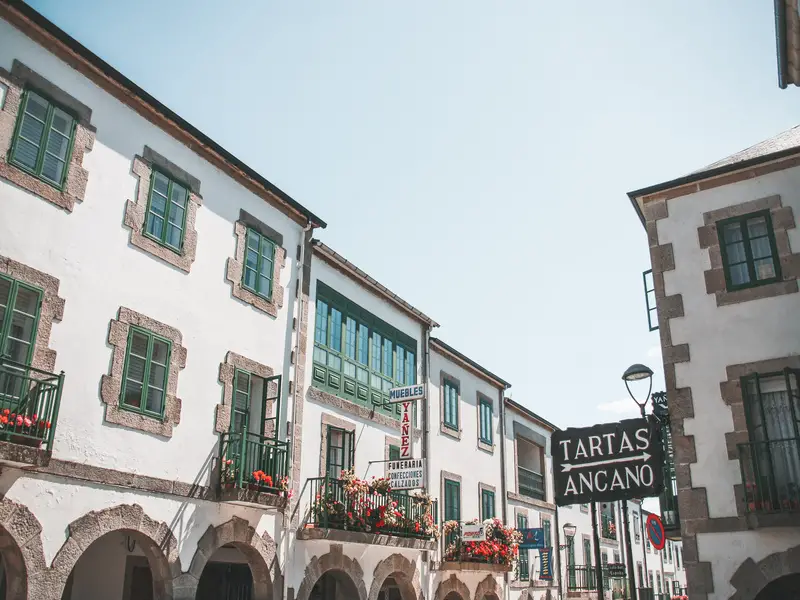
If you’re looking for the most beautiful towns in Galicia, you’ve come to the right place.
When I decided to visit this region in northern Spain, I wasn’t quite sure what to expect. But the truth is that Galicia completely surprised me, and one of the highlights of my Galicia road trip was exploring its charming towns and villages.
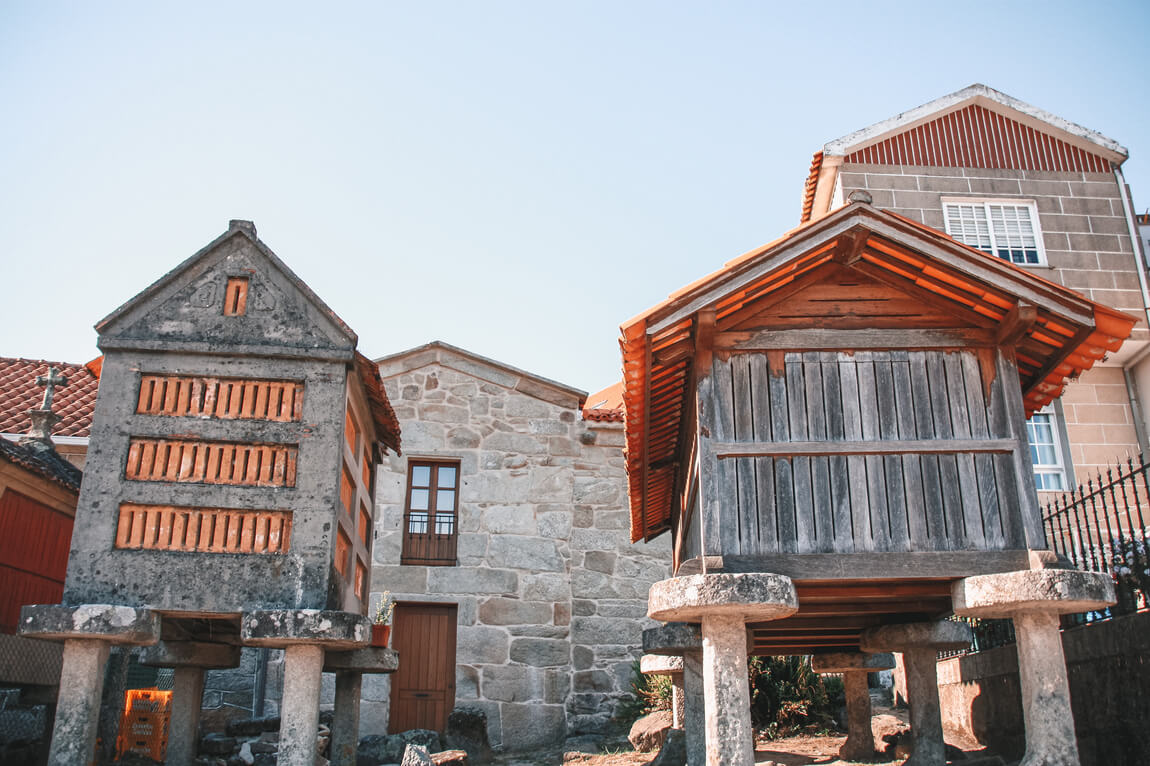
Some are peaceful medieval villages surrounded by green landscapes, while others sit right on Galicia’s rugged coastline. Each has its own history, character, and atmosphere, making them some of the best places to visit in Galicia.
Throughout this guide, you’ll also see me refer to them as pueblos, the Spanish word commonly used to describe these small historic towns and villages.
In this guide, I’ll share my favorite towns, the main attractions in each one, accommodation recommendations, and practical tips to help you plan your itinerary. If you’re looking for the most beautiful places in Galicia, these are some destinations I think you shouldn’t miss.
How to get around Galicia towns
Without a doubt, renting a car is the best way to explore Galicia.
While the region is connected by trains and buses, public transport mainly serves the larger cities, such as Santiago de Compostela, A Coruña, and Ourense. Many of the most beautiful towns in Galicia are located in rural areas or along the coast, where public transportation is either limited or time-consuming.
If you don’t plan to rent a car, don’t worry. There are plenty of excellent guided day trips departing from Santiago de Compostela and other major cities in Galicia. In fact, throughout this guide, I’ll recommend some tours that make it easy to visit places like Fisterra, Combarro, and the Rías Baixas without driving.
That said, if you want complete flexibility, I still believe renting a car is the best option. It allows you to travel at your own pace, stop at scenic viewpoints, discover cool beaches, and explore several towns in a single day without having to rely on public transport or tour schedules.
For my trips, I usually compare prices on Discover Cars, as it lets you easily compare offers from different rental companies in one place and often has some of the most competitive rates.
💼 TRAVEL INSURANCE: It’s one of those things you hope you won’t need… but it can save you a lot of money and stress if something goes wrong.
I personally use Heymondo because it offers strong coverage at a reasonable price, including medical expenses, lost luggage, and electronics.
What I like most is how easy it is to manage everything through their app, especially if you ever need assistance while traveling.
As a Ticket to Take Off reader, you get 5% off, already applied when booking through the link below.
Map of the best Galicia towns
To help you plan your Galicia road trip, I’ve created a map with all the most beautiful towns in Galicia featured in this guide. You’ll also find the main attractions in each destination, making it easier to organize your itinerary.
📌HOW TO USE THE MAP: Click on the top left corner to access the various layers of the map. You can select the layers you’re interested in and also find out more about each point of interest by clicking on it in the left-hand sidebar or on the pin on the map. Add the map to your Google Maps by clicking on the star next to the title. To access the map, simply go to Google Maps ‘Saved’ and click on ‘Maps’!
Most beautiful towns in Galicia
Below you’ll find what I consider the most beautiful towns in Galicia, along with the main attractions, accommodation recommendations, and practical tips for visiting each one.
1. Ribadavia (Ourense)
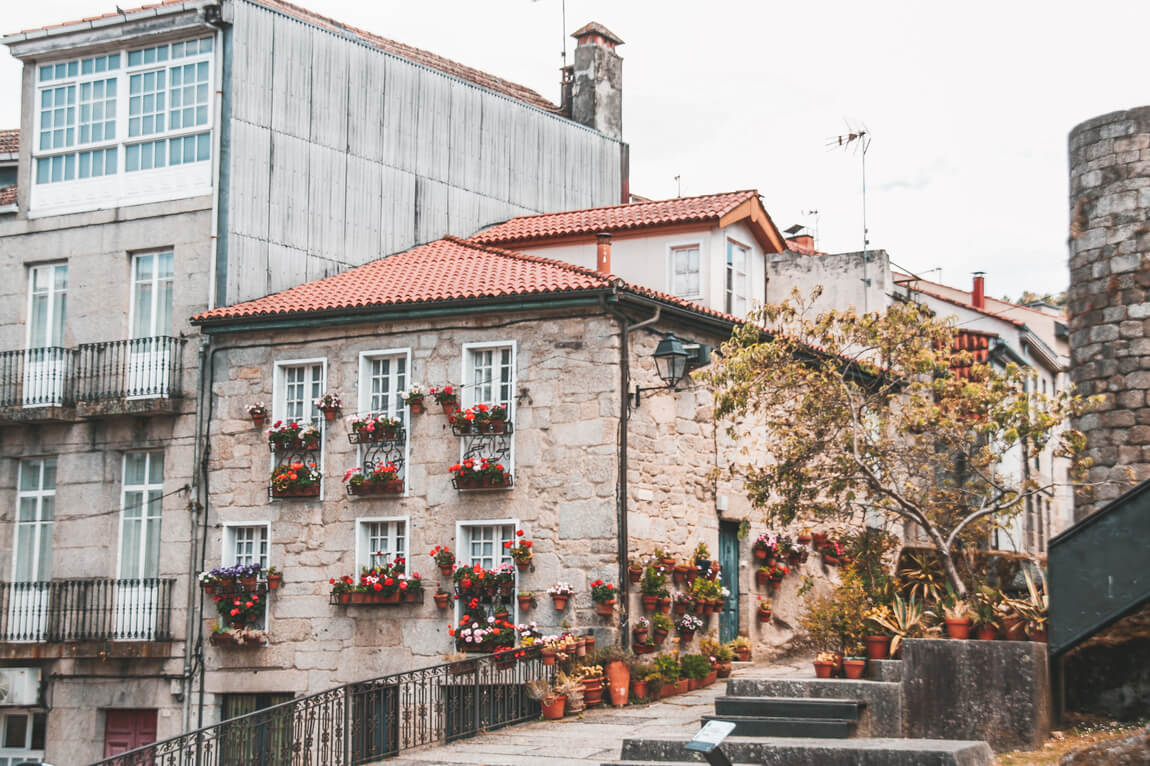
Located in the Galician province of Ourense, Ribadavia has a very small but interesting historic center. After all, this Galician pueblo was once the capital of the former Kingdom of Galicia.
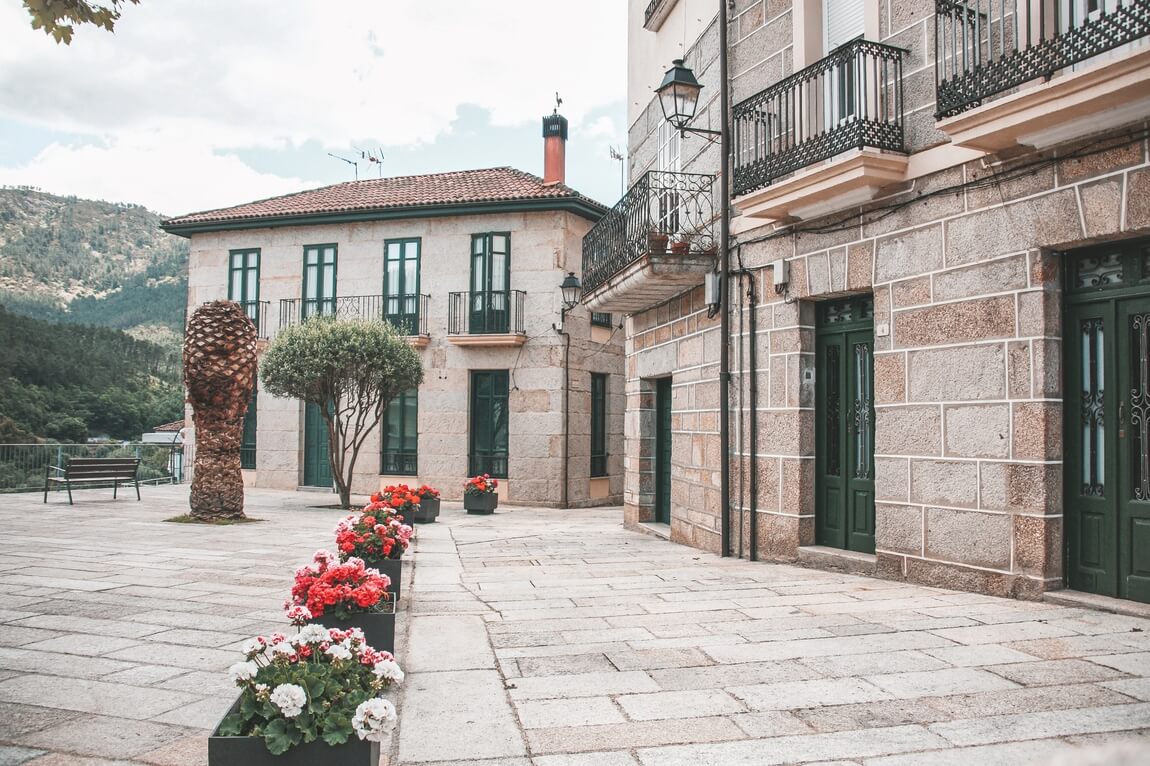
In its historic center, the highlight is the Jewish Quarter (Judiaria). This is one of the most important Jewish quarters in the region, not only for its significance at the time but also for how well preserved it remains to this day.
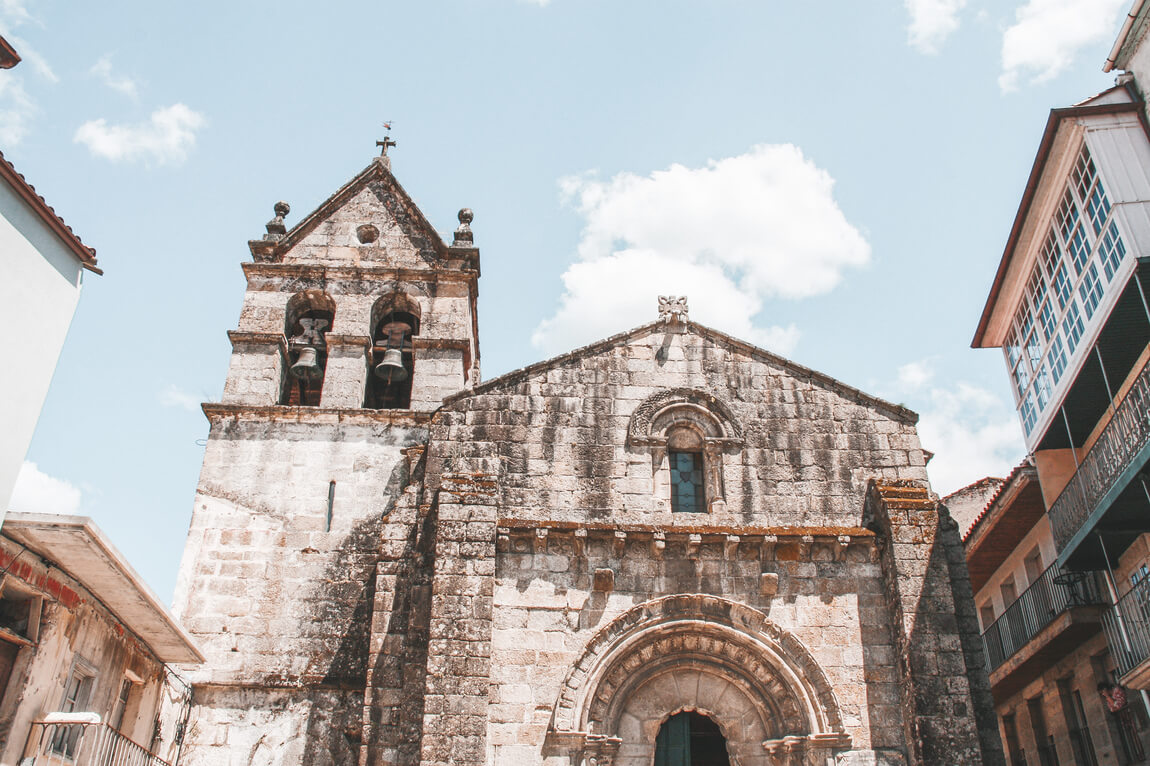
It’s also worth mentioning the Church of San Juan de Ribadavia, the Church of Santiago de Ribadavia or the Church of Santa María Magdalena.
And if you are looking for a more cultural tour, you can also visit the Ethnological Museum of Ribadavia.
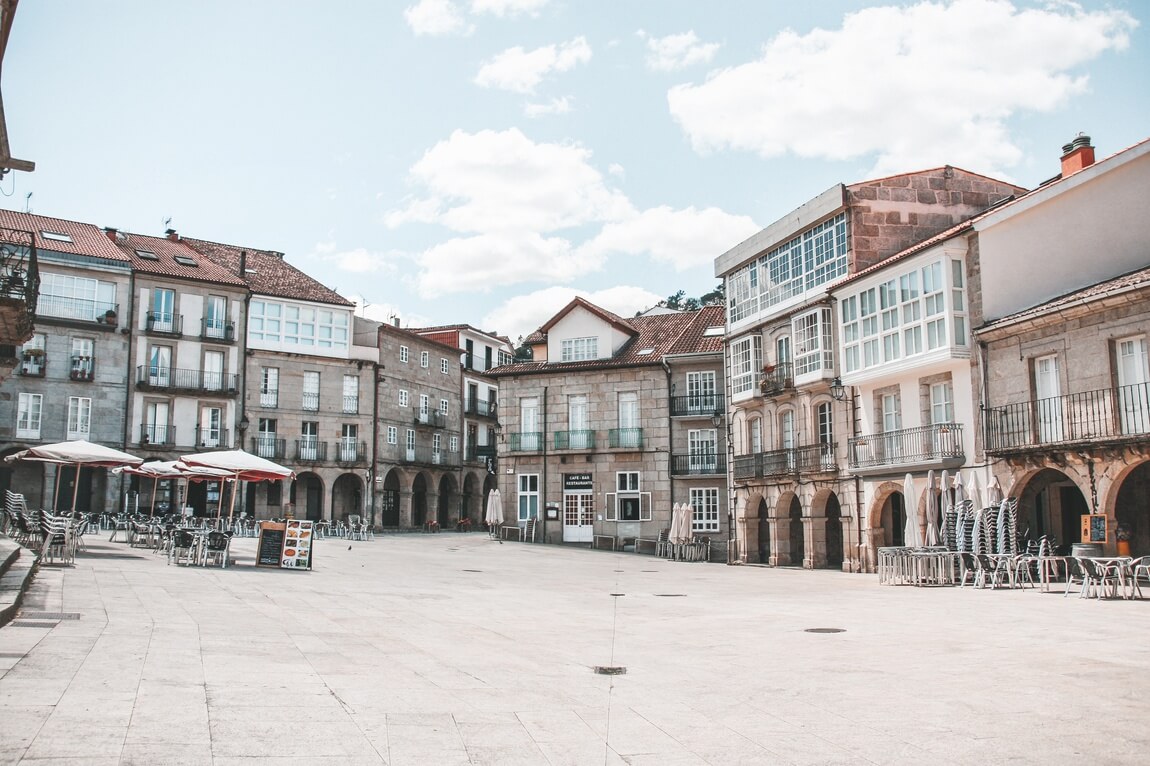
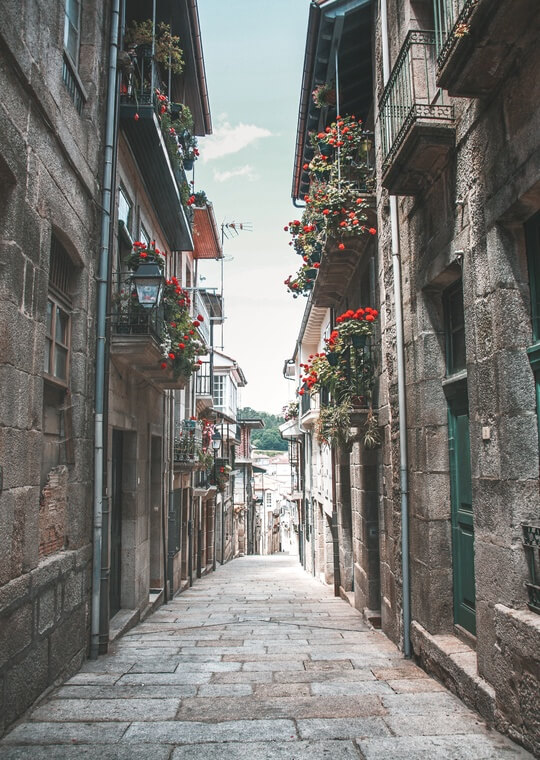
One of the best ways to experience Ribadavia is simply to wander through its historic streets with no particular destination in mind.
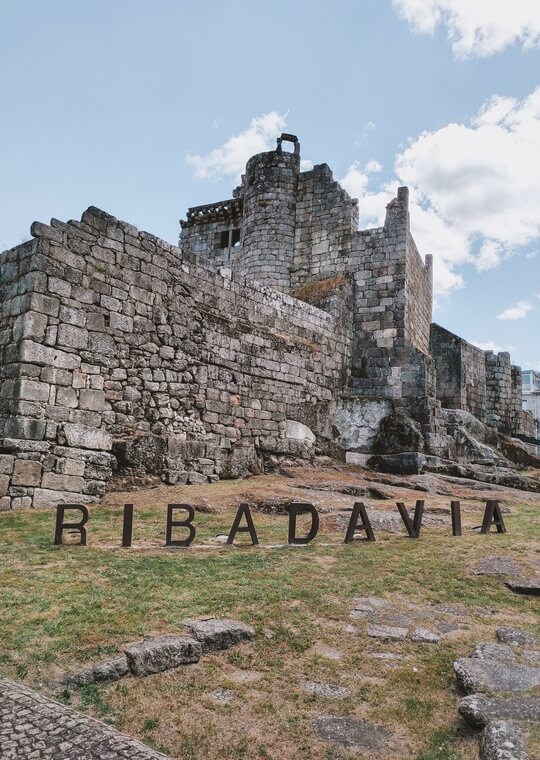
However, there are two other places you shouldn’t miss: the Santo Domingo Convent and the ruins of the Sarmento Castle.
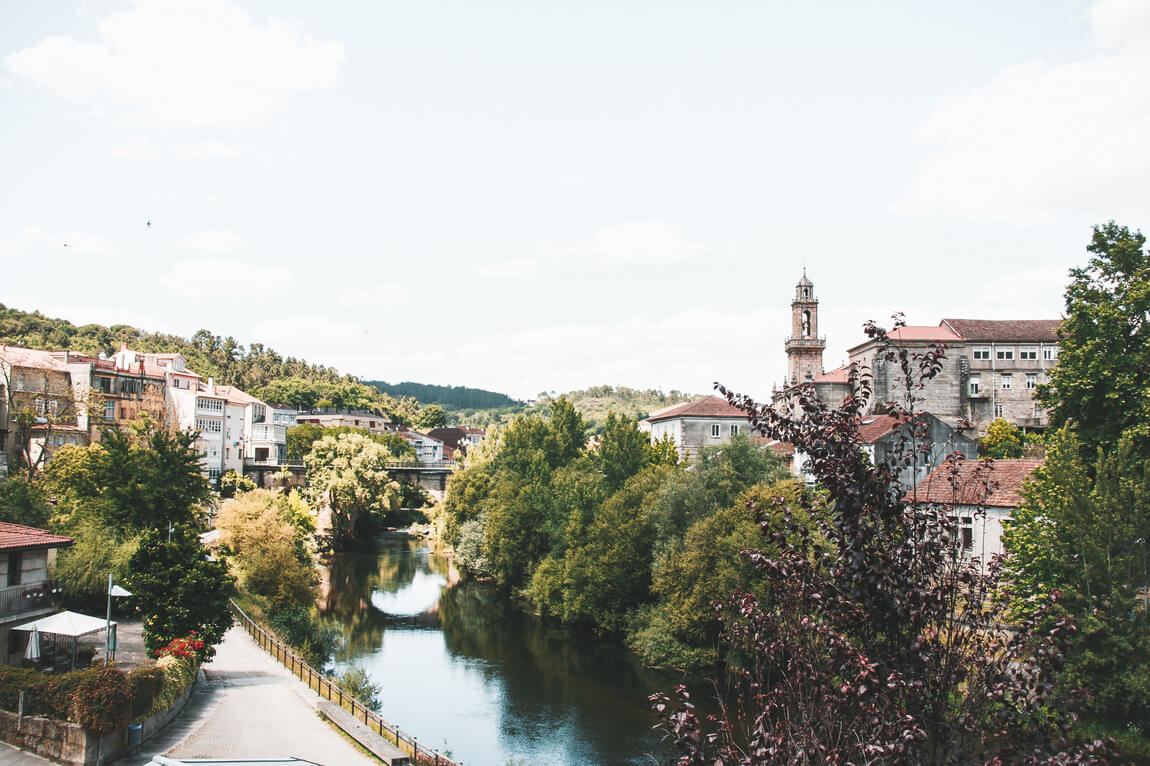
Finally, this beautiful Galician pueblo is not limited to its historic center. Treat yourself to a relaxing soak at the Prexigueiro Thermal Baths.
This thermal complex has a circuit with 6 pools, providing a very relaxing experience. The entrance ticket costs 6.95€ (7.93 USD) and you can stay there for 90 minutes. Check out the most up-to-date info before visiting.
👉 If you have more time, I also recommend spending a day exploring Ourense, one of Galicia’s most underrated cities. Read more about how to plan a trip to Ourense.
When to visit Ribadavia?
“Festa da Istoria” takes place on the last Saturday of August and it is a trip back in time to the Middle Ages.
This is undoubtedly one of the city’s great festivities and can be an interesting time to visit Ribadavia. The whole Jewish quarter is recreated, creating a unique atmosphere in this Galician pueblo.
Restaurants in Ribadavia
- O Birrán (€): This restaurant is located in the heart of the Jewish Quarter and it serves tapas. They will certainly not be the best tapas you will ever try, but the space (especially if you have the opportunity to enjoy the terrace) is quite pleasant.
Accommodation in Ribadavia
I did not stay overnight in Ribadavia and there aren’t many options in the historic center, to be honest. However, less than 10 minutes away by car, there are two very nice accommodations (Pazo de Esposende and Casa dos Ulloa).
A little further away (20 minutes by car), there is also the Aldea Rural Pazos de Arenteiro, which offers great value.
2. Castro Caldelas (Ourense)
Castro Caldelas was an unexpected discovery, as I happened to stay there on the road trip through Galicia. This is another Galician pueblo is well worth a visit and it has fewer than 2000 inhabitants.
This pueblo is so small that its main points of interest are the Castro Caldelas Castle and Watch Tower and the Nuestra Señora De Los Remedios Sanctuary.
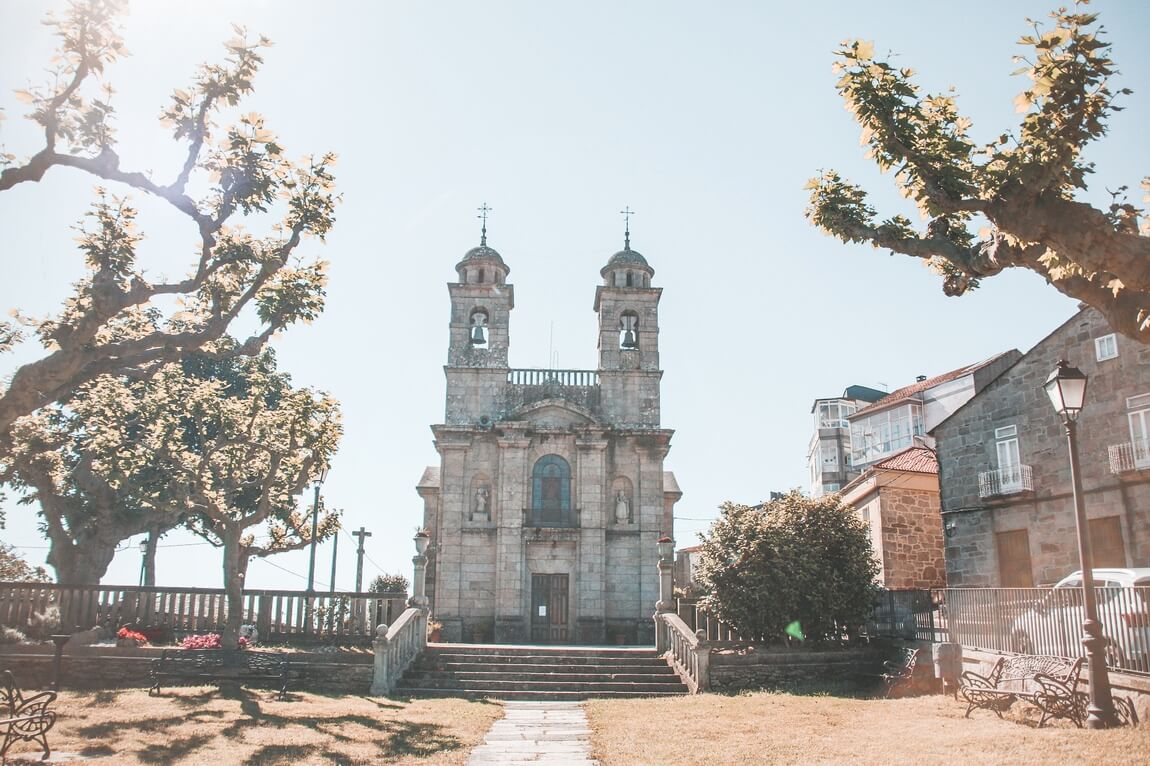
However, a few kilometers away by car, you can find some of the most beautiful views in Galicia at the Pena de Matacás viewpoint or even at the Pena do Castelo viewpoint.
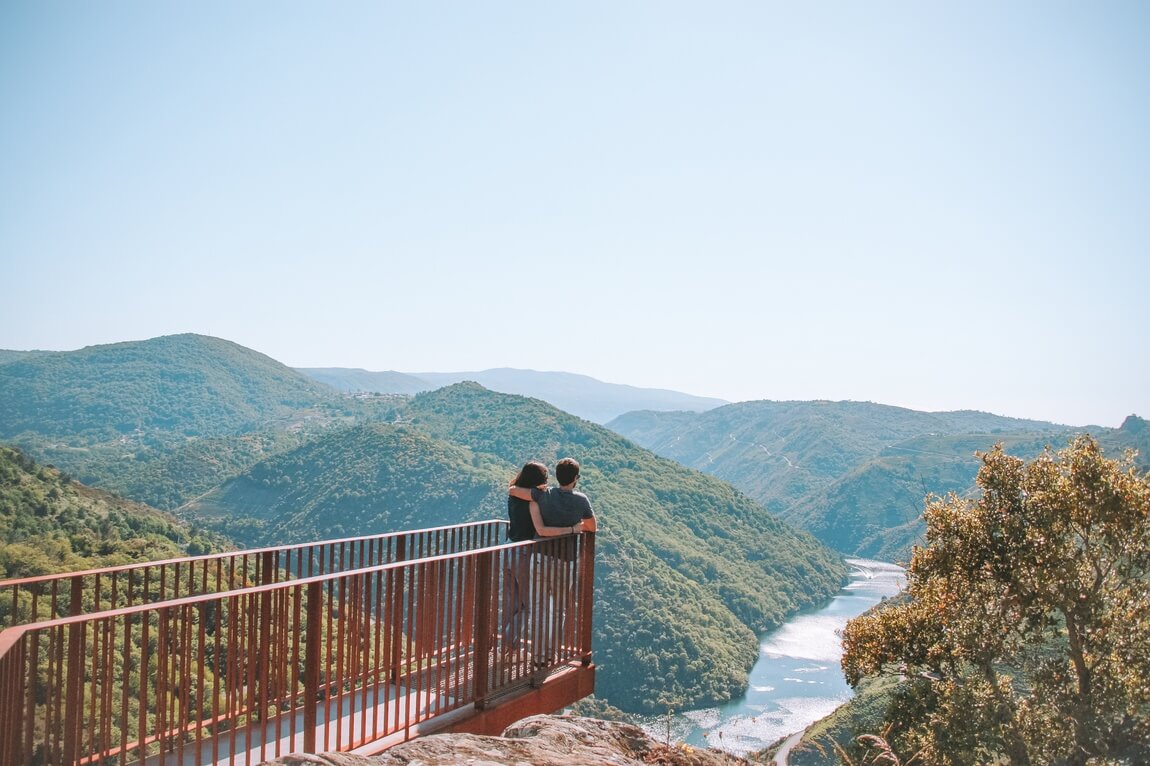
For the more adventurous, I suggest walking the Windmills Route (Ruta Dos Muiños) or the small trail that takes us to Cachón Waterfall (Fervenza do Cachón).
When to visit Castro Caldelas?
Despite being a very small pueblo, Castro Caldelas has 3 important festivals: Fachos Festival (January 19), the Virgen de los Remedios Festival (September 6-10) and the Ponte Louco festival (in August).
Accommodation in Castro Caldelas
- Hotel Casa de Caldelas: a rather familiar accommodation. The hotel has just a few rooms and is made out of stone, but it is very comfortable. Located right in the historic center of Castro Caldelas, breakfast is included, which is served in the café opposite the hotel
3. Monforte de Lemos (Lugo)
The pueblo of Monforte de Lemos is another must-see on a road trip through Galicia.
With its historic center declared a Site of Cultural Interest, the most important monument is probably the San Vicente del Pino Monastery, originating from the 10th century. Currently, the Monastery serves as Parador de Monforte, where it is possible to stay overnight.
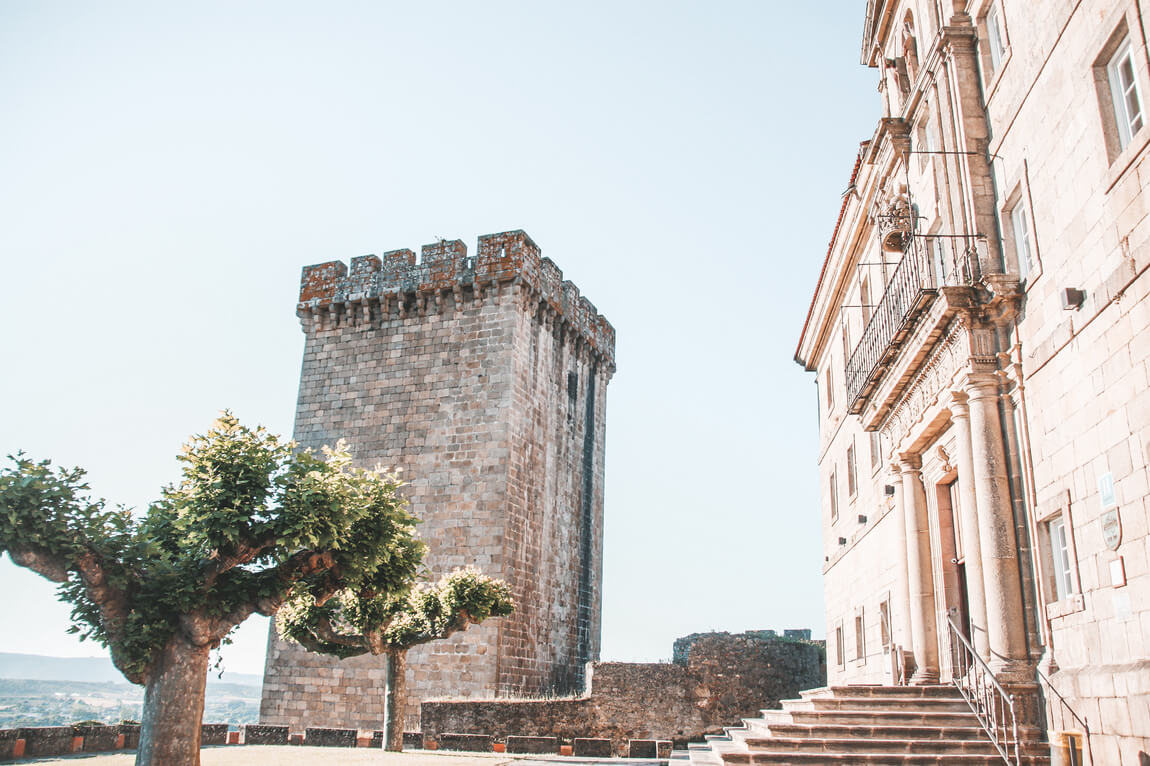
Due to the location of the San Vicente del Pino Monastery, from there you will have some of the best views of Monforte de Lemos. Also, be sure to visit the old castle’s tower.
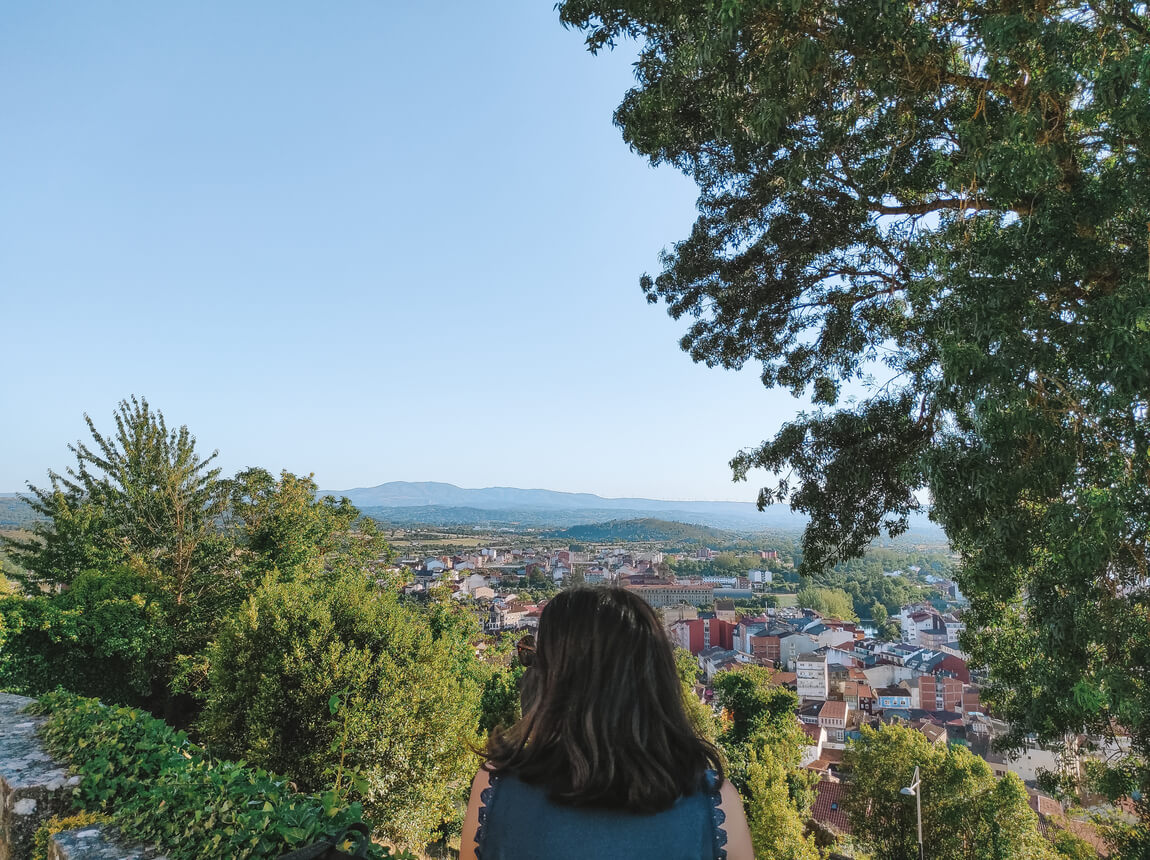
From there, continue downhill into the historic center and visit some of its other points of interest:
- Old bridge over the Cabe River – Roman bridge which, despite having been restructured, still keeps some of its original details
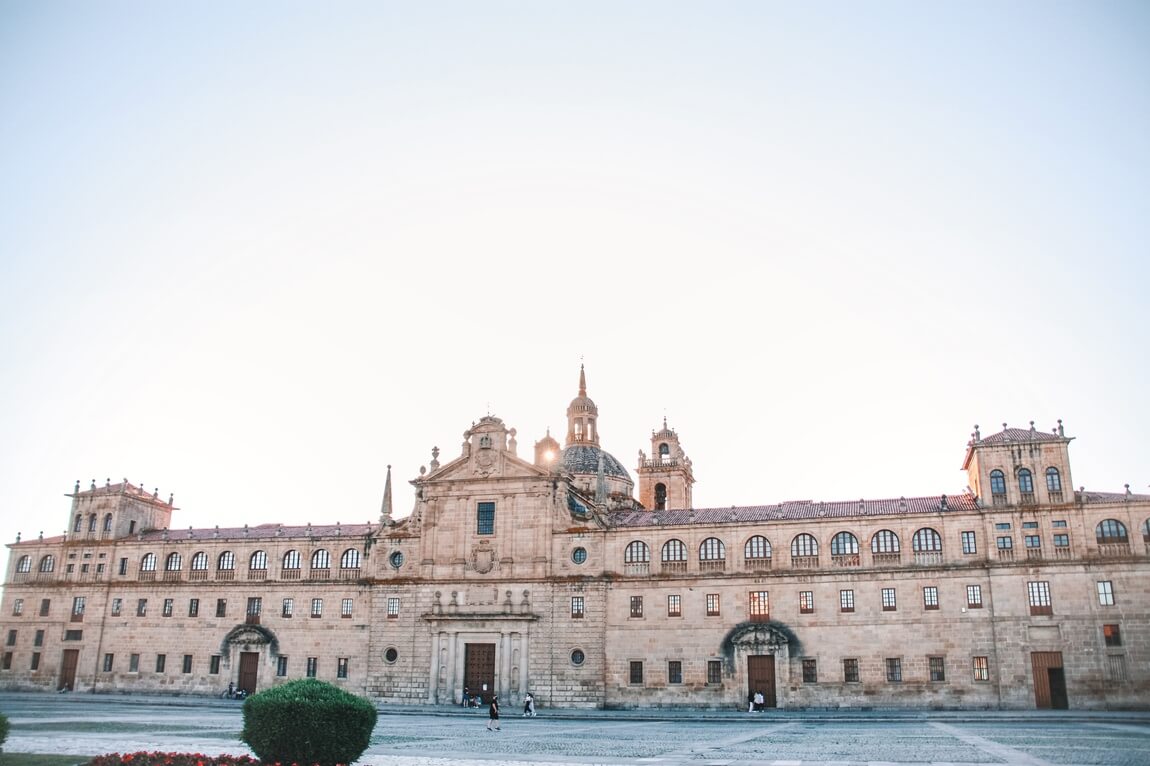
- College of Nosa Señora da Antiga – a 16th-century religious building that is impossible to pass unnoticed due to its grandiosity
- Clarissas Convent and now the Museum of Sacred Art
💡 EXTRA TIP: If you have some time, you can also take a walk along the Cabe River Walkways (Pasarela del Rio Cabe) – a short footpath that starts at Condes Park.
Accommodation in Monforte de Lemos
- Parador de Monforte de Lemos: located in what is the former San Vicente del Pino Monastery, it’ll be hard to find more beautiful interiors than these. If you only splurge on one hotel during your Galicia road trip, I’d seriously consider staying here since sleeping inside a former monastery is quite a unique experience.
- Hotel Cardenal: a hotel with more modern decoration and also slightly cheaper, located right in the city center
4. Portomarín (Lugo)
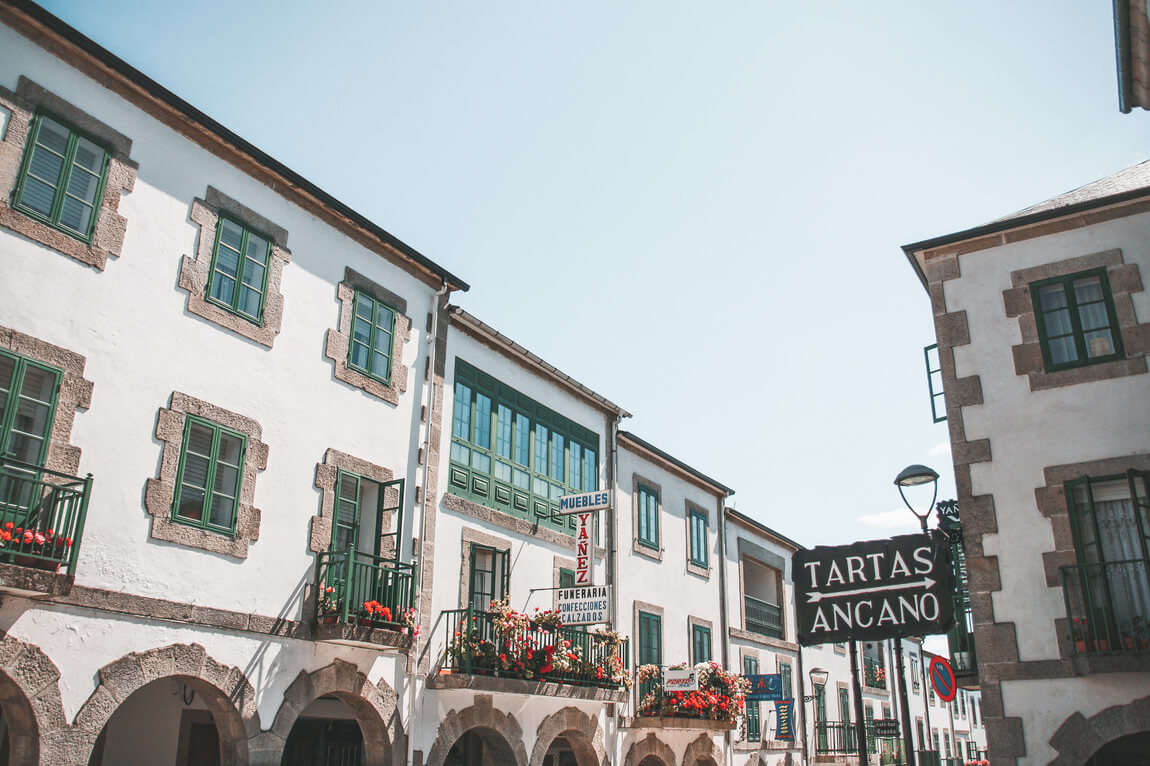
Portomarín is a small pueblo that pilgrims pass through on the French version of Camino de Santiago.
This Galician pueblo has one of the most interesting stories of all the pueblos mentioned in this blog post. In the 1960s, with the construction of the Belesar dam, the old village of Portomarín was completely submerged.
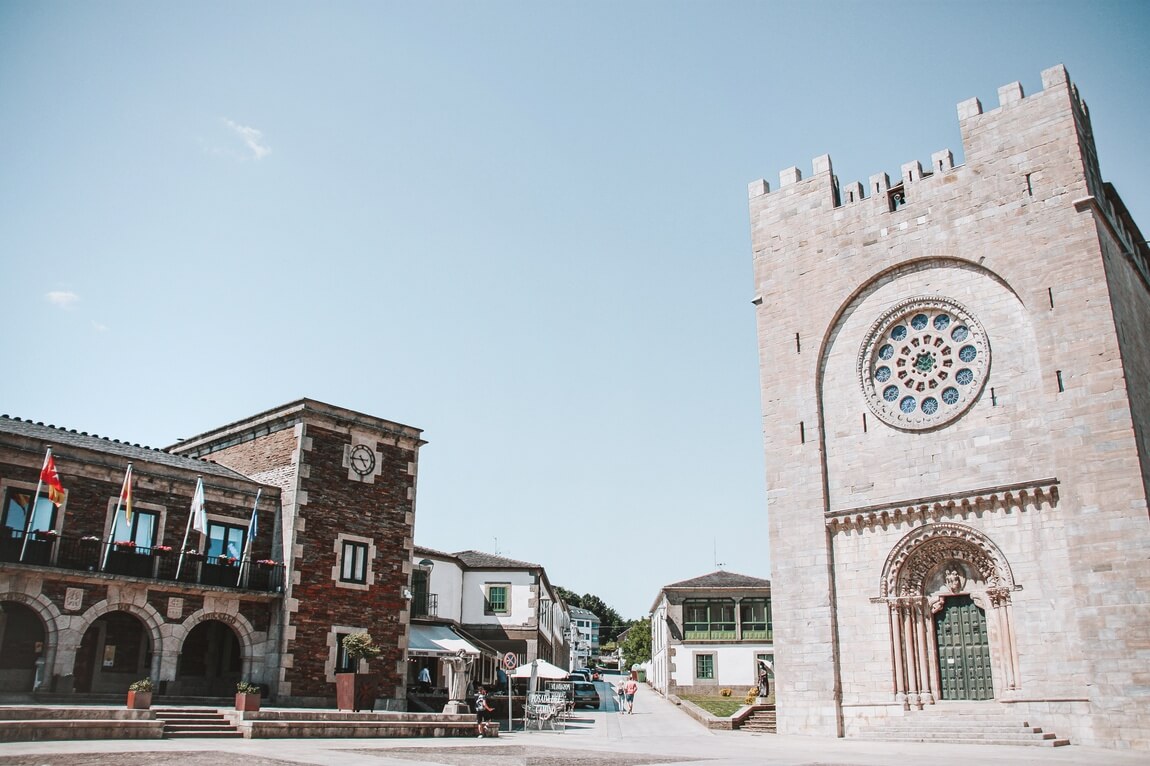
The monuments that existed were literally transported stone by stone to the new location of Portomarín. Some of the most relevant monuments in Portomarín include:
- San Xoán Church, currently known as St Nicholas Church
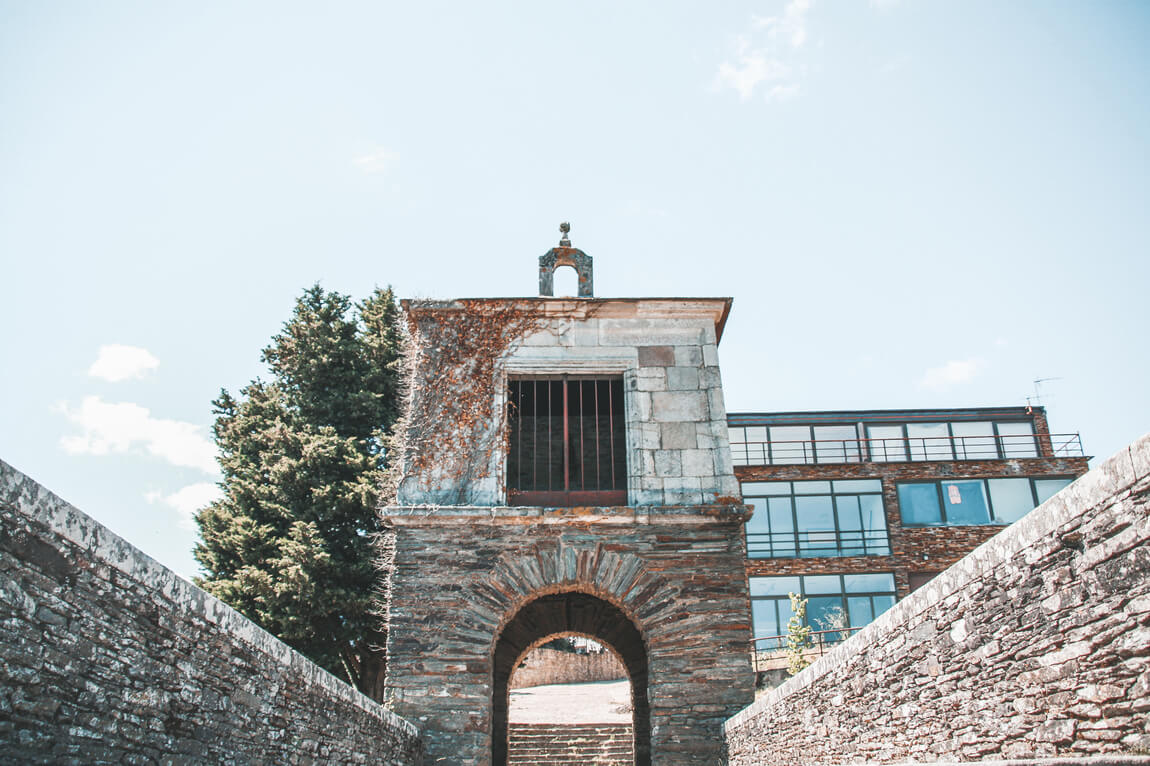
- Staircase of the old medieval bridge and Nieves Chapel – an important landmark for pilgrims on the way to Santiago, since this is the main access to Portomarín
- La Maza Palace
💡 EXTRA TIP: On days when the flow of the River Miño is lower, it is still possible to see what remains of the old village of Portomarín.
When to visit Portomarín?
This Galician pueblo is especially known for its brandy, and there is even a Brandy Festival (Festa da Augardente), celebrated during Holy Week.
Accommodation in Portomarín
- Hotel Ferramenteiro de Portomarín: with a central location and the best views over the river Miño and very spacious rooms
- VistAlegre Hotel-Spa: Located near the entrance to Portomarín, VistAlegre is a relatively small hotel, but with a nice view and spa services, jacuzzi and sauna.
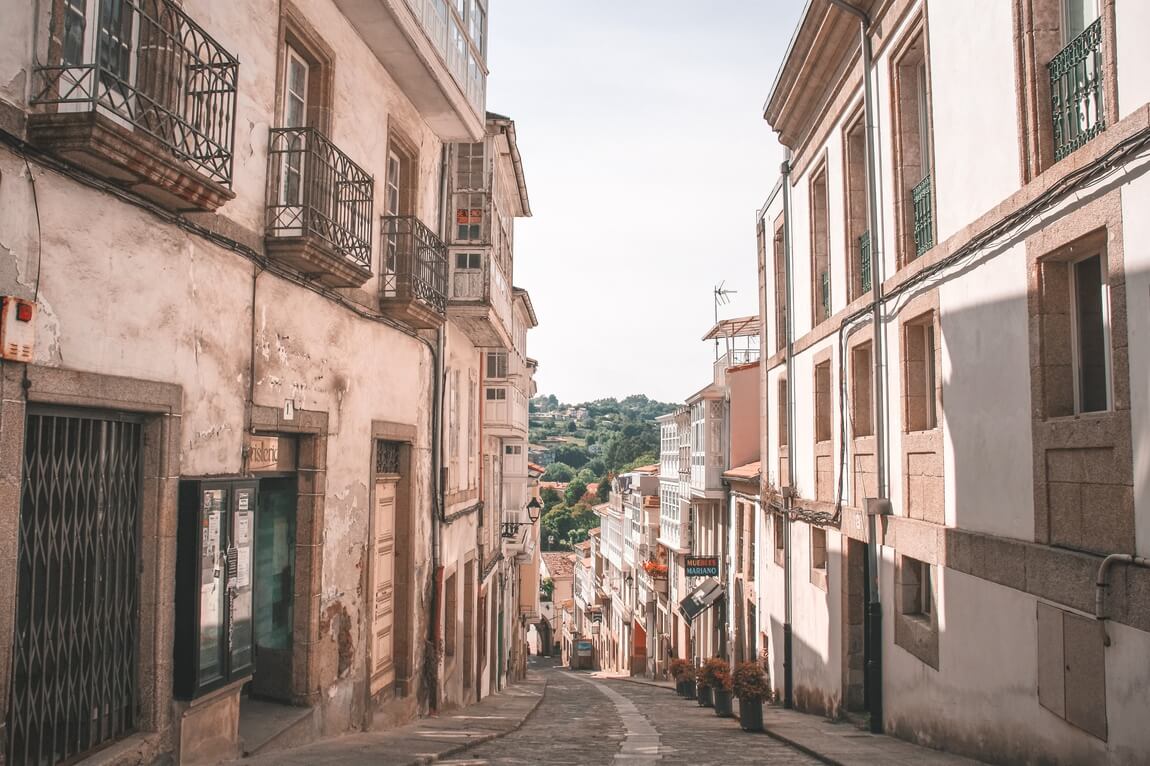
5. Betanzos (A Coruña)
Like Ribadavia, Betanzos was also once the capital of the ancient Kingdom of Galicia. Set between the Mandeo and Mendo Rivers, Betanzos was another pleasant surprise in this Galicia road trip.
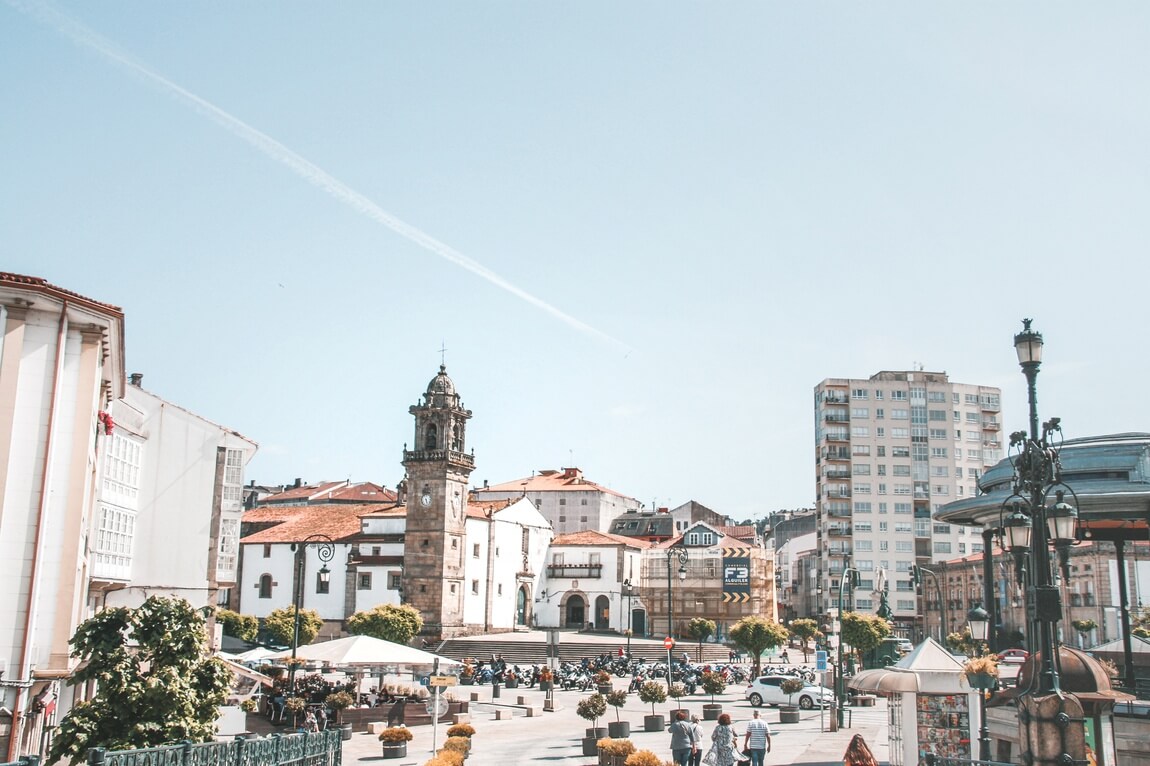
Start your visit in the charming Hermanos García Naveira Square.
Here you will find the house of Don Juan García Naveira (a former Spanish businessman from Betanzos), the Hospital of San Antonio, the Diana Fountain and also the old convent of Santo Domingo (currently the Mariñas Museum).
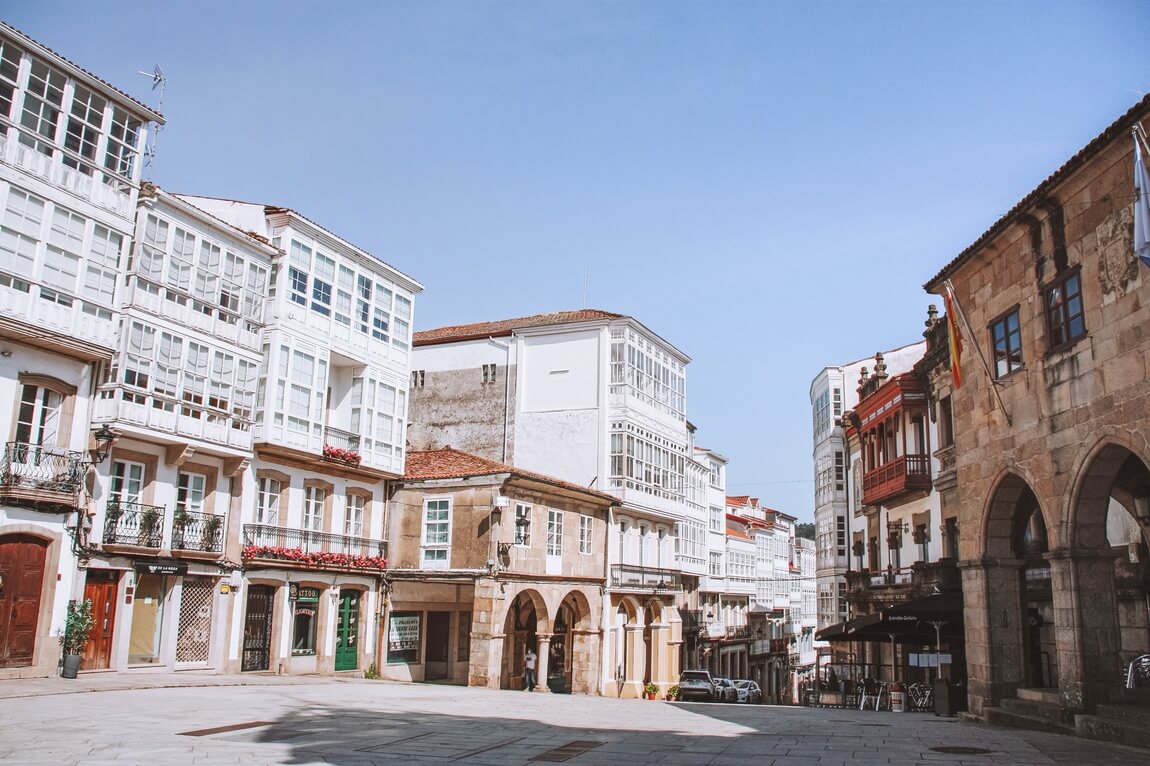
From there, continue to the Plaza de la Constitución, another of the most important squares in the city. It is here that we will find the Church of Santiago and the Bendaña Palace.
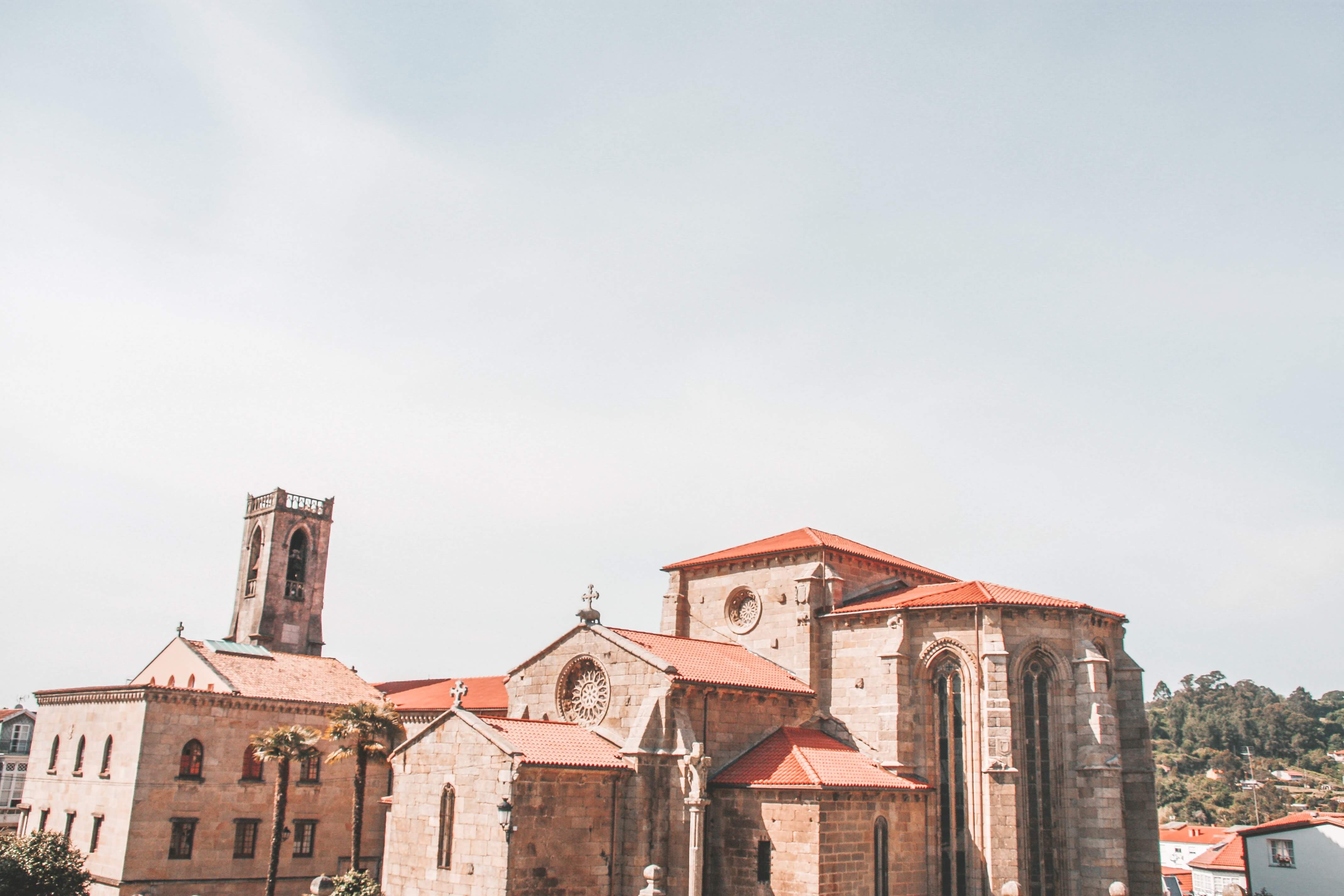
You must also visit the Fernán Pérez de Andrade Square, in honour of a Galician knight. Right next door, have a look at the Church of San Francisco and the Church of Santa Maria do Azougue – the church I liked the most in Betanzos.
🎫 If you’d like to learn more about Betanzos, this guided walking tour is a great way to explore the town’s medieval streets and discover stories you might otherwise miss.
When to visit Betanzos?
The San Roque festivities are among the most famous in Betanzos and are celebrated between 14 and 25 August to honour the town’s patron saint.
Another event also known in Betanzos is the Medieval Festival on the second Sunday of July – the whole town goes back to medieval times.
Accommodation in Betanzos
- Mirador de la Muralla: a renovated and very modern apartment in a central location. The apartment is well-equipped, with a kitchen and even a washing machine.
- Hotel Os Olivos: Located less than 15 minutes drive from the center of Betanzos, it is a relatively small hotel with a very nice space (especially the view from the breakfast room).
- Rectoral de Cines: also a 15-minute drive from Betanzos, has a more quirky decor but good value for money. It also offers friendly service and a quality breakfast.
6. Fisterra (A Coruña)
Fisterra is a pueblo known for Cape Fisterra, which, for many years, was considered the end of the world.
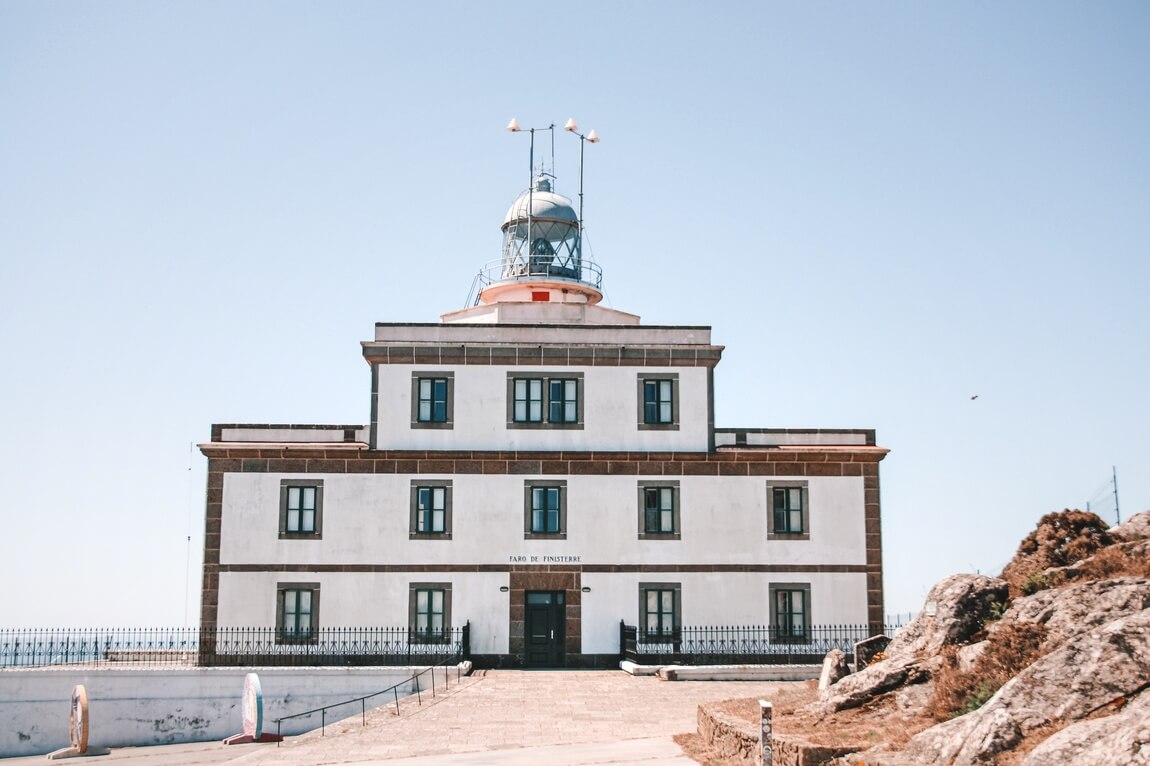
Being part of the famous Death Coast, nowadays Cape Fisterra is a special place for those who walk Camino de Santiago.
Many of the pilgrims continue on from Santiago de Compostela towards this place to end their journey here. In fact, near the Fisterra lighthouse, you’ll find the kilometre zero marked.
🎫 If you’re based in Santiago de Compostela and don’t have a car, this full-day tour is an excellent way to visit Fisterra, Muxía, and several highlights along the spectacular Costa da Morte in a single day.
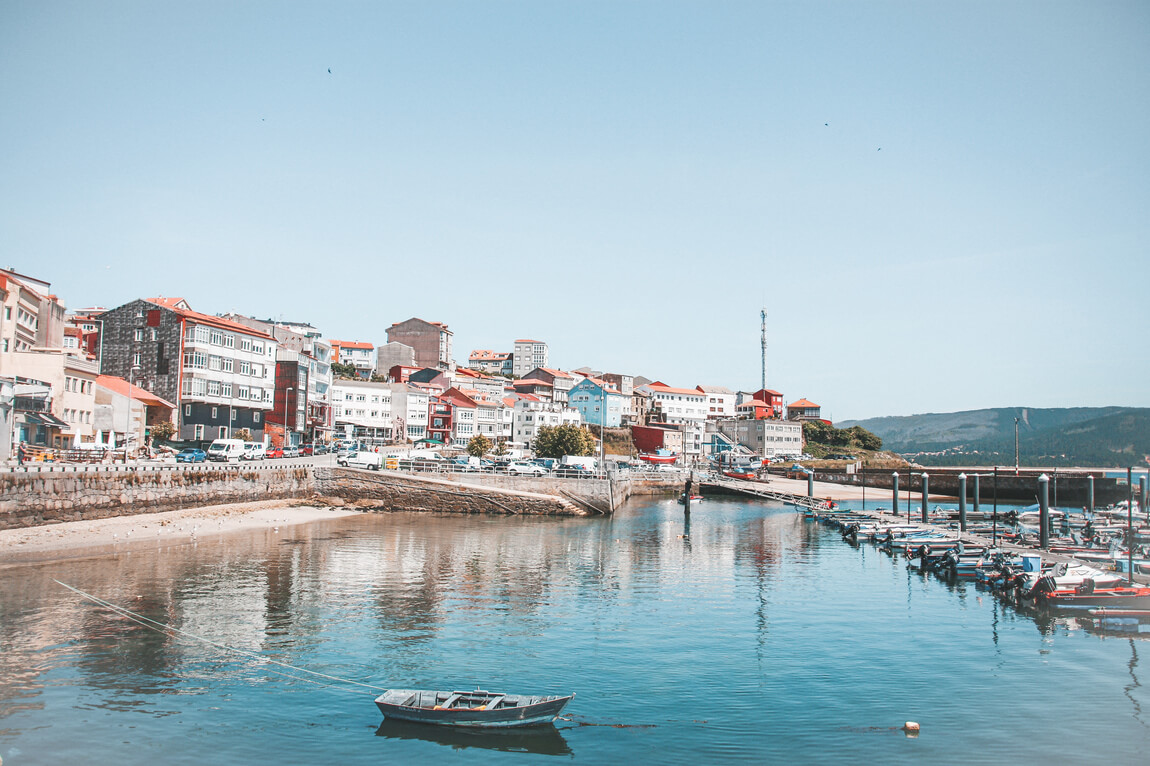
However, visiting Fisterra is not only about visiting the Lighthouse and Cape Fisterra. Also, take the opportunity to:
- Catch a glimpse of Langosteira Beach from the Fisterra viewpoint
- Enter San Carlos Castle
- Visit the Santa María das Areas Church
- Walking along the Paseo da Ribera
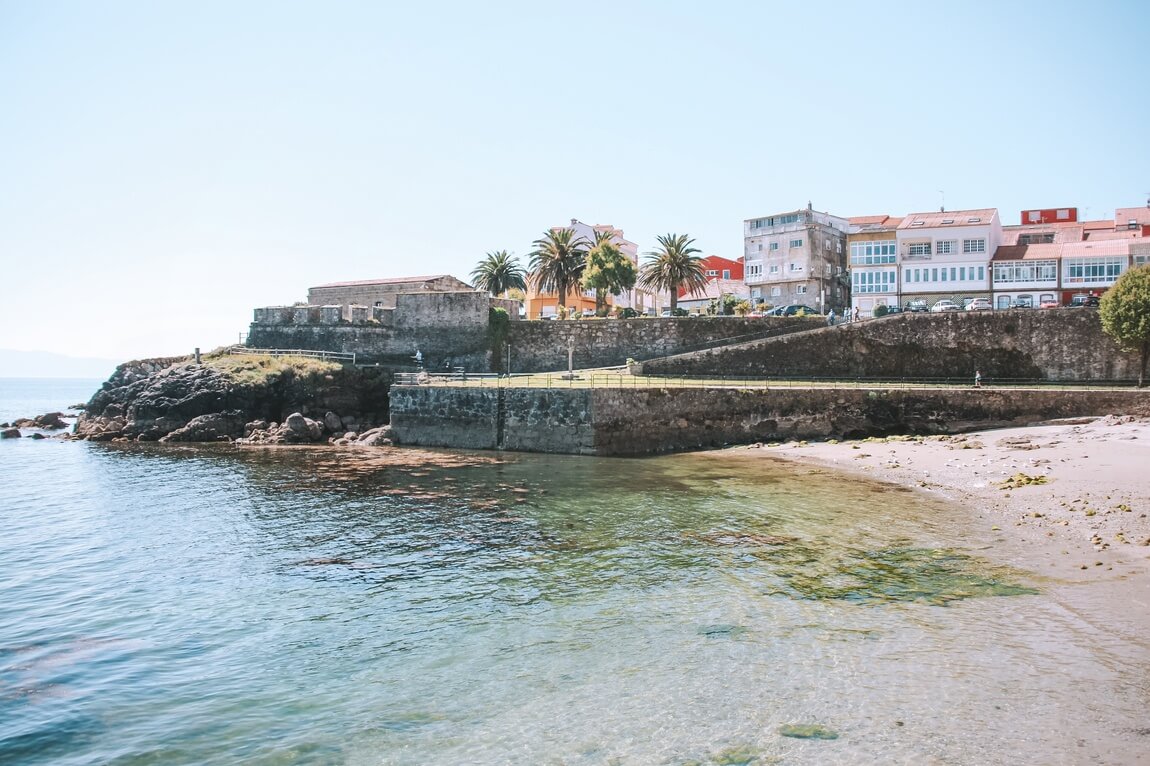
Accommodation in Fisterra
- Apartamento Valdemar Keliam Fisterra: modern apartment, located right next to Langosteira beach. Guests particularly praise the friendliness and availability of the hosts.
- Hotel Rural Finisterrae: rural accommodation, but with good conditions. The outdoor pool is perfect for a quiet day in Fisterra.
7. Muros (A Coruña)
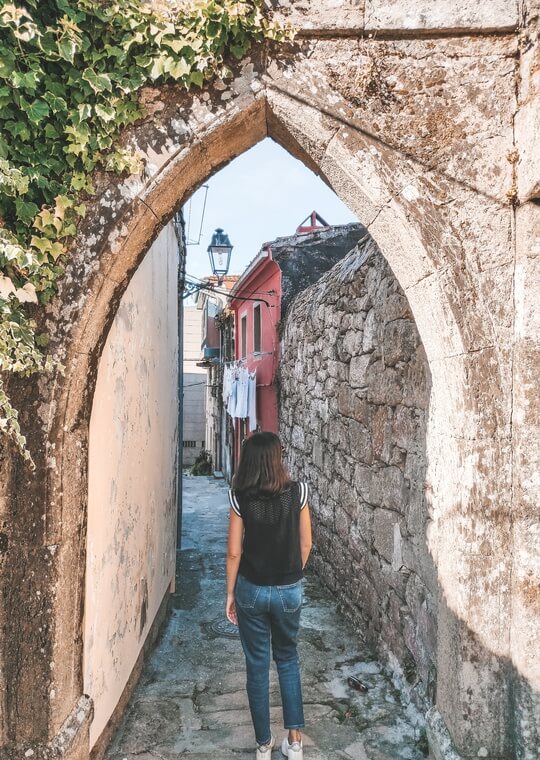
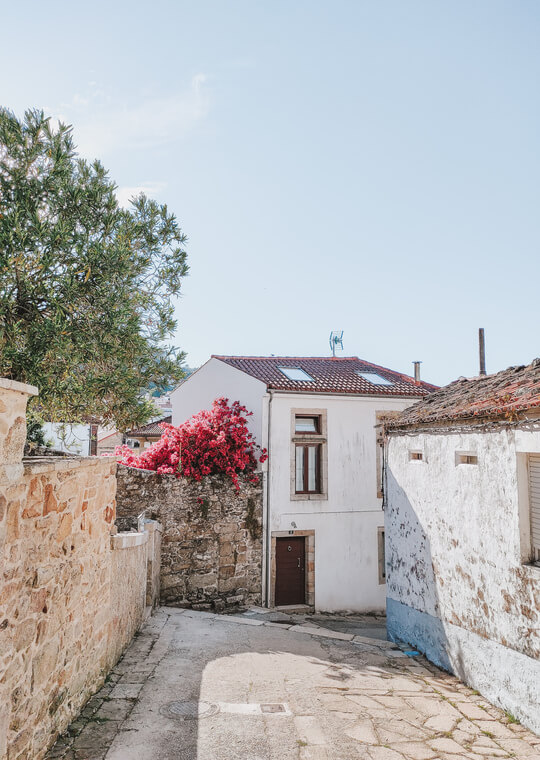
If I had to choose the pueblo in Galicia that I most enjoyed visiting, it would be Muros for sure.
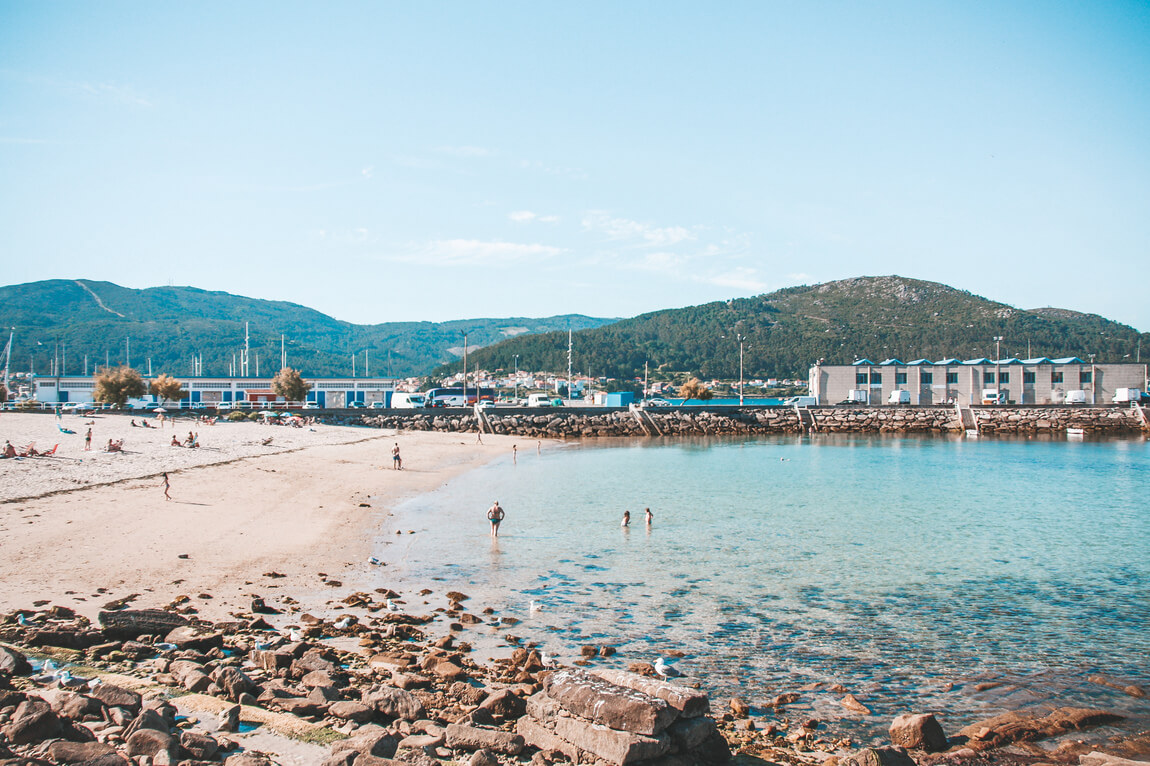
There aren’t many major attractions in Muros and that’s exactly what makes it so special.
The best way to explore Muros is to get lost in its streets and alleys. However, there is a mandatory stop: Castelo Beach.
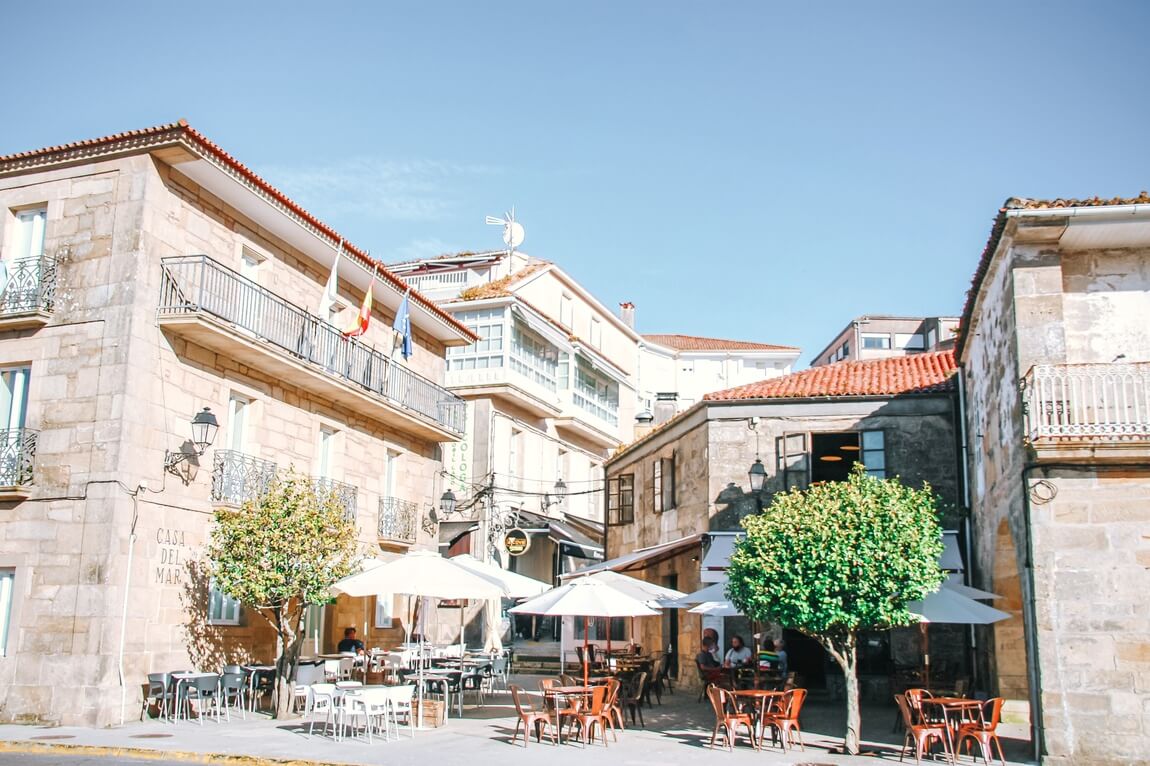
In addition, you can also stop to enjoy the beautiful landscape near Muros Harbour or by the San Pedro Church.
💡 EXTRA TIP: Less than 25 minutes by car from Muros, we find some of the best beaches in Galicia that are clearly worth a visit if the weather permits. They are Ancoradoiro Beach, Carnota Beach and Lariño Beach.
Accommodation in Muros
- Pensión Casa da Nena: Simple accommodation with no great luxuries, but with all the conditions for a night well spent.
- Casa del Ancla: despite a higher price, the decoration and comfort of Casa del Ancla will make anyone want to visit Muros
8. Padrón (A Coruña)
Padrón is another important stop along the Portuguese Camino de Santiago, as it’s traditionally believed to be the place where the remains of the Apostle St. James first arrived in Galicia.
But that’s not the town’s only claim to fame. Padrón is also the birthplace of the famous Padrón peppers, known for the saying “uns pican e outros non” (or, in English, “some are spicy, and some aren’t”). Since there’s no way of knowing which pepper you’ll get until you take a bite, trying them is all part of the fun!
👉 If you’re planning to continue to Santiago, don’t miss my guide to the best things to do in Santiago de Compostela.
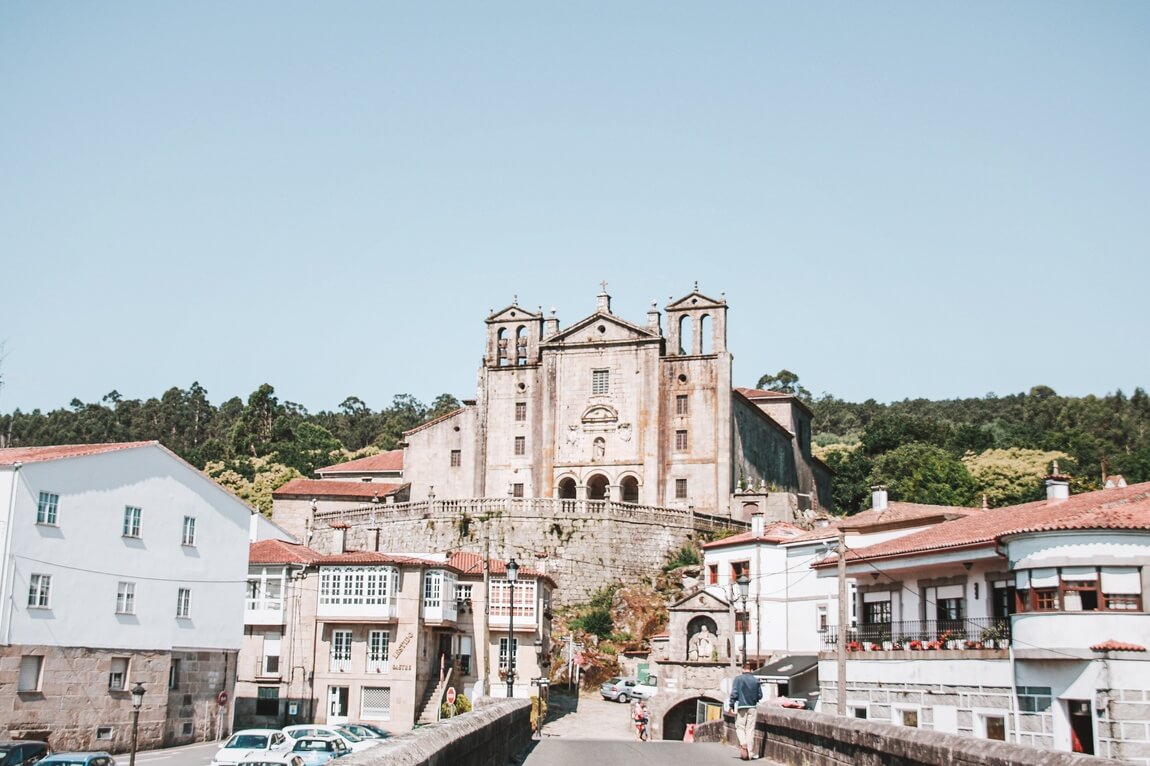
The historic center is quite small and you can easily walk its streets and alleys in a couple of hours. However, don’t miss Paseo do Espolón, Carme Convent or even Santiago Church.
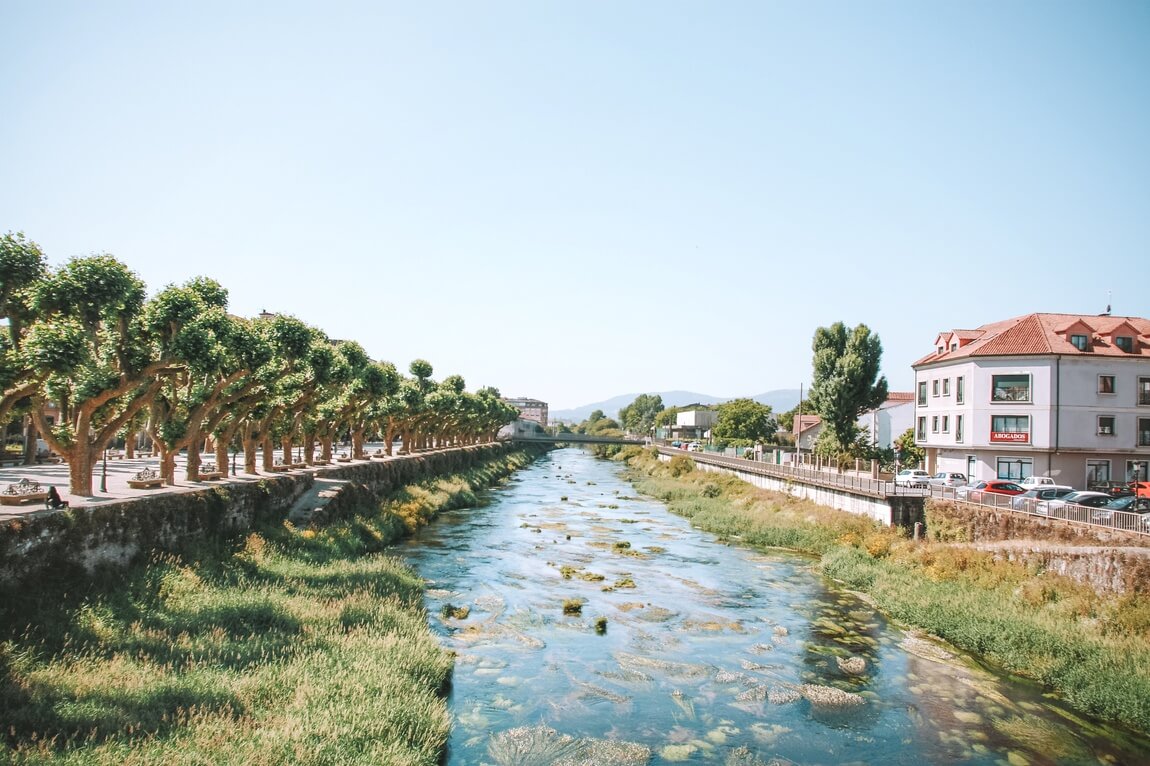
If you still have some time left, you can also visit two of the most important cultural spaces in Padrón:
- Rosalía de Castro Museum – poetess originally from Pádron
- Camilo José Cela Foundation – in honour of the Literature Nobel Prize, who is also originally from Pádron
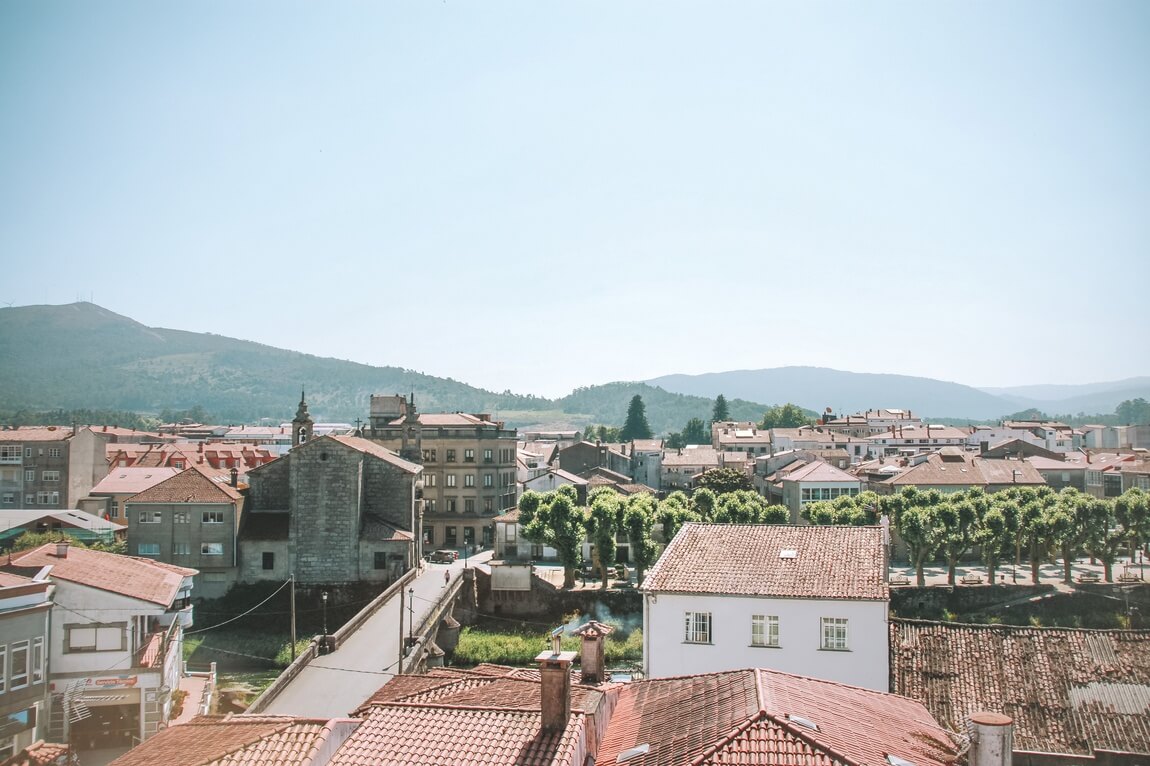
Accommodation in Padrón
- Os Lambráns: despite not being located in the old town of Pádron, this country house is a good option for those seeking tranquillity and, at the same time, something modern
- Suite Nest: a very central apartment with a modern décor that appeals to comfort. In addition, guests praise the availability and friendliness of the host.
9. Cambados (Pontevedra)
Cambados is a fishing pueblo known for its good seafood and albariño wine, and is even considered the capital of this type of wine.
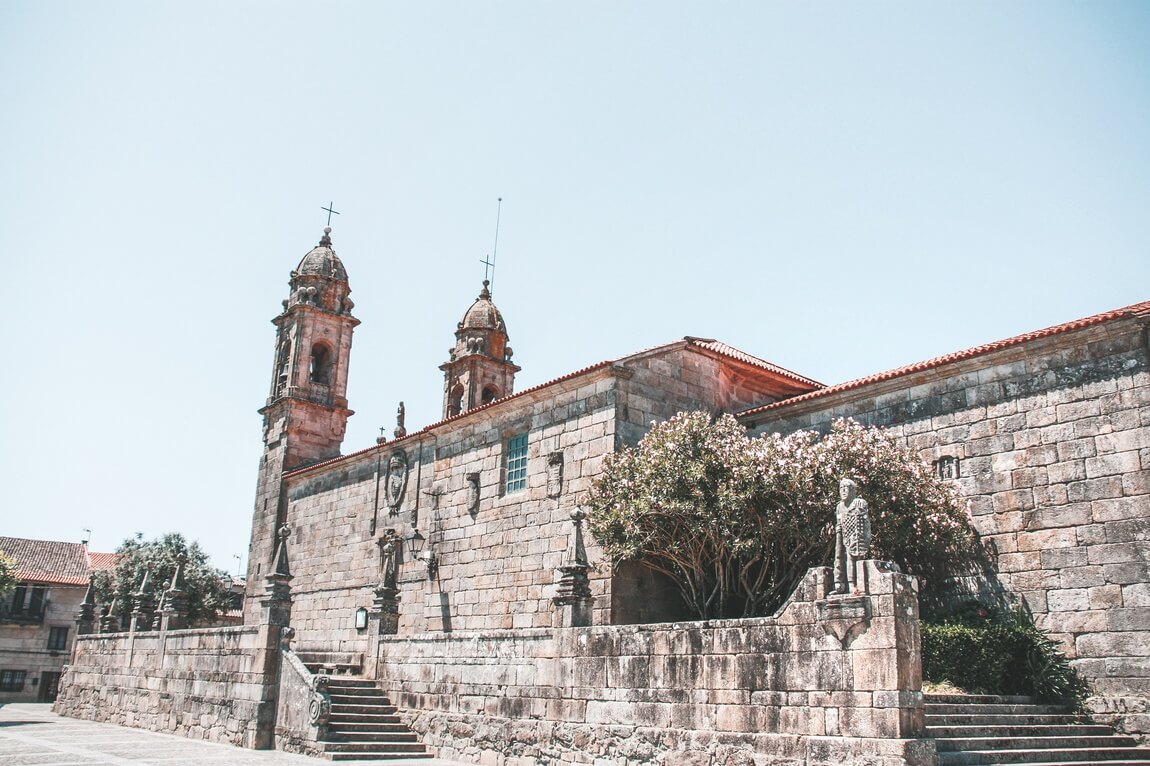
In addition to a well-deserved walk along the Cambados promenade, the town center of this village tells us stories of other times through its palaces and manor houses, among others.
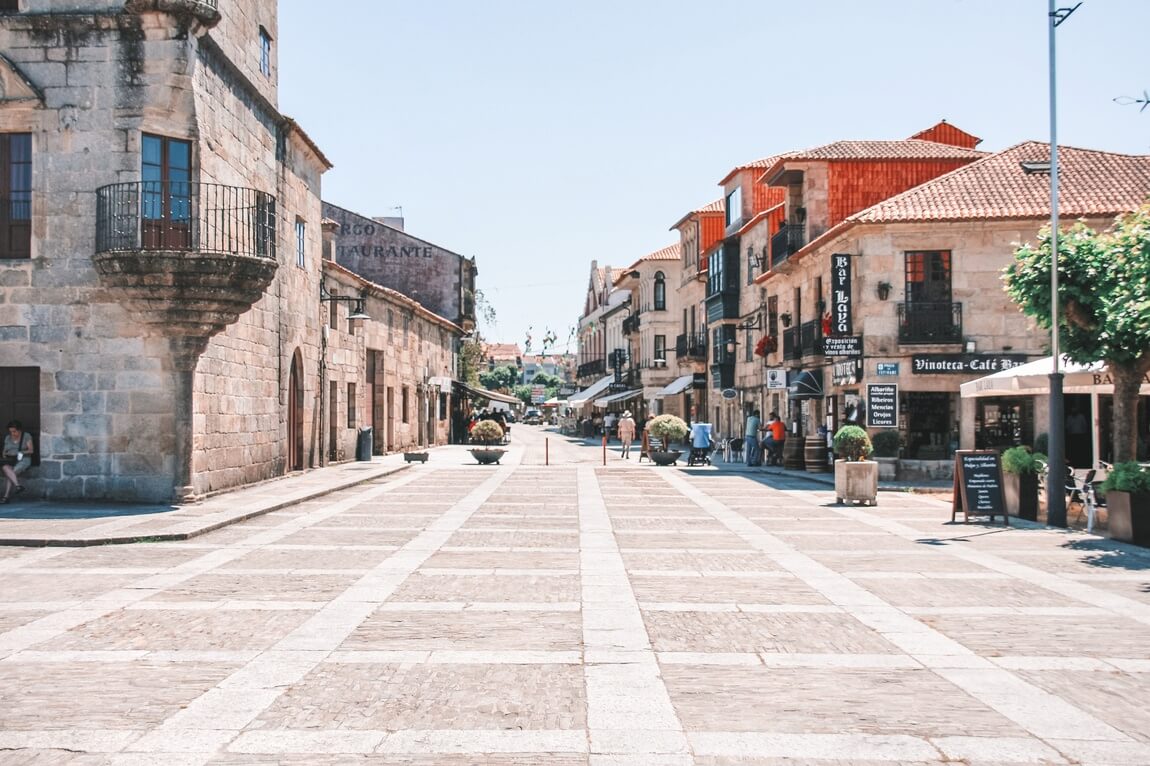
A visit to the town’s historic center can begin at Fefiñans Square, one of the largest squares in the town. Here we find the San Benito Church and the incredible Fefiñans Palace, where the Fefiñáns Winery is located.
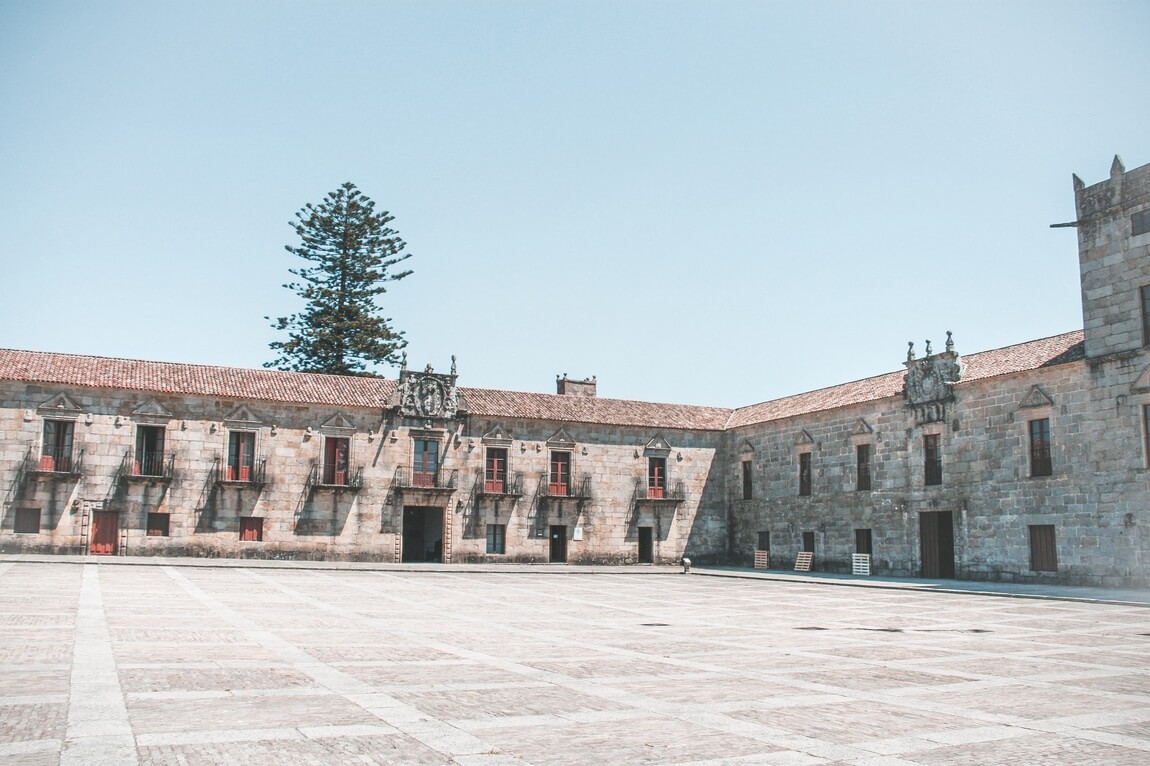
Getting away from the center, we can still visit the Ethnographic and Wine Museum, as well as the ruins of the Mariña Dozo church, where a cemetery is currently located.
🎫 If you’re based in Santiago de Compostela and don’t have a car, this full-day Rías Baixas tour is a great way to visit Combarro, Cambados, and other highlights of the region, including a boat trip through the famous mussel rafts with wine and mussel tasting included.
When to visit Cambados?
On the first Sunday in August, the Albariño Wine Festival is celebrated, so this could be a good time to get to know this Galician pueblo, especially for wine lovers. During the festival, there are many stalls on the streets and you can taste many different wines.
Accommodation in Cambados
- Parador de Cambados: Located in the old Bazán Palace, this accommodation option is a very pleasant trip back in time. Despite the higher prices, the quality of the parador is indeed incredible
- Villaprado: with an excellent location, it offers a more refined stay at an affordable price
Restaurants in Cambados
- A Fonte Do Viño (€€): the perfect place to try what is fished close by and experience a good albariño wine
10. Combarro (Pontevedra)
To round off this list of the most beautiful towns in Galicia, I couldn’t leave out Combarro. It’s one of the most charming and picturesque villages in the region, with a character unlike anywhere else in Galicia.
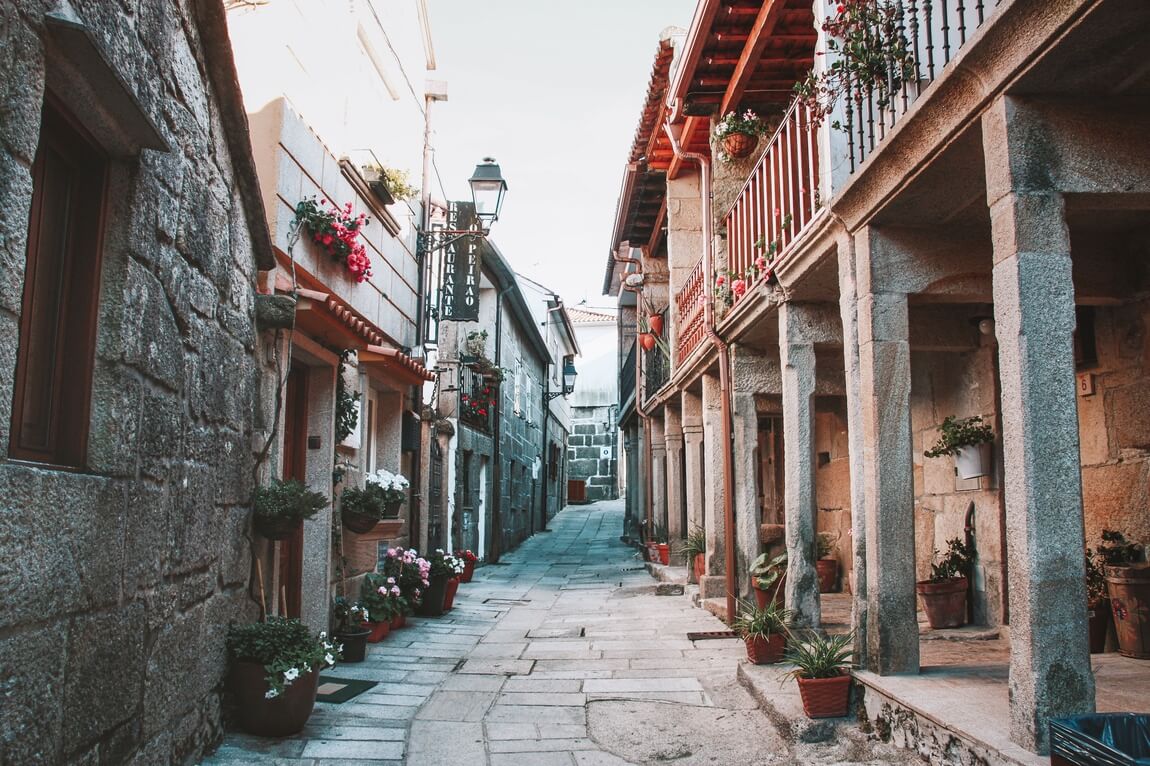
What makes Combarro truly unique are its traditional granaries, known locally as hórreos, which line the waterfront and have become the town’s most iconic feature.
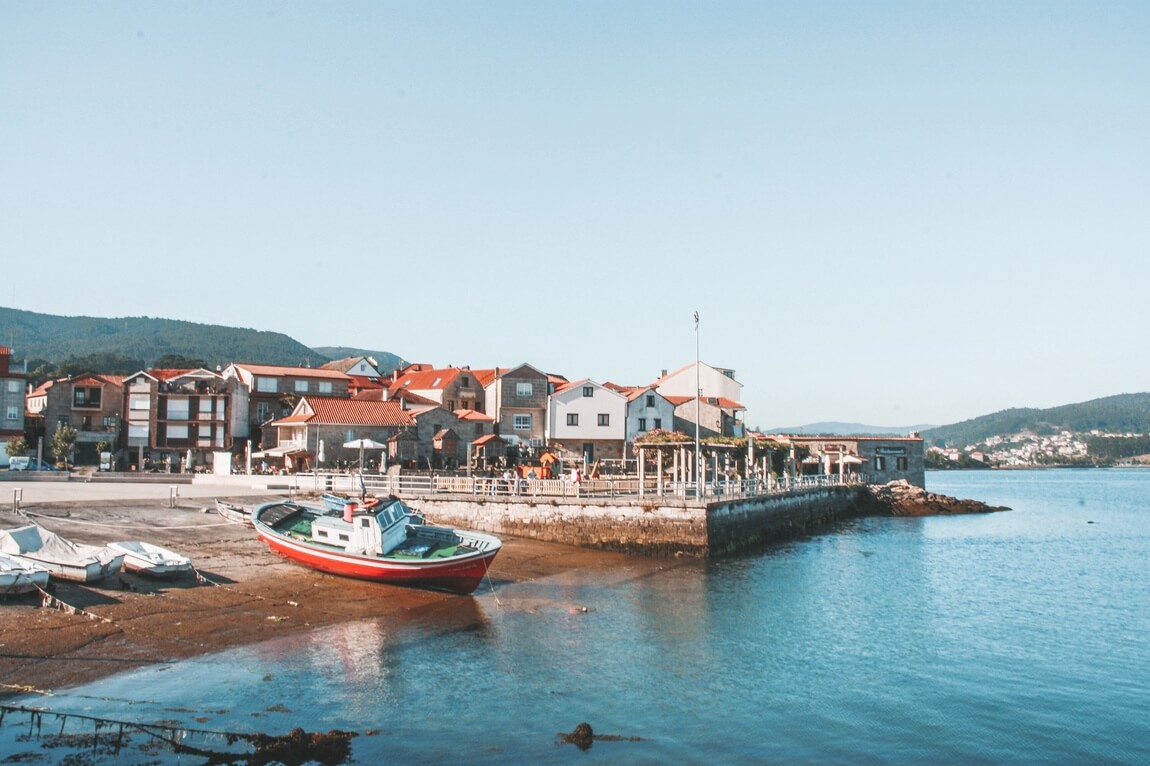
Wander through the narrow streets lined by the granaries that can be found near the estuary. Moreover, look out for the various cruises scattered around and the coastal houses (locally known as “casas marineras”).
I also suggest visiting San Roque Church and also San Juan de Poyo Monastery, located 5 minutes by car from the center of Combarro.
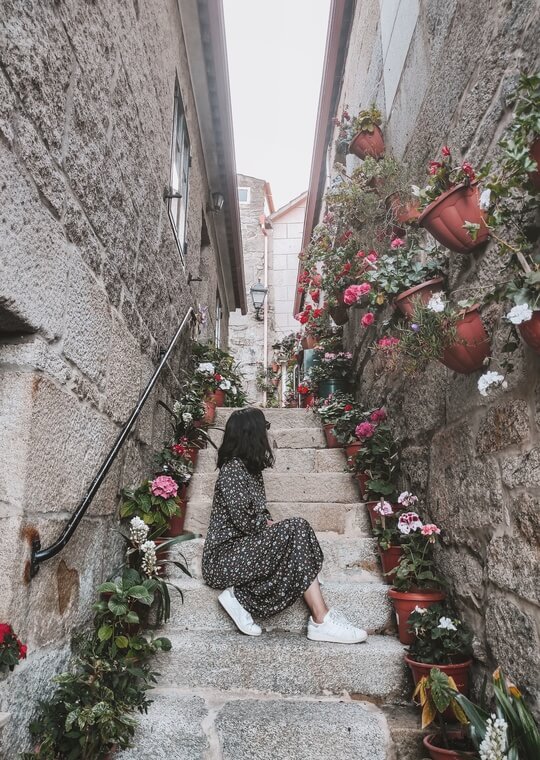
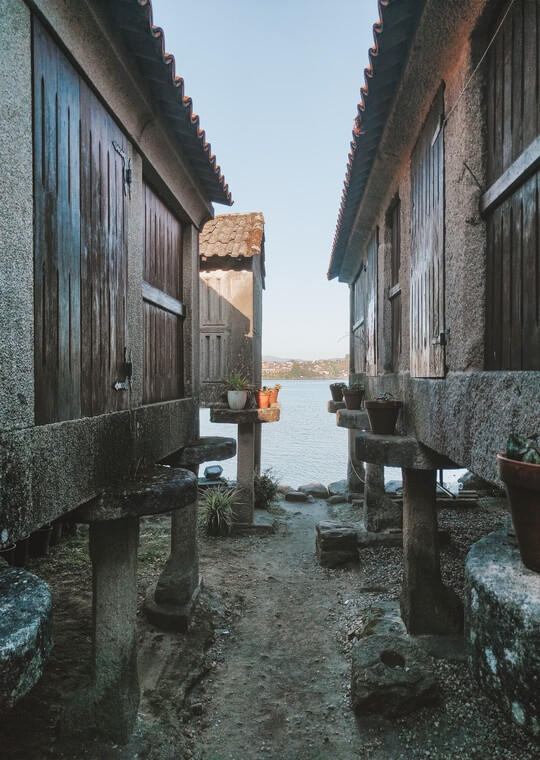
Finally, for a panoramic view of the granaries, I suggest a visit to Padrón beach or Pinela beach!
Accommodation in Combarro
- Casa Noelmar: Very rustic accommodation right in the center of Combarro. Apart from the very friendly service, the apartment is comfortable and has a garden to enjoy on warmer days.
- Atico Mirador Rualeira: typical house of Combarro with a central location and nice views
What is the best time to visit these pueblos in Galicia?
The weather forecasts in Galicia are not always the most optimistic, and this region is widely known for its high amount of rainfall.
However, any time of year is a good time to visit Galicia and, more specifically, its pueblos.
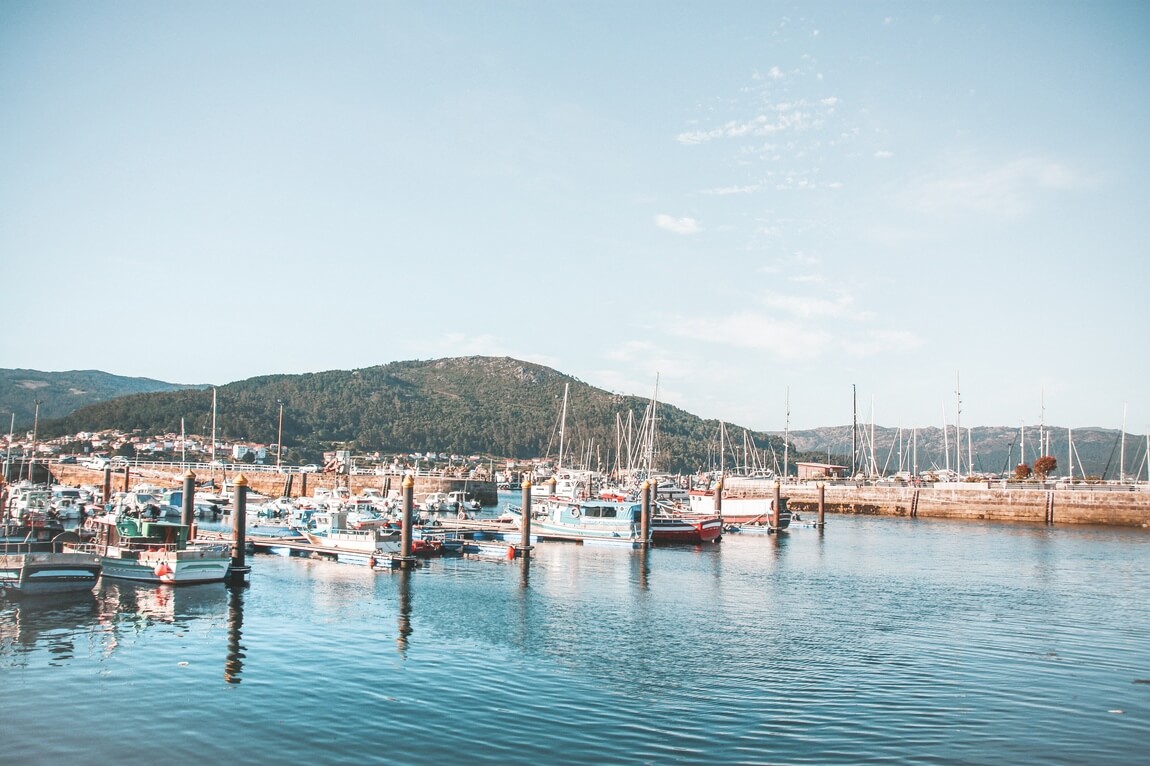
However, if you’re looking to enjoy some of the region’s almost heavenly beaches, the best time to visit is from June to August, when the temperatures are more inviting. But don’t be fooled by the beautiful color of the seawater, as it is quite chilly!
Final thoughts
I hope this guide has helped you discover some of the most beautiful towns in Galicia and inspired you to plan your own trip through this incredible region of northern Spain.
From medieval villages and charming fishing towns to breathtaking coastal scenery and historic centers, Galicia has so much more to offer than many travelers expect.
If you’re planning a longer trip around the region, be sure to check out my other Galicia travel guides, including my recommendations for the best beaches in Galicia, the best things to do in Santiago de Compostela, and my guide to Ourense. Together, they make the perfect complement to this itinerary.
Have you visited any of these towns already? Or is there another beautiful town in Galicia that you think should be on this list? I’d love to hear your recommendations and experiences, so let me know in the comments below!
Disclaimer: this post may contain some affiliate links, which means I get a small commission if you buy something through my links. This doesn’t represent any additional cost to you and you’ll be supporting my work here on the blog😊