

Are you looking for China travel tips to make your trip smoother and stress-free?
I spent 14 days traveling across China, and I can confidently say it’s one of the most fascinating yet complex countries I’ve ever visited.
Between the language barrier, internet restrictions, and cultural differences, being a tourist in China can feel overwhelming at first.


But with the right preparation, it quickly turns into one of the most rewarding travel experiences you’ll ever have.
In this guide, I’ll share my most practical and honest China tips for tourists. This includes how to prepare for a trip to China, to what it’s really like visiting China for the first time.
You’ll find out how to stay connected, how to pay for things, and how to navigate local customs like a pro.
This guide to visiting China will help you feel ready, confident, and excited to explore every corner of this incredible country.
China travel tips
✈️Travel documents & entry requirements
1. Confirm your passport validity
Your passport must be valid for at least six months beyond your stay. Double-check that your passport has enough blank pages too, as you might need them for visa stamps and entry forms.
2. Check visa requirements
Most travelers still need a visa to enter China, though recent changes have made things easier for some nationalities. In 2025, China introduced visa exemptions for a few countries. Portugal was one of them, so I was lucky to visit without applying. The visa-free entry policy will continue into 2026.
If you do need a visa, start the process well in advance. It can be more complicated than in other destinations. You’ll usually need to fill out a detailed form, provide your itinerary, and confirmation of booked accommodation, for example.
I remember a friend who had a tough time getting hers approved: multiple documents, long waits, and a few visits to the embassy.
So, always check the official Chinese embassy website for the latest requirements before applying.
3. Buy travel insurance
Even if you’re a careful traveler, having insurance is essential when traveling in China as a foreigner. Healthcare standards are good in major cities, but having travel insurance will make everything run smoothly. Choose a policy that covers medical expenses, lost luggage, and trip cancellations.
I personally recommend Heymondo. They offer solid coverage at a fair price, and their customer support works smoothly through the app.
🌐Internet & staying connected
One of the most important things to know when traveling to China is that staying connected works a bit differently here. The country has its own digital ecosystem, which means many of the apps and websites you use every day simply don’t work.


4. Consider a China-friendly eSIM or SIM card
Getting mobile data in China is essential for navigation and payments.
I used Airalo, and it made my life so much easier: I didn’t have to look for local SIMs or deal with language barriers at the airport. The setup takes just a few minutes, and it works across the country.
Want to know more? Check out my full guide on using Airalo in China!
👉 You can grab your eSIM from Airalo using the code MARIAN4315 for 3€ off your first purchase, or use ATICKETTOTAKEOFF for 10% off your next adventure if you book through this link.
5. Get a VPN before you arrive
Google, WhatsApp, Instagram, Facebook, and even Gmail are blocked in mainland China.
However, if you have a VPN, you can still access your favorite apps securely. Just make sure to download it before you land.
I used NordVPN during my 14 days in China, and it worked flawlessly. It kept all my apps accessible and my connection stable while browsing or uploading photos.

6. Download the right apps before your trip
China has its own system for everything, from messaging and maps to ride-hailing and payments.
Before you go, download the essential ones so you don’t end up lost or unable to pay. You’ll need specific apps to book tours, navigate the city, and even order food.
For a full list, check out my detailed guide on the essential apps you need in China. Trust me, having these ready before you land will make your experience a lot smoother.
💰Money & payments
When planning a trip to China, one of the biggest surprises for most travelers is how little cash you’ll actually need. China has gone almost completely digital when it comes to money: even street vendors and taxi drivers rely on mobile payments.

7. China is mostly cashless
The days of carrying bundles of yuan are long gone.
Apps like Alipay and WeChat Pay dominate, and you’ll use them for nearly everything, from paying for street food to buying metro tickets.
I had both, and they worked perfectly throughout my two weeks in China. Even the smallest fruit stall on the street accepted digital payments.
These systems are incredibly convenient once you get used to them, but you’ll need to set them up in advance with your foreign bank card.
It’s one of the most essential China travel tips I can give: download the apps, verify your account, and link your card before you arrive.
8. ATMs are rarely needed
While ATMs are available in major cities, you’ll probably never use them.
Most shops, restaurants, and even public toilets rely on mobile payments. Carrying large amounts of cash is just not needed.
Keep a small amount of cash for emergencies or if you want to save it as a souvenir, but you’ll likely find that it sits untouched in your wallet for the entire trip.


9. Tipping isn’t common
If you’re visiting China for the first time, you’ll quickly notice that tipping isn’t part of the culture. Locals don’t tip in restaurants, taxis, or even hotels. Service charges are often included in the bill, and offering extra can sometimes cause confusion.
Consider this one of those tips for traveling to China that saves both money and awkward moments.
China’s digital payment system might feel unfamiliar at first, but it’s one of the things that makes the country so efficient.
10. Currency & using Revolut in China
China’s official currency is the Chinese yuan (¥ or CNY or RMB). The exchange rate usually hovers around 1€ = 8 CNY or 1 USD ≈ 7.2 CNY, though it can fluctuate slightly.
Most payments in China are made digitally through Alipay or WeChat Pay, where you can add your Revolut Card.
Revolut is also my favorite and fee-free way to manage my money while abroad. You can load euros or dollars onto your Revolut account and pay in yuan without worrying about conversion fees or bad exchange rates.
I’ve used it countless times while traveling, and it’s saved me from unnecessary bank fees.
👉 You can learn more in my detailed post on how to use Revolut when traveling or create your Revolut account here before your trip to start using it in China.
🗺️Planning & logistics
Organizing your trip might feel like a puzzle at times, but once you get the hang of it, it’s incredibly rewarding.
These tips for traveling in China will help you avoid unnecessary stress once you’re there, making sure you spend more time exploring and less time figuring things out.


11. China is a huge country
If there’s one thing to understand before you start planning a trip to China, it’s just how big the country really is. You could spend months exploring and still only scratch the surface.
For a trip of one or two weeks, it’s best to focus on one region, like the south (Guilin, Guangzhou, and Hong Kong) or the north (Beijing and Xi’an).
Even within a single area, distances can be long, and trains or flights often take several hours. You’ll love it, though, and chances are, you’ll leave already thinking about when to come back.
12. Start planning your itinerary early
China is a world of its own, and it’s one of those destinations that rewards preparation. Train tickets, internal flights, and hotels should be booked as soon as possible, especially during national holidays or weekends.
When I was organizing my trip, I found it challenging to gather accurate and up-to-date information in English. Still, with some patience and a bit of trial and error, everything came together beautifully. Trust me, the effort is worth it.
So, careful planning will make your experience smoother and let you make the most of your time there.
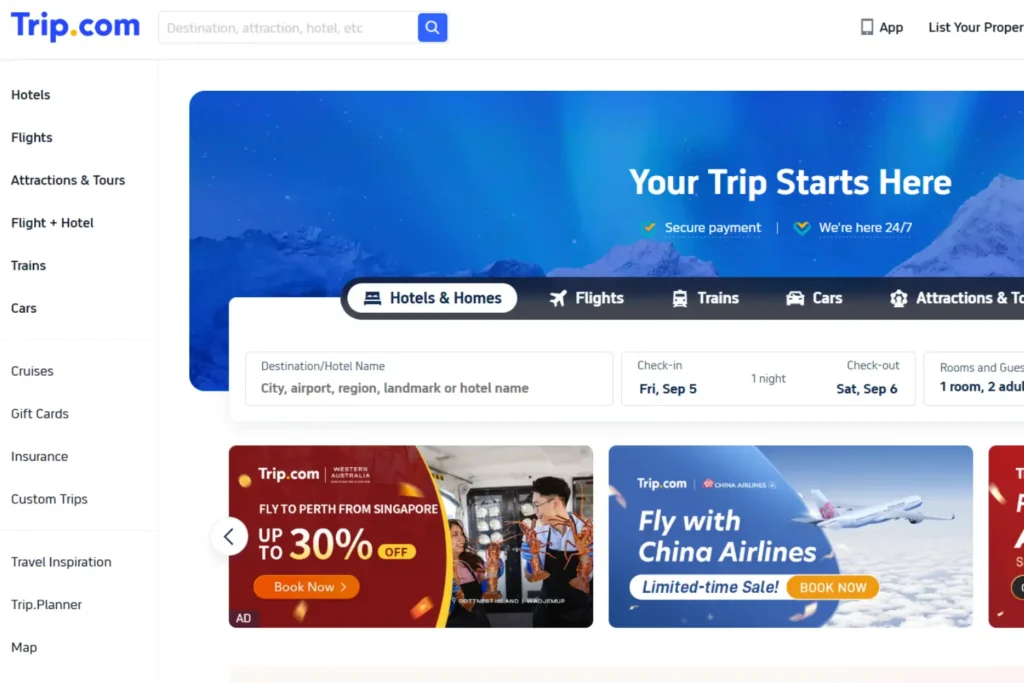
13. Book hotels via Trip.com
Although Booking.com also works in China, I found Trip.com had more options than Booking.
Plus, the platform is user-friendly and displays hotel details in English. If you’re not sure where to start, Trip.com is your best bet for finding verified reviews and up-to-date availability.
14. Book tours and tickets online
For tours, attractions, and transportation, Trip.com is again the easiest option.
You can also use WeChat, which locals rely on for nearly everything. However, if you’re new to it, the interface can feel confusing at first (and mostly in Chinese).
Whenever possible, I recommend booking through Trip.com instead since it’s faster, simpler, and all in English.
🙇Social customs & etiquette
Understanding social customs is one of the most valuable China tips for travelers. Life here follows its own rhythm, and things don’t always work the way you might expect. That’s part of what makes the experience so memorable.


15. Learn a few basic Mandarin phrases
Mandarin isn’t easy, but learning even a few words makes a big difference.
I only learned “nǐ hǎo” (hello) and “xièxiè” (thank you), yet they went a long way in connecting with locals. Most people don’t speak English (especially outside Beijing or Shanghai), so a smile and a simple greeting often do the trick.
You’ll find that locals appreciate the effort, even if your pronunciation isn’t perfect.

16. Don’t expect personal space
When it comes to queues and crowds, China plays by different rules. Queuing might be different, and some pushing or skipping is completely normal. It’s not rude, just cultural.
The same goes for personal space, which is nearly nonexistent in crowded areas like metro stations or tourist attractions. It can feel overwhelming at first and I have to admit this was one of the things that made me miss home more.
17. Be ready for curious locals
Another thing that surprised me was how much attention we got from locals. People, from children to adults, often asked to take photos with us, especially in areas with fewer Western tourists. However, it also happened in big cities like Beijing!
Sometimes they’d walk up smiling, gesture for a photo, and that would be the entire interaction. We laughed a lot about it and honestly found it endearing. It’s one of those moments that remind you how unique being a tourist in China can feel.
18. Communication can be tricky
Even though locals often tried to speak Mandarin to us (as if we’d understand a single word), the language barrier was real.
Having Google Translate was absolutely essential and I used it every single day. Whether ordering food, asking for directions, or reading signs, it saved me countless times. It’s one of the most practical travel tips for China I can give.
That said, I was pleasantly surprised to see that many signs in airports, train stations, and tourist sites had English translations. It made navigating much easier than I expected. Still, patience, gestures, and a good translation app will be your best friends when traveling in China as a foreigner.
🍜Food & dining


19. Be adventurous with food
One of my best tips for traveling in China is to embrace the unknown. Menus often come only in Chinese, and even when translated, they don’t always make sense. I ordered a few “mystery dishes” that turned out delicious.
Chinese cuisine changes dramatically across provinces, so what you try in Beijing will taste nothing like what you find in Chengdu or Guilin.
Don’t be afraid to experiment! Half the fun is not knowing exactly what will arrive at your table.
20. Learn to use chopsticks
In many restaurants, forks aren’t even an option. I wasn’t exactly an expert before going, but after a few days, I got the hang of it.
I felt a bit embarrassed at first for not knowing how to use them, but the locals didn’t even seem to notice.


21. Street food is safe (and delicious, most times)
You’ll see street vendors everywhere, especially in night markets. Stick to busy stalls with long queues… they’re popular for a reason. I never had any issues eating street food in China, and some of my favorite meals came from those little stands.
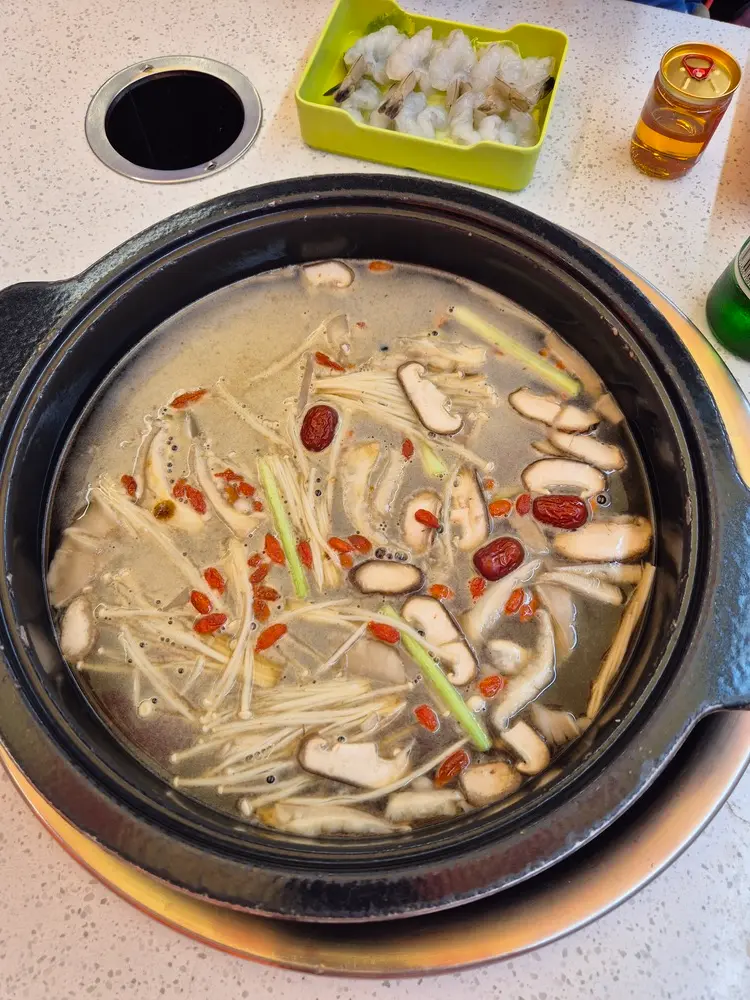

22. Food can be really spicy
Food can get very spicy in certain regions, especially in Sichuan Province — cities like Chongqing and Chengdu are famous for their fiery hotpots. If you’re not used to spice, ask for a non-spicy option. It doesn’t always guarantee a mild dish, but it’s worth a try!
🚻Toilets & hygiene
This might not be the most glamorous topic, but it’s definitely one of the most practical things to know before visiting China. Bathrooms work a bit differently here, and being prepared can save you from some very uncomfortable situations.
23. Squat toilets are common
Squat toilets are everywhere in China. You’ll find them in train stations, local restaurants, and public parks.
For me, it was my worst nightmare because I just can’t get used to them! Still, they’re considered more hygienic by locals since no part of your body touches the seat.
24. Public restrooms may lack paper
Many public toilets don’t provide toilet paper. Just remember to add tissues and hand sanitizer to your China travel checklist and you’ll thank yourself later.
25. Western toilets are mostly found in big cities
If squat toilets sound intimidating, don’t worry, Western-style toilets are more common in hotels, malls, and airports, especially in larger cities like Beijing, Shanghai, or Chengdu. Usually, the two options are often available.
Still, once you head into smaller towns or off-the-beaten-path destinations, expect squat toilets to make a comeback.
🚇Transportation & getting around
Getting around China might seem intimidating at first, but it’s much easier than it looks once you understand the system.
Efficient, fast, and surprisingly affordable, China’s transportation network is one of the best in the world.

26. Book your train tickets early
Train travel is incredibly popular in China, so seats can sell out fast, especially during holidays or weekends.
You can book tickets up to 15 days in advance through the official 12306 app or via Trip.com, which is available in English.
At first, it might seem like a confusing process, but once you get the hang of it, it’s simple. During peak periods, try booking the moment tickets become available, as they can sell out within minutes.
27. Trains are the best way to travel
Trains are hands down the best way to get around the country. China’s high-speed rail network is modern, reliable, and expanding every year.
Journeys are smooth, comfortable, and often faster than flying when you factor in airport transfers.
👉 Read my detailed guide on how to buy train tickets in China to learn exactly how the system works and what to expect on board.

28. Arrive early for trains
Train stations in China can be huge, and you’ll need to go through both a security check and ticket verification at the entrance, so it’s best to arrive about 45 minutes before your train departs.
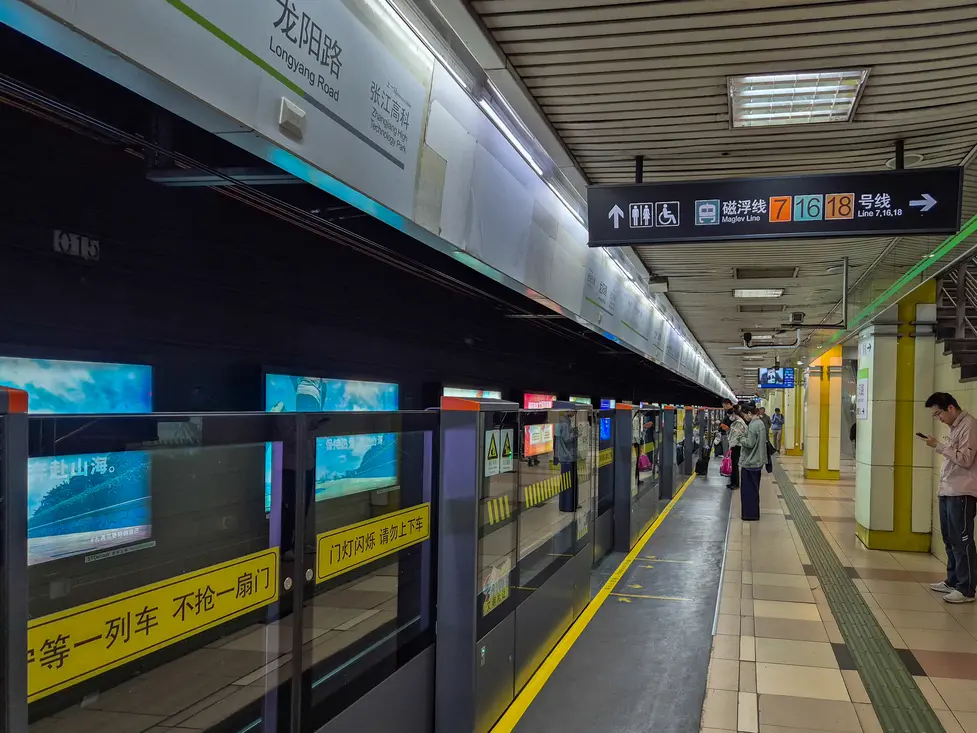
29. City metros are excellent
Major cities like Beijing, Shanghai, Chengdu, and Guangzhou have modern, efficient metro systems. They’re cheap, clean, and easy to use, even for foreigners.
You can buy tickets directly through Alipay or WeChat Pay, which makes everything seamless. I also recommend downloading Amap, a navigation app that tells you which metro exit to take. It’s super helpful in massive stations with multiple exits.
30. Use DiDi for easy rides
When you don’t feel like taking the metro or bus, DiDi (China’s version of Uber) is the easiest alternative. It has an English version and accepts foreign cards, so you don’t have to worry about explaining destinations in Mandarin.

31. Don’t rely on Google Maps
When you’re in China, I suggest forgetting about Google Maps because it doesn’t work that well there. The app is often inaccurate, with misplaced locations and roads that don’t line up, which can make navigation pretty frustrating.
Instead, use Amap (also known as Gaode Maps). It’s much more reliable and offers real-time directions that are actually accurate.
It now has an English interface, making it easy for foreigners to use without getting lost in translation. You can use it to check metro routes, walking paths, or even see which metro exit to take, which is incredibly helpful in massive stations.
Amap quickly became one of my go-to apps in China, and honestly, I don’t know how I would’ve managed without it.
📅Destinations & timing
32. Best time to visit China
Spring (April–May) and autumn (September–October) are the best months to explore China. Temperatures are mild, skies are usually clear, and attractions are less crowded than in summer or winter.
33. Avoid public holidays
Here’s one of the most important things to know when visiting China (and I’ve learned this the hard way): avoid national holidays at all costs.
The country practically comes to a standstill during Golden Week (early October) and Labor Day (around May 1).
I visited during Labor Day, and it was chaos: crowds everywhere, sold-out tickets, and endless queues. I’d heard it would be busy, but I honestly didn’t imagine that many people!
Key holidays in China to keep in mind:
- Chinese New Year (late January or February – dates vary)
- Qingming Festival (early April)
- Labor Day (May 1–5)
- Dragon Boat Festival (June)
- Mid-Autumn Festival (September or October – dates vary)
- National Day / Golden Week (October 1–7)

34. Pollution can affect plans
Northern cities like Beijing or Xi’an can experience high pollution levels. Always check the AQI (Air Quality Index) before heading out, as it can affect visibility and outdoor activities.
For example, during my stay in Beijing, the air was so hazy that my eyes started stinging.


35. Consider visiting smaller cities
If you’re looking for a more authentic experience, consider exploring smaller or lesser-known destinations. Places like Furong Ancient Town or Fenghuang feel worlds away from the massive crowds of Shanghai or Beijing.
They show a slower, more traditional side of the country that’s well worth discovering.
🧳Packing tips for China
36. Bring power adapters
China uses plug types A, C, and I (220V), so bring a universal adapter so you’re prepared. You’ll find sockets in hotels, trains, and airports, but they often differ between cities.
37. Power bank restrictions
If you’re packing a power bank, check airline regulations. China has recently launched new specific rules about approved types of power banks. You can read more about it.
On domestic flights, it’s no longer allowed to bring power banks that don’t have the official Chinese certification symbol (the “3C” mark). Most power banks sold in Europe or the US don’t include this label, which means you might not be able to use or carry them on internal flights.
The best solution is to buy a certified one once you arrive or rent power banks locally, which is surprisingly easy since they’re available almost everywhere.
It’s a slightly inconvenient rule, especially because you’ll use your phone constantly for maps, payments, and translation apps. Having a power bank is essential for any traveler in China, so plan ahead to avoid surprises.
38. Bring wet wipes and sanitizer
Let’s just say cleanliness standards in China can vary a lot depending on where you are. The streets were surprisingly clean, and I was impressed by how well-maintained the public areas were.
But when it came to restaurants, things felt a bit different. Tables weren’t always wiped down properly, and sometimes the cutlery didn’t look spotless.
It’s best not to overthink it too much, but if that sort of thing bothers you, it’s worth carrying wet wipes to clean your table before eating and hand sanitizer to use afterward.
😷Safety, health & mindset


39. China is safe
If there’s one thing that truly surprised me, it’s how safe China is. In fact, it’s the safest country I’ve ever been to.
I never once felt uneasy, even when walking at night through quiet alleys or poorly lit streets. Petty theft can happen in crowded places like train stations or tourist attractions, but violent crime is extremely rare.
Locals are respectful, and police presence is strong in most cities, which adds an extra sense of security.
For solo travelers or anyone worried about safety, this is one of the most reassuring tips for traveling in China I can share: you can relax here.


40. Keep an open mind
Perhaps the most important piece of advice when thinking about how to travel in China as a foreigner is to stay open-minded.
China is a fascinating mix of old and new, but daily life can feel completely different from what you’re used to. Cultural habits, food, and even social norms might surprise you, but that’s what makes traveling here so rewarding.
Stay curious, go with the flow, and embrace the unexpected because that’s where the best stories begin.
41. Avoiding crowds isn’t that easy
If there’s one thing you quickly learn in China, it’s that avoiding crowds isn’t easy, no matter where you go. With over a billion people, popular attractions are almost always busy, especially in major cities like Beijing, Shanghai, or Xi’an.
Even in smaller towns, don’t be surprised to find tour groups arriving.
That said, there are ways to make sightseeing more manageable. Visit top landmarks early in the morning or close to closing time, when local tour groups have usually left. If possible, travel outside national holidays when the entire country seems to be on the move.
Still, part of the experience of traveling in China as a foreigner is learning to embrace the crowds. They’re a reminder of just how lively and dynamic the country is. So instead of getting frustrated, take a deep breath, go with the flow, and enjoy it.
Final thoughts
Traveling through China can feel overwhelming at first and that’s completely normal. The language barrier, the digital systems, and the cultural differences can seem like a lot to figure out. But once you understand how things work, it becomes surprisingly easy.
These China travel tips are all about helping you feel prepared so you can actually enjoy the experience instead of stressing about logistics.
A little planning goes a long way, and soon enough, things that felt complicated, like using Alipay or catching a high-speed train, will start to feel second nature.
The best advice I can give is to embrace the differences. China isn’t like anywhere else you’ve been, and that’s exactly what makes it so fascinating. Go with curiosity, patience, and an open mind, and you’ll come home with unforgettable stories.
If you found these China tips for tourists helpful, I’d love to hear from you! Have you been to China or are you planning your first trip soon?
👉 Before you go, don’t miss my other helpful posts about China:
- Apps you need in China – the essential tools to make your trip smoother
- How to buy train tickets in China – everything you need to know about navigating China’s high-speed rail system
Disclaimer: this post may contain some affiliate links, which means I get a small commission if you buy something through my links. This doesn’t represent any additional cost to you and you’ll be supporting my work here on the blog😊