
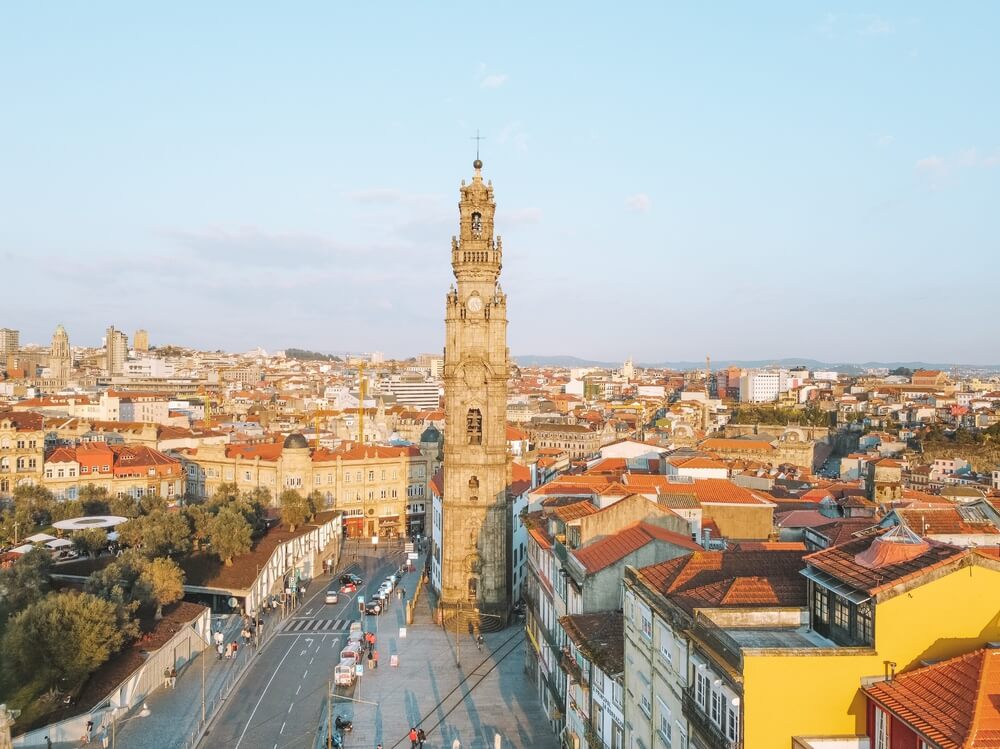
Looking for the perfect Porto 2-day itinerary? Then you’re in the right place.
Two days are enough to fall in love with Porto, but only if you know how to make the most of your time. This guide will help you visit the city’s must-see attractions, discover a few local favorites, and avoid wasting time on places that don’t live up to the hype.
I’ve lived in Porto my entire life. This is the city I call home. I’ve spent years exploring its streets, trying its cafés and restaurants, and showing friends and family around whenever they visit.
That’s why this isn’t just another Porto travel guide. It’s the exact itinerary I’d recommend to someone visiting Porto for the first time.
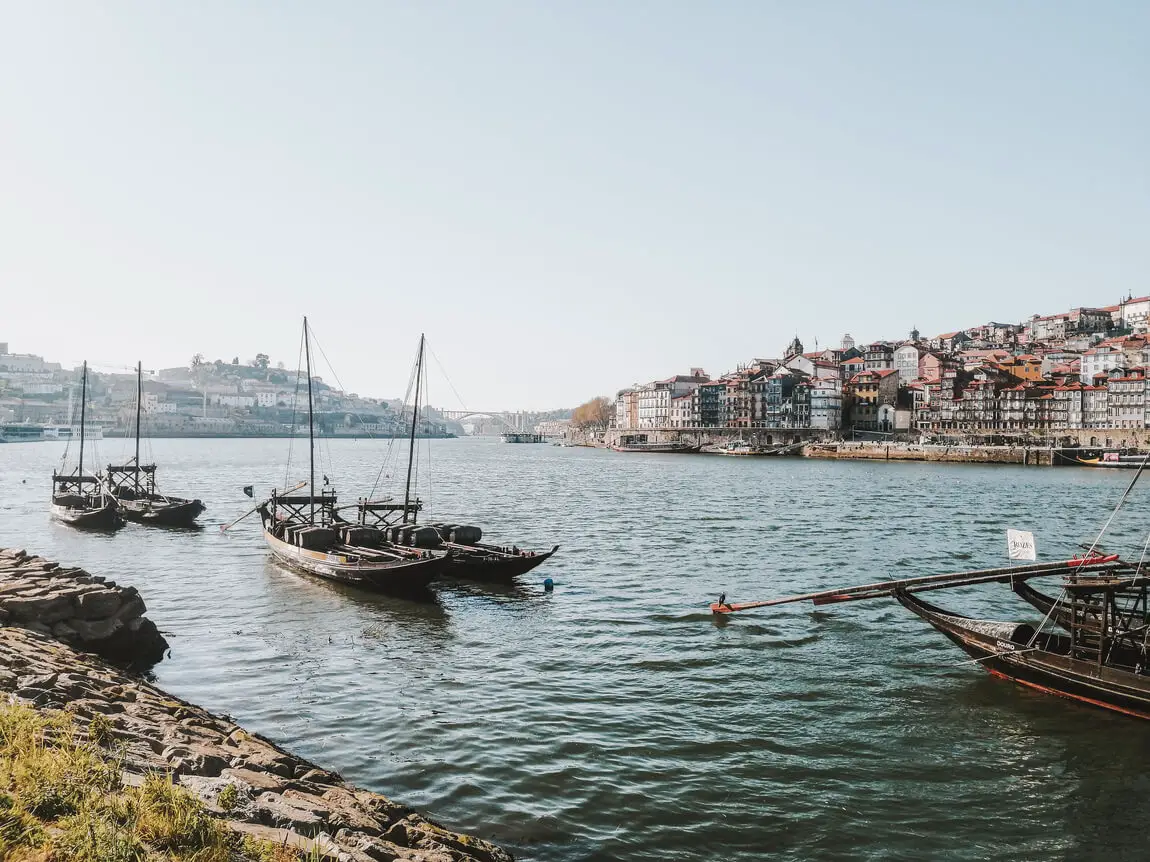
In this guide, I’ll show you how I’d spend 2 days in Porto if I wanted to experience the city’s highlights without rushing from one attraction to the next.
You’ll find a logical walking route, honest opinions on which places are worth visiting, practical tips to avoid common mistakes, and plenty of recommendations that come from actually living here.
I’ll also share a few local tips along the way. Some will help you avoid tourist traps. Others will help you discover places that many visitors completely miss.
My goal isn’t to help you see the most attractions in two days. It’s to help you have the best possible experience in Porto.
More Porto travel guides to help you plan your trip
Want to plan your Porto trip even better? Here are a few more guides that will help you choose where to eat, find great cafés, discover rooftop bars with amazing views, and have a few unique experiences while you’re in the city.
🍽️ The best restaurants in Porto for every mood: my favorite places to eat, whether you’re looking for traditional Portuguese food or something more modern.
☕ The best cafés in Porto: from specialty coffee shops to beautiful historic cafés.
🌧️ What to do in Porto when it rains
🍸 The best places to go for a drink with a view in Porto: my favorite rooftops and bars overlooking the city.
🚐 The day I visited Porto in a VW Bus: a fun and different way to discover Porto
🏎️Cool experience in Porto – buggy ride: One of the most fun outdoor activities I’ve tried near Porto.
Quick guide to this Porto 2-day itinerary
📍 What to visit in Porto: Sé do Porto | São Bento Station | Rua das Flores | Palácio da Bolsa | Ribeira | Luís I Bridge | Port wine cellars | Mercado do Bolhão | Clérigos Tower | Livraria Lello | Jardins do Palácio de Cristal
🚶 Getting around: This itinerary is designed to be explored mostly on foot. Porto is a hilly city, but the route minimizes unnecessary backtracking. You’ll only need public transportation for a few optional stops.
⌛ Is 2 days in Porto enough? Yes! Two days are enough to see Porto’s main highlights while leaving time to enjoy the city’s cafés, viewpoints, and atmosphere. If you have an extra day, I also share additional ideas at the end of this guide.
📅 Best time to visit Porto: May to October for warmer weather and longer days. Visiting in spring or fall is ideal if you want pleasant temperatures and fewer crowds.
🍷 Most popular experiences in Porto
– Guided walking tour of Porto
– Palácio da Bolsa guided tour
– Cálem Port wine cellar tour with tasting and Fado show
– Six Bridges Cruise
– Porto food tour
– Clérigos tower entrance ticket
– Sé do Porto guided tour with entrance tickets
😴 Where to stay in Porto: MyStay Porto Bolhão | D’Autor Apartments | Vincci Ponte de Ferro
💊 Best travel insurance for Portugal: I recommend Heymondo for its excellent balance between affordability and quality.
🛜 Best way to stay connected in Portugal: If your phone supports eSIM, use Airalo (MARIAN4315 = 3$ off). Otherwise, get a MEO, NOS or Vodafone SIM.
💰Currency in Portugal: The local currency is the Euro (€) and I recommend using Revolut to save on conversion fees.
How to get to Porto
Getting to Porto is easy, whether you’re flying directly into the city or traveling from elsewhere in Portugal. Thanks to its excellent transport connections, you can reach Porto by plane, train, bus, or car.
» Flying to Porto
If you’re flying to Porto, you’ll arrive at Francisco Sá Carneiro Airport (OPO). Located about 15 km (9.3 miles) from the city center, it’s one of Portugal’s busiest airports.
The airport offers direct flights to dozens of European cities, as well as several long-haul destinations. These include the United States, Canada, Brazil, and Morocco.
» Getting from Lisbon to Porto
If you’re arriving in Lisbon first, getting to Porto is straightforward. Whether you prefer traveling by bus, train, or car, there are plenty of options.
By bus
For most travelers, the bus offers the best balance between price and convenience. FlixBus and Rede Expressos both operate multiple daily departures between Lisbon and Porto. The journey takes around 3.5 hours.
Buses arrive at Campanhã Station, where you can easily connect to Porto’s metro network and reach the city center in just a few minutes.
💡 LOCAL TIP: As soon as you know your travel dates, book your tickets. Besides securing your seat, you’ll often pay less than if you wait until the last minute. Check timetables and book your bus or train tickets here.
By train
Traveling by train with Comboios de Portugal (CP) is slightly faster, with the journey taking around 3 hours on the high-speed services.
Most trains also arrive at Campanhã Station, which is served by the metro. Most services also stop at Devesas Station, in Vila Nova de Gaia. At the moment, this station isn’t connected to the metro network, although an extension is planned for the future.
💡 LOCAL TIP: Although the train is faster on paper, delays aren’t uncommon. Unless you’re in a hurry, I’d happily take either option.
By car
Driving from Lisbon to Porto takes about 3 hours. The route is almost entirely on modern highways, making it an easy and comfortable drive.
If you’re planning a Portugal road trip, I’d actually recommend renting a car. That way, you can stop at some fantastic destinations along the way. If you’re looking for ideas, have a look at my guide to the best places to visit in Central Portugal.
Once you arrive in Porto, however, I recommend leaving the car parked. The historic center is very walkable, and parking can be both expensive and difficult to find.
A rental car becomes much more useful if you’re planning to explore places outside the city after your visit. Some of my favorite day trips include the Douro Valley, Braga, Guimarães, and Amarante.
How to get from Porto Airport to the city center
There are several ways to travel from Porto Airport to the city center. Which one is best depends on your budget and where you’re staying.
» Metro
For most travelers, Metro do Porto is the easiest and most affordable option.
Take Line E (Purple Line) towards Trindade and get off at the station closest to your accommodation. Depending on your final destination, the journey usually takes between 30 and 40 minutes.
You’ll need a Z4 ticket, which currently costs 2.25€ /2.6 USD, plus the reusable Andante card if you don’t already have one. Check the updated prices before visiting Porto.
💡 LOCAL TIP: Line E runs every 20 to 30 minutes, depending on the time of day, so it’s worth checking the timetable before heading to the station.
» Uber and Bolt
If you’re traveling with luggage, arriving late at night, or staying outside the city center, Uber and Bolt are excellent alternatives.
There’s a dedicated ride share pick up area on Level -1 of the airport. Simply follow the signs inside the terminal after collecting your luggage.
A ride to downtown Porto usually costs between 10€ and 15€ (11 – 17 USD), depending on demand and the time of day.
» Bus
STCP operates several bus routes between Porto Airport and the city, including lines 601, 602, and 604.
There’s also the 3M night bus if you arrive after the metro has stopped running. Depending on where you’re staying, one of these routes may be more convenient than the metro. Check out the most up-to-date info on STCP routes to the airport.
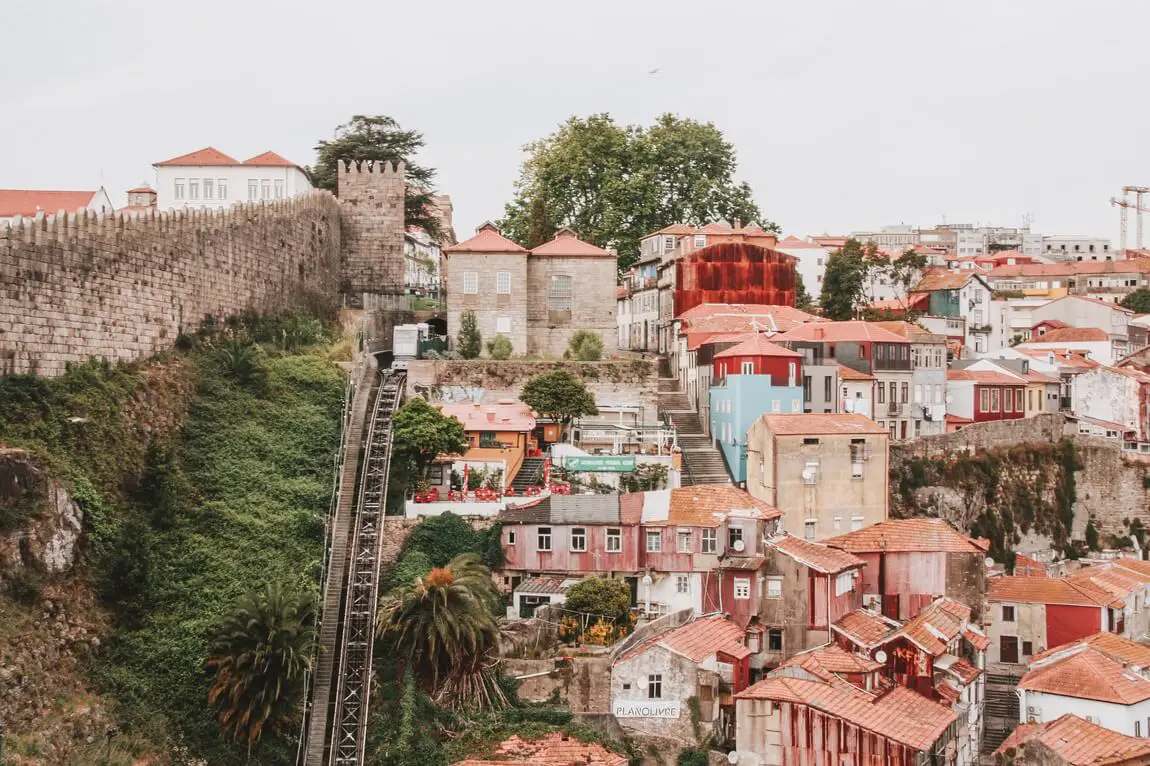
💡 LOCAL TIP: If you’d like to try one of Porto’s unique modes of transport, you can also ride the Guindais Funicular, which connects Batalha with Ribeira in just a couple of minutes. While you probably won’t need it for this itinerary, it’s a fun option if you’re exploring beyond the historic center.
Best way to see Porto: how to get around
The good news is that you don’t need a car to explore Porto. In fact, for most visitors, walking is the best way to experience the city.
Most of the top things to do in Porto are located within or close to the historic center.
While Porto is known for its steep streets, the main attractions are close enough that you can easily walk between them. During this 2-day itinerary in Porto, you’ll only need public transportation a couple of times.
When you do need to travel a little farther, such as heading to Foz do Douro or Matosinhos, Porto’s metro and bus network makes getting around easy.
Using public transportation
For occasional journeys, I recommend buying an Andante Azul card and loading it with single trips. The fare depends on the number of zones you’ll travel through. You can check the latest fares and zone information here.
If you expect to use public transportation several times during your trip, it’s worth loading 10 trips onto your card. You’ll receive the 11th trip for free.
If you’re planning to use public transportation frequently, you may want to consider one of these passes instead:
- Andante Tour: Unlimited travel for 24 hours (7.5€ / 8.6 USD) or 72 hours (16€ / 18 USD) after the first validation.
- Andante 24: Unlimited travel for 24 hours within your chosen zones. The price varies depending on the zones selected.
💡 LOCAL TIP: Porto’s fare zones can be confusing if it’s your first time using the metro. Before buying your ticket, check which zone you need for your destination. The zone maps are displayed next to every ticket machine. Also, remember to validate your ticket before every journey, including when changing lines or vehicles.
Best areas to stay in Porto
If it’s your first time visiting Porto, I’d recommend staying somewhere close to the historic center.
Most of the attractions included in this Porto itinerary are within walking distance of each other, so choosing the right neighborhood will help you make the most of your time.
These are the three areas I’d recommend:
Aliados and São Bento
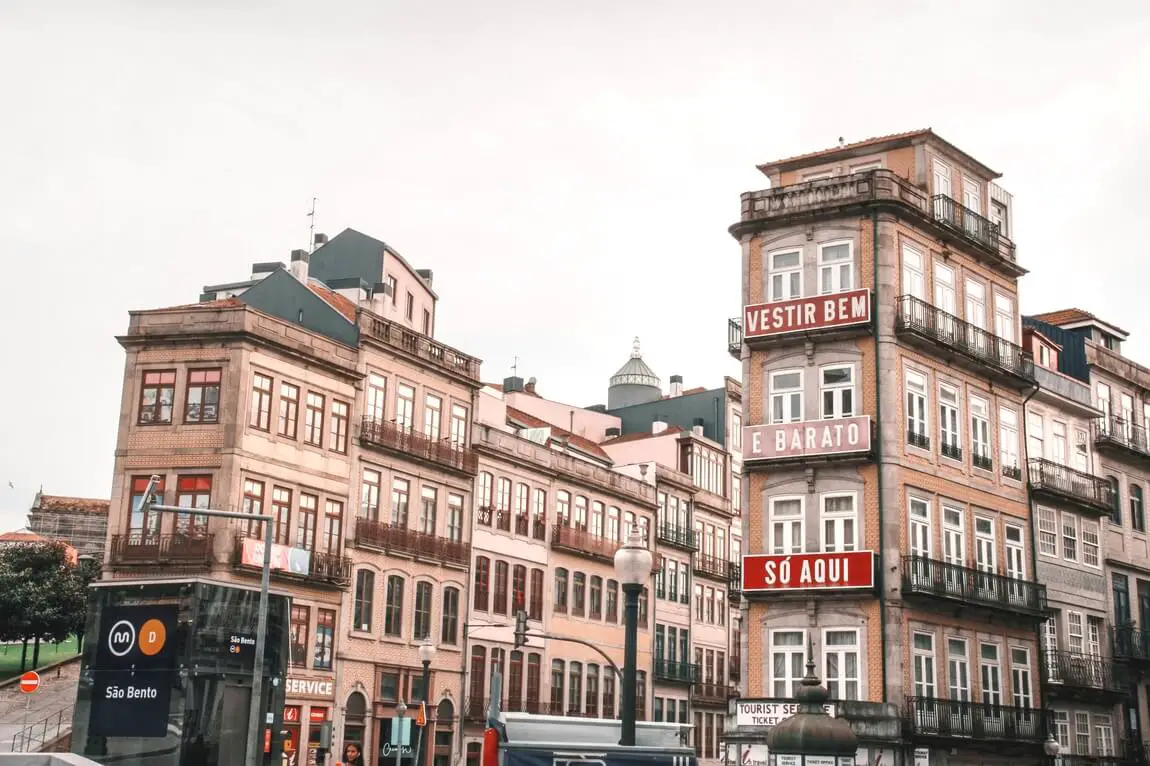
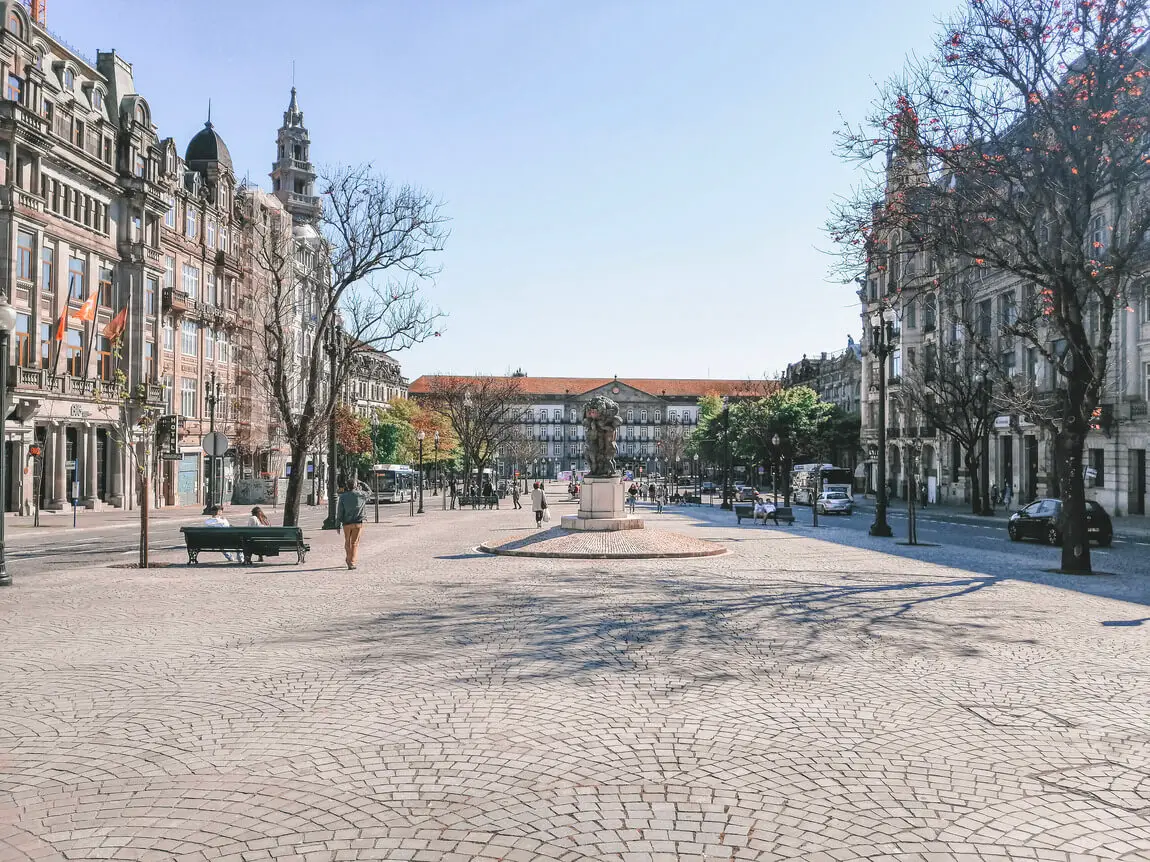
This is my top recommendation for most visitors. You’ll be within walking distance of many of Porto’s main attractions, as well as countless restaurants, cafés, and metro stations. It’s also the most convenient base if you’re only spending 48 hours in Porto.
Cedofeita
If you prefer a quieter neighborhood with a more local feel, Cedofeita is an excellent choice. It’s known for its independent shops, art galleries, and cafés, while still being within walking distance of the city center.
Ribeira and Sé
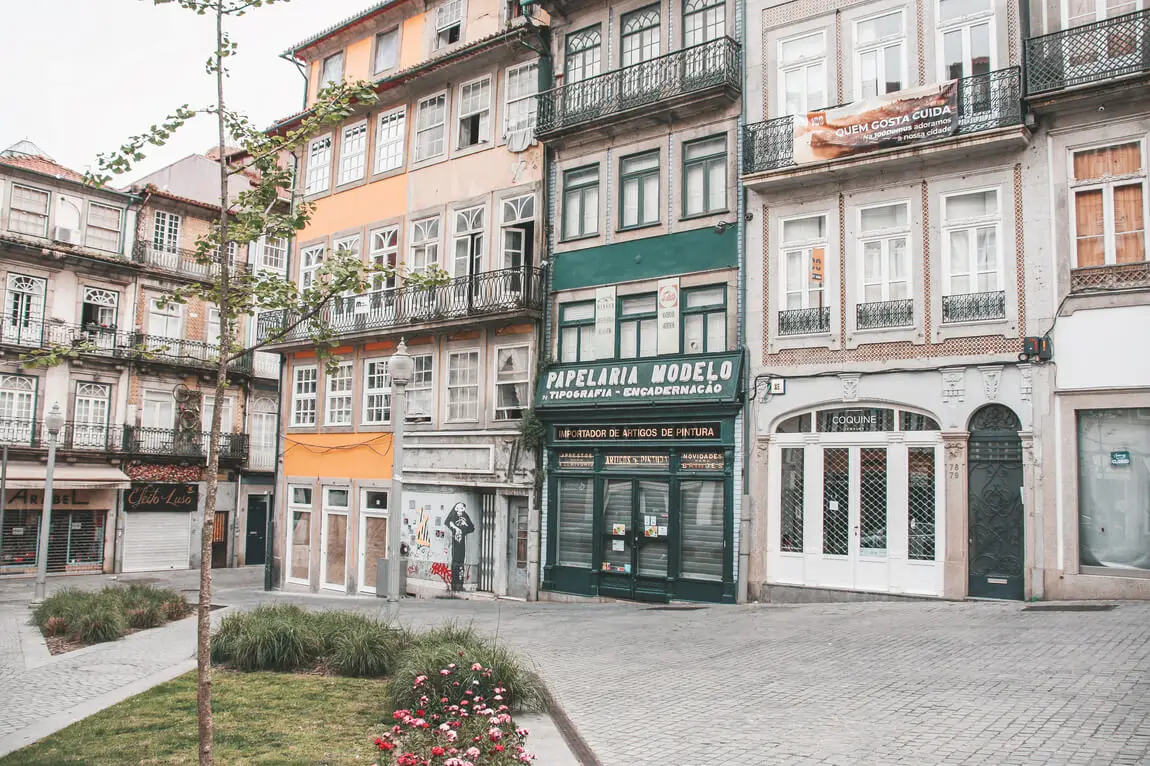
If staying in a historic building overlooking the Douro River sounds like your idea of the perfect trip, Ribeira and Sé are hard to beat. These are two of Porto’s oldest neighborhoods, full of character, narrow streets, and beautiful views.
That said, they’re not the most practical areas to stay. Many of the buildings are centuries old, so even renovated apartments may have less insulation and fewer modern amenities than hotels in other parts of the city.
While I have no problem walking around Ribeira and Sé, even after dark, these neighborhoods can feel quieter at night than areas like Aliados or Cedofeita, especially during the week.
They’re also less convenient if you’re relying on public transportation, as the narrow streets mean you’ll usually have to walk a bit to reach the nearest metro or bus stop.
💡 LOCAL TIP: If you can’t find accommodation in these neighborhoods, don’t worry. Anywhere close to a Metro do Porto station on the Yellow Line (Line D) is usually a great alternative. You’ll be able to reach the historic center in less than 15 minutes.
Where to stay in Porto
The truth is that there are many interesting accommodation options in Porto! A quick search and you’ll find something you like.
Here are a few places I’d personally recommend:
- Invictus Hostel: located in the heart of downtown Porto, it offers rooms with private bathrooms and it also has breakfast available
- MyStay Porto Bolhão: One of the best value-for-money options near the city center.
- Downtown Porto Mouzinho Studio Apts: very well-equipped flat (including kitchen) and also excellent location (next to São Bento)
- D’Autor Apartments: despite a higher price, these flats are also equipped with everything you need and have a fantastic decor
- Vincci Ponte de Ferro: although it is located in Vila Nova de Gaia, you only have to cross the Luiz I bridge to get to downtown Porto. My top pick if you’re looking for incredible views over the Douro River and Porto’s skyline.
💼 TRAVEL INSURANCE: It’s one of those things you hope you won’t need… but it can save you a lot of money and stress if something goes wrong.
I personally use Heymondo because it offers strong coverage at a reasonable price, including medical expenses, lost luggage, and electronics.
What I like most is how easy it is to manage everything through their app, especially if you ever need assistance while traveling.
As a Ticket to Take Off reader, you get 5% off, already applied when booking through the link below.
My favorite activities & tours in Porto
🎫 Don’t leave your activities until the last minute. Some of the most popular tours sell out quickly, especially during peak season. I personally use GetYourGuide to book activities because it’s easy to compare options and most tours offer free cancellation. Use code ATICKETTOTAKEOFF5 for 5% off your first booking in the app. Download here!
Map of the best places to visit in Porto
Before diving into this itinerary, take a look at the map below. I’ve pinned all the best things to do in Porto in 2 days that I’ve included in this guide, making it easier to visualize the route and plan your days.
Since this itinerary is designed to help you visit Porto in 2 days, I’ve organized the attractions in a logical order to minimize walking and make the most of your time. I recommend saving this map before your trip so you can easily access it while exploring the city.
📌HOW TO USE THE MAP: Click on the top left corner to access the various layers of the map. You can select the layers you’re interested in and also find out more about each point of interest by clicking on it in the left-hand sidebar or on the pin on the map. Add the map to your Google Maps by clicking on the star next to the title. To access the map, simply go to Google Maps ‘Saved’ and click on ‘Maps’!
Porto 2-day itinerary
Day 1 in Porto
» Porto’s Cathedral (Sé do Porto)
Your first stop is Porto Cathedral (Sé do Porto), one of the city’s oldest landmarks. Perched on one of Porto’s highest points, it’s the perfect place to begin this itinerary. Not only because of its history, but also because you’ll enjoy some of the best views over the Douro River before making your way downhill through the historic center.
Originally built between the 12th and 13th centuries, the cathedral combines Romanesque, Gothic, and Baroque architectural styles.
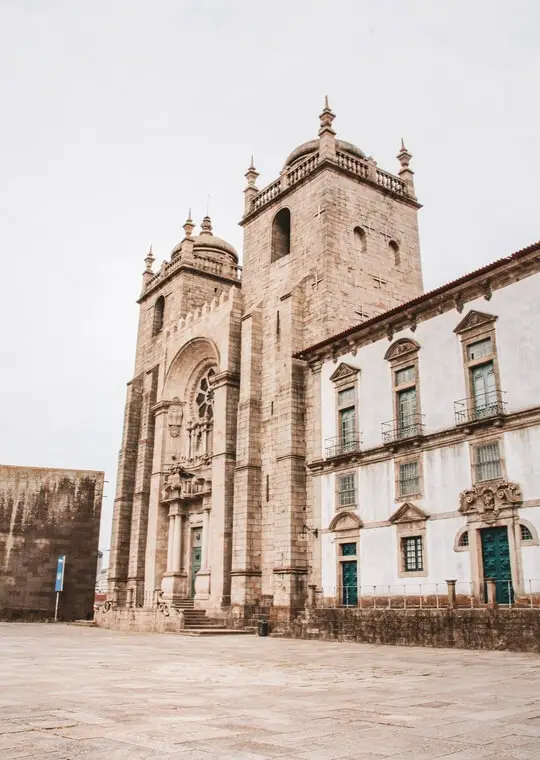
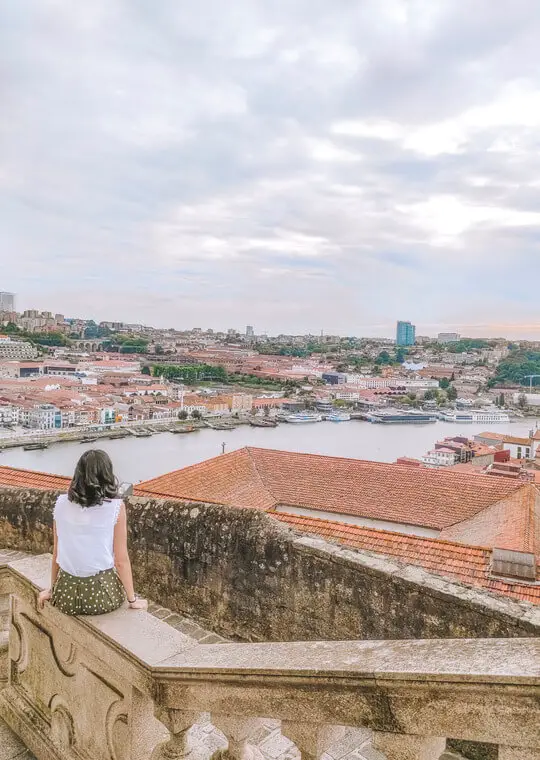
While the exterior is impressive, I also recommend stepping inside to visit the beautiful Gothic cloister, one of my favorite parts of the complex.
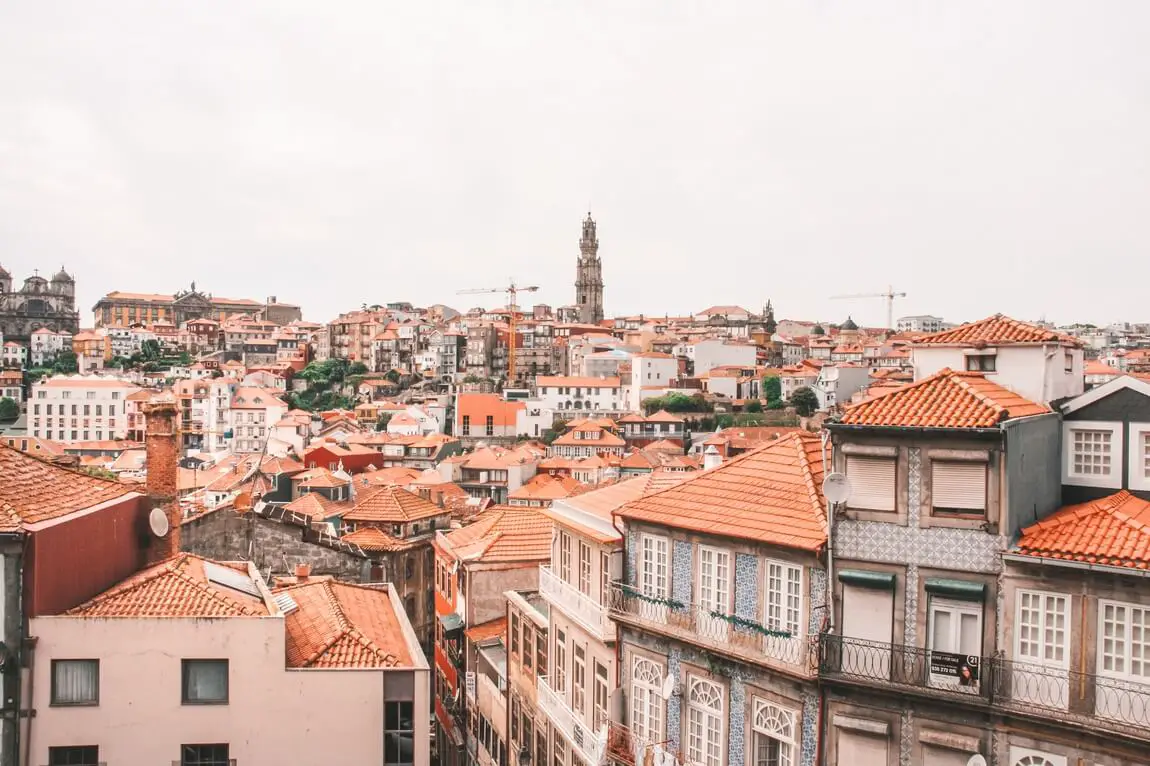
Before leaving, don’t miss the views from Terreiro da Sé and the nearby Miradouro da Rua das Aldas. They’re often overlooked, but they’re among my favorite viewpoints in Porto.
Porto Cathedral is open daily from 9 am to 6.30 pm between April and October, and from 9 am to 5.30 pm during the remaining months. Entry to the cathedral is free, but you’ll need to purchase a ticket to visit the Gothic cloister, which costs 3€ (3.4 USD).
Before the next stop, spend a few minutes wandering through the streets around the cathedral. Rua da Bainharia, Largo da Pena Ventosa, and the surrounding alleys are some of the most atmospheric parts of Porto’s historic center.
This is one of the few places where I’d actually tell you to put Google Maps away for a while. Some of the city’s most charming corners are found when you simply let yourself get a little lost.
👉 Learn more about Porto’s Cathedral: Sé do Porto Guided Tour with Entrance Tickets
» São Bento Station (Estação de São Bento)
From the cathedral, it’s just a short downhill walk to São Bento Station (Estação de São Bento), one of the city’s most iconic landmarks.
Even if you’re not arriving by train, don’t skip this stop. The station’s main hall is covered with more than 20,000 blue and white tiles illustrating key moments in Portuguese history.
It’s one of the most beautiful railway stations in Europe, and best of all, visiting is completely free.
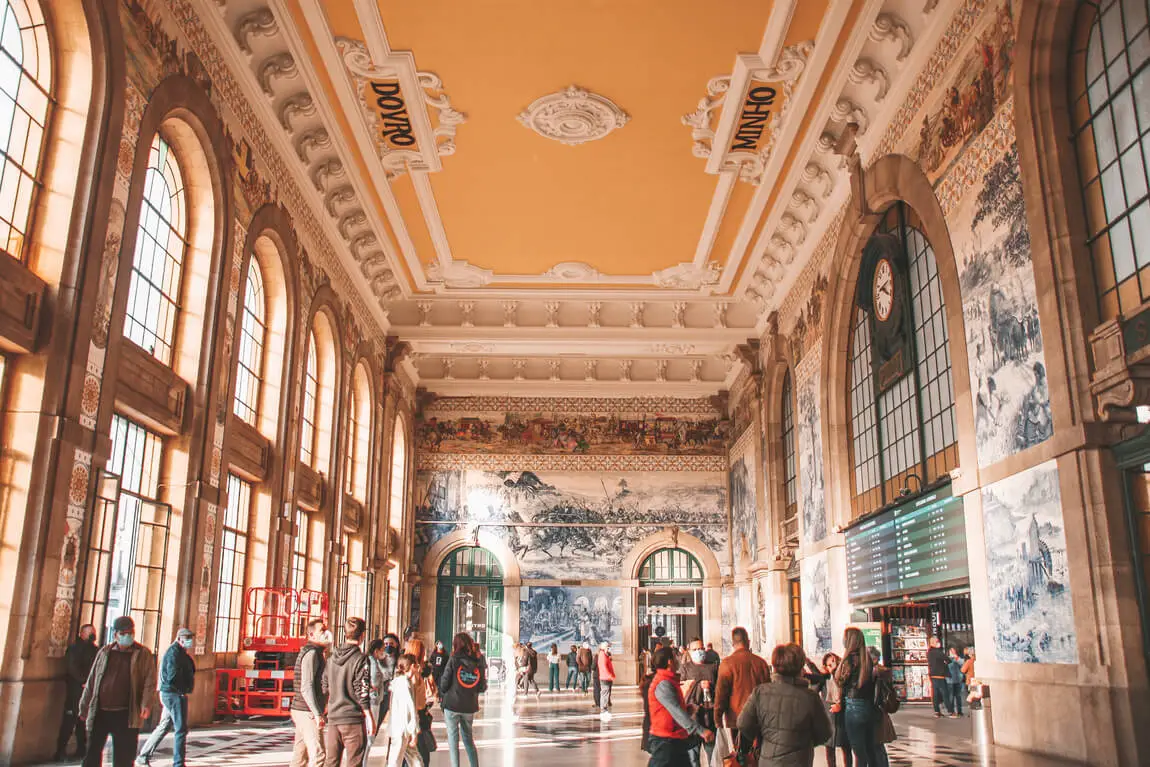
Most visitors stop just inside the entrance, snap a quick photo, and leave.
Walk to the center of the main hall and take a moment to admire the tile panels from there. You’ll get a much better view of the artwork and appreciate just how impressive the station really is.

Designed by architect José Marques da Silva and inaugurated in 1916, São Bento Station is still one of Porto’s busiest transport hubs.
Whether you’re catching a train or simply exploring the city, it’s one of the most unique things to do in Porto and a stop I never skip when showing friends around.
💡 LOCAL TIP: As you make your way towards São Bento Station, you’ll also pass by Time Out Market Porto, one of the city’s newest food halls. Even if you’re not hungry yet, it’s worth keeping it in mind for later. But if you’d rather enjoy a more traditional Portuguese meal, I’d recommend checking out my guide to the best restaurants in Porto, where I share some of my favorite spots.
» Rua das Flores
As you leave São Bento Station, you’ll immediately notice the beautiful blue and white façade of Igreja de Santo António dos Congregados (church in the photo below). It’s worth stopping for a quick photo before continuing your walk.
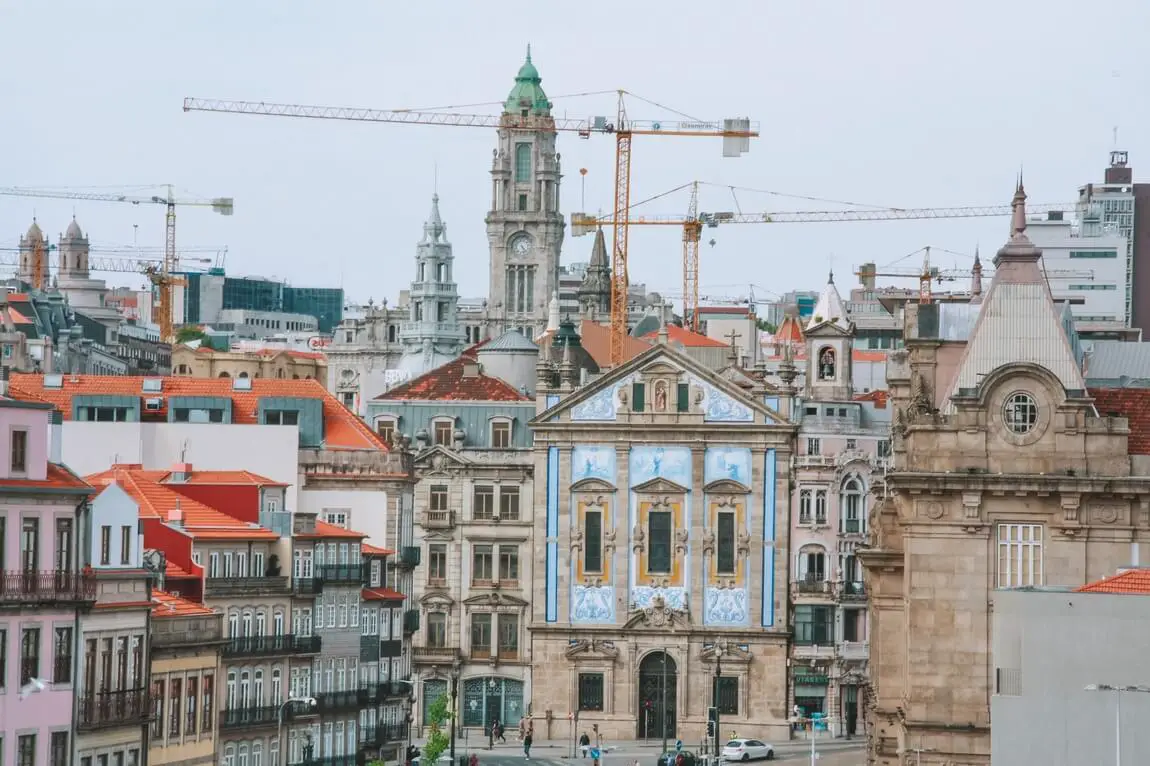
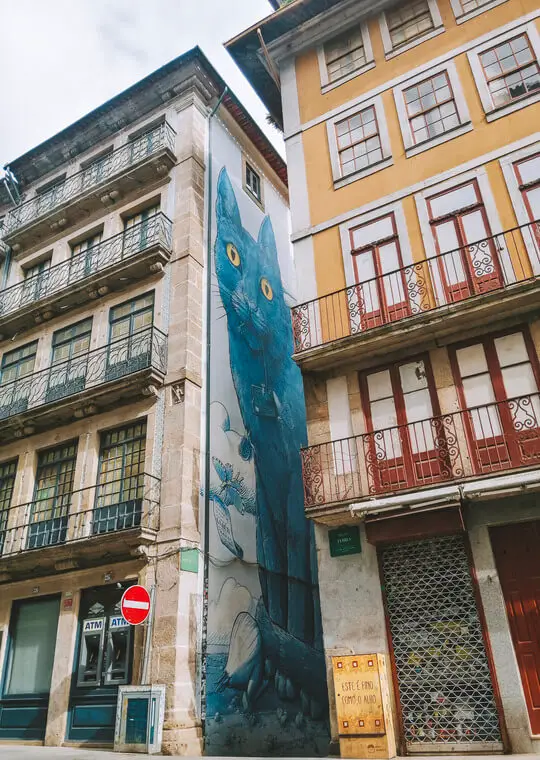
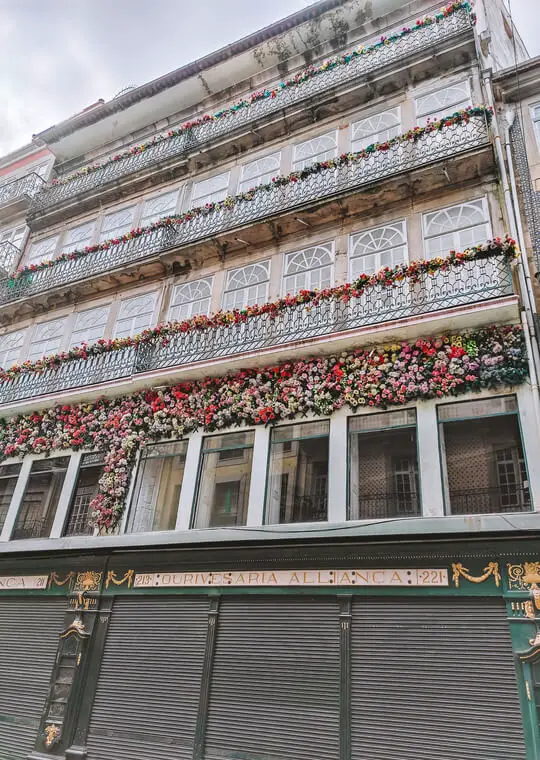
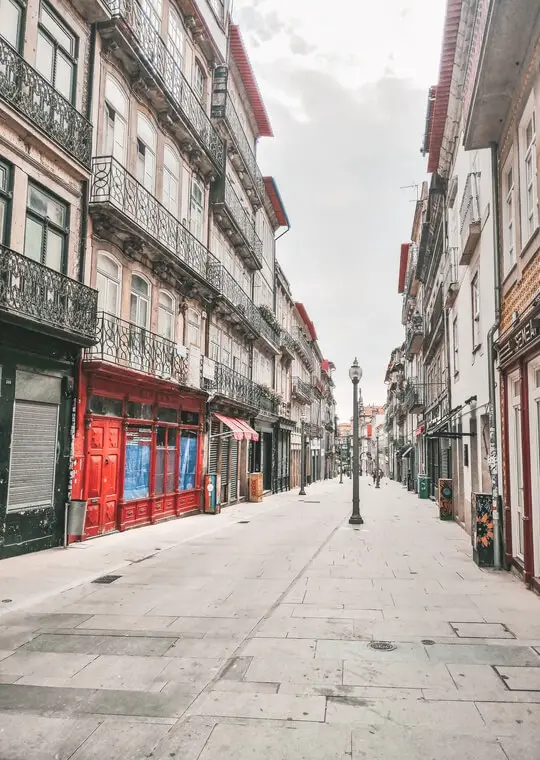
From there, head down Rua das Flores, one of my favorite streets in Porto. Lined with historic buildings, cafés, small shops, and street performers, it’s one of the liveliest streets in the city and a great place to simply slow down.
Keep an eye out for some of the street art hidden along the way, and don’t be surprised if you end up spending longer here than planned. It’s one of those streets where I always find myself stopping, whether for a coffee or just to watch the city go by.
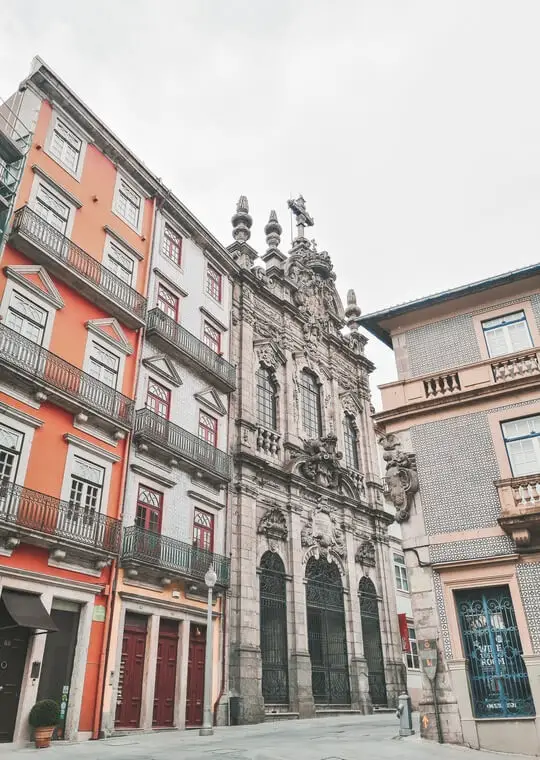
As you reach Largo de São Domingos, you’ll find Igreja da Misericórdia do Porto, easily recognizable by its elegant façade tucked between the surrounding buildings.
If you enjoy museums, religious art, or learning more about Porto’s history, it’s worth stepping inside the Misericórdia do Porto Museum. Otherwise, I’d simply admire the church from the outside and continue exploring the historic center.
📝 USEFUL INFORMATION: The museum is open daily from 10 am to 6.30 pm between April and September, and from 10 am to 6.00 pm during the rest of the year. Admission costs 10€ (11.4 USD).
» Palácio da Bolsa (Stock Exchange Palace)
Palácio da Bolsa isn’t usually the first attraction that comes to mind when people think about Porto. But if you ask me, it’s one of the city’s biggest surprises and one of my favorite places to visit.
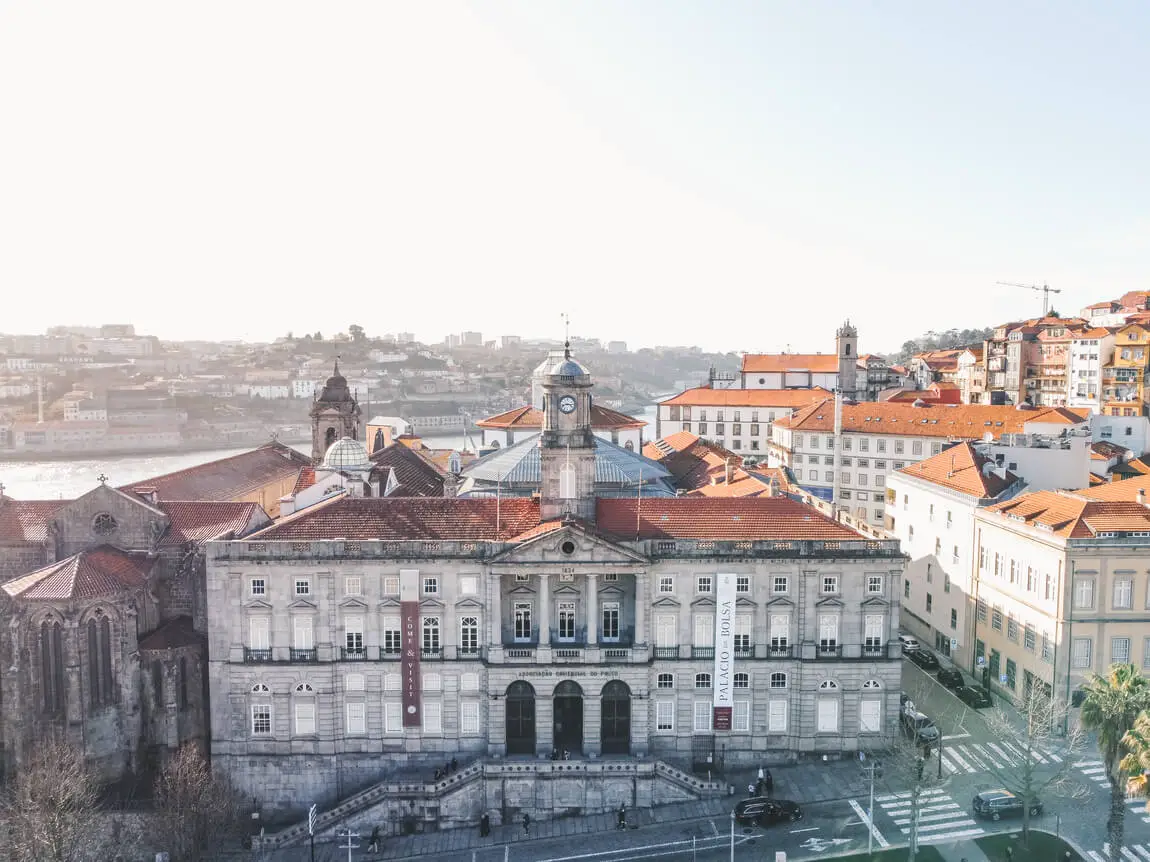
From the outside, the building looks fairly understated. You’d never guess what’s waiting inside. Check out my full video about Palácio da Bolsa.
In fact, even the entrance hall next to the ticket office is stunning. But the real highlight is the spectacular Arab Room, inspired by the Alhambra in Granada. It’s one of the most beautiful interiors you’ll find anywhere in Portugal.
📝 USEFUL INFORMATION: The palace can only be visited as part of a guided tour, available in several languages throughout the day. Tours usually run from 9 am to 6.30 pm, and tickets cost 14€ (16 USD).
I’ve visited Palácio da Bolsa twice already, and I’d happily go back again. If you’re only choosing a few paid attractions during your time in Porto, this is one I’d genuinely recommend.
👉 Book your spot here: Skip-the-Line ticket with guided visit to the Palácio da Bolsa
As you leave Palácio da Bolsa, you’ll pass by the distinctive red iron structure of Mercado Ferreira Borges (photo below).
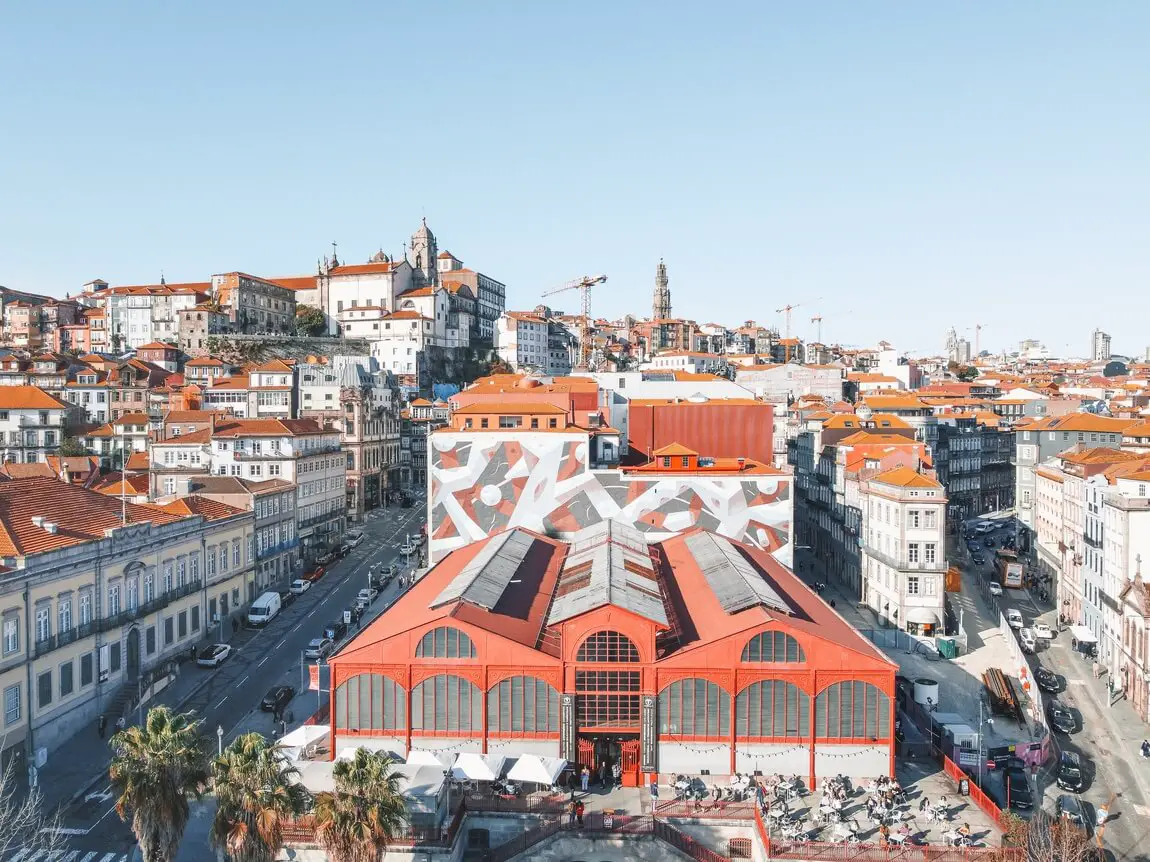
Today, it’s mainly used as an events venue and cultural space (Hard Club), so unless there’s something happening during your visit, I’d continue towards Ribeira.
Also, take a few minutes to walk through Jardim do Infante Dom Henrique (photo below). This small garden is dedicated to Prince Henry the Navigator, one of the key figures behind the Portuguese Age of Discovery, who was born in Porto.
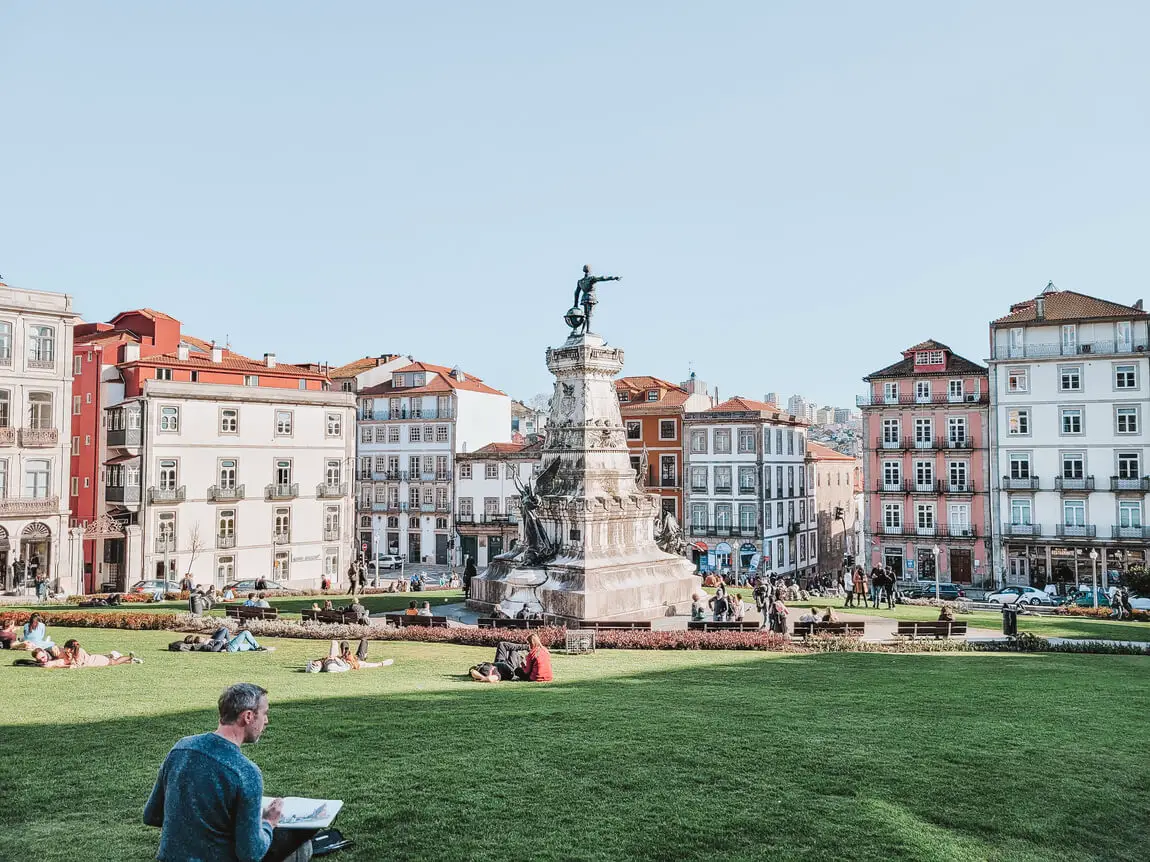
Just across the garden, you’ll also find Casa do Infante, where tradition says Prince Henry was born. If you’re particularly interested in Portuguese history, it’s worth a quick visit. Admission costs 4€ (4.6 USD).
👉 Learn more about Porto: 3 hour guided walking tour of Porto
» Igreja de São Francisco (St. Francis Church)
Just a short walk away is Igreja de São Francisco, one of the most impressive churches in Porto and, in my opinion, one that’s often underrated.
From the outside, it looks relatively simple. Step inside, however, and you’ll find an interior almost completely covered in intricate gilded wood carvings.
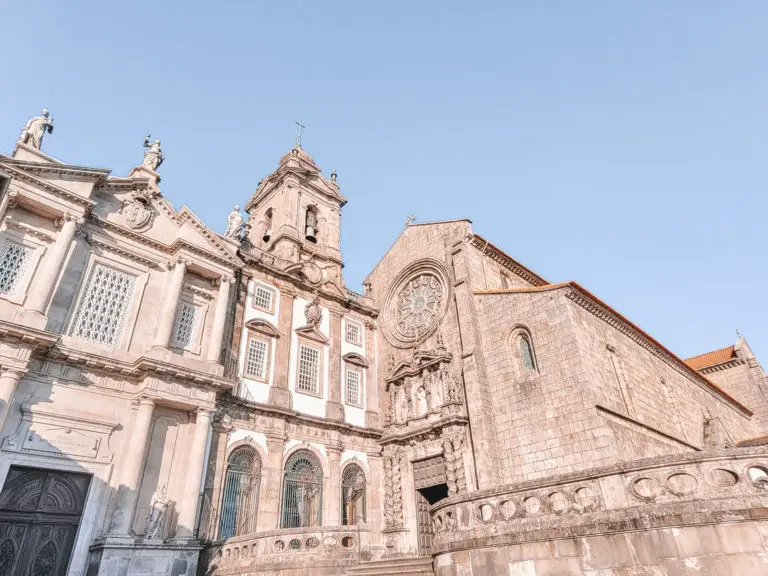
It’s one of the finest examples of Baroque architecture in Portugal and unlike any other church you’ll visit during your trip.
If you’re interested in churches or historic architecture, I’d definitely recommend visiting. Otherwise, if you’re trying to keep costs down, I’d simply admire the exterior before continuing towards Ribeira.
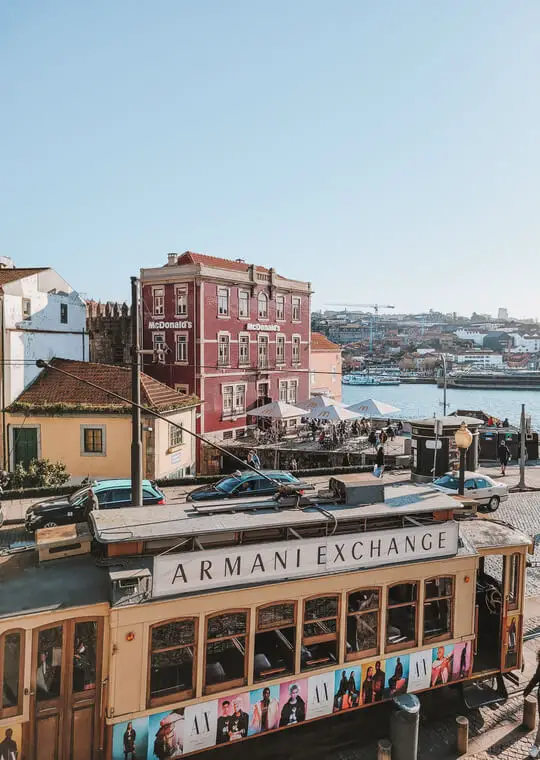
💡 LOCAL TIP: If you’d like to experience one of Porto’s historic trams, the nearby Tram Line 1 starts close to the church and follows the Douro River all the way to Foz do Douro. While I wouldn’t prioritize it during this particular Porto itinerary, it’s a fun experience if you have an extra day in the city.

» Cais da Ribeira
After a busy morning of sightseeing, you’ve finally reached Cais da Ribeira, Porto’s most iconic waterfront.
To be honest, there aren’t that many attractions to tick off here.
Apart from landmarks like the Cube Fountain, the Monumental Fountain, the remains of the old Pensil Bridge, and the small Alminhas da Ponte monument, which commemorates the victims who lost their lives while fleeing Napoleon’s troops during the French invasions in 1809, Ribeira isn’t really about sightseeing.
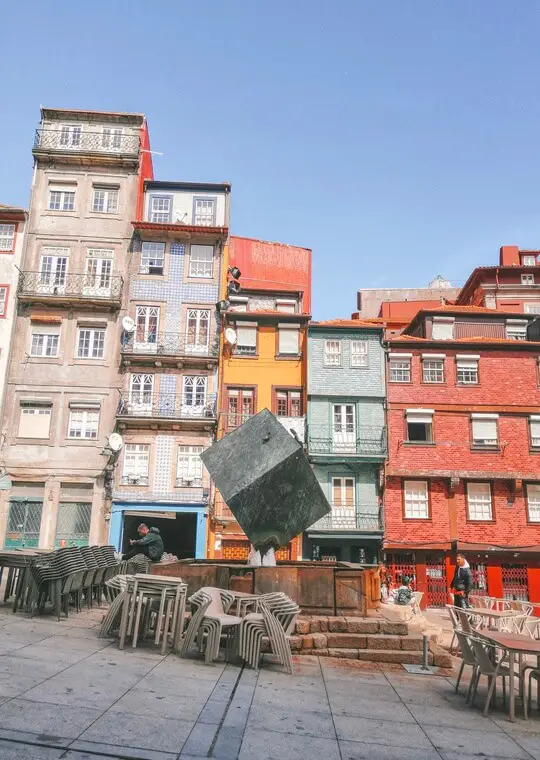
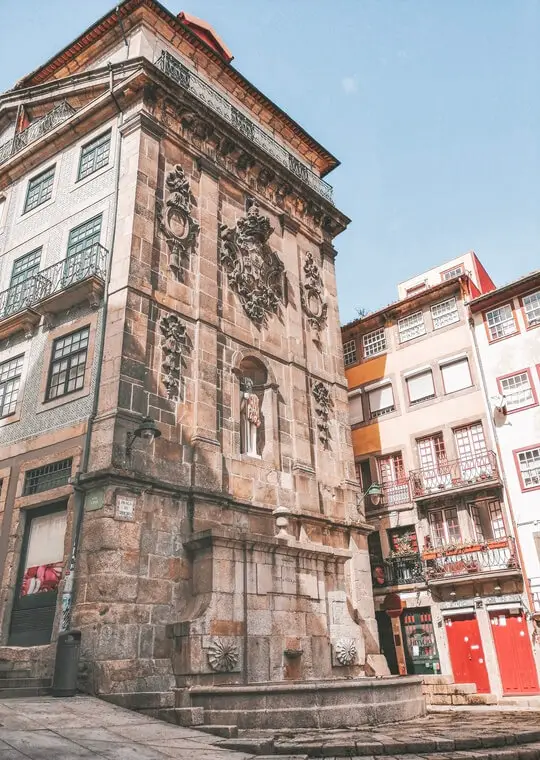
Instead, this is the perfect place to slow down.
Take your time wandering through the narrow streets, admire the colorful riverside houses, and simply enjoy the atmosphere.
Personally, I wouldn’t spend too much time eating at one of the restaurants along the riverfront. The views are fantastic, but they’re also some of the city’s most touristy spots. Instead, grab a drink, enjoy the scenery, and keep exploring.
🍴 Lunch suggestion: If you’re ready for a break, I’d recommend heading to Adega São Nicolau, just a couple of minutes from the waterfront. Their octopus fillets is one of my favorite dishes on the menu, and it’s a great option if you’re looking for something a little different from the typical tourist restaurants in Ribeira.
Looking for more recommendations? Check out my guide to the best restaurants in Porto, where I share my favorite local spots, from traditional Portuguese restaurants to international cuisine.
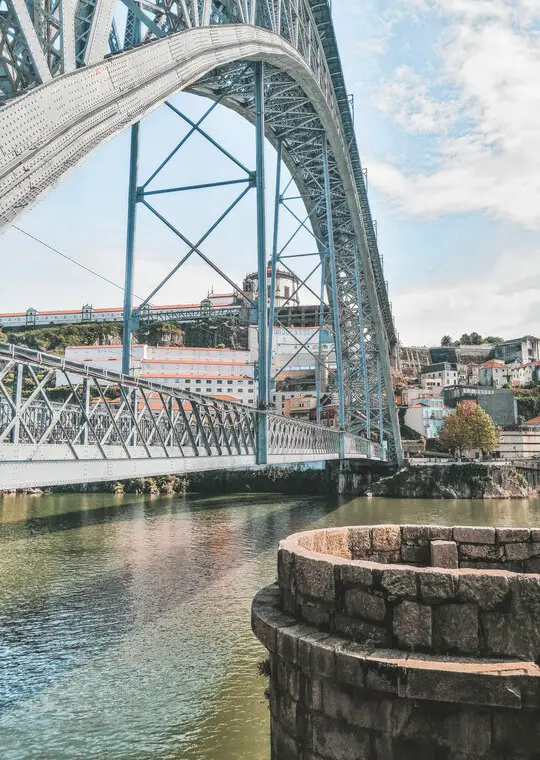
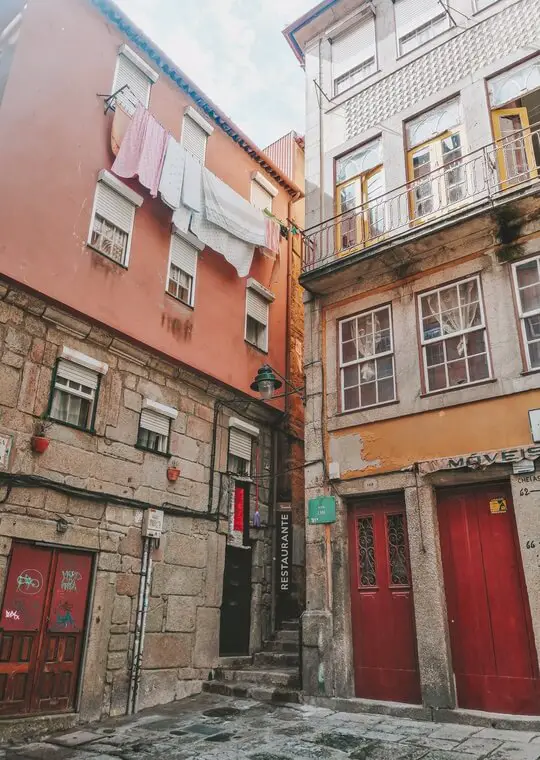
Even after living in Porto my whole life, I still love walking around Ribeira. Every visit feels a little different, whether it’s because of the street musicians, the boats passing by, or just watching people enjoy the waterfront.
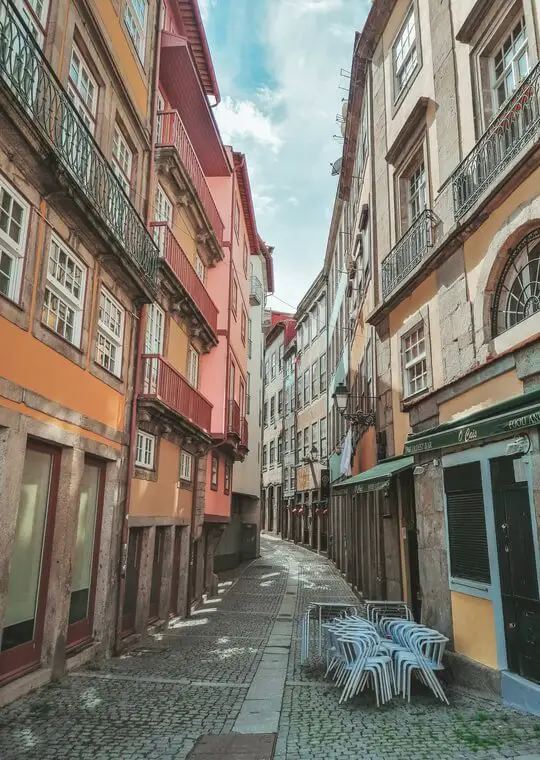
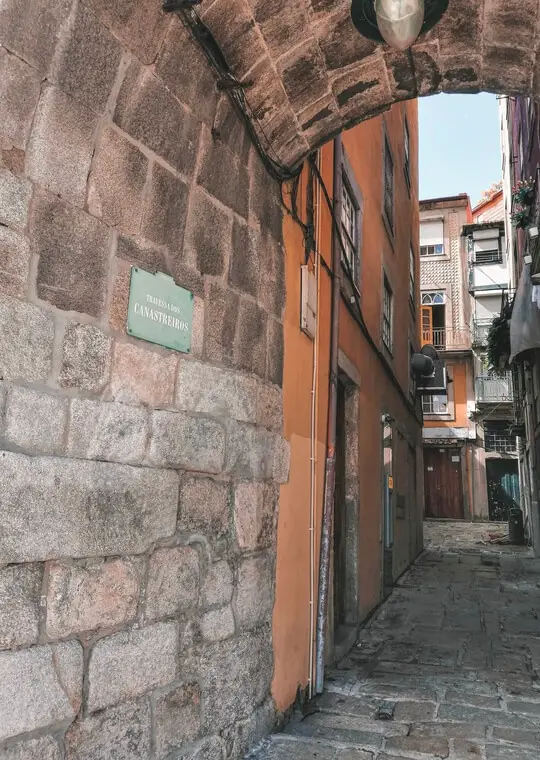
For me, this is where you’ll experience the best of Porto: no checklist, no rushing, just the city at its most authentic.
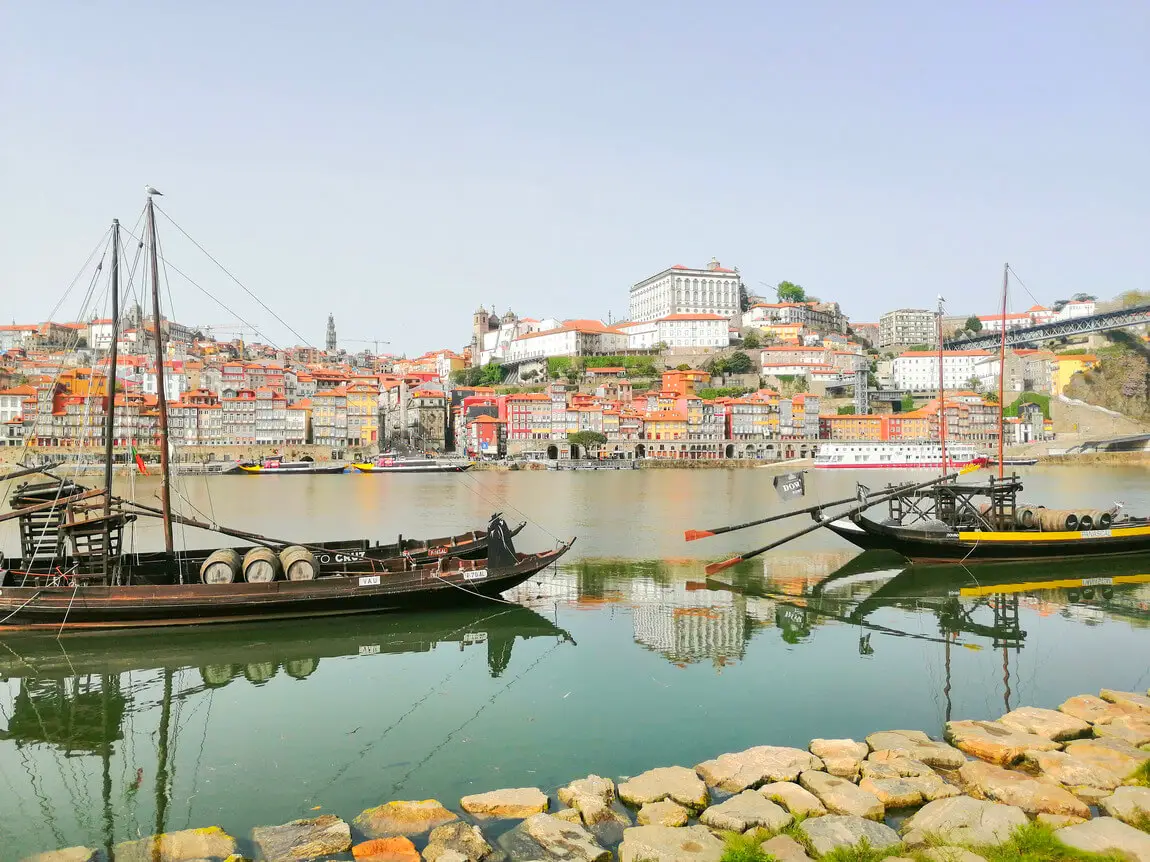
🎫 Looking for a unique experience? One activity I genuinely recommend is the Six Bridges Cruise. Yes, it’s touristy, but I’ve done it myself twice and really enjoyed it. Seeing Porto from the Douro River gives you a completely different perspective of the city, especially of the iconic bridges.
The cruise lasts around 1 hour and passes beneath all six bridges connecting Porto and Vila Nova de Gaia. You can buy tickets from several kiosks along Ribeira, but I recommend booking in advance.
» Cais de Gaia and Port Wine Cellars
From Ribeira, cross the lower deck of Luís I Bridge to Vila Nova de Gaia. This is one of my favorite walks in Porto.
Not only will you enjoy some of the city’s best views, but you’ll also get a completely different perspective of Porto’s colorful waterfront.
One of the best things to do in Porto is to visit one of the famous Port wine cellars.
Although the wine is produced in the Douro Valley, it has traditionally been aged in Vila Nova de Gaia. Thanks to its cooler and more stable climate, Gaia provided the ideal conditions for storing and aging the wine before it was shipped around the world.
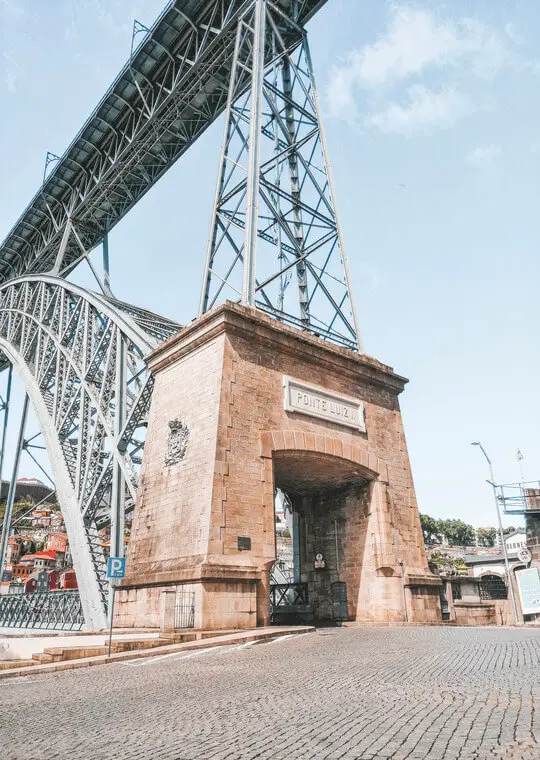
I’ve visited several cellars over the years, and my favorite so far is Cálem. Besides learning about the history and production of Port wine, the tour ends with a guided tasting and a live Fado performance.
I wasn’t sure what to expect before my first visit, but I genuinely loved the experience and think it’s one of the best ways to combine two of Portugal’s most iconic traditions.
👉 Book your Port Wine Tasting: Cálem Cellar Tour, Fado Show & Wine Tasting
Other popular cellars include Taylor’s, Graham’s, Sandeman, Ferreira, and Ramos Pinto, each offering slightly different experiences.
Personally, I think visiting one cellar is enough. They all explain a similar winemaking process, so unless you’re a true wine enthusiast, I’d rather spend the rest of the afternoon enjoying the riverside or exploring more of Gaia.
Even if you’re not interested in port wine tasting, I’d still recommend crossing the river. In my opinion, the views of Porto from Gaia are worth the walk alone.
☕ Need an afternoon coffee? Before heading back to Porto, stop by 7g Roaster, one of my favorite specialty coffee shops in the city.
Looking for more great coffee? Check out my guide to the best cafés in Porto.
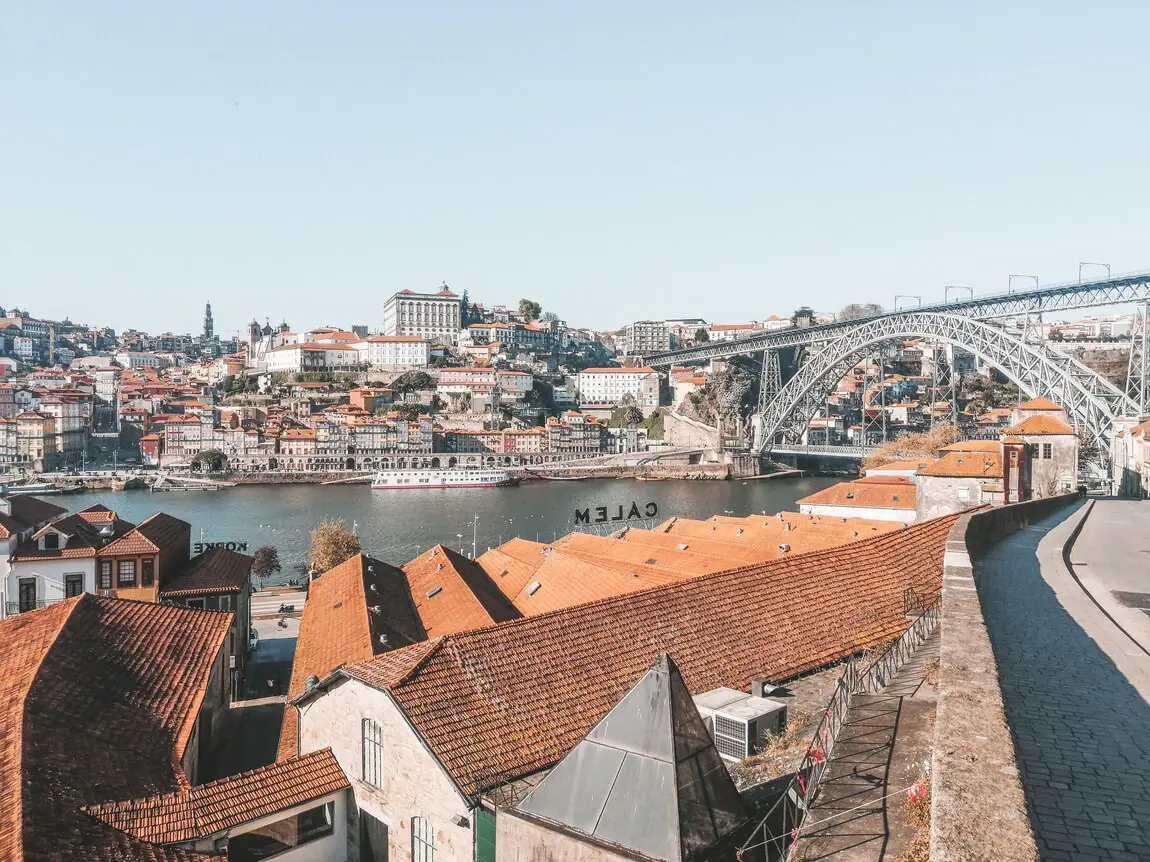
💡 LOCAL TIP: If you still have some time left, it’s worth stopping by WOW Porto (World of Wine). This cultural district is home to several museums, restaurants, wine bars, and one of the best viewpoints over Porto.
Since this is a 2-day itinerary in Porto, you won’t have time to visit the museums. Instead, I’d simply walk up to the terrace and enjoy the panoramic views over Porto and the Douro River. It’s one of my favorite viewpoints in Gaia.
» Jardim do Morro and Serra do Pilar Monastery
I can’t think of a better way to end your first day in Porto than watching the sunset from Jardim do Morro.
This is one of the city’s most popular sunset spots, so don’t expect to have it all to yourself.
On warm evenings, both locals and visitors gather here with a drink in hand to watch the sun set behind Porto’s skyline.
Yes, it gets crowded. But I’d still come every single time. The views over Luís I Bridge, Ribeira, and the Douro River are simply unforgettable.
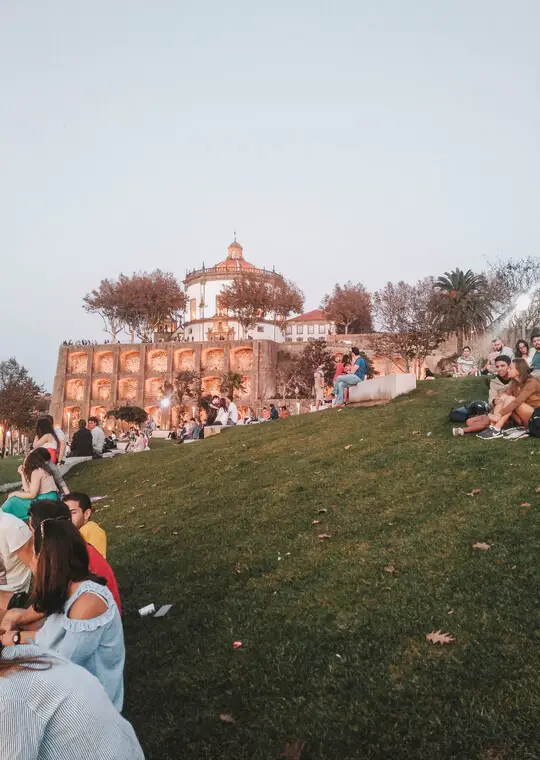
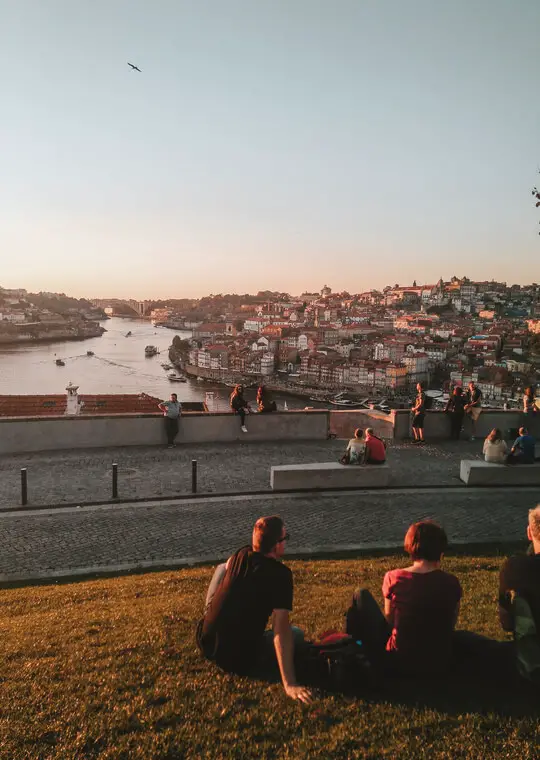
Before settling in for sunset, take a few extra minutes to walk up to Serra do Pilar Monastery. The viewpoint here is even higher, offering one of the most spectacular panoramic views over Porto and Vila Nova de Gaia.
If you only stop at one viewpoint during your trip, I’d make it this one.
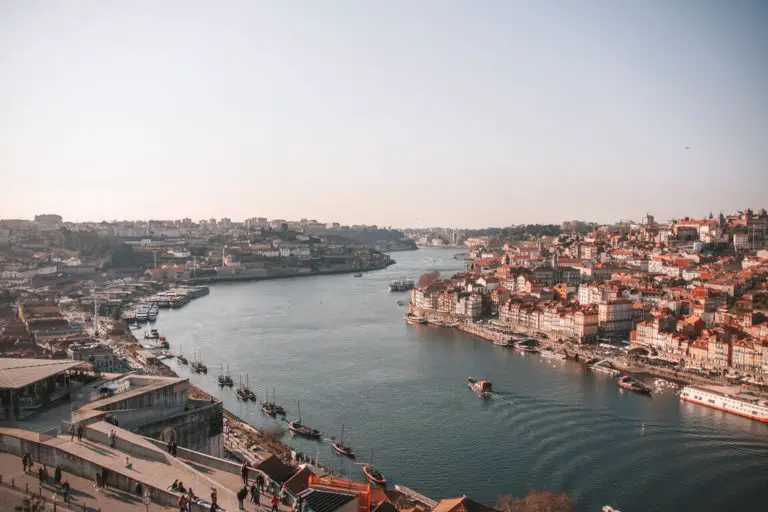
If you’re not quite ready to call it a day, this is the perfect time to head to one of Porto’s rooftop bars for a drink with an incredible view.
💡 LOCAL TIP: If climbing up from the riverside sounds a bit too much after a full day of exploring, you can take the Gaia Cable Car from Cais de Gaia up to Jardim do Morro. A one-way ticket costs 7€ (8 USD) and saves you one of the steepest climbs of the day.
Day 2 in Porto
If you’re wondering what to see in Porto in 2 days beyond the historic riverside, this part of the itinerary offers a completely different atmosphere, with traditional markets, iconic cafés, and some of Porto’s most recognizable landmarks.
» Santa Catarina Street, Bolhão Market, and Capela das Almas
Start your second day by exploring one of Porto’s liveliest neighborhoods.
Begin your walk along Rua de Santa Catarina, Porto’s best-known shopping street. Even if shopping isn’t on your itinerary, it’s still worth strolling along the street to experience a different side of the city.
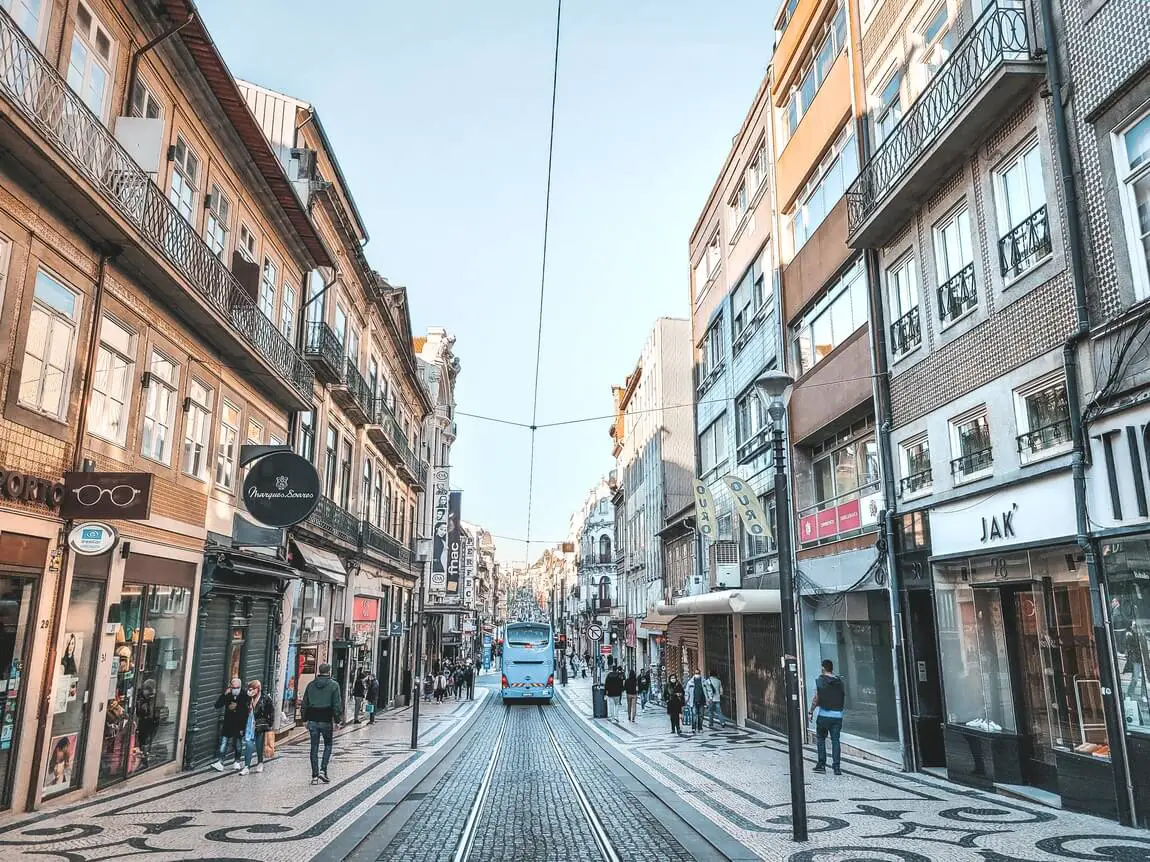
One of the highlights here is the recently renovated Mercado do Bolhão, one of the best places to visit in Porto if you’d like to experience a more authentic side of the city.
It’s a great place to browse local produce, traditional delicacies, and regional products, even if you’re not planning to buy anything.
Even when I don’t need to buy anything, I still enjoy walking through the market whenever I’m nearby.
Don’t expect bargain prices. While you’ll still find local vendors, Mercado do Bolhão has become much more geared towards visitors following its renovation.
🍴 If you love trying local food, don’t miss this food tour. I’ve done it myself and really enjoyed it. Even after living in Porto my whole life, I discovered a few places I’d never visited before. Plus, one of the stops is Mercado do Bolhão, where you’ll sample some of Porto’s best local specialties.
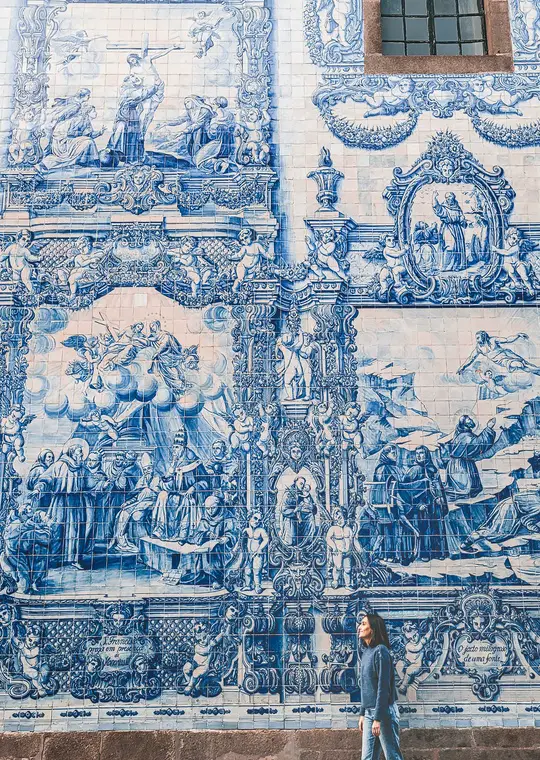
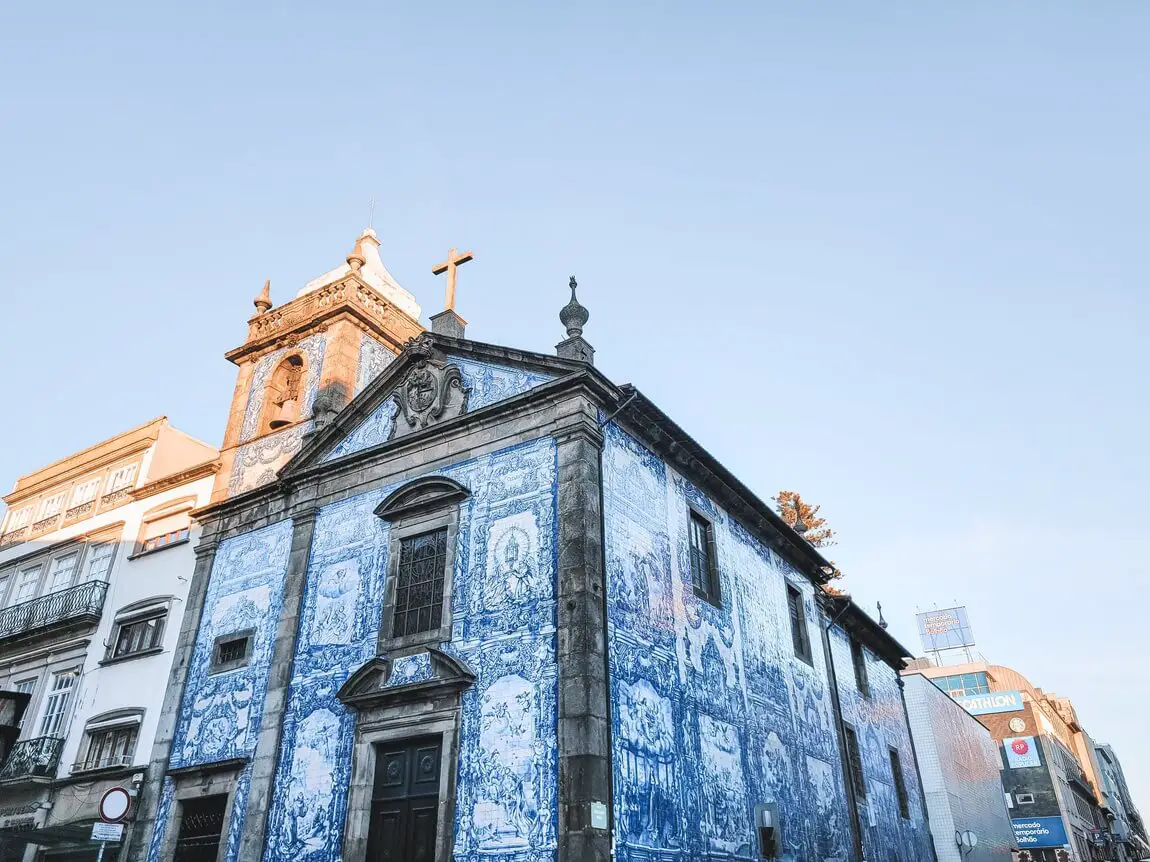
Just around the corner, don’t miss Capela das Almas. Its façade is covered with more than 15,000 blue and white tiles, making it one of Porto’s most recognizable landmarks and, in my opinion, one of the city’s most beautiful churches.
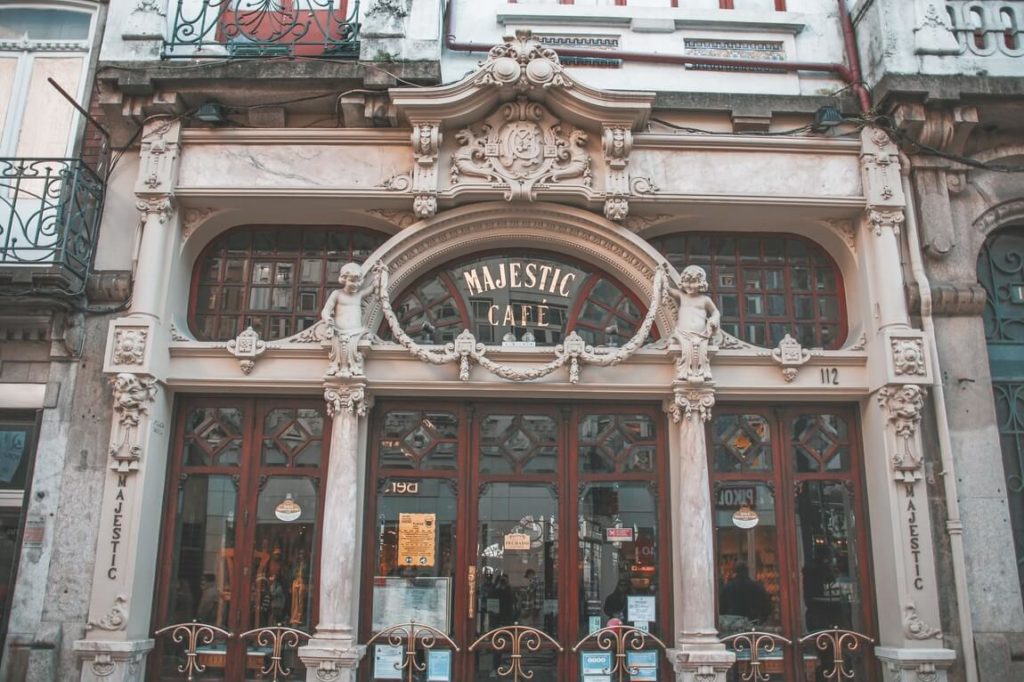
Since you’re already on Rua de Santa Catarina, don’t miss Majestic Café, Porto’s most iconic café. While I don’t come here often anymore, mainly because it’s become very touristy, the queues can be long, and prices are on the expensive side, I still think it’s worth visiting at least once.
☕ Love discovering great cafés? Porto has so many more to offer beyond Majestic. From historic cafés to specialty coffee shops, check out my guide to the best cafés in Porto, where I share the places I genuinely keep going back to.
The Art Nouveau interior is stunning and, in my opinion, it’s the most beautiful café in Porto.
Just a few steps away, you’ll also find Pérola do Bolhão, one of Porto’s most recognizable traditional grocery stores. Its beautifully tiled façade is well worth stopping to admire.
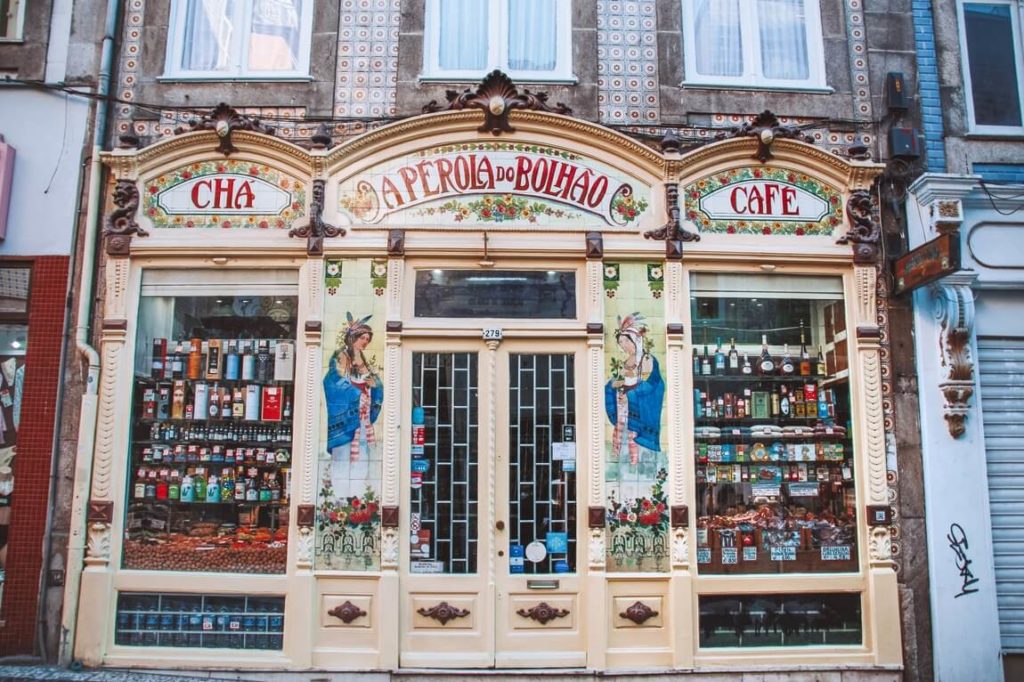
While the shop has changed quite a bit in recent years and now caters more to tourists than locals, I still recommend taking a look at the exterior before continuing your walk.
» Santo Ildefonso Church and São João National Theatre
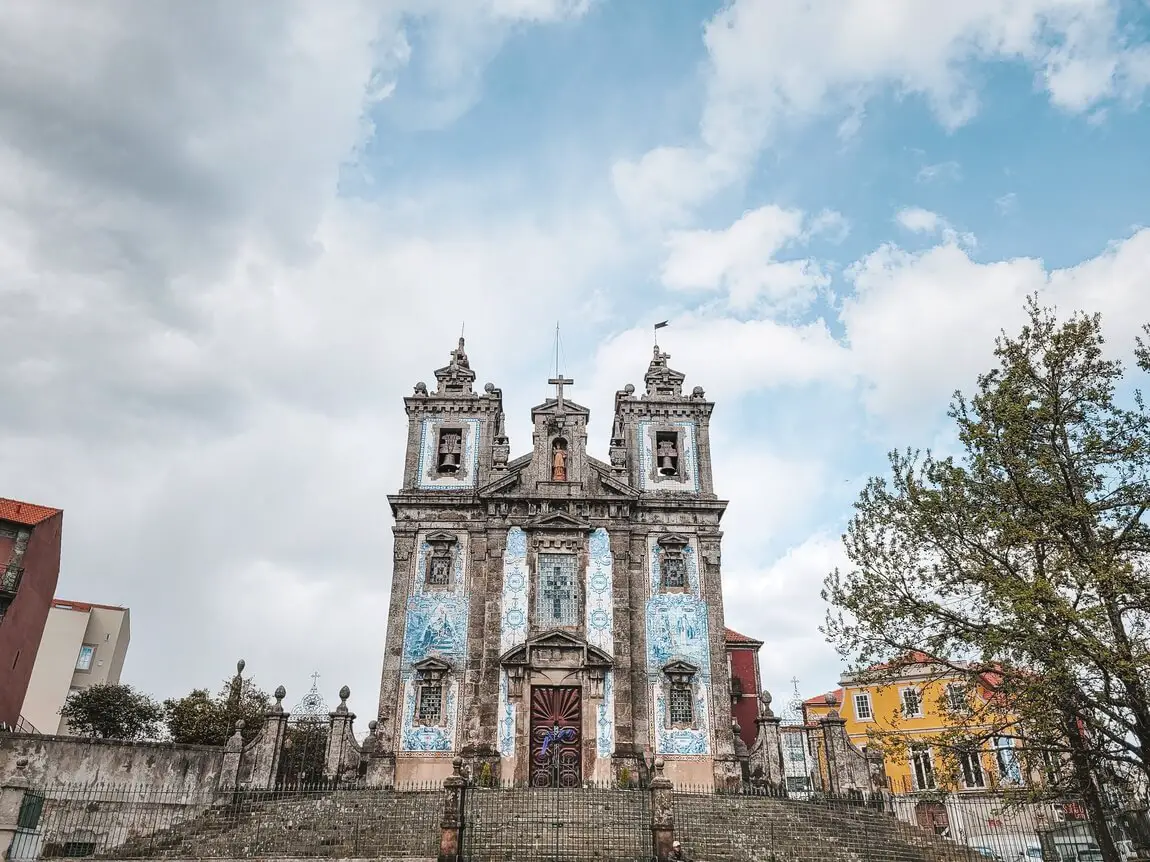
Continue towards Praça da Batalha, where you’ll come across Igreja de Santo Ildefonso, another of Porto’s beautiful tiled churches.
Its façade, covered with more than 11,000 blue and white tiles, makes it well worth a quick stop.
Just a few steps away is Teatro Nacional São João, one of Portugal’s most important theatres. Even if you don’t have time to catch a performance, it’s worth admiring the elegant neoclassical building before continuing your walk.
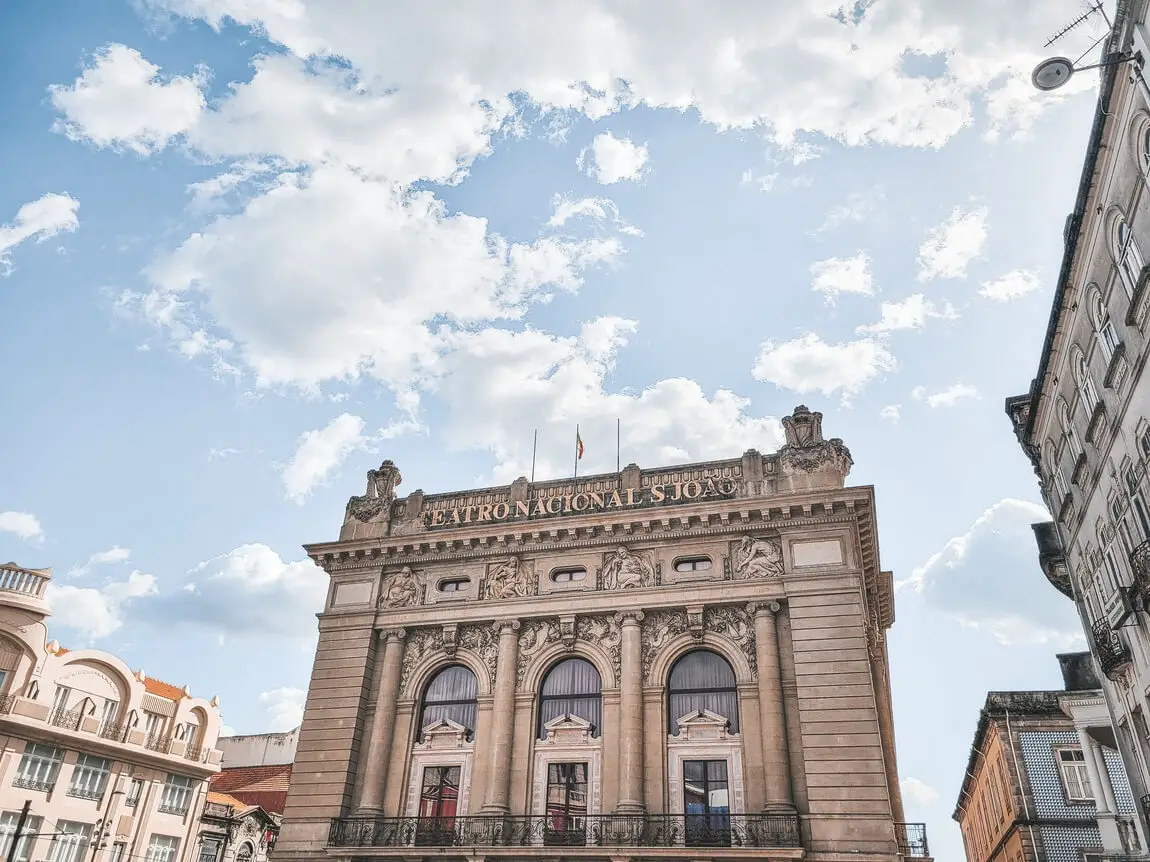
If you’re planning to spend more time in Porto or simply enjoy the performing arts, it’s worth checking the theatre’s schedule before your trip. You might find a concert, play, or dance performance during your stay.
» Escadas dos Guindais
As you make your way back towards the historic center, take a short detour to Escadas dos Guindais. It’s one of my favorite spots to admire Luís I Bridge from a different perspective and one of those places many visitors completely miss.
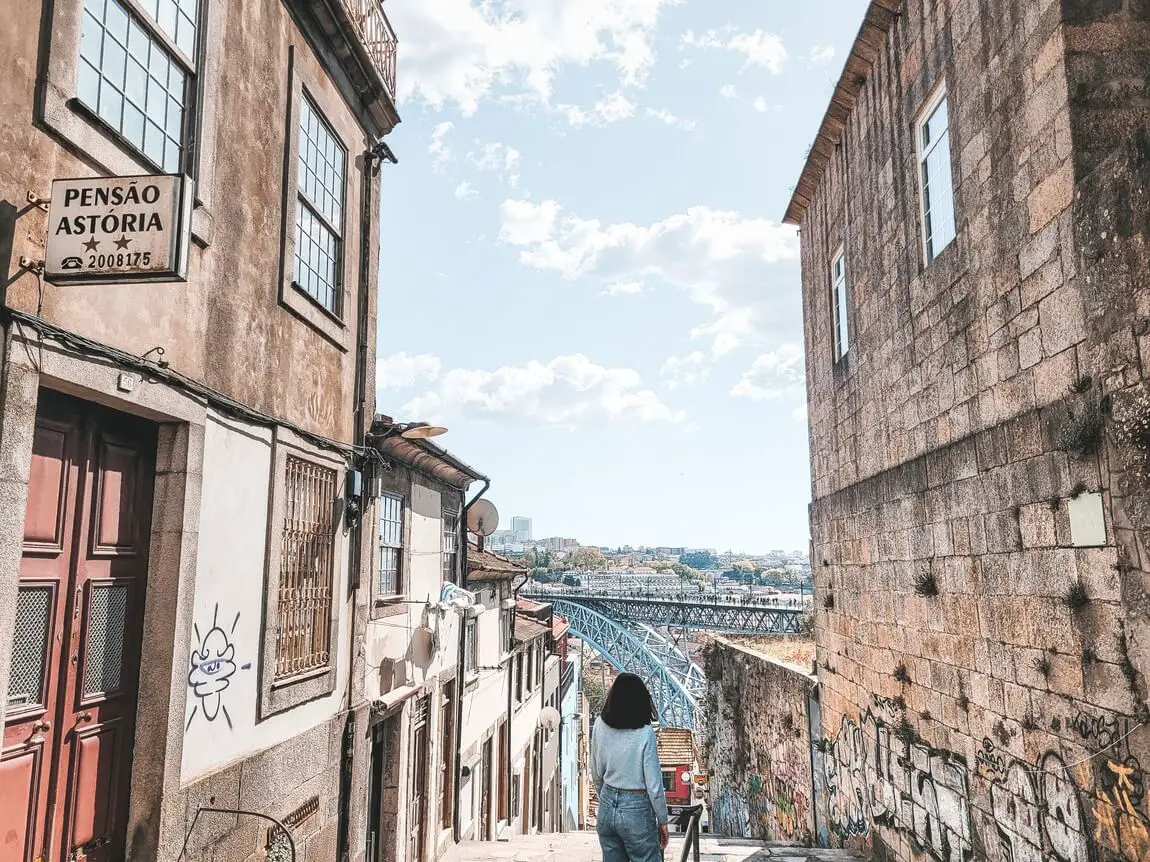
Don’t forget to stop at Guindalense Futebol Clube, a local institution known for its relaxed atmosphere and incredible terrace overlooking the Douro River and Luís I Bridge. It’s the perfect place to take a short break with a drink before continuing your walk.
👉 Looking for more places like this? Check out my guide to the best places to go for a drink with a view in Porto.
» Luís I Bridge and Fernandine Walls
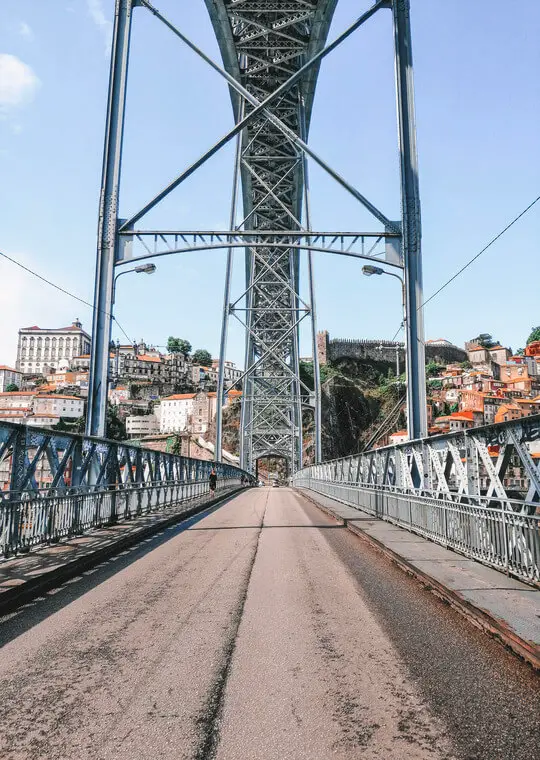
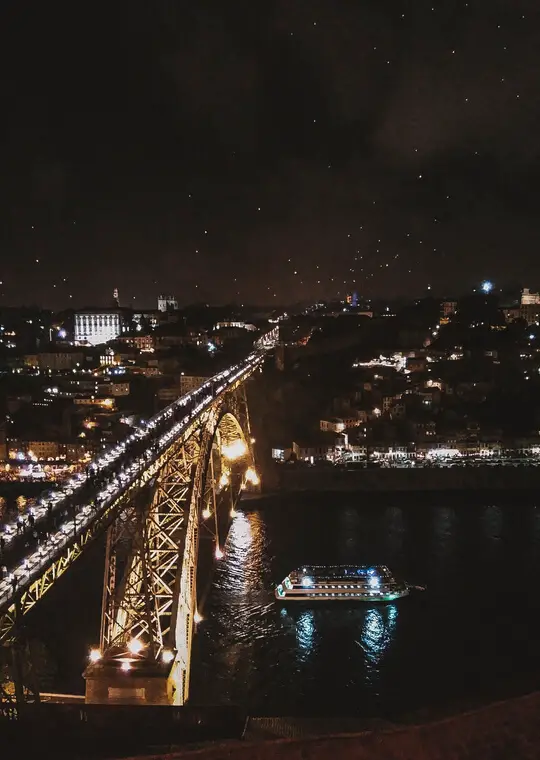
No visit to Porto would be complete without walking across the upper deck of Luís I Bridge.
By now, you’ve already admired it from Ribeira, crossed the lower deck, and seen it from several viewpoints. But walking across the top is a completely different experience.
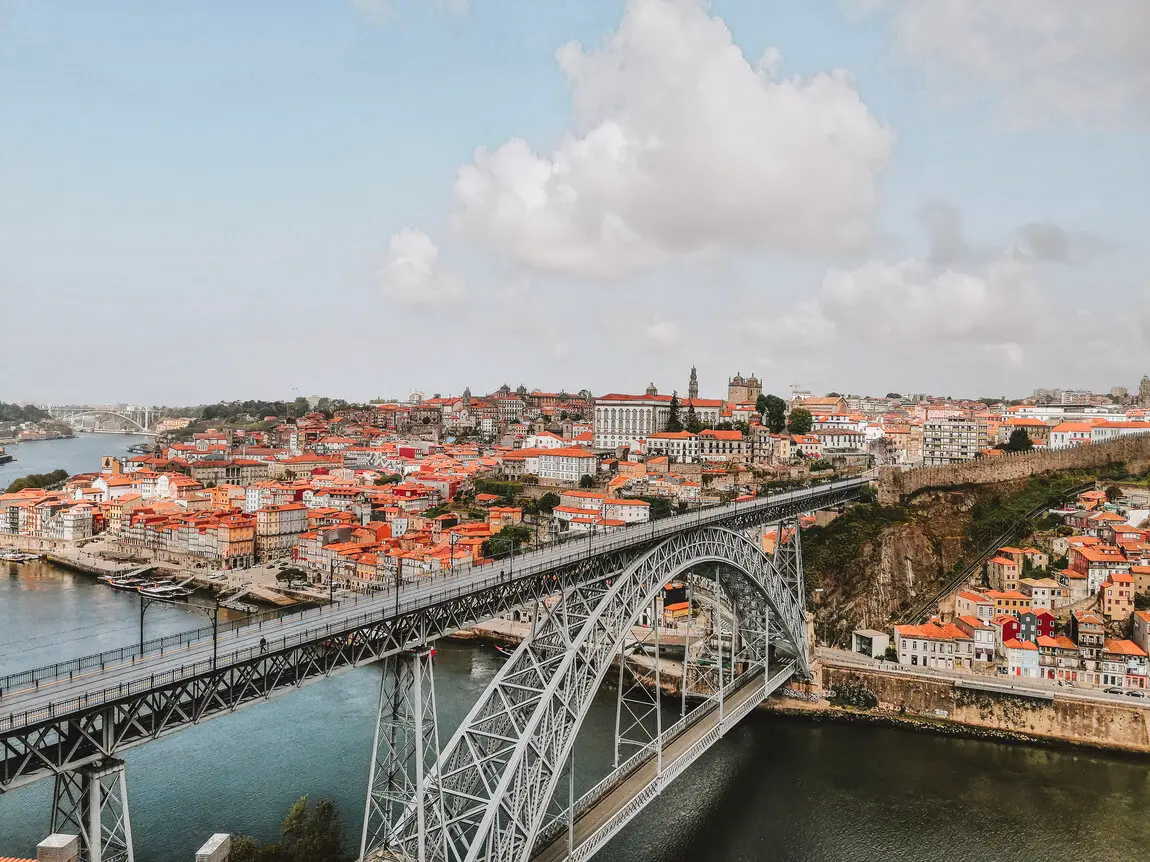
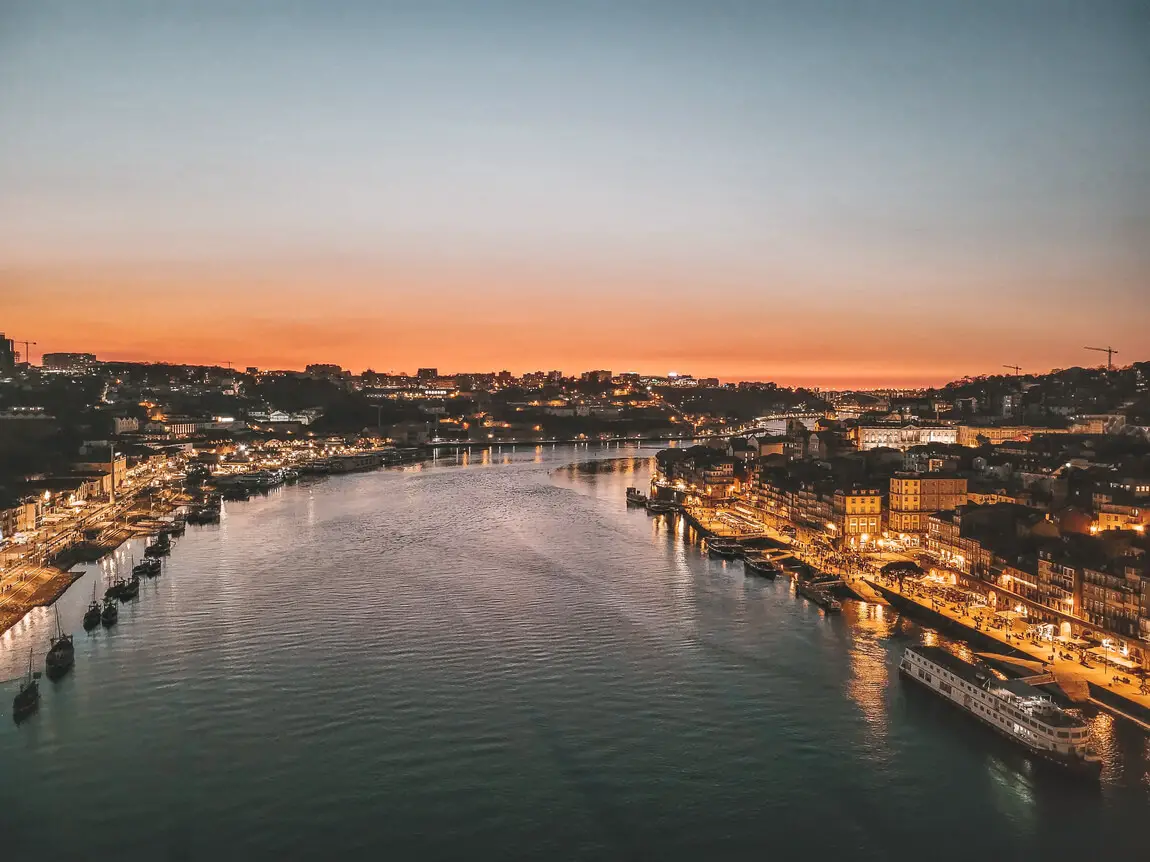
The panoramic views over Porto, Vila Nova de Gaia, and the Douro River are some of the best you’ll find anywhere in the city.
It’s easily one of my favorite spots in Porto and one of those experiences that never gets old, no matter how many times I do it.
I’ve crossed Luís I Bridge more times than I can count, and I still find myself stopping to admire the view every single time.
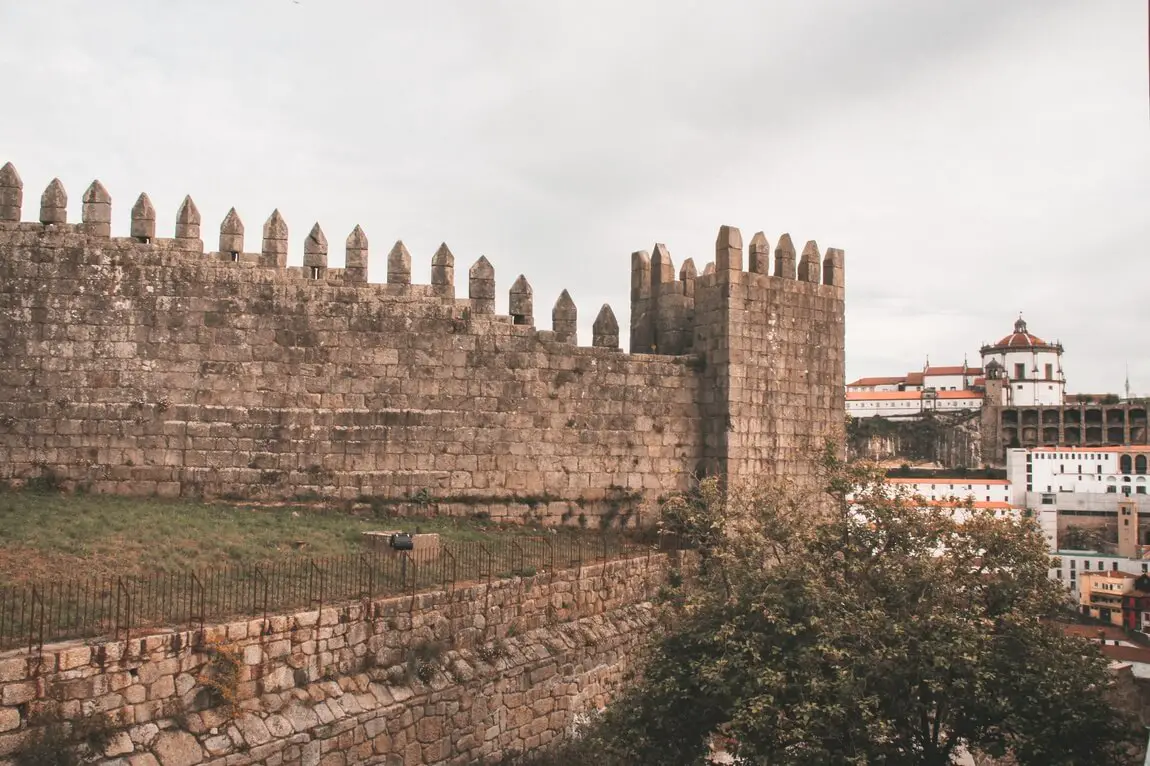
As you cross the bridge, you’ll also spot part of the Fernandine Walls, the medieval fortifications that once protected Porto’s historic center.
While only a few sections remain today, this is one of the best places to appreciate their scale and understand how the city evolved over the centuries.
» Avenida dos Aliados
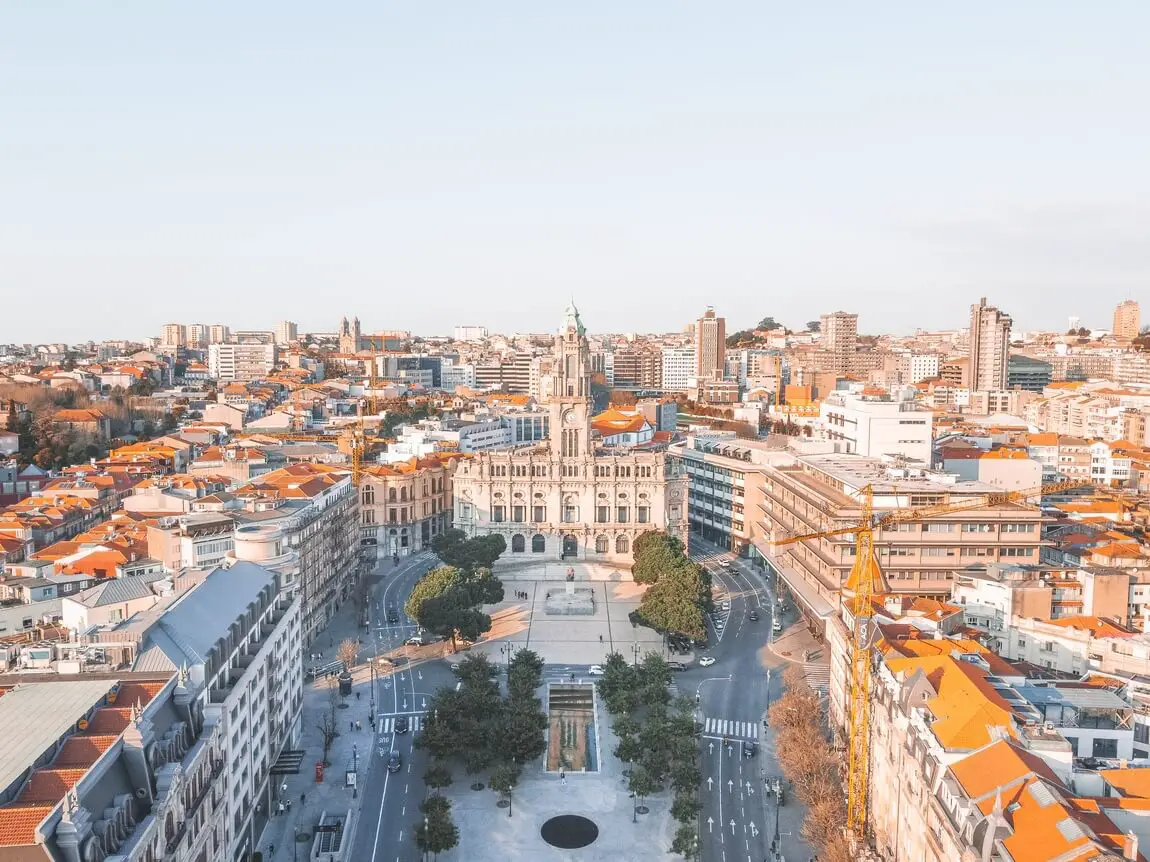
From Luís I Bridge, continue towards Avenida dos Aliados, Porto’s grand boulevard and the heart of the city.
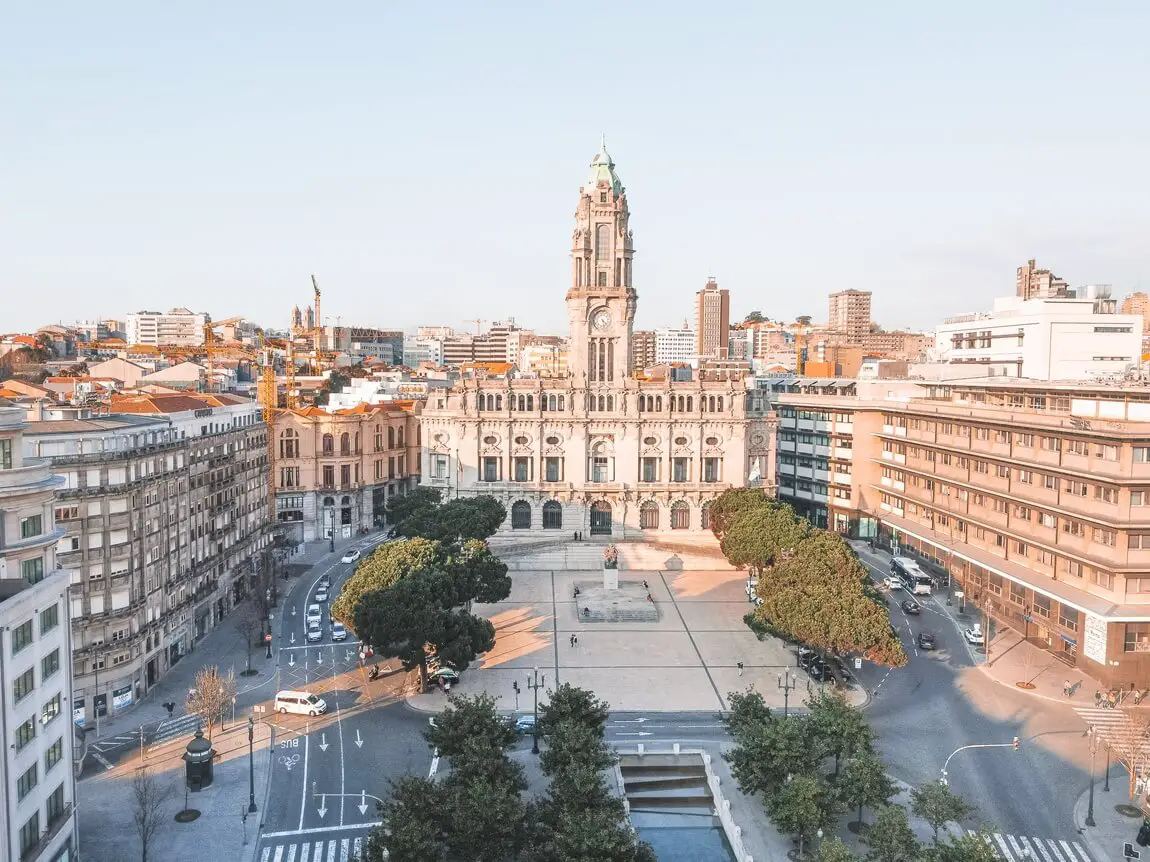
Take your time walking through Praça da Liberdade and Praça General Humberto Delgado, while admiring the elegant buildings that line the avenue, many of which date back to the late 19th and early 20th centuries.
At the northern end of the avenue, you’ll find Porto City Hall, one of the city’s most recognizable landmarks.
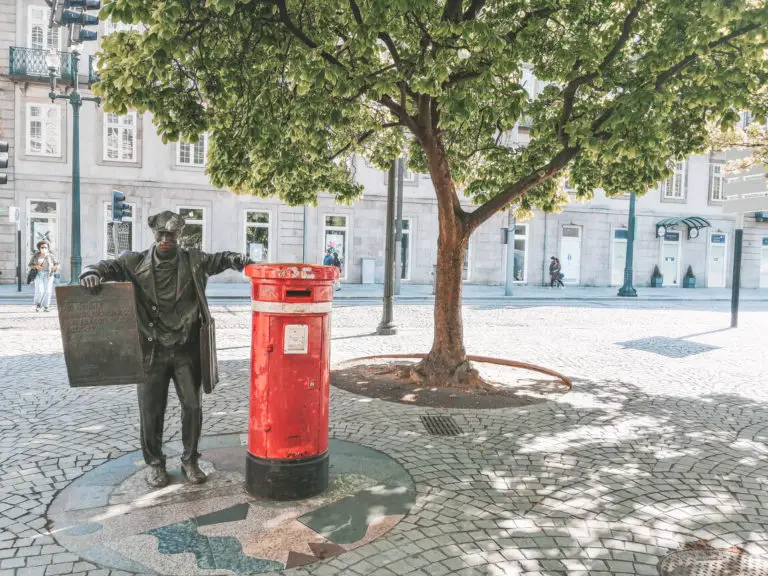
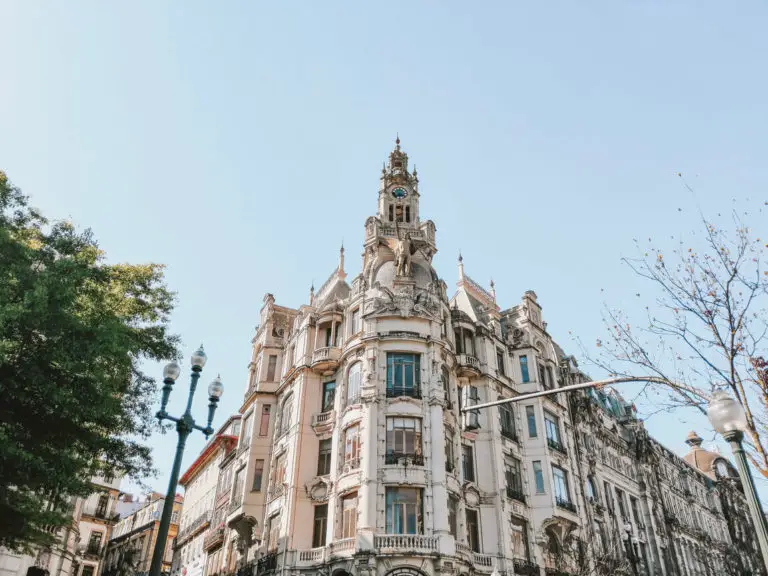
As you explore the area, don’t miss Café Guarany, one of Porto’s historic cafés, or the famous McDonald’s Imperial.
It might sound like an unusual recommendation, but this is widely considered one of the most beautiful McDonald’s restaurants in the world. Even if you don’t plan to eat there, it’s worth stepping inside to admire the stunning interior.
» Clérigos Church and Tower
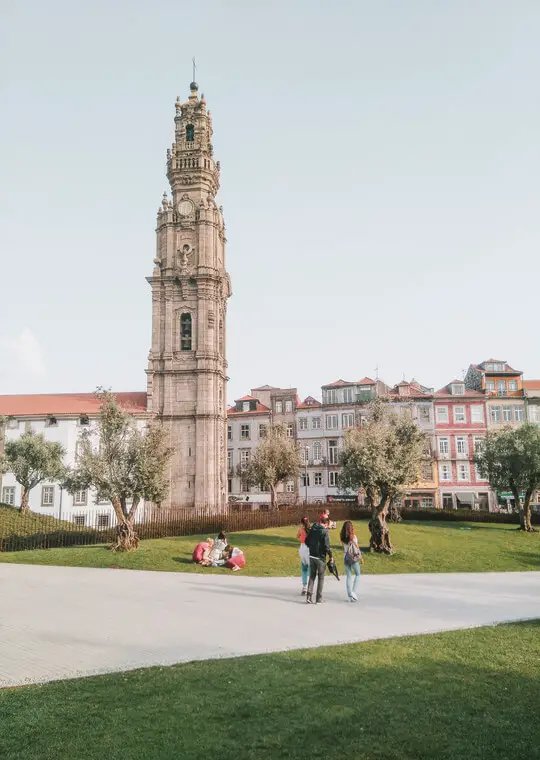
A short walk from Aliados brings you to Clérigos Church, one of Porto’s most iconic landmarks.
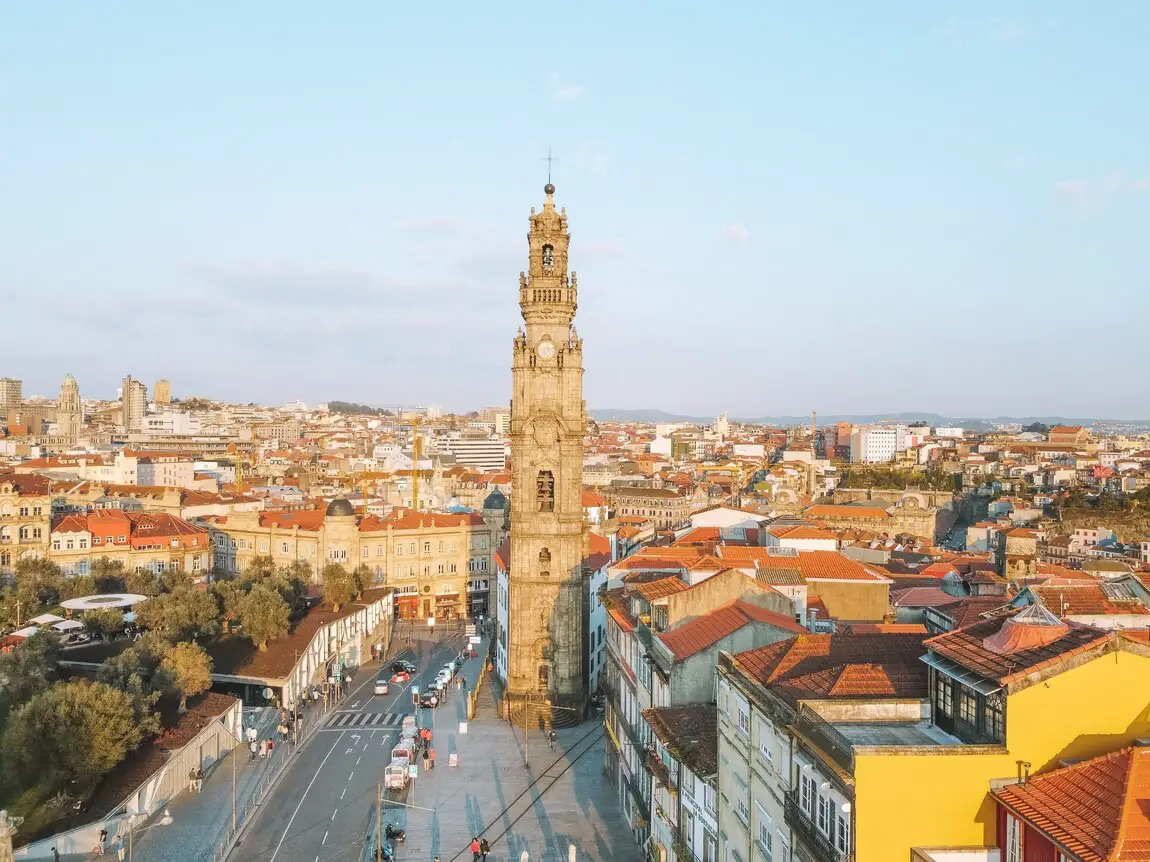
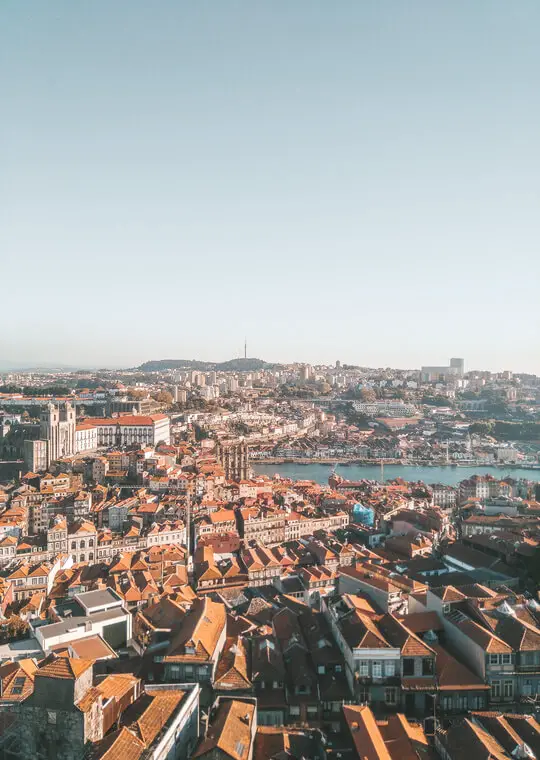
While the Baroque church itself is beautiful, the real highlight is climbing the Clérigos Tower.
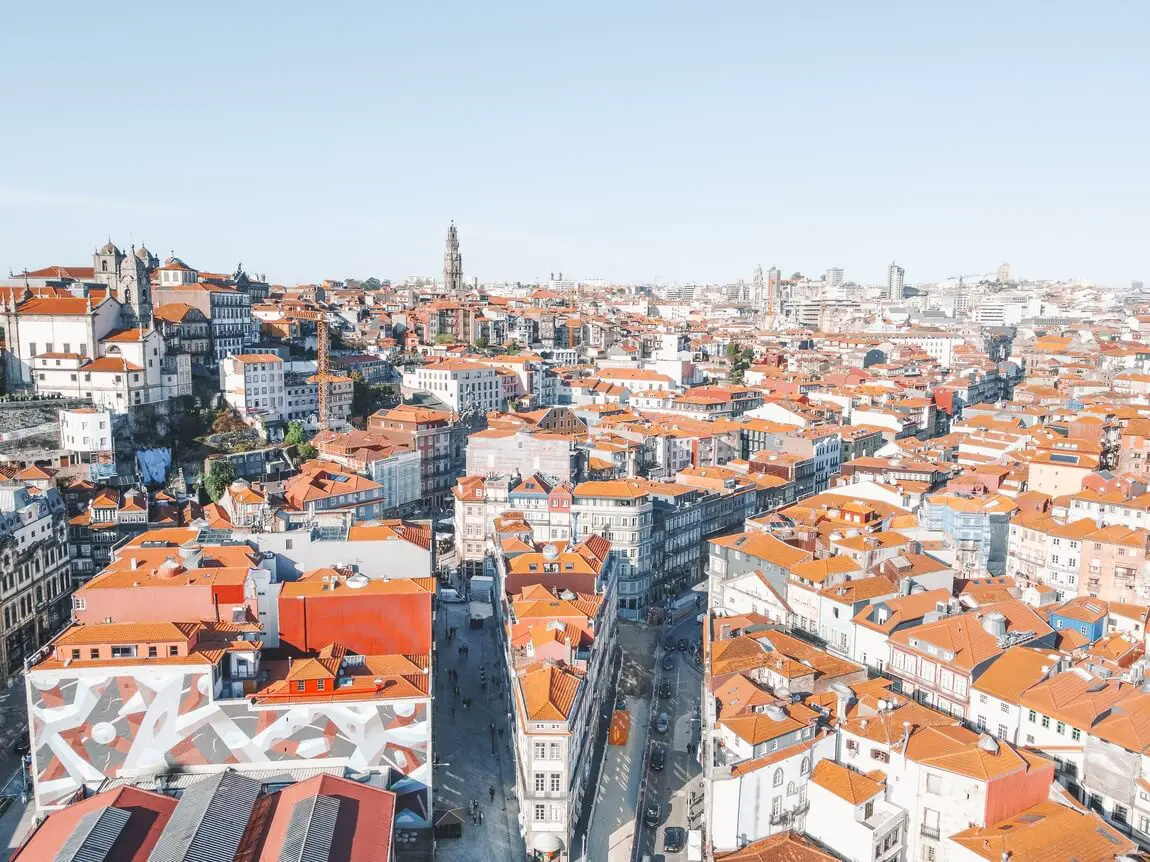
Standing 75 meters (246 ft) tall, it offers one of the best panoramic views over Porto. Yes, you’ll have to climb more than 200 steps, but I promise the view at the top makes the effort worthwhile.
Clérigos Tower and Museum is open daily from 9 am to 7 pm (last admission usually 30 minutes before closing). Tickets for the tower and museum cost 10€ (11.4 USD). Even though it’s rather a short visit, I think it’s worth the money.
👉 Book now: Clérigos Tower and Museum Entrance Ticket
If you’re visiting later in the day, I’d also recommend checking out Spiritus, an immersive light and sound show inside Clérigos Church.
It’s a completely different way to experience one of Porto’s most iconic monuments. If you have the time, I think it’s well worth it.
» Livraria Lello & Irmão
No Porto itinerary would feel complete without mentioning Livraria Lello. It’s one of the city’s most famous landmarks and one of the attractions that almost every visitor has on their list.
For years, the bookstore has been associated with the Harry Potter series. Although J.K. Rowling has since confirmed that Livraria Lello wasn’t the inspiration for Hogwarts, many visitors still come because of that connection.
To be completely honest, I have mixed feelings about recommending it.
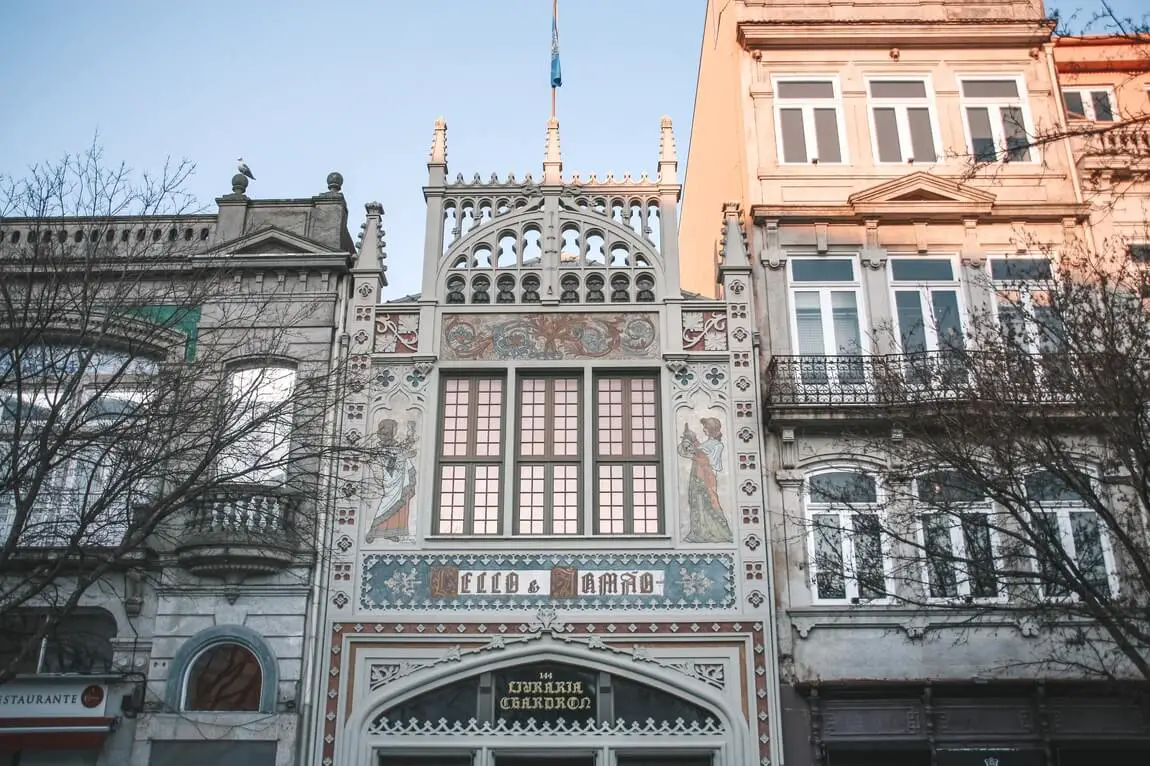
There’s no doubt that the bookstore is beautiful. The famous staircase, the stained glass ceiling, and the overall architecture make it one of the most unique bookstores I’ve ever visited.
However, over the years, it has also become one of Porto’s biggest tourist attractions. With tickets now starting at 15.95€ (18.2 USD), long queues, and large crowds inside, I personally don’t think it’s a must if you’re only spending 2 days in Porto.
📝 USEFUL INFORMATION: Standard admission to Livraria Lello costs 15.95€ (18.2 USD). There’s also a combined ticket that includes Fundação Livraria Lello for 30€ (34.2 USD). In both cases, you can deduct 15,95€ of your ticket if you purchase a book. I highly recommend booking your ticket in advance, as time slots often sell out.
That said, I still wanted to include it in this itinerary because it’s such an iconic place. If you’re a book lover, curious to see it for yourself, or simply don’t mind the crowds, I think you’ll still enjoy the visit. Just make sure to book your ticket in advance and visit as early as possible.
👉 Book your slot here: Livraria Lello Entry Ticket & Foundation Combo Ticket
» Praça dos Leões, Igreja do Carmo, and Igreja dos Carmelitas
Just around the corner is Praça de Gomes Teixeira, better known by locals as Praça dos Leões.
While the square itself is a pleasant place to pause for a few minutes, the real highlights are the two neighboring churches.
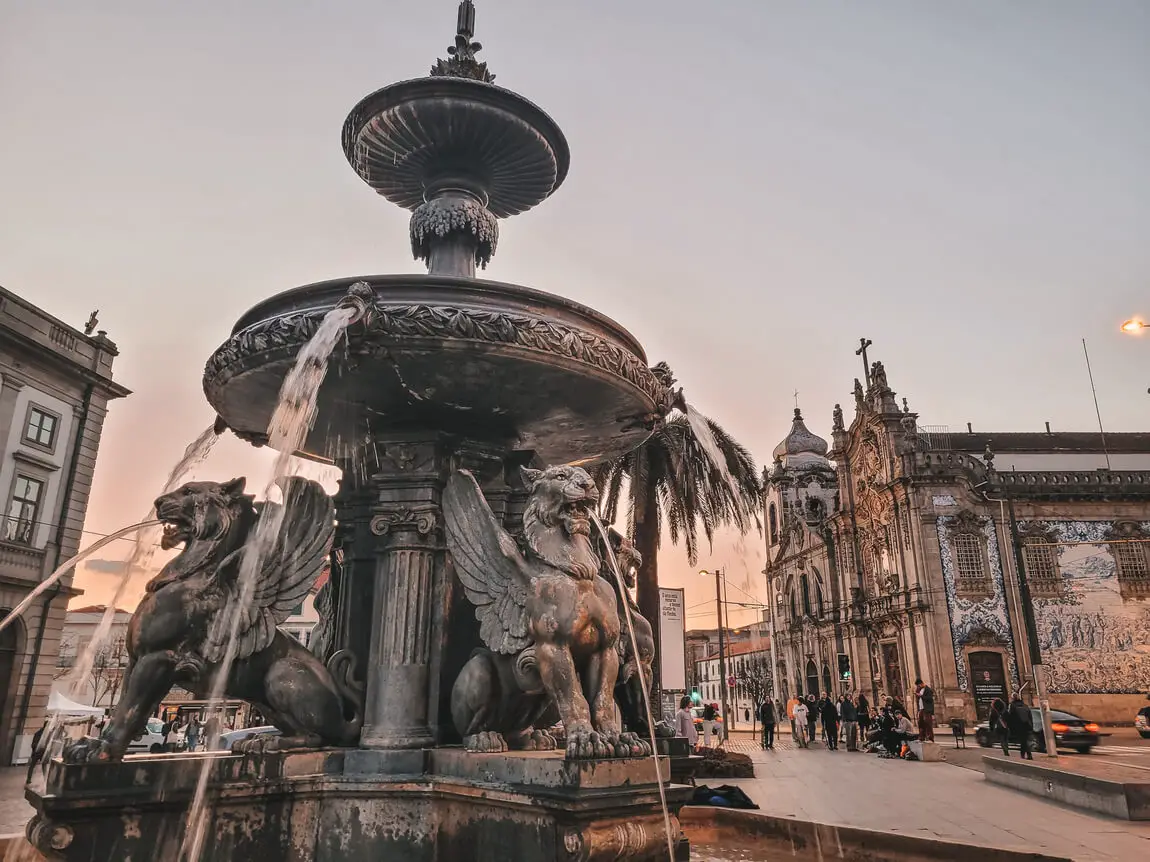
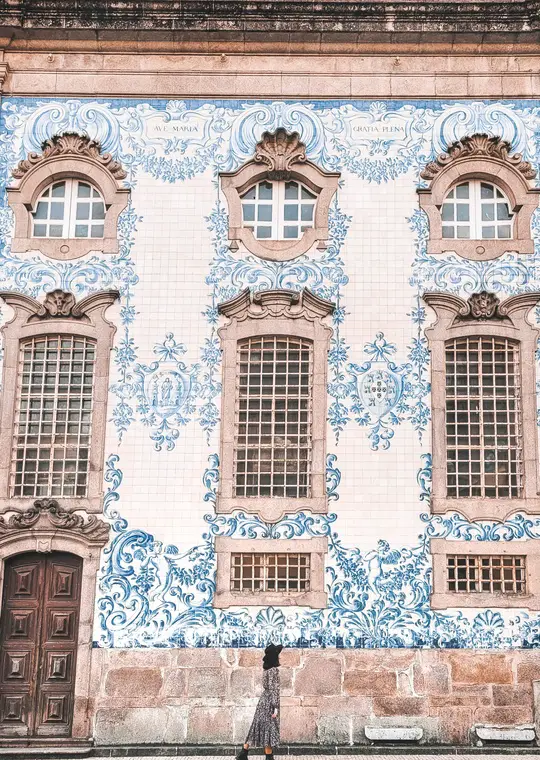
Igreja do Carmo is one of Porto’s most recognizable landmarks thanks to its stunning blue and white tiled façade, which is well worth stopping to admire. You have to pay to visit inside!
Right next to it stands Igreja dos Carmelitas, separated by one of Porto’s most curious buildings, the famous Hidden House. Built to separate the two churches, it’s considered one of the narrowest houses in Porto.
Even if you don’t plan to visit the churches, I wouldn’t skip this stop. The square is one of the city’s most photographed spots and a great place to take in another side of Porto’s beautiful architecture.
» Praça Carlos Alberto and the Joana Vasconcelos mural
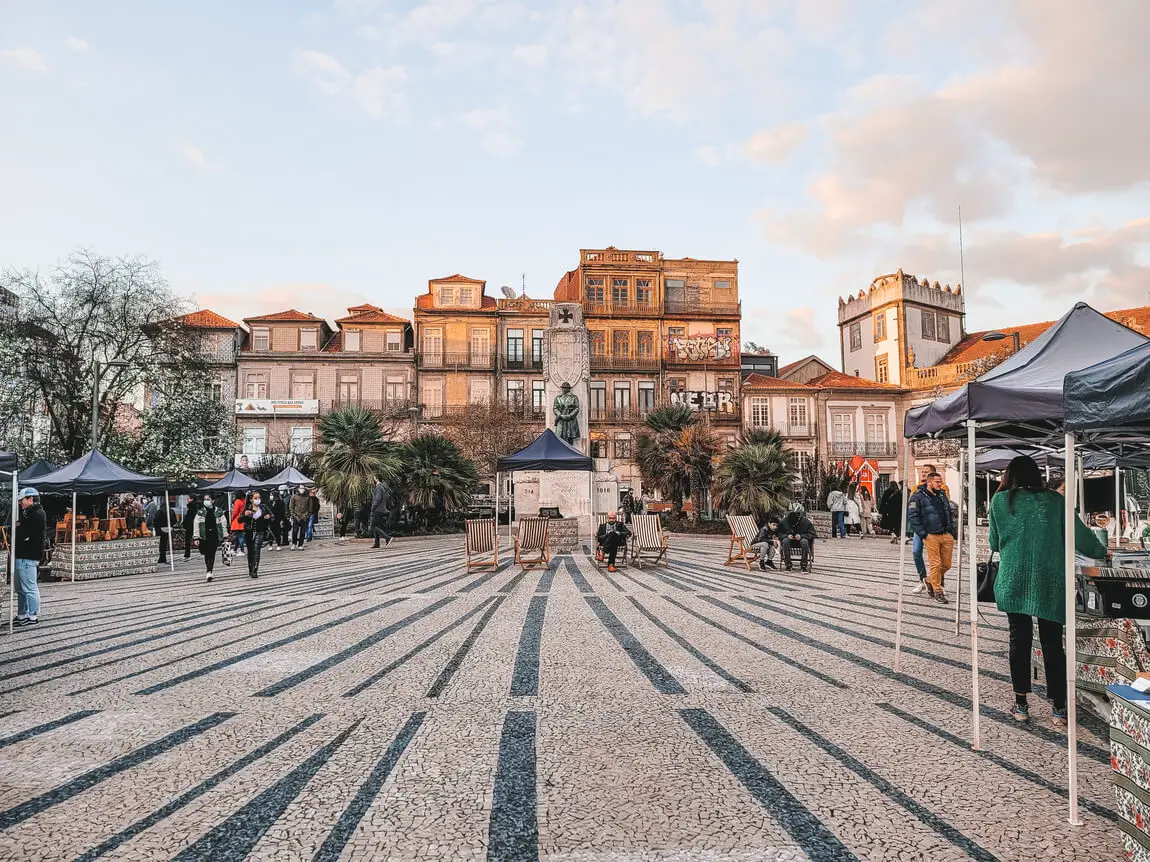
One of my favorite squares in Porto is Praça Carlos Alberto. While it isn’t one of the city’s main attractions, it’s one of those places that gives you a glimpse of everyday life in Porto.
Locals meet here for coffee, friends catch up on the terraces, and if you’re visiting on a Saturday, you’ll usually find a small market with local designers, handmade products, and vintage stalls.
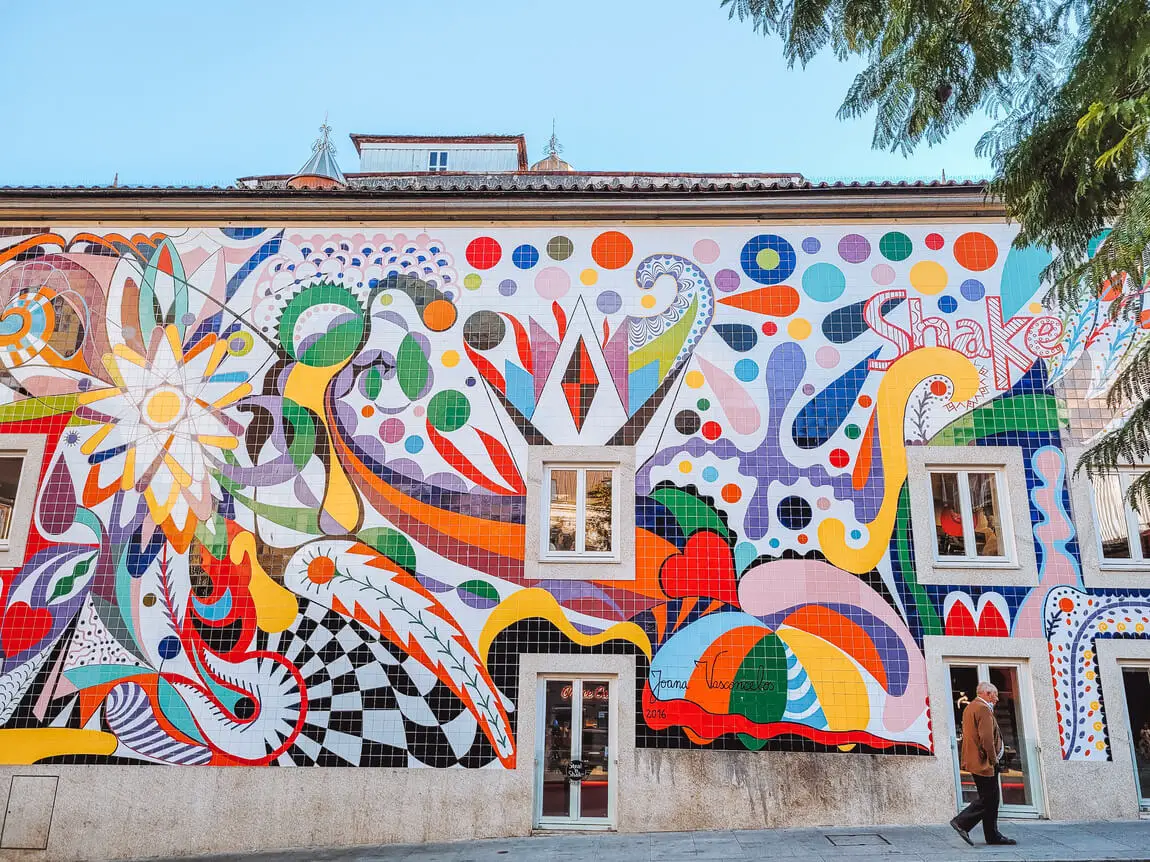
Just around the corner, take a quick detour to Rua do Actor João Guedes to see one of Porto’s most colorful hidden gems. The striking mural was designed by renowned Portuguese artist Joana Vasconcelos and is well worth a quick stop if you enjoy street art.
» Jardim das Oliveiras
Just a short walk from Praça Carlos Alberto, you’ll reach Jardim das Oliveiras, a small green space tucked behind Clérigos Tower.
If you’ve been walking all day, this is one of my favorite places to slow down before the final stops on this itinerary.
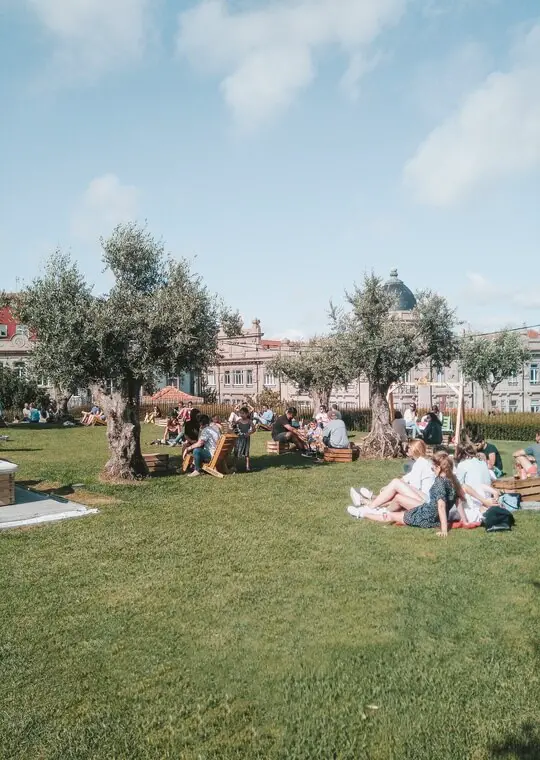
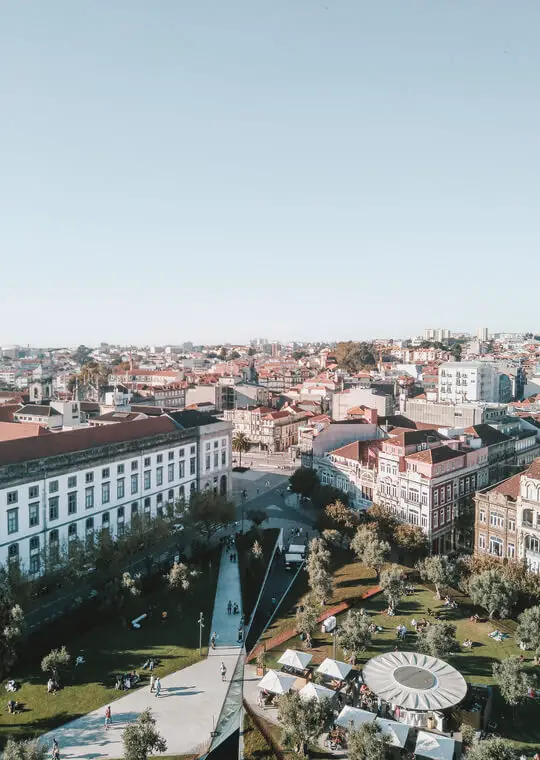
If the weather is nice, grab a drink at BASE Porto and enjoy the relaxed atmosphere beneath the olive trees. I come here more for the setting than the drinks themselves. With Clérigos Tower rising above the garden, it’s one of my favorite spots to take a short break in the city.
👉 Looking for more places like this? Check out my guide to the best places to go for a drink with a view in Porto.
» Palácio de Cristal
To end your Porto itinerary, head to Jardins do Palácio de Cristal, one of my favorite places in the city.
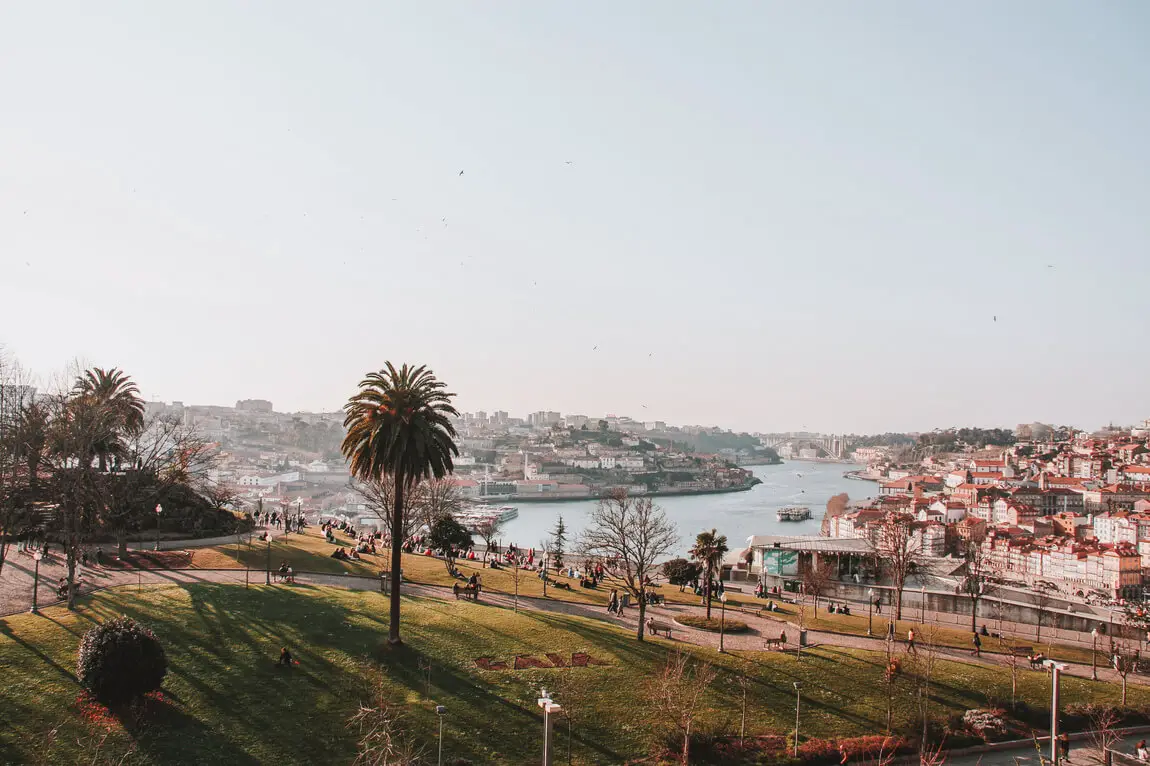
Although the original Crystal Palace no longer exists, the gardens remain one of the most peaceful places in Porto. With tree-lined paths, hidden viewpoints, roaming peacocks, and panoramic views over the Douro River, it’s the perfect place to slow down after two days of exploring.
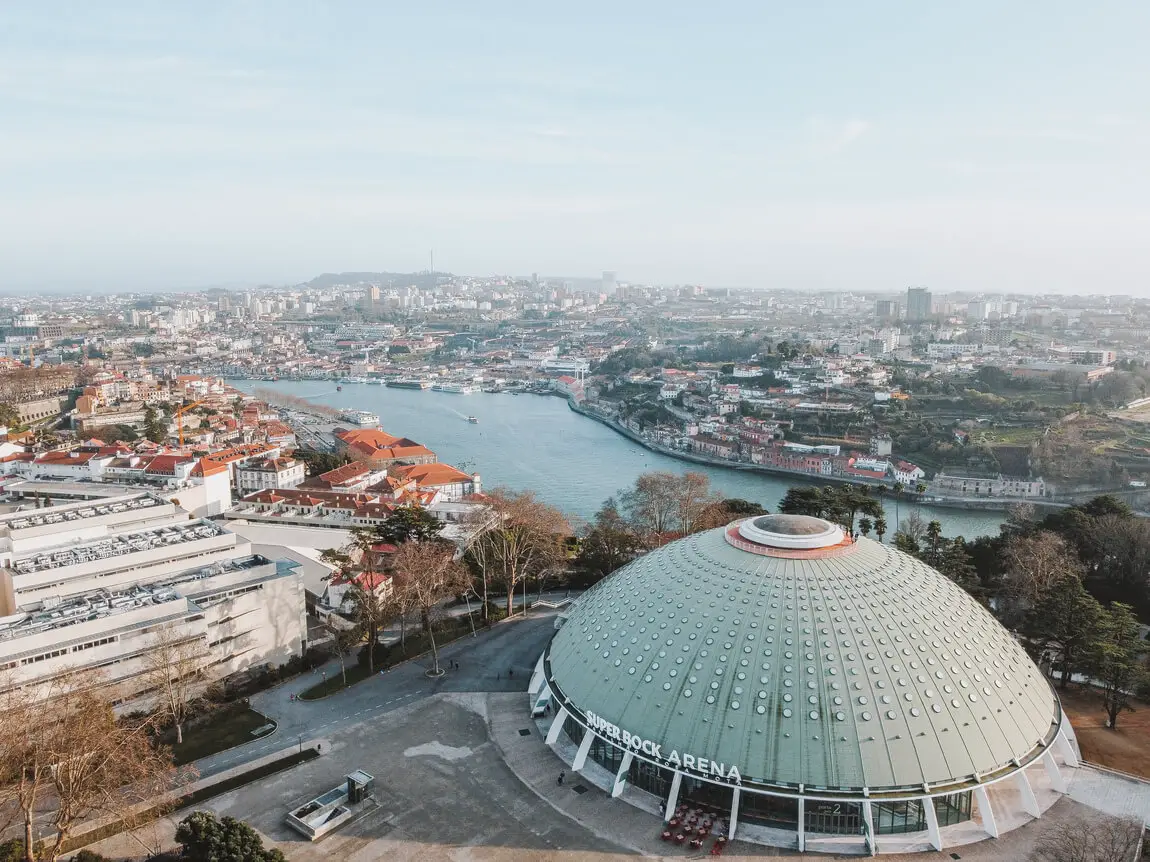
If you don’t have time to wander through the entire park, make sure you don’t miss the viewpoints near Torreão do Jardim do Palácio and Jardim dos Sentimentos. In my opinion, they’re among the most underrated viewpoints in Porto.
This is one of those things to visit in Porto that I recommend to everyone. It might not be as famous as Ribeira or Luís I Bridge, but it’s one of the places I keep coming back to.


Also, keep an eye out for the resident peacocks. They’re one of the gardens’ most distinctive features and almost always steal the show.
💡 LOCAL TIP: If you don’t have enough time to make it all the way to the gardens, Jardim das Virtudes is a great alternative. It’s much closer to the historic center and another favorite sunset spot among locals.
Still have some energy left? After watching the sunset at Jardins do Palácio de Cristal, enjoy dinner before experiencing Porto’s nightlife. Most bars and clubs are concentrated around Galerias de Paris and Rua de Cândido dos Reis, the city’s main nightlife district.
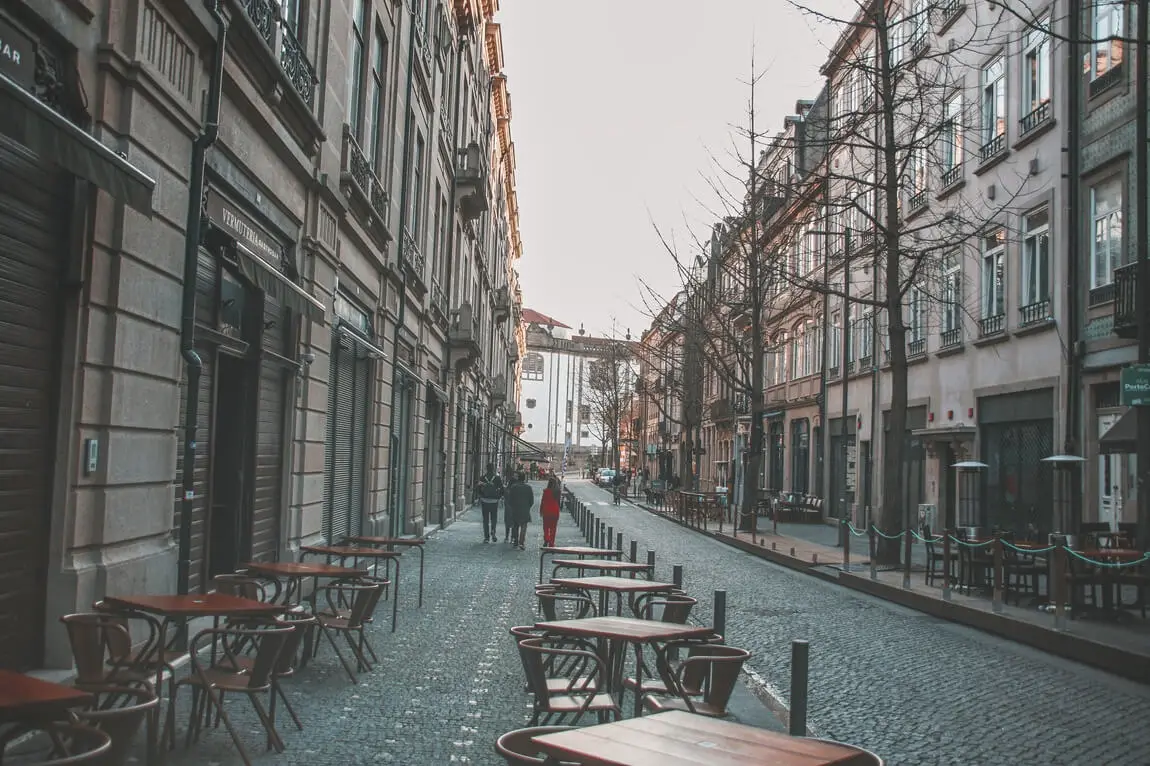
💡 LOCAL TIP: Don’t head there too early. In Porto, nights start late. While you can grab a drink at a bar from around 9 pm or 10 pm, the nightlife doesn’t really get going until midnight, and most clubs only start filling up between 12 am and 1 am.
Have more time in Porto?
If you’re staying longer than 2 days in Porto, you’re in luck. While this itinerary covers the city’s main highlights, there are plenty of other places worth exploring if you have an extra day or two.
Some of my favorite options include:
- Visit the Serralves Foundation Museum and stroll through its beautiful gardens
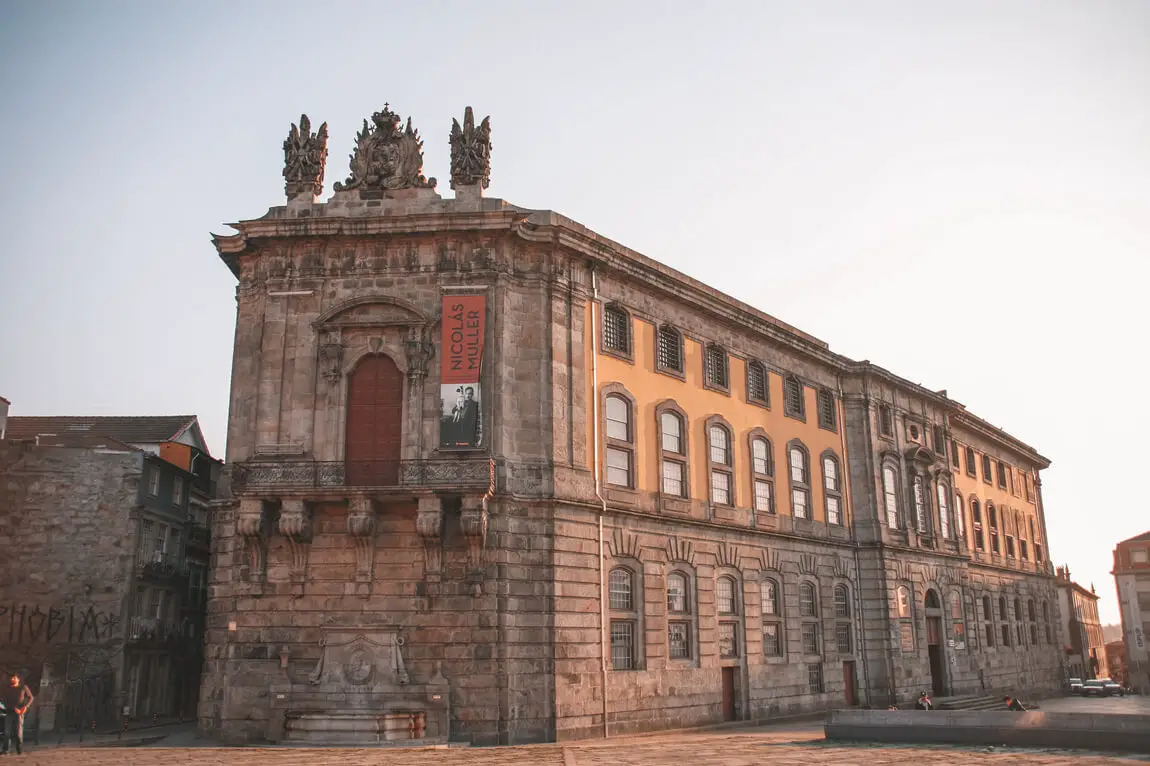
- Visit the former Cadeia da Relação (prison), where the Portuguese Photography Centre is now located
- Visit one of the most beautiful gardens in the city at the Botanical Garden
- Go to Foz do Douro, walk along the promenade, passing through “Praia dos Ingleses” and the photogenic “Pérgola da Foz” to the City Park (one of the largest in the city)
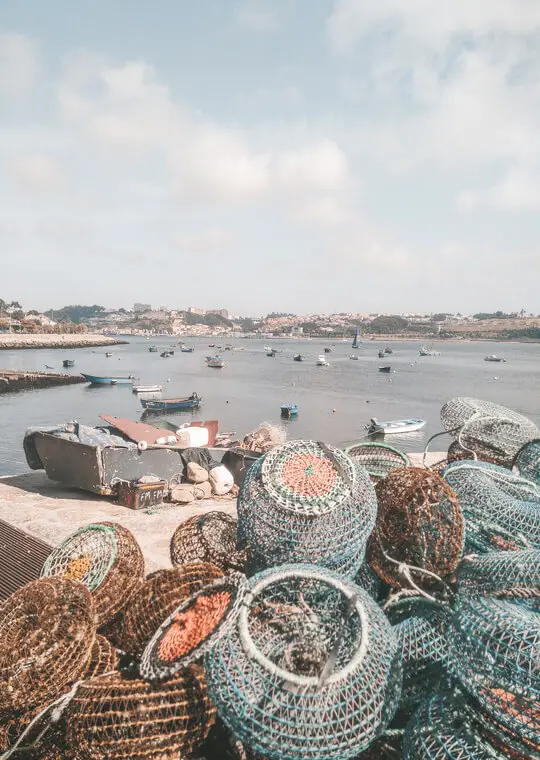
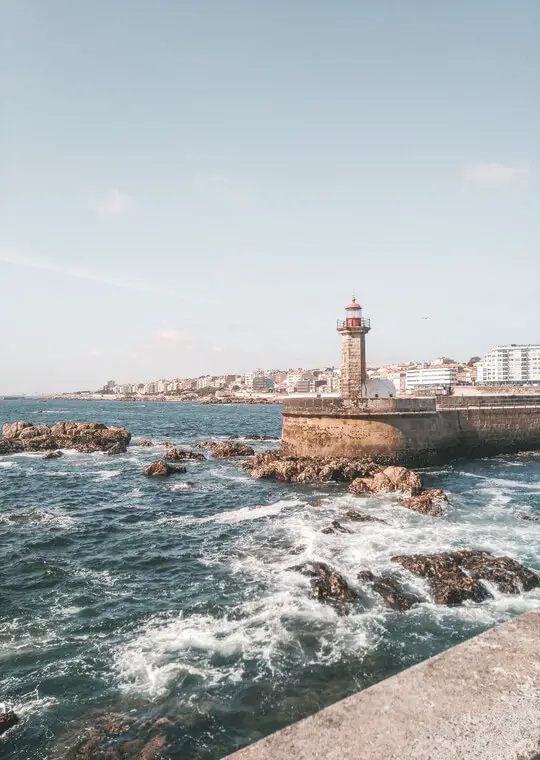
- If time allows it, perhaps a surf lesson at Matosinhos beach or even a visit to the long beaches of Vila Nova de Gaia
- Walk from Cais de Gaia towards Afurada Harbour, always alongside the Douro River, having views of Porto on one side and the best panoramic views over the Arrábida Bridge
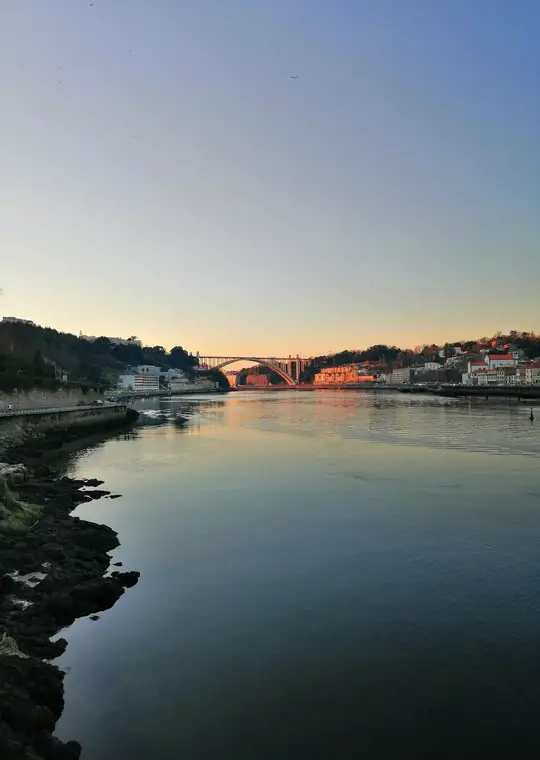
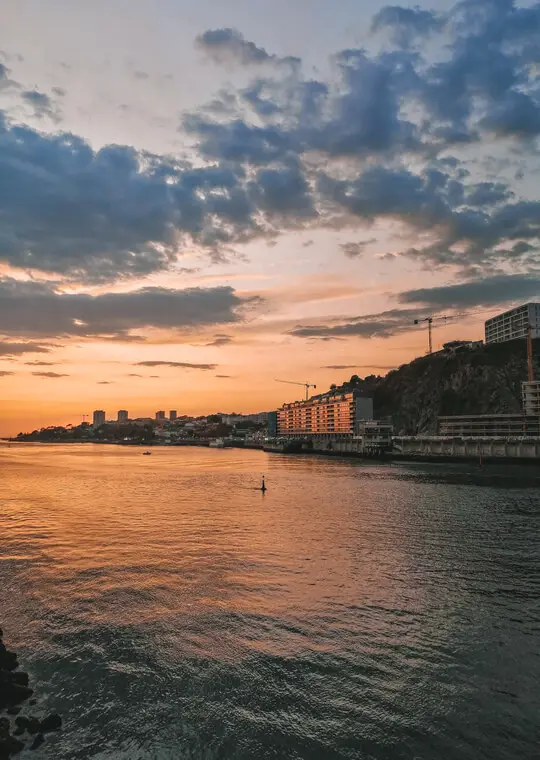
- Climb the arch of the Arrábida Bridge with Porto Bridge Climb
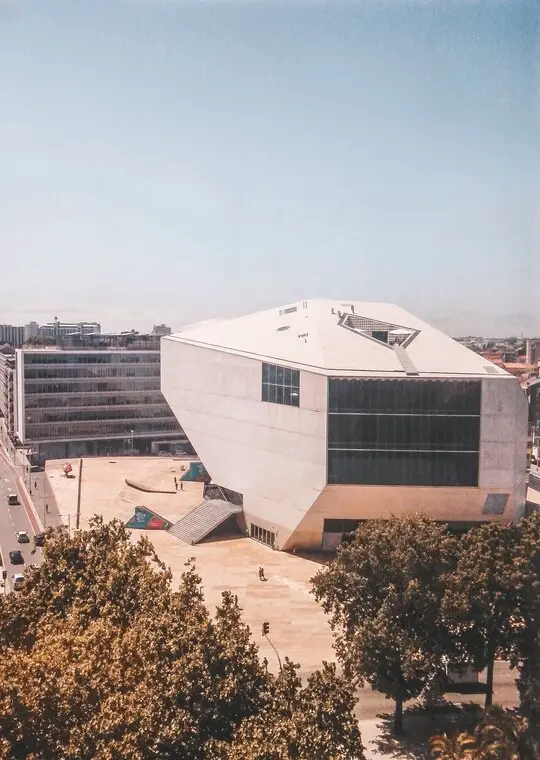
- Watch a show at Casa da Música or simply visit the inside of this avant-garde building
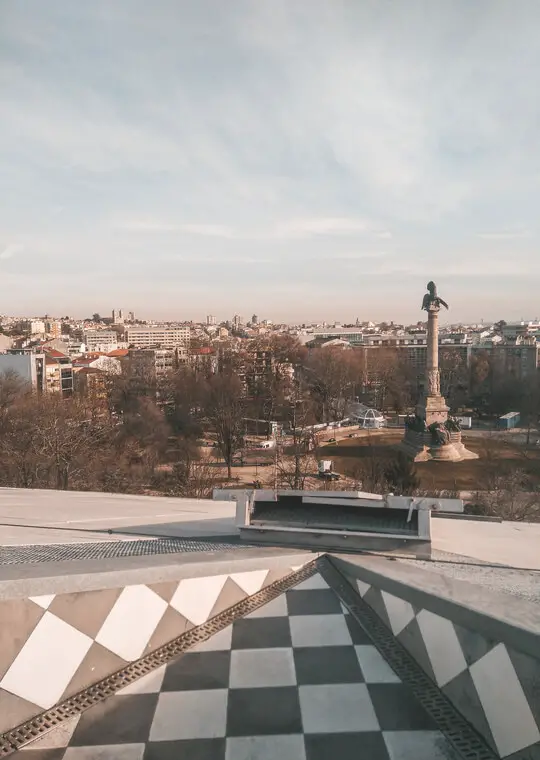
- Taste some delicacies at the Bom Sucesso Market in Boavista
- Enjoy works of art at the Soares dos Reis National Museum
- Learn more about the history of the electric car at the Tram Museum
Best time to visit Porto, Portugal
One of the things I love about Porto is that it’s a year-round destination. Every season has something different to offer, so there’s no bad time to visit.
That said, if you’re looking for pleasant weather and longer days, I’d recommend visiting between May and September. These months are ideal if you plan to spend most of your time exploring the city on foot or enjoying the riverside terraces.
If you’re planning to experience Porto in winter, don’t let the weather put you off. While you can expect cooler temperatures and occasional rain, the city is much quieter than during the summer months.
It’s also a great time to enjoy museums, cozy cafés, and a Port Wine tasting after a day of sightseeing.
Raining in Porto? Check out my guide on the best things to do in Porto when it rains.
Festivals worth planning your trip around
If your travel dates are flexible, consider visiting Porto during one of its biggest annual celebrations.
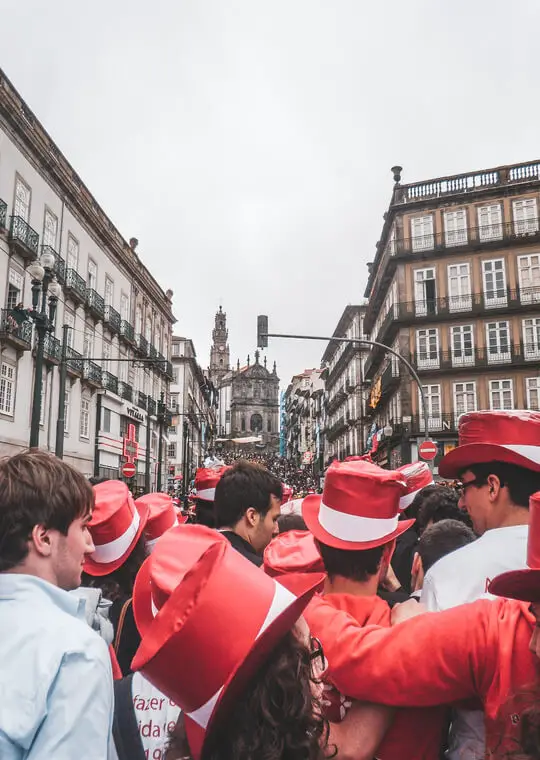
- 🎉 São João (June 23): This is, without a doubt, my favorite day of the year in Porto. Thousands of people fill the streets for an unforgettable night of music, fireworks, grilled sardines, and the city’s famous plastic hammers. If you can only experience one festival in Porto, make it this one. Want a glimpse of what it’s like? Watch my São João video.
- 🎓 Queima das Fitas (early May): Porto’s biggest university festival transforms the city into a sea of colorful student parades, concerts, and celebrations.
- 🎆 New Year’s Eve: Porto welcomes the new year with concerts, fireworks, and celebrations across several parts of the city, especially around Avenida dos Aliados.
Is 2 days in Porto enough?
Yes, 2 days in Porto are enough to experience the city’s highlights, and that’s exactly what this itinerary is designed to help you do.
You’ll have enough time to visit Porto’s historic center, admire its famous viewpoints, enjoy traditional Portuguese food, and tick off many of the must-do things in Porto without feeling too rushed.

If you have an extra day, I’d recommend slowing the pace down and exploring places beyond the historic center, such as Foz do Douro or Matosinhos.
You could also join a Douro Valley day trip, one of the most popular experiences in northern Portugal.
If you’re staying even longer, here are a few destinations that are well worth adding to your itinerary:
Is Porto Card worth it?
If you plan on visiting several paid attractions, Porto Card can help you save money.
The card offers discounts at many museums, monuments, tours, restaurants, and shops across the city. You can also choose a version that includes unlimited travel on Porto’s public transportation network.
Before buying the card, add up the attractions you actually plan to visit. If your itinerary mainly focuses on Porto’s free attractions, viewpoints, churches, and walking around the historic center, you may not save enough to justify the cost.
On the other hand, if you’re planning to visit several museums or join multiple paid experiences, Porto Card can be a worthwhile investment.
Final thoughts
I hope this Porto 2-day itinerary helps you make the most of your time in my hometown. While it’s impossible to see everything in just two days, I truly believe this route covers the city’s highlights while also introducing you to a few places that many visitors overlook.
If you’re still deciding what to visit in Porto, my biggest piece of advice is not to rush from one attraction to the next. Leave some time to wander through the streets, stop for a coffee, enjoy the viewpoints, and simply soak up the atmosphere. That’s when Porto is at its best.
If you’re planning to stay longer, don’t forget to check out my other Porto guides, where I share my favorite restaurants, cafés, viewpoints, day trips, and plenty of local tips to help you experience the city beyond the main tourist attractions:
- The best restaurants in Porto for every mood
- The best cafés in Porto
- What to do in Porto when it rains
- The best places to go for a drink with a view in Porto
- The day I visited Porto in a VW Bus
- Cool experience in Porto – buggy ride
Have a fantastic trip, and if you have any questions while planning your visit, feel free to leave a comment below. I’ll be happy to help!
Disclaimer: this post may contain some affiliate links, which means I get a small commission if you buy something through my links. This doesn’t represent any additional cost to you and you’ll be supporting my work here on the blog😊